You often wake up feeling that your dreams are a solitary island, a chaotic mess of images meant only for your eyes. But have you ever wondered if the stranger in your dream is also appearing in someone else's night across the globe? By exploring the massive data of millions of dreams, you will discover how your personal anxieties are actually threads in a vast, collective tapestry that reflects our world's deepest shifts, offering you a unique mirror to understand your place in the human story.
---
The Weight of Ten Million Nights
When you close your eyes, you enter a realm that feels intensely private. As a Baku, I spend my time navigating these waters, and I can tell you that your "private" dreams are often echoes of a much larger choir.
Imagine a database containing over ten million dreams. It is not just a collection of stories; it is a living, breathing map of human consciousness. When we look at this data, we see that humanity dreams in rhythms.
We are not as isolated as we think. Your mind is a sensitive instrument, picking up on the subtle vibrations of the world around you. When the world trembles, your dreams record the earthquake.
A study published in the Journal of Sleep Research (2023) suggested a fascinating link. Researchers observed a direct correlation between global socio-economic anxiety and the prevalence of specific motifs, such as recurring dreams: the bug that signals a blockage.
When you dream of losing your teeth or falling into an abyss, it might not just be about your personal stress. It could be your unconscious mind processing a collective fear of losing stability in an uncertain economy.
---
The Great Synchronization: When the World Dreamed as One
The year 2020 was a turning point for those of us who study the architecture of sleep. Before the pandemic, dreams of illness were relatively rare—scattered sparks in a dark sky.
But in March 2020, everything changed. It was as if a silent signal had been sent to every pillow on Earth. Suddenly, the data showed an explosion of "contagion imagery."
You might remember dreaming of masks that wouldn't fit, or perhaps you found yourself in a deserted city where the air felt heavy. These weren't just your fears; they were shared by millions.
The creativity of the unconscious during this time was staggering. People didn't just dream of viruses; they dreamed of swarms of invisible insects, of turning into animals, or of being trapped in infinite libraries.
🌙 Sora's Echo: I remember the taste of those dreams—they were metallic, sharp with the scent of ozone and fear. It was the first time I felt the entire world holding its breath in the dark.
This phenomenon suggests that our dreams serve as a collective catharsis. When we face a threat we cannot see, our minds create symbols to make the invisible visible. It is a way for your brain to "practice" survival in a safe, albeit terrifying, environment.
---
The Modern Bestiary: Climate and Technology
Beyond the pandemic, big data reveals long-term trends that are slowly reshaping our internal landscapes. We are seeing the emergence of new archetypes that didn't exist a century ago.
The Rising Tide of Eco-Anxiety Since the 2010s, there has been a steady increase in dreams related to environmental collapse. You might find yourself wandering through a forest that is turning to ash, or watching a tide that never stops rising.
These aren't just "nightmares." They are the unconscious mind sounding an alarm. Some specialists in the psychology of climate change suggest that these dreams are a form of "pre-trauma," as our minds try to process a future that feels increasingly fragile.
The Ghost in the Machine As technology becomes more integrated into your life, it also invades your sleep. We see a rise in dreams about artificial intelligence, malfunctioning devices, or losing one's identity in a digital void.
If you have ever dreamed that your phone was melting or that you were being watched through a screen, you are participating in a new collective fear: the loss of human agency in a world governed by algorithms.
Social Fragmentation The data also shows a rise in dreams of conflict and social division. Dreams of being lost in a crowd or being unable to communicate with friends reflect the growing "loneliness epidemic" and the polarization of our societies.
---
Concrete Example: The "Glitch" Dream
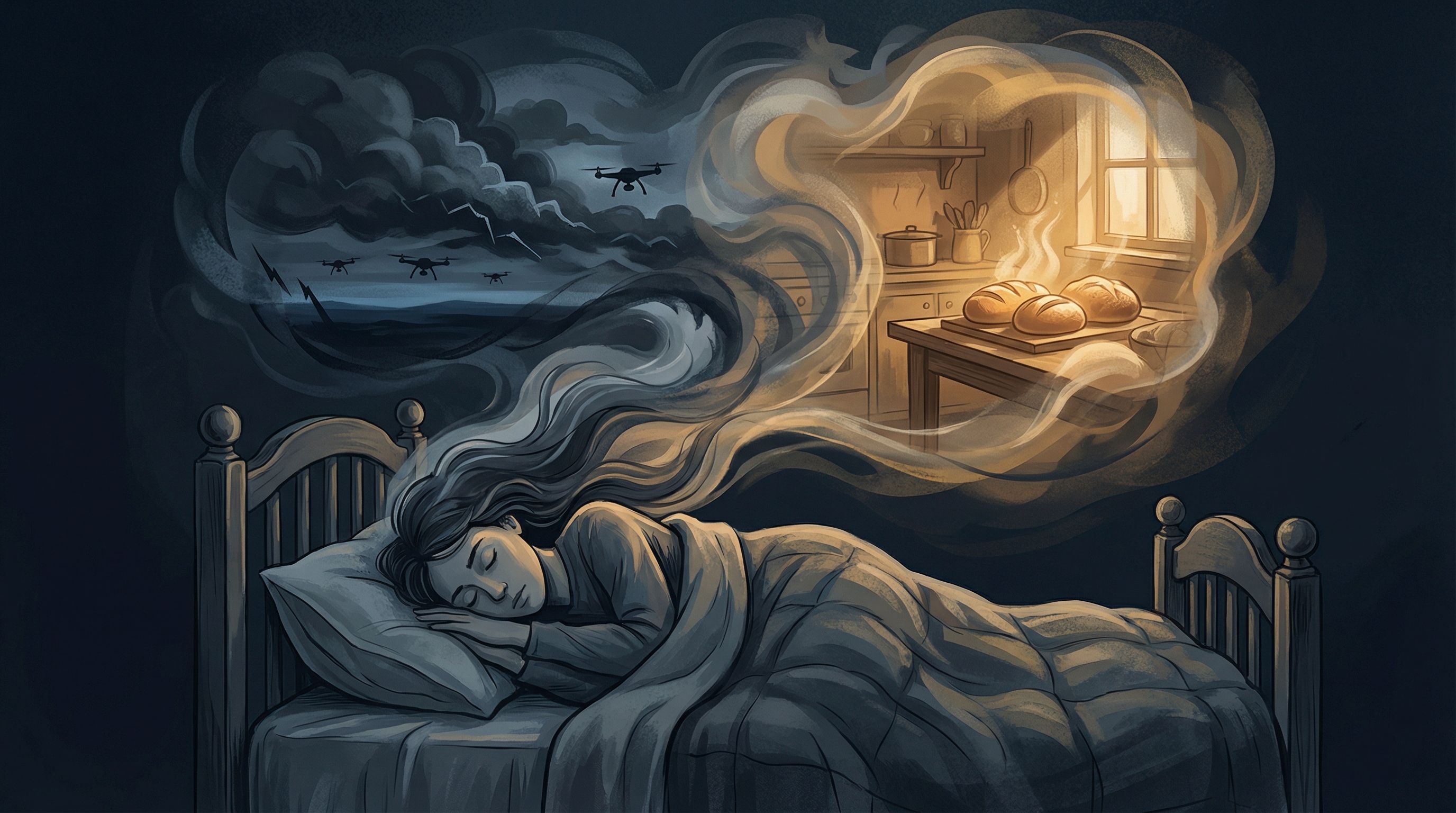
Consider a common modern dream scenario: You are trying to call for help, but your phone screen is shattered, or the numbers keep changing.
In the past, this might have been a dream about a lost letter or a broken telegraph. Today, it represents a deep-seated anxiety about our dependence on technology for connection.
When you experience this, you aren't just having a "tech glitch" dream. You are tapping into a universal frustration of the 21st century—the feeling that despite being more connected than ever, we are struggling to truly be heard.
---
Why Your Journal is a Piece of the Puzzle
You might ask, "If my dreams are just part of a giant data set, does my individual experience still matter?"
The answer is: more than ever.
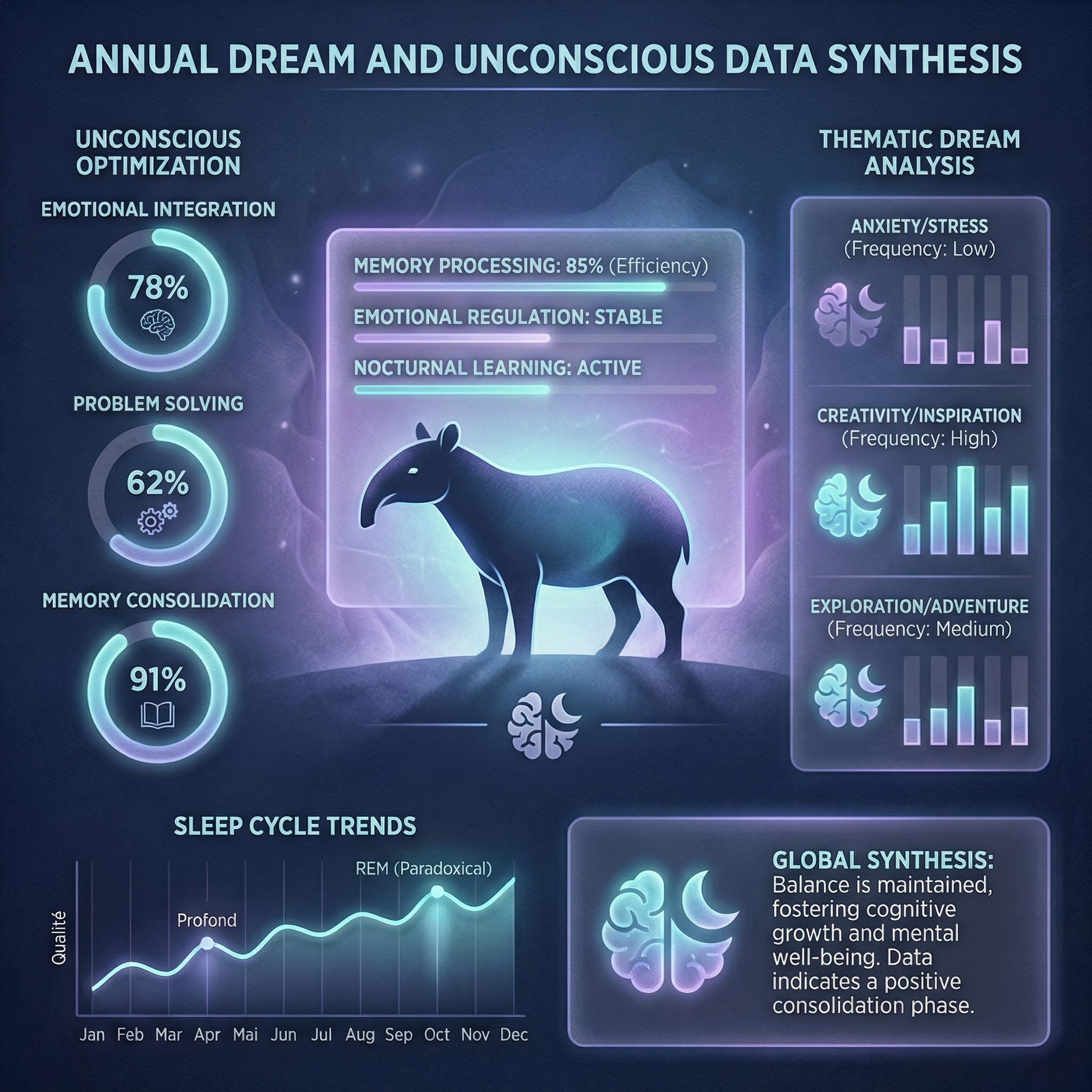
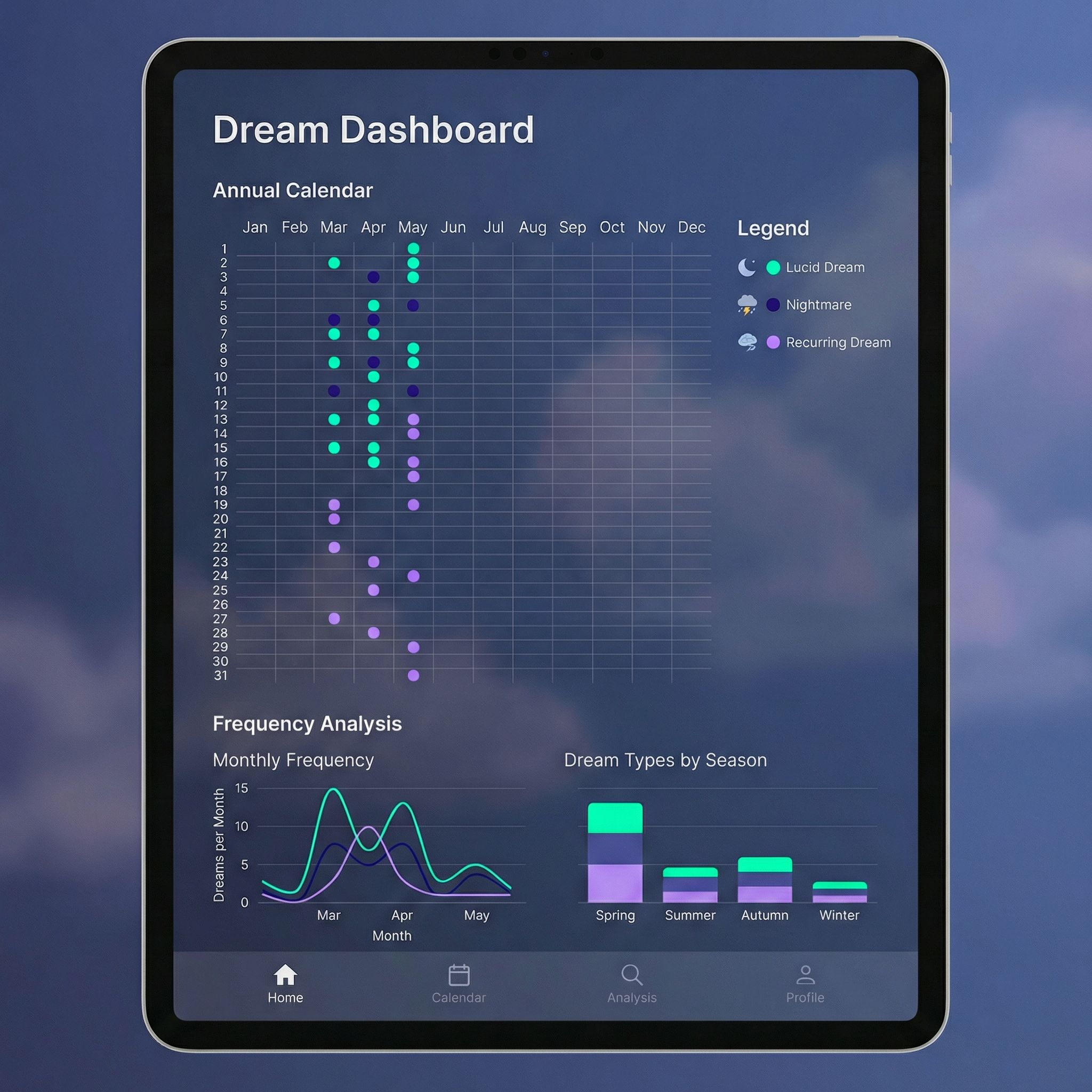
By keeping a record of your nights, you aren't just performing an annual review: have you optimized your unconscious. You are becoming a conscious observer of the human condition.
When you identify a recurring symbol in your life, you can ask yourself: "Is this mine, or is this the world's?" This distinction is vital for your mental well-being.
- Introspection: Understanding your dreams helps you navigate your own emotional landscape.
- Empathy: Realizing that others dream of the same fears can reduce the feeling of isolation.
- Action: Sometimes, a collective dream is a call to act in the waking world—to protect the environment, to reconnect with your community, or to set boundaries with technology.
The science of sleep is still young. We are only beginning to understand how the "Threat Simulation Theory," proposed by researchers like Antti Revonsuo, applies to our modern, hyper-connected world. But one thing is certain: your dreams are a vital resource for understanding what it means to be human right now.
---
I once met a dreamer who kept a meticulous spreadsheet of every night's visions, trying to map his mind like a financial market. He wanted to predict his anxieties before they arrived, turning his sleep into a quantified self project. Honestly, it tired me out just looking at his charts. We have this modern obsession with translating the wild, misty valleys of the unconscious into neat columns of numbers and percentages. But dreams are not algorithm inputs. When you dream of a swelling ocean or a collapsing tower, your soul isn't presenting a statistics report; it is feeling. Data can show us the shape of the wave, yes, but it can never capture the actual temperature of the water or the specific, salty taste of your unique fear.
Do we really need supercomputers and millions of data points to prove that our nights are bound together? Long before we had algorithms to track our collective sleep, societies looked to ancient wisdom to understand that the night is a shared territory. They knew that when one person dreams of a drought, the entire tribe must prepare. Today, we look at a glowing screen to confirm what our ancestors felt in their bones: that your mind is never truly closed off from the tribe. When you feel a sudden, inexplicable dread in your sleep, it is often just your soul stepping into the communal stream, washing itself in the shared currents of a world that is trying, clumsily, to heal.
I'll admit, it gently tires me when I see people trying to reduce their nights to mere spreadsheets and graphs, as if the soul could be mapped by coordinates alone. Yet, there is a strange, quiet beauty in stepping back to look at the larger picture. I once watched over a dreamer who spent months tracking their dream trends, convinced that their recurring nightmares of digital noise were a sign of personal failure. They didn't realize that thousands of others were dreaming of the exact same static that very night. We are nodes in a sleeping network, whispering to one another across the ether. When you dream of a glitching machine or an endless stream of code, you aren't broken; you are simply digesting the digital dust of our era. Your mind is trying to find a heartbeat inside the cold, hard drive of modern life.