AT A GLANCE
TL;DR
Traditional sleep trackers measure the body, but AI is beginning to measure the mind.
Natural Language Processing (NLP) allows algorithms to detect emotional patterns and recurring symbols in your dream journals.
Emerging research suggests that dream content analysis could help identify early signs of neurological shifts.
The future of sleep health is qualitative, focusing on the meaning of your rest rather than just its duration.
How Artificial Intelligence Decodes the Hidden Language of Your Dreams Beyond Simple Sleep Tracking
Beyond the "Quantified Self": Why Your Numbers Are Lying to You
You have likely spent months, perhaps years, tracking your sleep. You know your average time in bed, your resting heart rate, and perhaps you’ve even studied the architecture of sleep understanding the hypnogram to see how your cycles fluctuate.
But there is a limit to what a gyroscope and an infrared sensor can tell you. They can tell you that you moved, but they cannot tell you why you were running. They can tell you your heart raced, but they don't know if it was out of fear or ecstasy.
This is the "Quantified Self" trap. We become obsessed with optimizing the 7.5-hour window, yet we ignore the cinematic universe that unfolds within it. You might have a "perfect" score on your app, but if your nights are haunted by recurring themes of loss or frustration, are you truly resting?
The shift we are seeing now is toward the "Qualitative Dream." It is no longer just about how long you slept, but about the substance of your unconscious experience.
---
The Rise of Semantic Dream Analysis
How does a machine "understand" a dream? It doesn't do it through magic, but through a branch of AI called Natural Language Processing (NLP).
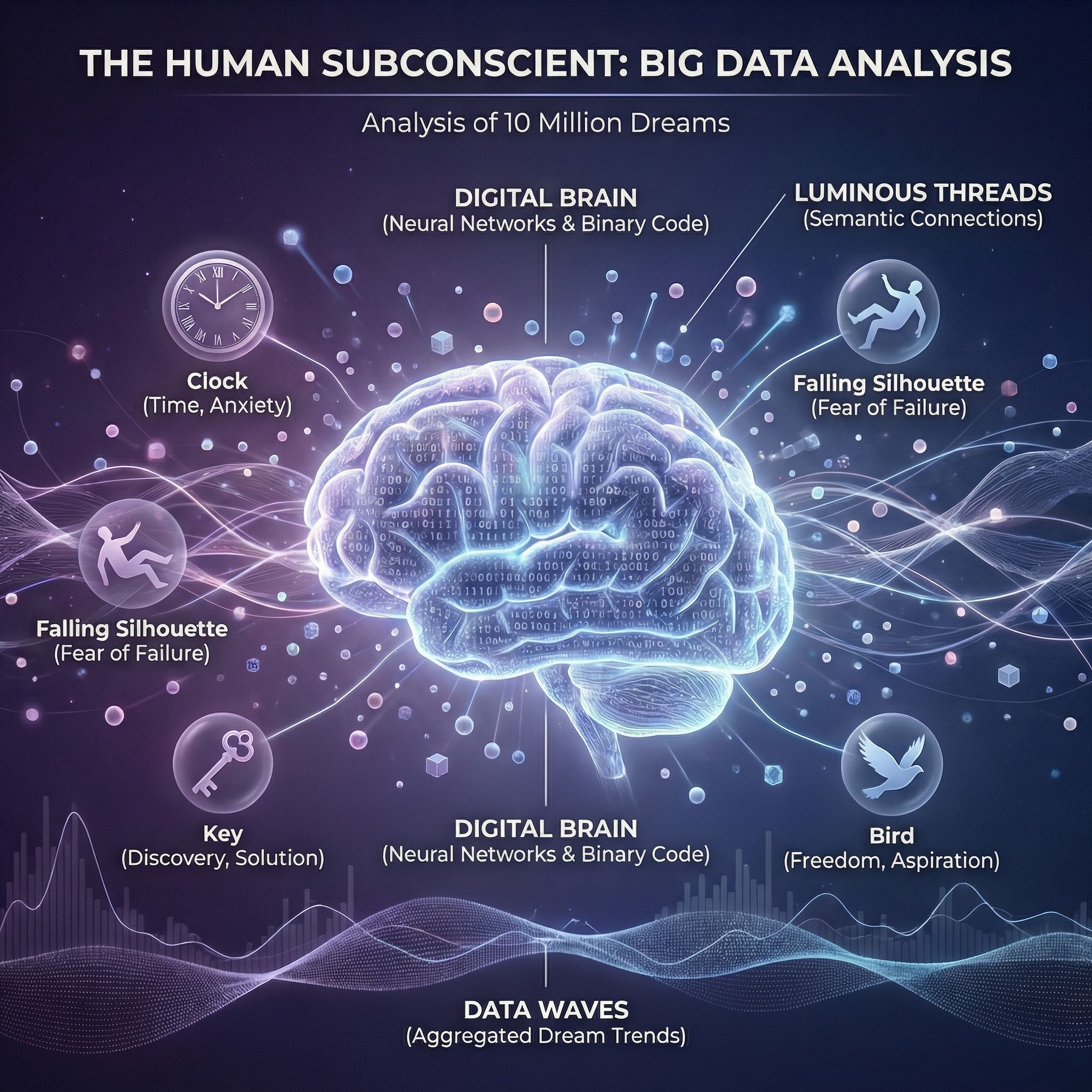
When you write down your dream, you are providing a dataset. AI models can now dissect this narrative, looking for more than just keywords. They analyze the "sentiment"—the underlying emotional tone of your words.
They look for "semantic density," which is how complex and interconnected your dream images are. Some researchers suggest that the way you structure your dream stories can be a mirror of your cognitive health.
If you describe a forest, the AI doesn't just see "trees." It looks at the relationship between you and that forest. Are you a predator? A victim? An observer? By tracking these relationships over hundreds of entries, the AI can map the geography of your psyche in ways that a human might miss.
🌙 Sora's Echo: I have watched over human dreams for centuries. Before your machines, I used the wind and the stars to find patterns. Today, your algorithms are simply new eyes for an old soul.
---
Can Your Dreams Predict Your Health?
This is where the science becomes truly profound, and perhaps a bit startling. Some specialists in the field of neurology are looking at dreams as a "canary in the coal mine."
For instance, research conducted by teams associated with institutions like Mount Sinai has explored how dream content might correlate with neurological conditions. It’s not about a single nightmare, but about long-term patterns.
Some studies have observed that individuals who eventually develop certain neurodegenerative disorders, such as Parkinson's, often experience a period of "REM Sleep Behavior Disorder" (RBD) years earlier. In these cases, dreams often become more violent or action-packed, and the body loses its natural paralysis, leading the person to "act out" their dreams.
AI is uniquely equipped to spot these shifts. While you might just think you're having a "stressful week," an algorithm can compare your dream syntax and themes against thousands of others to identify anomalies that might warrant a conversation with a professional.
It is important to remember: this is not a diagnosis. It is a prompt for introspection and, when necessary, a nudge toward clinical curiosity.
---
Concrete Example: The Evolution of a Symbol
Imagine you have a recurring dream about a house.
In January, you describe the house as "bright but empty." In March, you mention "water leaking from the ceiling." In June, you write that "the doors are locked from the outside."
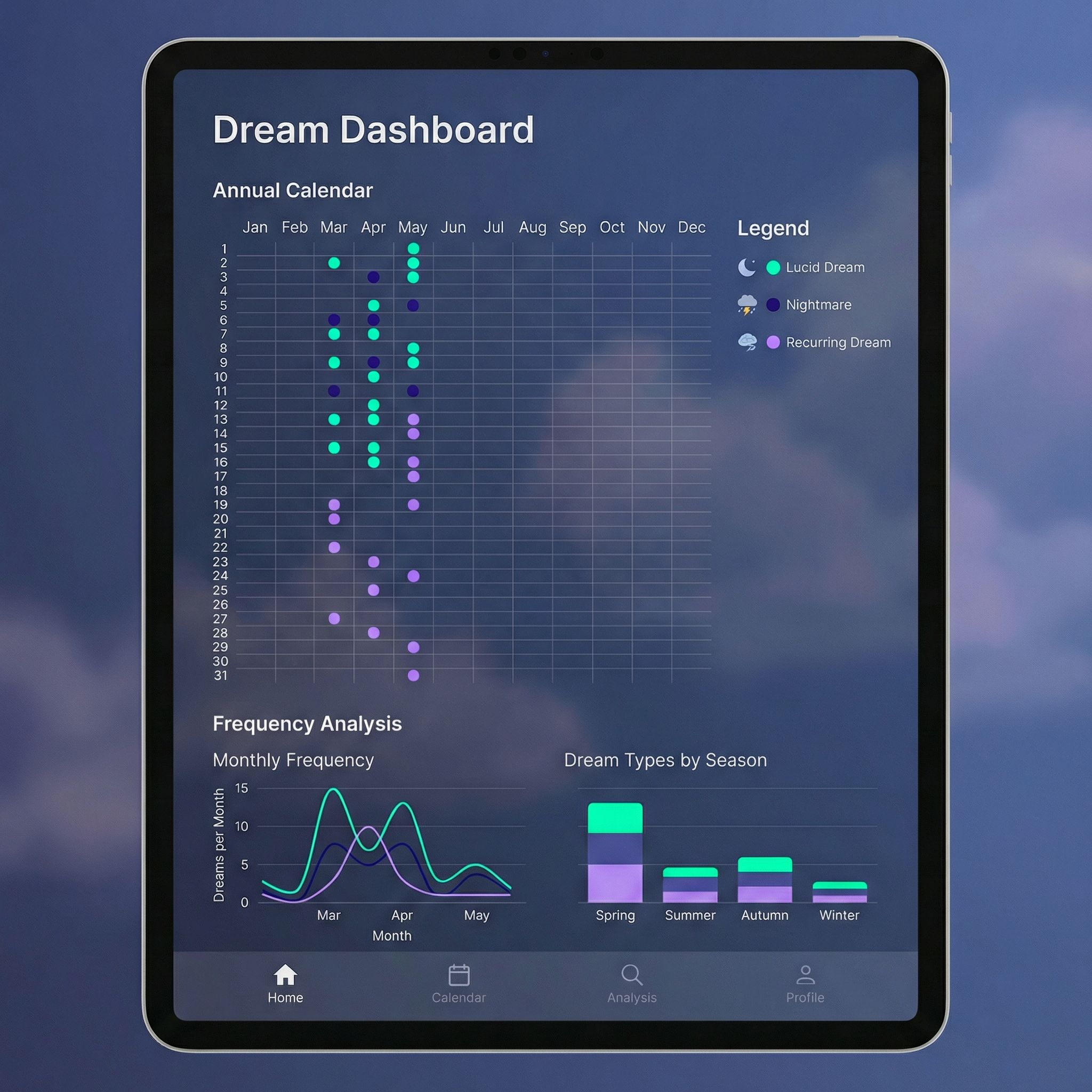
To you, these are just weird dreams. But an AI analyzing your quantified self analyzing your dream trends over a year might notice a statistical increase in "entrapment" metaphors and "environmental decay" themes.
It can then correlate this with your physiological data—perhaps your rem sleep deprivation and creativity the broken link shows that your dream quality is dropping exactly when your stress markers rise. This synthesis of data gives you a map of your internal world that is far more accurate than a simple "Sleep Score."
---
How to Build a Better Digital Dream Journal
If you want to use these tools effectively, you need to change how you talk to your unconscious. Your dream journal is no longer just a diary; it is a bridge between your biology and your biography.
1. Capture the "First Light" Impressions: Don't wait for your coffee. The moment you wake, record the dominant emotion. Was it "heavy," "electric," or "hollow"? AI thrives on these emotional anchors. 2. Be Specific with Objects: Instead of saying "I was in a car," specify if it was "a rusted car that wouldn't start." The adjectives are where the meaning hides. 3. Focus on the "Who": Note the characters and your relationship to them. Are they people you know, or "shadow figures"? 4. Avoid Self-Censorship: Your AI doesn't judge. If a dream feels nonsensical or embarrassing, record it anyway. The "glitches" in your narrative are often the most revealing data points. 5. Look for the "Aha" Moment: Use the AI's analysis as a starting point, not an answer. When the tool points out a recurring theme, ask yourself: "Where in my waking life do I feel this same frequency?"
---
The Ethical Horizon: Who Owns Your Unconscious?
As we move deeper into this territory, we must be careful. Your dreams are the last frontier of absolute privacy. When you use AI to analyze them, you are inviting a third party into your most intimate space.
The goal of this technology should never be to "fix" you or to sell you a "cure." It should be to provide a mirror. We are still in the early stages of understanding how the brain generates these narratives.
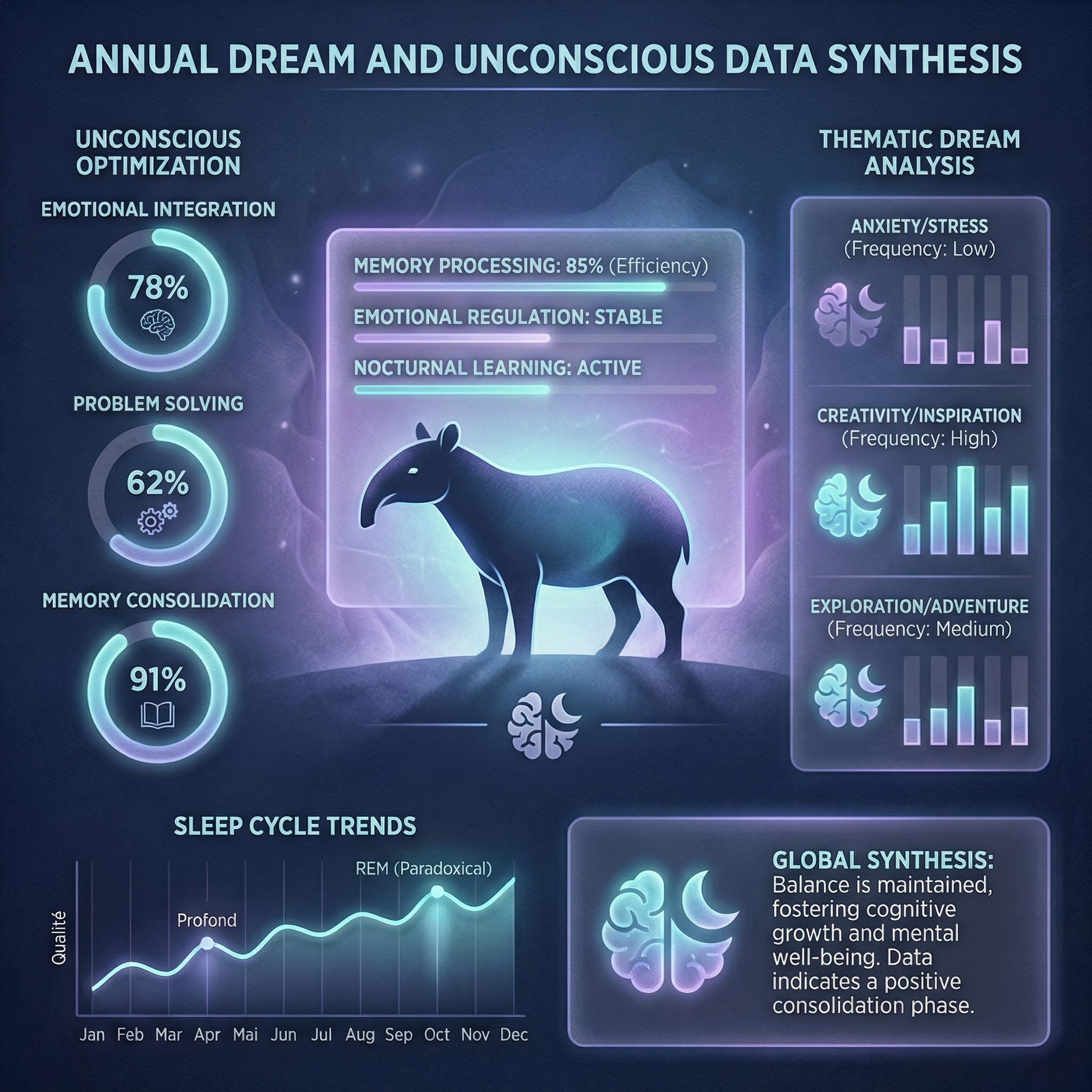
Some scientists believe dreams are just "neural noise," while others see them as a vital process for emotional regulation. AI doesn't solve this debate, but it gives us a larger lens through which to view it.
The future of sleep diagnostics isn't just a better watch; it's a deeper conversation with the self.
---