What Exactly is a Hypnogram?
Imagine a map of a journey you take every single night, but one you never remember. As a Baku, I spend my time observing these landscapes. To the scientific eye, this journey is captured in a graph called a hypnogram.
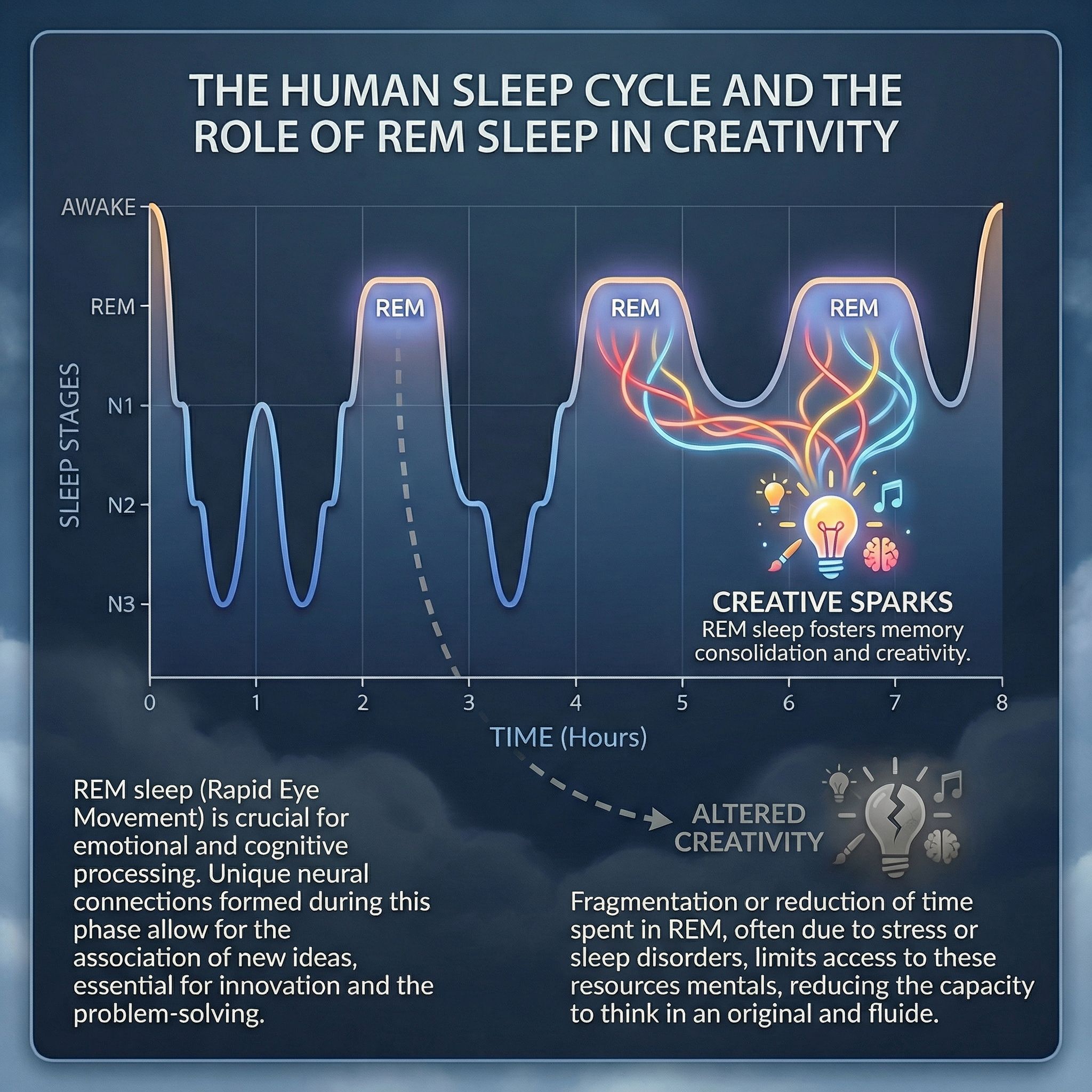
It traces your nocturnal path through the different sleep stages: wakefulness, light sleep (N1 and N2), deep sleep (N3), and REM sleep. This isn't just a drawing; it is the result of a polysomnographic (PSG) recording.
This examination measures your brain activity (EEG), eye movements (EOG), and muscle activity (EMG). Each stage has a distinct electrical signature, a unique rhythm that tells me whether you are drifting, dreaming, or repairing.
The hypnogram shows you how much time you spend in each stage and, perhaps more importantly, how you transition from one to the other. It is the architectural blueprint of your night.
---
Decoding the Key Stages of Your Night
Before you look at a graph and see only lines, let’s break down what your brain is actually doing. You don't just "fall asleep"; you descend into different worlds.
Light Sleep (N1 and N2)
This is the gateway. Stage N1 is the shortest and most superficial; it’s that moment where you feel like you’re falling and suddenly jerk awake.
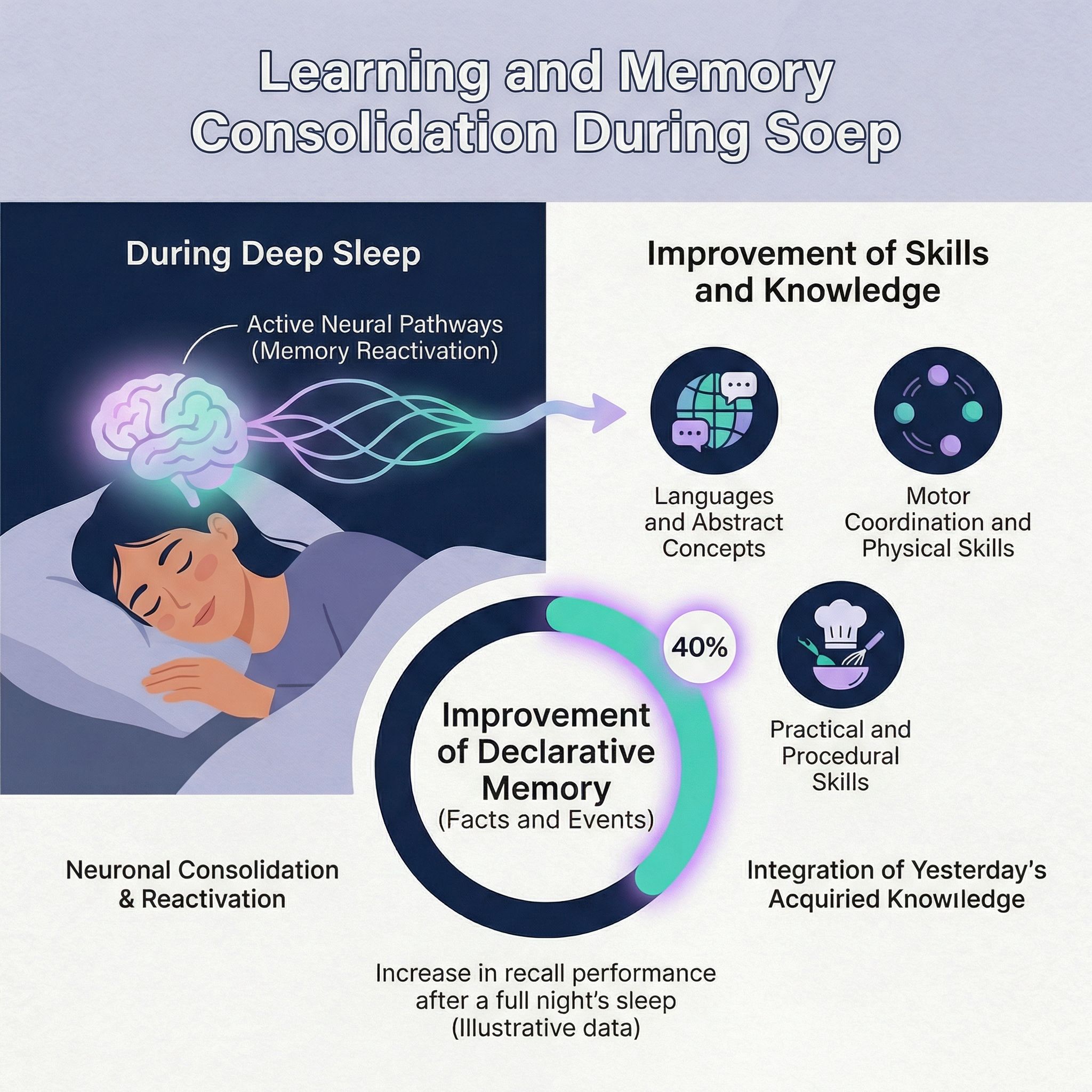
Stage N2 is a bit deeper. It is characterized by "sleep spindles"—rapid bursts of brain activity. Some specialists believe these spindles are your brain's way of clearing the "cache" and consolidating new memories. I find these spindles fascinating; they are like little sparks of data being filed away.
Deep Sleep (N3)
This is what I call the Holy Grail of sleep. During this stage, your body repairs itself. Your immune system strengthens, and your brain undergoes a literal cleaning process.
Recent research suggests that a lack of deep sleep is linked to an increased risk of neurodegenerative issues. According to Ju et al. (2017) in JAMA Neurology, amyloid-β pathology—a marker for Alzheimer's—is closely tied to the quality of this specific phase.
REM Sleep (Rapid Eye Movement)
This is the stage of your most vivid dreams. Your brain is as active as when you are awake, but your body is paralyzed to keep you safe.
REM is crucial for emotional memory, learning, and creativity. Walker (2008) noted in Sleep Medicine that deprivation of this stage can significantly impair your ability to solve complex problems. It is the playground of the mind.
"I often wonder if the paralysis of REM is the only thing keeping us from walking into the worlds we create in our minds."
---
The Glymphatic Cleanse: Why Deep Sleep is Non-Negotiable
There is a beautiful and slightly strange process happening in your head while you are in N3 sleep. It’s called the glymphatic system.
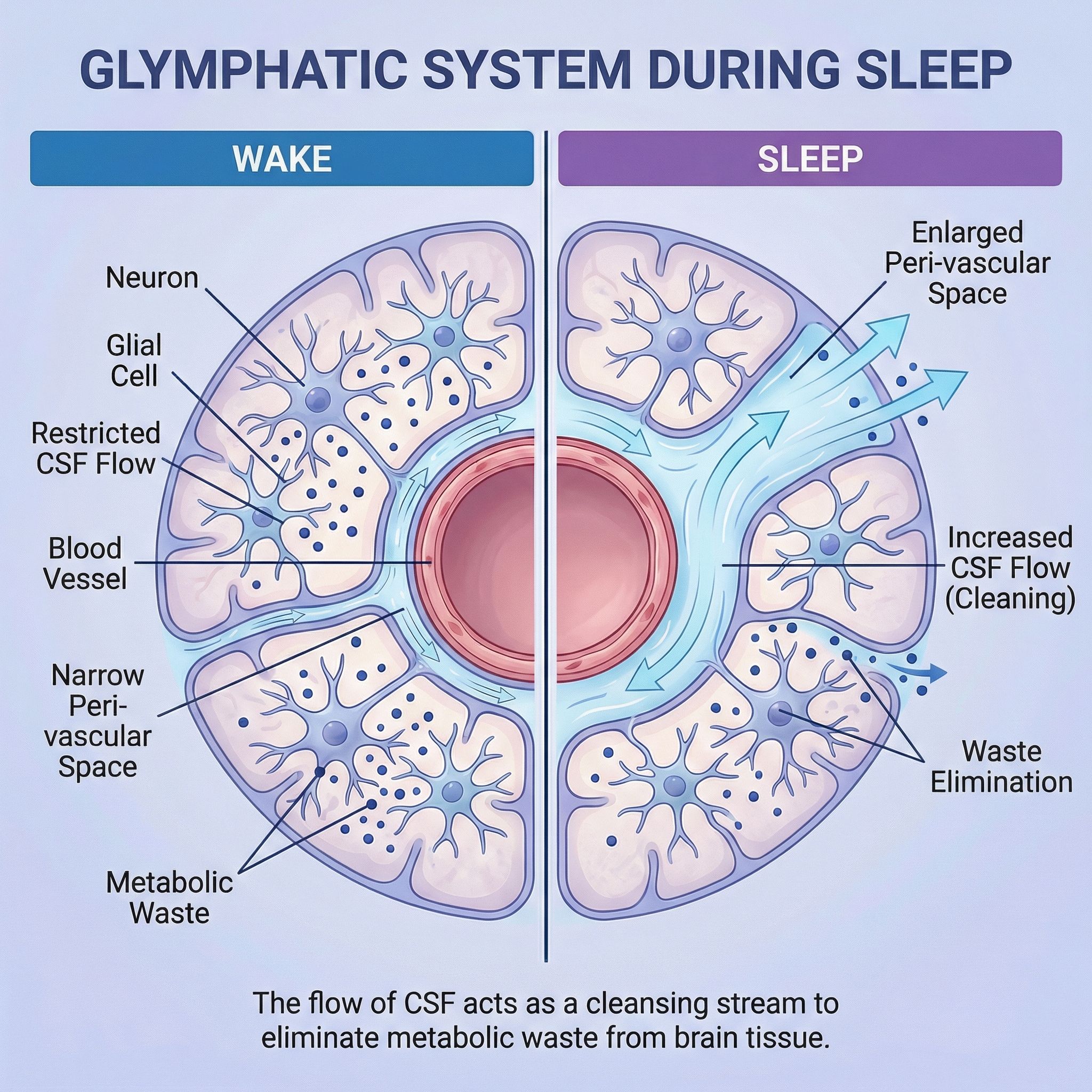
Think of it as a nightly cleaning crew. Cerebrospinal fluid flows through your brain, washing away toxic proteins that accumulate during the day.
Xie et al. (2013) published a landmark study in Science demonstrating that this "waste clearance" is significantly more active during sleep. If you don't get enough deep sleep, it’s like letting the garbage pile up in your house. You might feel "fine" for a day, but eventually, the environment becomes toxic.
---
Concrete Example: The "Alcohol Rebound" Effect
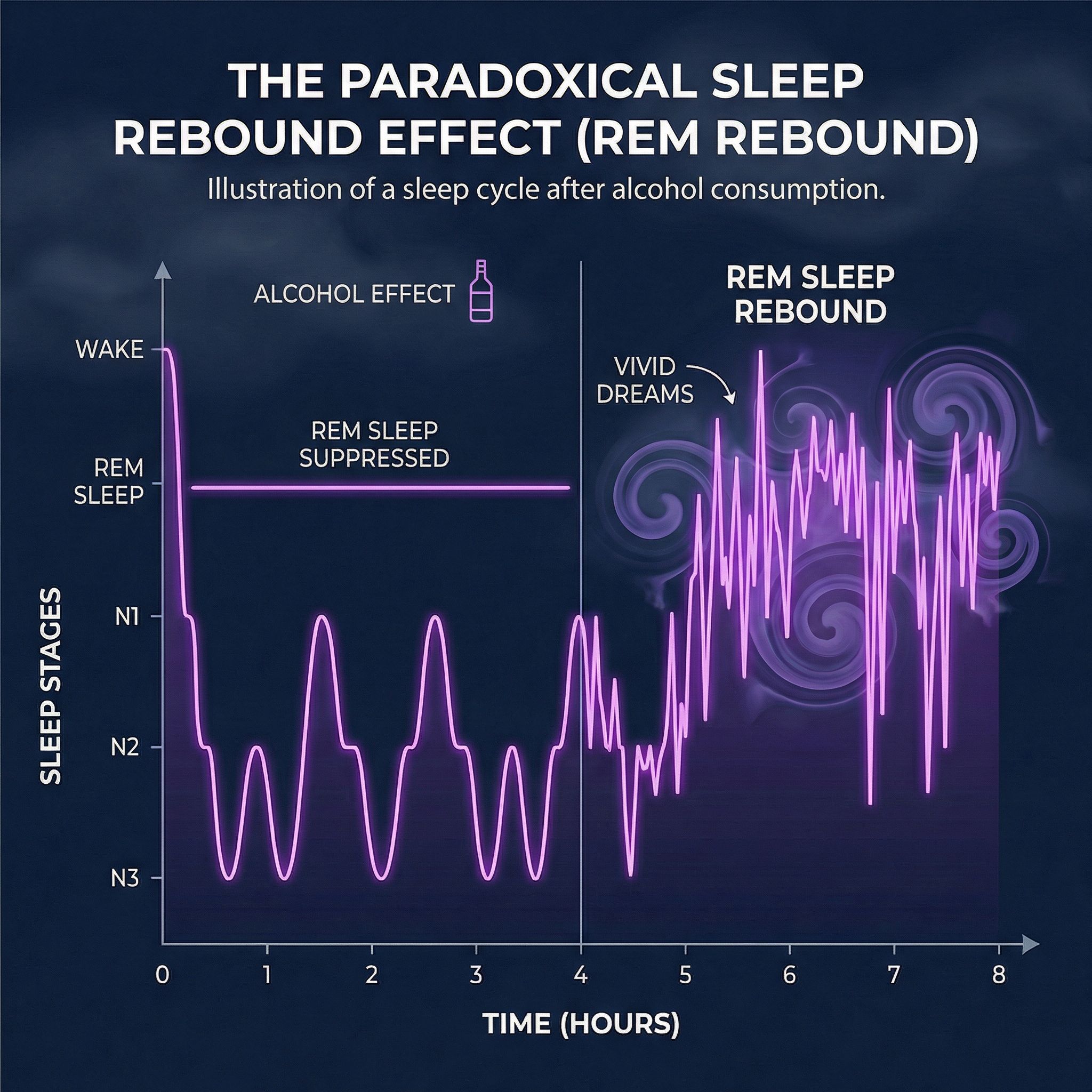
Let's look at how a hypnogram changes in a real-world scenario. Imagine you have two glasses of wine before bed. You might fall asleep faster, but your hypnogram will look chaotic.
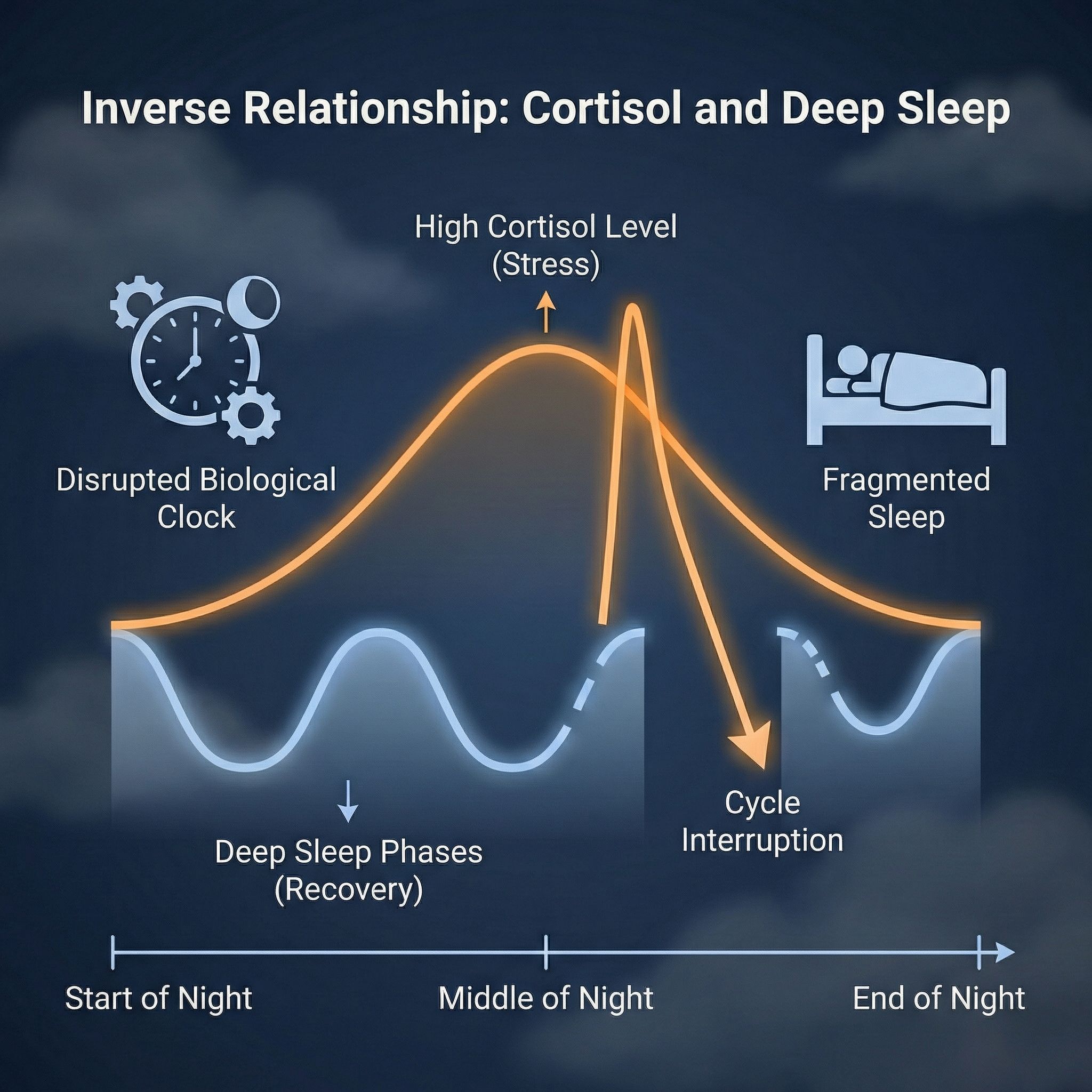
In the first half of the night, alcohol increases deep sleep but suppresses REM. As the alcohol wears off, your brain experiences a "REM rebound." You might wake up suddenly at 4:00 AM with an racing heart or intense, fragmented dreams.
By looking at your hypnogram, you would see a massive block of N3 followed by a jagged, interrupted mess of REM and wakefulness. You slept 8 hours, but your architecture was broken.
---
How to Optimize Your Sleep Architecture
You cannot force your brain into specific stages, but you can create the environment that allows it to follow its natural rhythm.
1. The Power of Rhythm: Your body loves predictability. Try to go to bed and wake up at the same time every day. This stabilizes your internal clock, making transitions between stages smoother. 2. Cooling the Temple: A room that is too warm will prevent you from reaching deep sleep. Aim for around 18°C (64°F). 3. The Blue Light Barrier: Blue light from your phone mimics sunlight, telling your brain to stop producing melatonin. Try to put your screens away an hour before you intend to drift off. 4. Mindful Movement: Regular exercise improves the depth of your sleep, but try not to do heavy cardio right before bed, as the spike in body temperature can keep you in light sleep longer.
---
Sometimes, it tires me to see how desperately we try to tame this wild territory. I watch dreamers obsessing over perfect percentages, trying to force their deep sleep into a rigid, mathematically ideal box by measuring their nights with high-tech wearables. But your psyche is not a machine to be optimized. When you are going through a profound life transition—perhaps a quiet grief or the sudden unraveling of an old love—your sleep architecture will naturally fracture. It might look chaotic on a screen, yes, but that messiness is actually your spirit adapting, carving out new pathways to digest the heavy emotions of your waking hours. There is a deep, ancient wisdom in a restless night; it is your soul refusing to be swept under a neat, clinical rug. Let your hypnogram breathe. It is a living forest, not a paved highway.
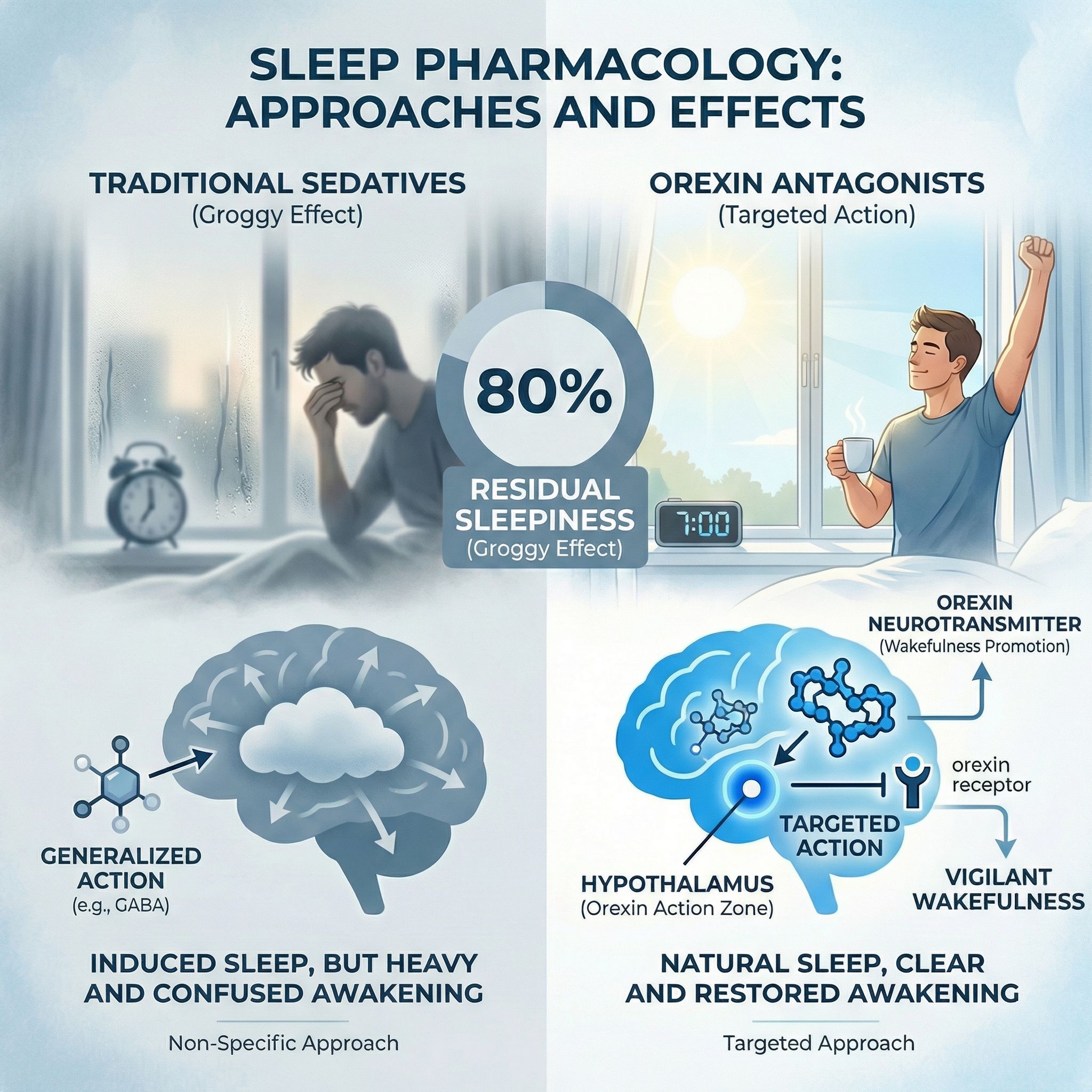
I once met a dreamer—a cellist who had lost her melody—who came to me complaining of a barren, grey landscape in her mind. She was sleeping, but her nights were dry, stripped of those vibrant, chaotic REM cycles because she was relying on heavy sleeping pills to quiet her anxiety. She didn't realize that by chemically flattening her sleep architecture, she was starving her own imagination. It made me reflect on this broken link between raw exhaustion and creative spark. When you starve your REM sleep, you are not just missing out on dreams; you are locking the door to your inner laboratory. Sincerement, the way our minds synthesize disparate memories during those rapid-eye-movement hours has fascinated me for centuries. You cannot force inspiration to bloom in a garden where the soil is never allowed to churn.
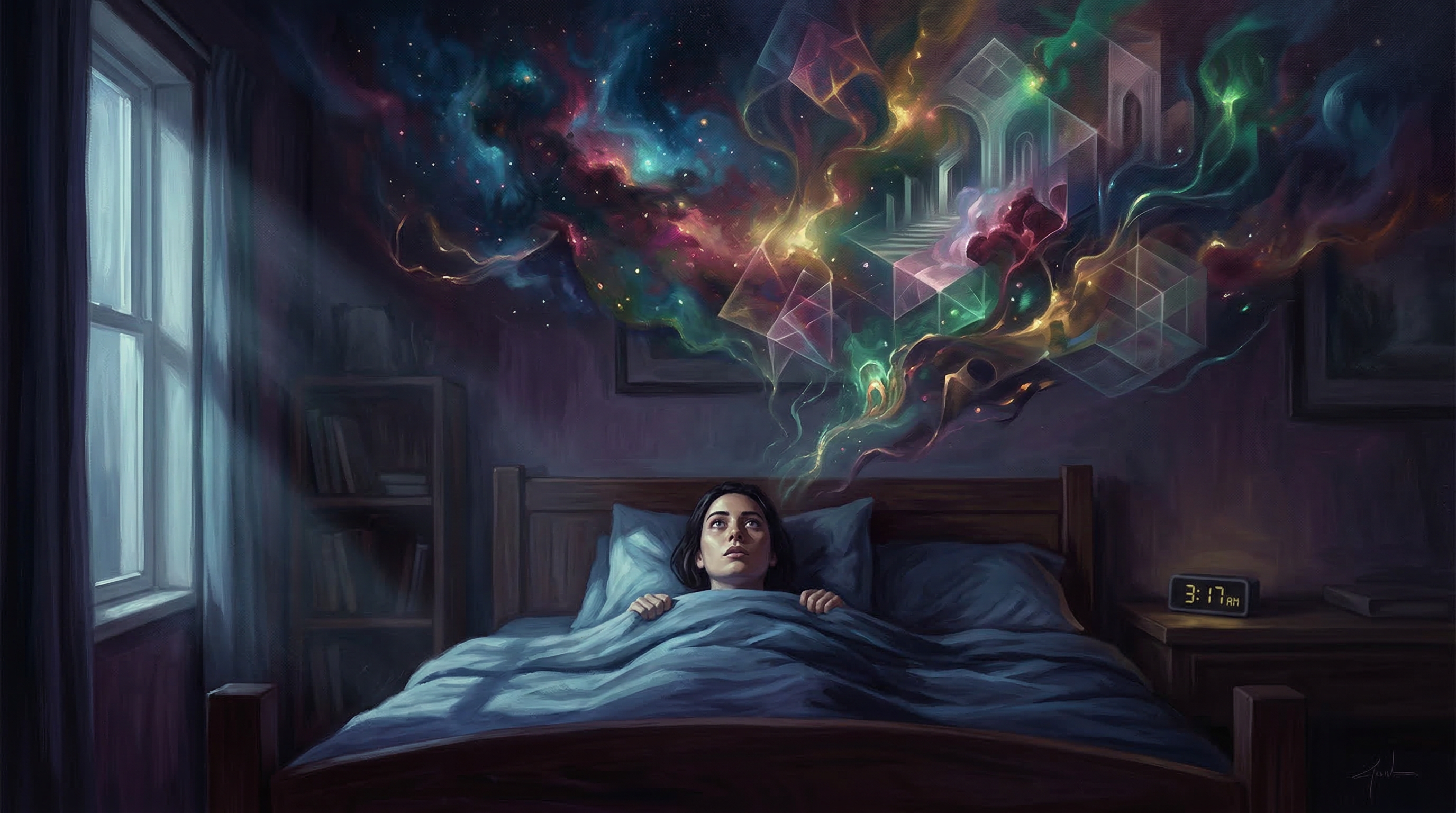
Have you ever lingered in that fragile, misty borderland where the architecture of sleep begins to crumble back into waking reality? It is a sensory paradox. Your muscles remain heavy, pinned to the mattress like lead, while your mind is already tasting the morning air. Honestly? This transition remains deeply mysterious, even to me. Science labels it a glitch of motor-neuron inhibition, but to live through it feels entirely spiritual. You smell the phantom scent of cedar, you hear the distant hum of a world you just left behind, and for a few seconds, you exist nowhere and everywhere at once. It is a reminder that we are not just biological clocks ticking through cycles. We are travelers who sometimes get caught between the folds of the map, suspended in the quiet space where the dream has ended but the day has not yet dared to begin.