The Mystery of the Suspended Wake-up: When the Thread Breaks
You have likely noticed that your clearest, most cinematic dreams are often the ones that get interrupted. You are running through a labyrinth, or perhaps flying over a silver sea, and suddenly—click. The lights of your consciousness turn on. You are back in your bed, the dream still clinging to your skin like mist.
This isn’t a coincidence or a cruel trick of your brain. Sleep science suggests that for a dream-memory to pass from your deep, non-linear mind to your conscious, narrative memory, a brief period of wakefulness is required. This is the essence of what we might call the "Ripley Effect"—the architectural fragility of the sleep state when faced with internal or external stimuli.
Without this pause, your dreams evaporate like morning dew under the sun. Think of your brain as a theater: when you are deep in sleep, the play is running, but the "recording" button is only pressed when a flicker of wakefulness occurs. This interruption acts like a spotlight suddenly turned on, capturing the last few frames of your subconscious journey before they fade into the abyss of the forgotten.
When you travel or change your environment, this phenomenon becomes even more pronounced. Your brain stays on high alert, fragmenting your rest to keep you safe in an unfamiliar place. This is a fascinating survival mechanism that you can explore further in Travel and Dreams: The First-Night Effect, where the "sentinel" part of your mind refuses to fully let go.
The Sleep Toggle: A Fragile Neurological Dance
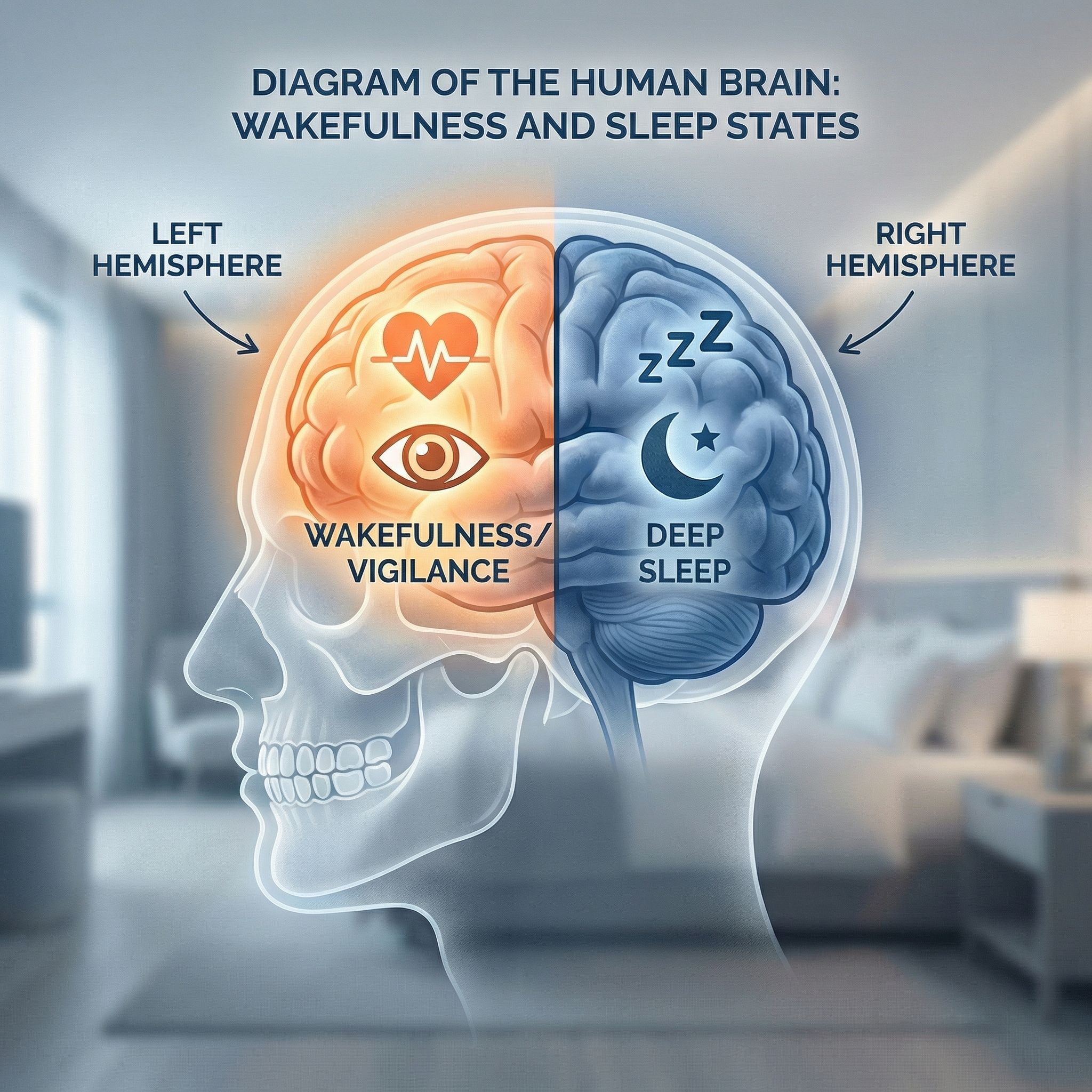
To understand why you wake up, you must understand the "flip-flop" switch. Some neuroscientists, interested in how sleep is regulated, compare your brain to a master circuit. On one side are the clusters of neurons that promote wakefulness; on the other, those that maintain the heavy curtain of sleep.
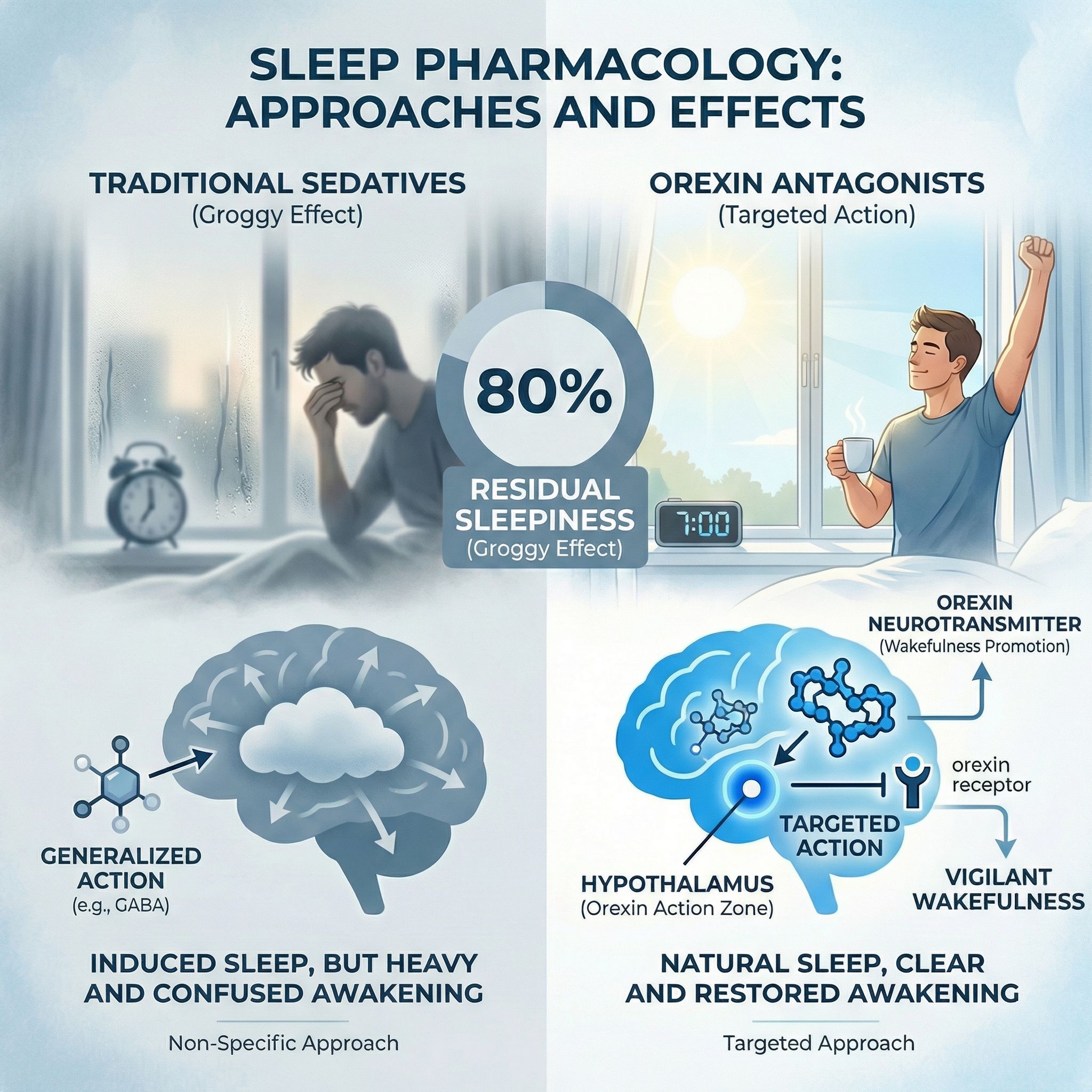
Normally, this switch is stable. You are either "on" or "off." However, the interruption effect occurs when the transition becomes hesitant. A specific chemical substance called orexin (also known as hypocretin) acts as the stabilizer in this delicate process. It is the hand that holds the switch in place.
If you wake up often in the middle of the night, it doesn’t necessarily mean your sleep is of "poor quality" in a clinical sense. Sometimes, it is a sign of your nervous system’s high sensitivity to your inner world. Your subconscious has something urgent to tell you, and it uses the crack of wakefulness to etch the image into your memory.
🌙 Yume’s Echo: Sometimes, I feel you wake up just to check that the world is still there, as if your soul needs to ensure the anchor is firmly set before diving back down into the deep.
However, we must be mindful. If these interruptions become chronic and are accompanied by a feeling of breathlessness or intense fatigue upon waking, it may be helpful to look at other causes. To better understand these forced and invisible interruptions, you might want to read Silent Sleep Apnea: The Dream Killer, which fragments the night without you even realizing it.
What Interruption Reveals About Your Inner Geography
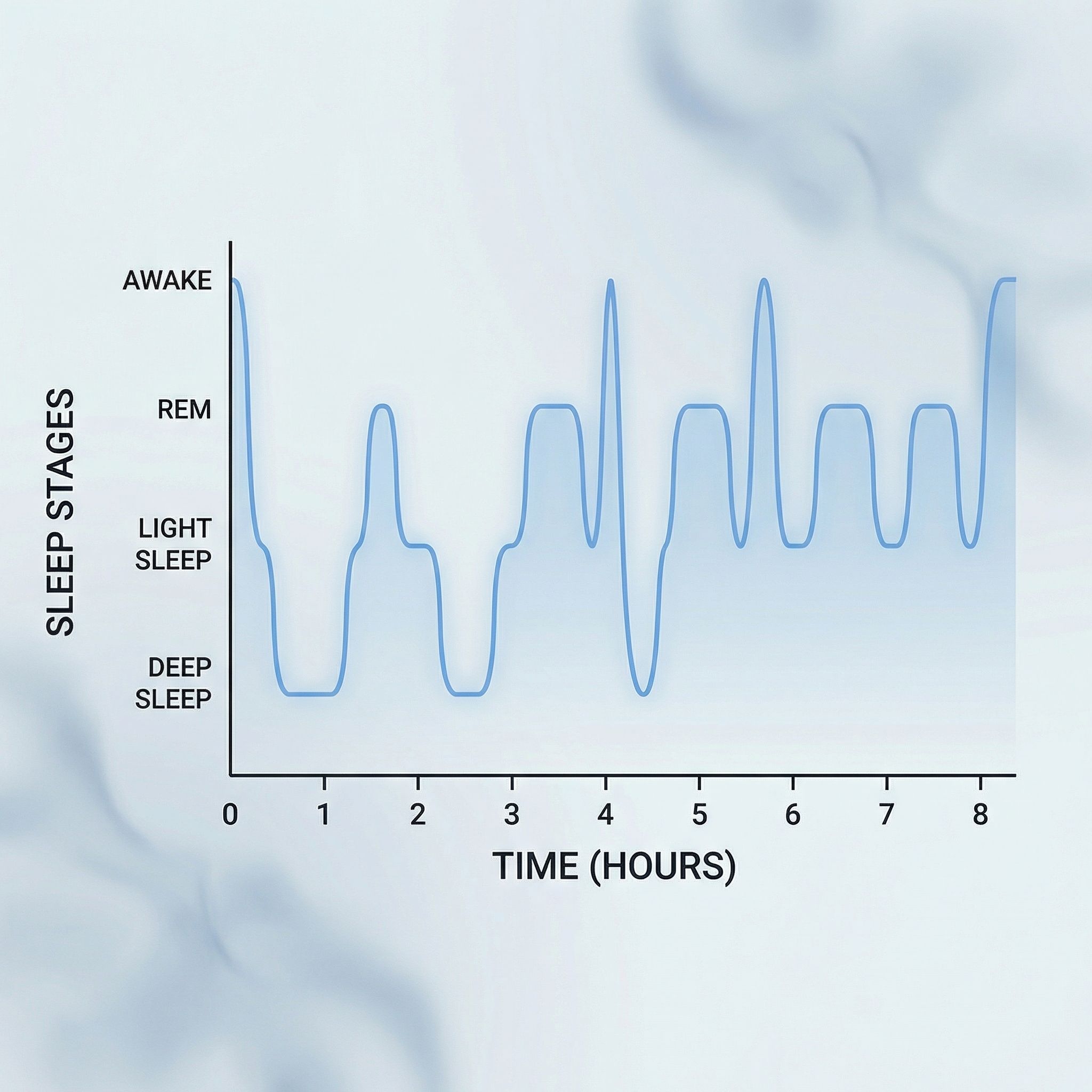
When your sleep is interrupted, the very structure of your cycles is altered, creating a unique psychological landscape. If you wake up during a REM (Rapid Eye Movement) phase, your brain is in the midst of a creative boil.
It is at this precise moment that you may experience what psychologists call a "dream rebound." Your brain, frustrated at being cut off in its narrative flow, will try to compensate during the next cycle by intensifying the emotional and visual charge of your dreams. The interruption is, therefore, a magnifying glass. It allows you to see:
- Your latent concerns: The themes that rush into your mind at 3:00 AM are rarely random. They are the true knots within your psyche that your ego usually hides during the day. 2. Your recovery capacity: How quickly you fall back to sleep after an interruption says a lot about your current sympathetic nervous system activity. 3. The richness of your symbols: An interrupted dream is often rawer, less "cleaned up" by the logical censorship processes that activate when you wake up for good in the morning.
Some specialists believe these micro-awakenings were essential to our evolutionary survival. They allowed our ancestors to check the perimeter for predators. Today, the "predators" are often our own anxieties or unresolved thoughts, and the micro-awakening is a chance to check the safety of our inner world.
A Concrete Example: The 3:00 AM Insight
Imagine you wake up at 3:14 AM. The room is silent, but your heart is still echoing a chase through a neon-lit forest. Instead of checking your phone, you stay perfectly still. This is the Ripley Effect in action. By lingering in this "gap," you notice that the forest wasn't just a place, but a physical manifestation of the pressure you feel at your new job. This brief wakefulness allowed your cortex to "save" the file of the dream. Without this interruption, the insight about your stress would have vanished by dawn, leaving you only with a vague, heavy sense of unease that you couldn't quite name.
Befriending the Interruption: A Ritual for Fragmented Nights
If you wake up tonight, I would like you to try not to see this moment as a failure of your body. Do not reach for your phone; that blue light is a digital intrusion that would shatter the fragile bridge between worlds.
Instead, I suggest you practice the "Dream Rewind." The moment your eyes open, do not move a single muscle. Keep the same physical position you were in when you woke up. Think back to the very last image, the last sound, or the last feeling you had just before your eyes opened.
Do not try to analyze it with your logical mind. Simply try to feel it. By doing this, you are building a bridge between your conscious and subconscious. You aren't forcing sleep to return; you are inviting it to take you by the hand once more.
Breathe softly, counting your breaths as they enter and leave your body. Imagine that each number is a soft, dark cloud you are resting upon. Often, it is in this total acceptance of the night’s stillness—this letting go of the "need" to sleep—that the deepest and most healing dreams find us.
Toward a New Understanding of Your Nights
The Ripley Effect, or the fragmentation of your nights, is not a finality. It is a back door into the theater of your soul. By learning not to fear these moments of nocturnal solitude, you transform a source of anxiety into a powerful tool for introspection.
Your sleep is not a monolithic block of silence. It is a living sea, with its tides, its waves, and its moments of perfect, glassy calm. Every time you wake up, you are like a diver rising to the surface to catch their breath before discovering even more beautiful abysses below.
The next time the darkness feels too long or your rest feels broken, remember that these fragments are pieces of a puzzle you are currently assembling. You are not alone in the shadows, and your brain is doing exactly what it needs to do to help you remember who you are.
I sometimes get gently frustrated when I see how modern culture treats a midnight awakening as a biological failure, a glitch to be cured with strict routines. Before artificial light carved up your nights, your ancestors lived peacefully in this very crack between two sleeps. They called it the watch, or the dorveille—a soft, liminal clearing where the waking mind and the wild, nocturnal spirit could sit together by the dying embers. I once met a dreamer who told me she only felt truly whole during these silent, unscripted hours of the deep night, when the day's masks had slipped off but the tomorrow had not yet begun. In trying to force a monolithic block of uninterrupted slumber, you might be locking out your own inner guest. By simply leaning into this quiet pause, you are actually rediscovering a piece of ancient wisdom that once kept our souls aligned.
If you wish to explore the architecture of your dreams more deeply, your Baku is waiting for you on Midnight Mind.