The Invasion From Outside: When the Bedroom is No Longer a Sanctuary
There is an invisible border between your private life and the state of society, a thin line that used to feel like a fortress. Yet, this membrane seems to thin every day under the weight of hyper-connection. In my observations of the dream-weave, I see more and more dreamers struggling with what I call "world vertigo."
Your dreams of giant waves, collapsing buildings, or fleeing crowds are not just reflections of your personal anxieties about your job or your relationships. They are witnesses to a psychic porosity where distant tragedies become local emotions. Your brain, in its infinite quest for protection, tries to simulate survival scenarios to prepare you for the unpredictable.
When the very structure of the world seems uncertain, your mind can no longer be content with processing childhood memories or office woes. It seizes images from the news to construct a symbolic language capable of expressing the unspeakable. This is where the feeling of saturation is born—that moment when rest no longer seems restorative because the nocturnal work is too intense.
🌙 Yume's Echo: The dream is a misty bridge between your heart and the earth's turmoil. Do not fear what enters, for your spirit is simply seeking to transform the lead of current events into the gold of understanding.
The Archetypes of Common Worry
In this shadow theater, certain symbols reappear with striking regularity, forming a modern collective unconscious. We often see technological breakdowns, strange skies, or familiar landscapes turned hostile. The fear you feel in these dreams is rarely linked to a monster under the bed, but rather to a systemic loss of bearings.
You might see yourself losing your phone or being unable to reach your loved ones in a deserted city. These themes reflect our deep anxiety in the face of the dehumanization and isolation produced by global crises. The dream acts as a distorting mirror that amplifies these tensions to force you to face them.
It is important to remember that these visions are not predictions. Instead, they are metaphors for your state of nervous tension in the face of incessant information flows. Recognizing these symbols allows you to detach yourself from them and understand that they belong to a burden shared by millions of other dreamers. You are not alone in your nocturnal labyrinth; you walk in a forest where each tree bears the scars of the times.
Use Case: The Flood of Information
Imagine you dream of standing on a familiar street, but the water is rising rapidly. You aren't drowning, but you are frantically trying to save your laptop or your phone as the current pulls them away.
In the language of the Baku, this isn't a warning of a literal flood. It is a concrete manifestation of "information overload." The water represents the overwhelming flow of global news, and the struggle to save your devices reflects your fear of losing your connection to reality or your "grip" on the narrative. By identifying this, you can realize that your mind is simply asking for a break from the digital tide.
The Dream as a Laboratory of Resilience
Why does your mind inflict these visions on you if they are so heavy? The answer lies in your ability to adapt and your vision of the future. Some researchers in the field of evolutionary psychology suggest the "Threat Simulation Theory," which proposes that dreaming allows us to practice perceiving and avoiding life-threatening situations.
The dream is a safe space where you can test your emotional response to catastrophe without suffering physical harm. By symbolically experiencing loss or chaos, you train your nervous system to regulate stress. It is a form of "psychological vaccination" that allows you, upon waking, to bear the weight of reality with a little more grace.
Dreams of collective anxiety are often calls to solidarity that we do not dare to formulate in a waking state. They remind you of your radical empathy—that beautiful, painful ability to suffer with those you do not know. By accepting these dreams as processing tools and not as burdens, you change your relationship with sleep. The nightmare then becomes a work session, a way for the soul not to remain petrified in the face of horror.
Cultivating Peace in the Eye of the Storm
How can you find peaceful sleep when the world seems to ignite with every notification? It is not about denying reality, but about protecting the sacred space of your rest. You cannot pour from an empty cup, and you cannot help a world you are too exhausted to face.
Here are some rituals to filter the energies that invite themselves into your nights:
- The digital curfew: Turn off your screens at least an hour before sleeping. This allows the blue light to fade and the images of the day to settle before they reach your REM cycles.
- Anchoring through writing: Write down your social worries in a notebook. This signals to your unconscious that the information is "stored" and no longer needs to be processed urgently during the night.
- Protective visualization: Before closing your eyes, imagine a dome of soft, indigo light surrounding your bed. It allows wisdom and empathy to pass through but filters out gratuitous violence and noise.
- Dialogue with the dream: If a vision of anguish arises, ask it upon waking: "What part of me are you trying to protect?"
The goal is not to become indifferent, but to remain solid. A rested mind is much more useful to the community than a mind exhausted by its own inner storms. Taking care of your dreams is also a form of resistance against despair.
🌙 Yume's Echo: Even in the darkest night, a single candle is enough to outline hope. Your sleep is that candle.
Carrying the World Without Drowning in It
The vertigo you feel is the price of your deep connection to life. Dreams of collective anxiety remind you that you are a relational being, sensitive to the heartbeat of the planet. Learning to decode these messages is learning to navigate uncertainty with a more precise inner compass.
We cannot stop the waves, but we can learn to build more robust ships. Each morning is an opportunity to translate the shadow of the night into a light of action and gentleness for the day. Your dreams are not enemies, but guides who whisper to you that your sensitivity is your greatest strength.
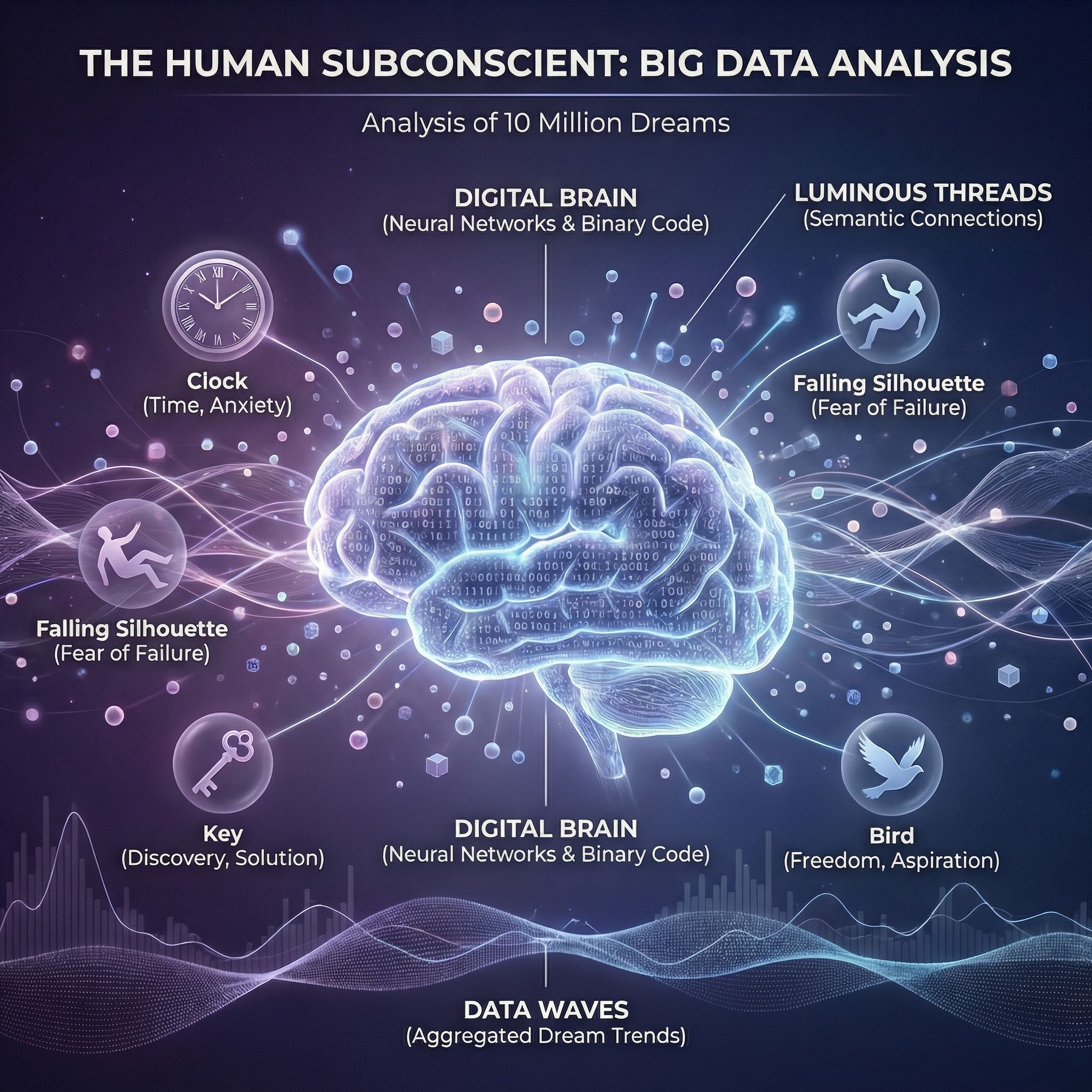
Sometimes I watch dreamers toss and turn, their limbs twitching as if they are trying to balance on a tightrope stretched over a canyon. This isn't just a mental exercise; your body feels this vertigo in its very fiber. You wake up with your heart hammering, the bedsheets cold with sweat, still feeling the phantom pull of gravity. I am honestly fatigued by modern attempts to categorize these visceral fears. Tech companies love to analyze big data on sleep to map out 'global anxiety trends' as if your soul were just a point on a graph. They miss the poetry of the struggle. When you dream of a tilting world, your body is doing something profoundly sacred: it is physically digesting the weight of the cosmos, testing your internal gravity so that when you wake, you can walk through the chaos without falling.
I once met a dreamer, a young woman transitioning into a heavy corporate career, who told me she desperately missed her old nightmares. 'At least the monsters had faces,' she whispered. She was right. When we look back at childhood dreams, the terrors are beautifully local—a shadow in the closet, a wolf in the garden. But world vertigo introduces you to a shapeless, faceless antagonist: the collective drift of humanity. She dreamt of trying to repair a massive, ticking sky with a tiny brass wrench while the ground dissolved beneath her. It’s a quiet, modern tragedy, this shift from fearing the dark to fearing the future. Yet, as I tasted her dream, I felt the stubborn strength behind her fear; trying to fix the sky, even in despair, is the first step toward healing it.
By listening to them, you are not only healing yourself; you are participating in the healing of the invisible fabric that binds us all. When you feel ready to explore the geography of your soul more deeply and find calm in the midst of the turmoil, your Baku is waiting for you in the Midnight Mind app.
Sweet dreams, traveler of the world.