The Aboriginal Dreamtime: Navigating Your Invisible Cartography
For the Indigenous peoples of Australia, the concept of Dreamtime—or Alcheringa—is far more than a collection of stories about the past. It is a parallel, eternal dimension that exists right now, just beneath the surface of your waking life. In this tradition, you don't just "have" a dream; you enter a territory that is as real and structured as the physical world.
When you sleep, you are not escaping reality. Instead, you are returning to the source. The ancestors are said to have "sung" the world into existence, creating sacred paths known as songlines. For a dreamer, navigating these paths is a way to maintain the balance of the world.
If you adopt this perspective, your relationship with the night changes. You begin to see your mental landscapes—those strange, shifting scenes of your REM cycles—as a form of inner geography. This tradition teaches you that your nocturnal visions carry a weight of responsibility. What you see and resolve in your sleep has a direct impact on how you carry yourself during the day.
🌙 Sora's Echo: The dream is not an escape from reality, but the whisper of the very structure of the world reminding you of who you are when your eyes finally close.
---
Sacred Incubation: The Art of Healing Through Imagery
In Ancient Greece, the night was a sanctuary for healing. If you were suffering from an ailment or a heavy heart, you might have traveled to a temple of Asclepius, the god of medicine. There, you would practice incubation—the deliberate act of sleeping in a sacred space to receive a curative dream.
The process was rigorous. You would undergo purification rituals, perhaps fasting or bathing, to signal to your subconscious that you were ready to receive. Then, you would lie down in the abaton, a holy portico, with the specific intention of meeting the god or receiving a symbolic vision of your cure.
While we no longer sleep in marble temples, the psychological mechanism remains valid. Modern research into "dream incubation" suggests that the thoughts and intentions you hold in the moments before sleep—the hypnagogic state—heavily influence the content of your dreams. By setting a clear, gentle intention, you are essentially preparing your mind to work on a specific problem while you rest.
This approach reminds you that the quality of your sleep environment is not just about ergonomics or temperature. It is about the "sanctity" of the space. When you clear your room of distractions and blue light, you are creating your own modern abaton.
---
The Soul’s Desire: Iroquois Wisdom and the Unconscious
Long before the birth of modern psychoanalysis, the Iroquois (Haudenosaunee) nations developed a sophisticated understanding of the human psyche. They believed that dreams were the primary way the "soul" communicated its hidden desires—desires that the conscious mind might be too proud or too busy to acknowledge.
In this culture, ignoring a dream was considered dangerous. It was believed that an unfulfilled dream could lead to physical illness or a deep sense of spiritual "unrest." The community took these visions seriously; if you dreamed of a specific gift or a ritual act, your peers would often help you enact it in the waking world to release the psychic tension.
This mirrors what many psychologists today call emotional regulation. Your dreams allow you to "digest" the complex feelings you couldn't process during the day. By paying attention to these "soul desires," you are practicing a form of deep self-care. You are listening to the parts of yourself that usually remain silent.
---
The Science of the Sacred: Bridging Myth and Biology
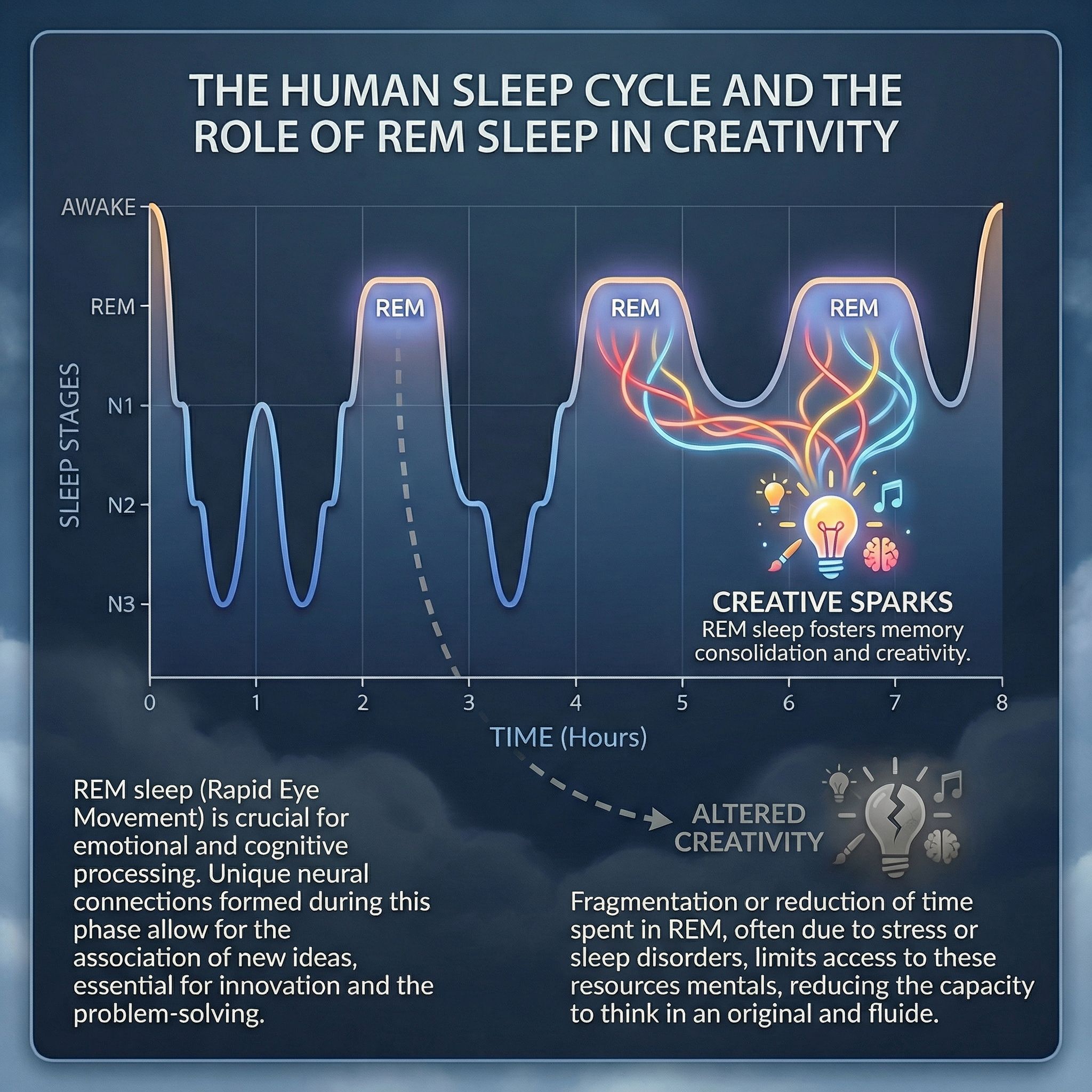
It is fascinating to observe how modern neuroscience is beginning to provide a biological framework for these ancient intuitions. We now know that during REM sleep, your brain is highly active, but it is stripped of norepinephrine—a stress-related chemical. This creates a "safe space" where you can re-process traumatic or emotional memories without the accompanying physical stress response.
Some specialists in sleep science suggest that dreaming serves as a form of "overnight therapy." When the ancients spoke of meeting gods or ancestors, they were perhaps personifying the intense internal dialogue that happens when your brain's prefrontal cortex relaxes its grip, allowing more creative and emotional centers to take the lead.
The loss of darkness in our modern world, caused by artificial lighting and constant connectivity, has severed our link to this natural process. When you stay awake scrolling through a screen, you are effectively silencing the "silent teacher" that is the night. Reclaiming the night means reclaiming your ability to introspect.
- Emotional Processing: Dreaming helps you "file away" the emotional intensity of your experiences.
- Creativity: Your brain makes unusual connections during sleep, which is why you often wake up with the solution to a problem you couldn't solve the day before.
- Memory Consolidation: Sleep is when your brain decides what information is worth keeping and what can be discarded.
---
Concrete Example: Practicing Modern Incubation
Imagine you are facing a difficult career choice. Instead of ruminating on it until 2 AM, you decide to use a simplified version of the Greek incubation ritual.
An hour before bed, you put away your phone. You dim the lights and perhaps light a candle or use a specific scent, like lavender, to signal the transition. As you lie in bed, you don't try to solve the problem. Instead, you phrase it as a gentle request to your unconscious: "Show me the path that aligns with my values."
You don't force an answer. You simply hold the question as you drift off. In the morning, you don't jump out of bed immediately. You stay still for two minutes, catching the fading threads of your dreams. Even if you don't see a "god" giving you a map, you might find that your emotional state regarding the decision has shifted from anxiety to a quiet, intuitive certainty.
---
Recreating Your Own Nocturnal Ritual
You don't need to live in a forest or a temple to honor the wisdom of the night. You can start tonight by integrating small, intentional shifts into your routine.
1. The Threshold: Create a clear ritual that separates day from night. This could be as simple as washing your face with the intention of "washing away" the day's stress. 2. The Dream Journal: Treat your dreams with the respect the Iroquois did. Write them down without judging them. You can learn more about this in our guide on how to start a dream journal. 3. The Question: Use the final moments of wakefulness to plant a seed of curiosity rather than a seed of worry. 4. The Observation: Look for recurring symbols. Are they related to your personal history or something more universal? Understanding the science of REM sleep can help you see why these symbols appear.
By paying this level of attention to your nights, you are doing more than just improving your sleep hygiene. You are restoring a broken dialogue with a part of yourself that holds the keys to your fulfillment. The night is not a void; it is a landscape waiting for you to explore it.
Sometimes, I get gently exasperated by how we expect ancient wisdom to arrive with golden halos and booming voices, like some cinematic oracle. I once met a dreamer who was terribly disappointed because her grand dream of 'spiritual guidance' featured only an elderly woman sweeping dust in a small, windowless kitchen. She wanted a glowing scroll; she got a broom. But that is the beauty of the unconscious, isn't it? The deepest intelligence of your lineage rarely lectures you. It manifests in the mundane, sometimes taking the shape of a quiet grandparent sitting in absolute silence, waiting for you to notice the space between thoughts. These figures don't hand you a ready-made map; they simply remind you of the slow rhythm of survival. Do not look for burning bushes in your sleep. Often, the oldest truth is found in the dust.