---
The Essence of Nachtträume: More Than Just a Dream
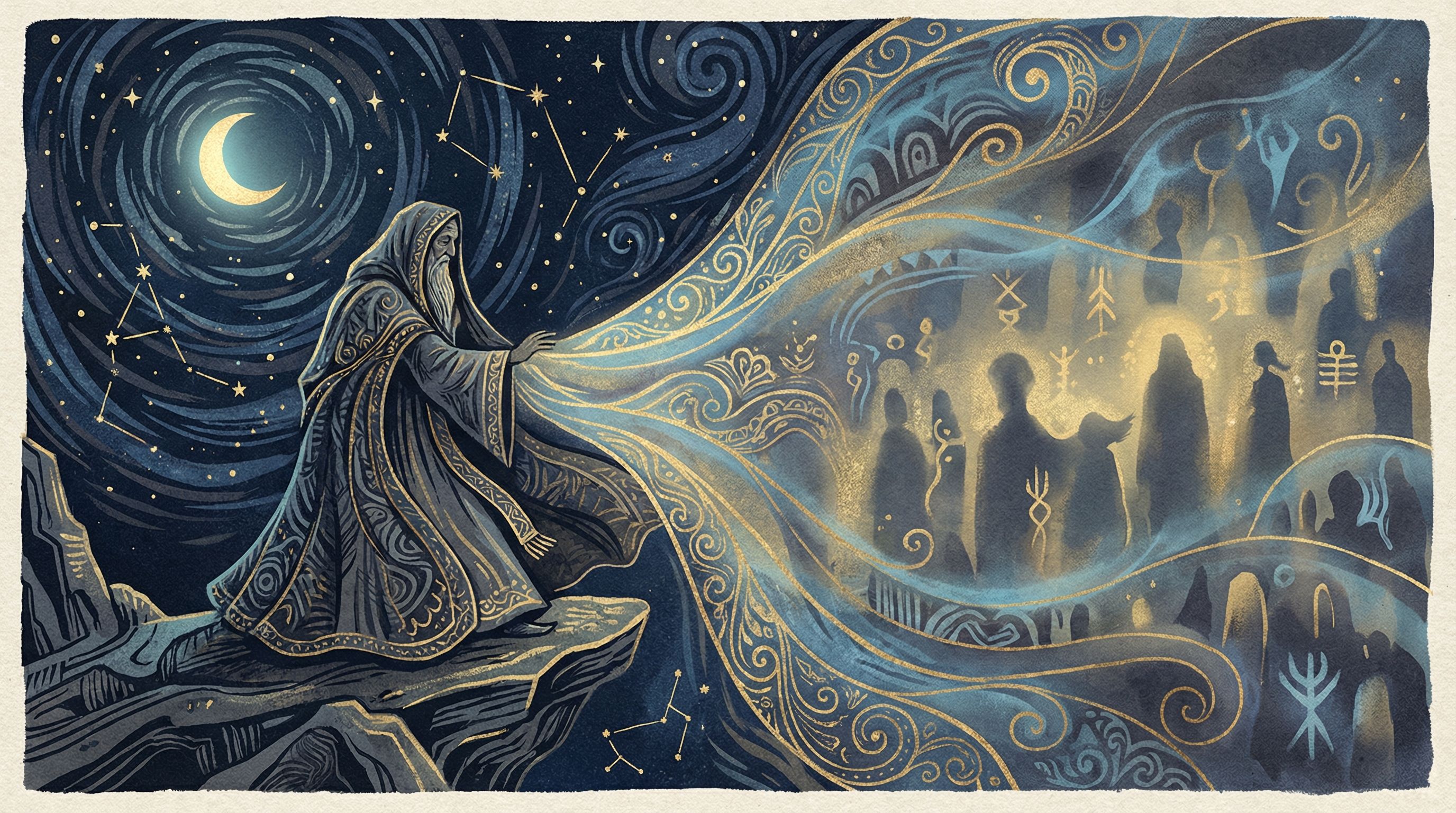
When you hear the word "dream," you might think of fleeting images or nonsensical fragments that vanish with your morning coffee. But Nachtträume—a term borrowed from the poetic depth of the German language—are different. They are the "night dreams" that seize the stage of your mind with an almost cinematic force.
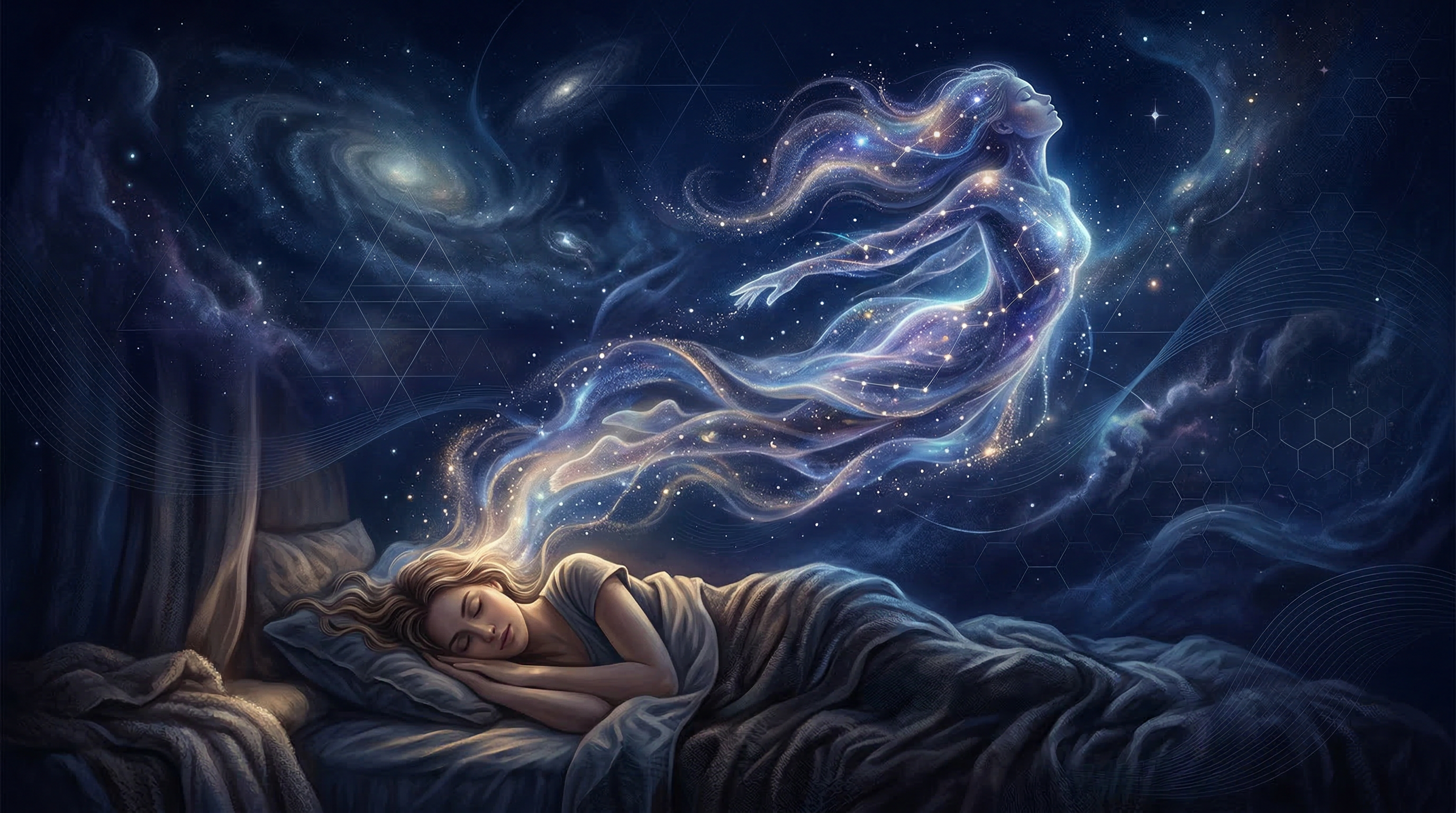
As a Baku, I have wandered through thousands of these nocturnal landscapes. I have seen how they differ from the light, airy dreams of a nap. These are deep-sea explorations. They are the moments when your subconscious decides to stop whispering and instead proclaims, loud and clear, what moves it.
In these instances, you are no longer just a sleeper. You become both the spectator and the actor in a play where you are the sole author, even if you don't yet recognize the script. It is a sacred space where the boundaries of the possible are rewritten by your own internal logic.
---
The Biological Stage: Why Your Brain Creates Such Vivid Scenes
You might wonder why some dreams feel like a blurry polaroid while others feel like a high-definition film. The secret lies in the unique architecture of your sleeping brain. When you enter a Nachttraum, the precision of the details is often staggering: the texture of a velvet garment, the exact temperature of a mountain breeze, or the weight of your own body.
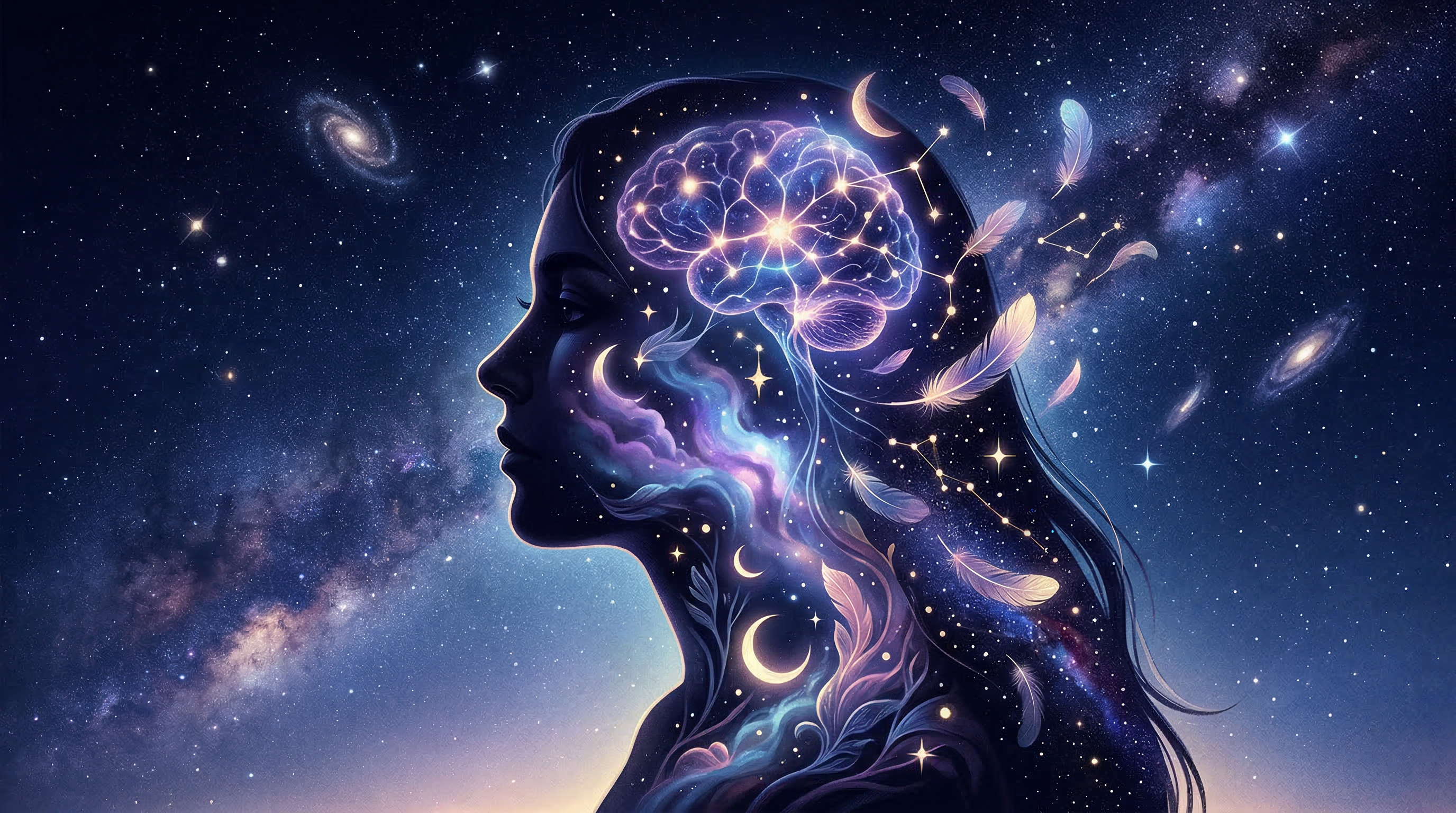
Research suggests that this intensity is linked to heightened activity in the amygdala and the hippocampus—the regions responsible for emotions and memory. Meanwhile, the prefrontal cortex, which usually manages your logic and sense of time, steps into the background.
This unique neurobiological configuration allows the dream to take on a "theatrical" dimension. Without the "logic police" on duty, your mind is free to render emotions as physical landscapes. Your body is not left behind in this process; it becomes the primary instrument of the narrative.
To better understand how your own image transforms under the spotlights of your subconscious, you might find it helpful to explore The Oneiric Body: When Flesh Becomes Symbol in Our Dreams. You will discover that every physical sensation you feel in the dark is a coded message from your inner self.
---
Concrete Example: The Architecture of a Cinematic Dream
Imagine you find yourself standing in a vast, ancient library. You can smell the dust and the old parchment. You feel the cool marble floor beneath your bare feet. This is a classic Nachttraum.
In this scenario, the library isn't just a building. The height of the shelves might represent the vastness of the knowledge you feel you haven't yet mastered. The specific book you reach for, even if the title is in a language you don't speak, represents a hidden part of your history.
The sensory "realness"—the weight of the book, the flickering of a candle—is your brain's way of forcing you to pay attention. It is as if your subconscious is saying: "This matters. Don't look away." By making the dream feel "real," your mind ensures that the emotional lesson sticks with you long after you wake up.
---
Navigating the Symbols: When Your Subconscious Speaks in Images
On this nocturnal stage, you are rarely alone. Figures appear—sometimes familiar, sometimes terrifying, often enigmatic. These characters are not there to frighten you or to predict the future. Instead, they embody the forces that dwell within your mind every day.
This is where symbolism truly finds its meaning. An animal, for example, is never just an animal in the world of Nachtträume. It is an emotion that has found a form to speak to you. It is a visual metaphor for a feeling that is too complex for words.
If, during an act of your nightly play, you encounter a reptile slithering in the shadows, do not turn away immediately. The meaning of its presence is often more nuanced than it seems, as discussed in the exploration of The Snake: Healing or Danger?. Every creature is an actor waiting for you to understand their lines.
🌙 Yume’s Echo: Sometimes, the silence of a dream character says far more than any dialogue; it is in this stillness that your intuition can finally express itself.
---
The Science of Emotional Regulation: A Dress Rehearsal for Life
One might think these spectacular dreams occur at any time, but they favor the REM (Rapid Eye Movement) phase of sleep. It is during this period that your brain activity is closest to wakefulness, creating a fragile bridge between your memories and your desires.
Many sleep specialists believe these intense dreams play a crucial role in emotional regulation. By staging your fears or hopes, your mind practices managing them in a secure environment—the safety of your bed. It is a form of "threat simulation" or "emotional processing" that helps you navigate the complexities of your waking life.
If you wake up with a racing heart or a sense of profound fulfillment, it is because the play that just unfolded touched a sensitive chord in your psyche. Your subconscious never wastes its energy building elaborate scenery for nothing. It is working, even while you rest, to keep your emotional world in balance.
---
The Evening Anchor: A Ritual to Honor Your Nightly Travels
If you feel as though these scenes escape you the moment you open your eyes, know that you can learn to be a better spectator. The goal is not to control the dream—that would be like trying to direct a play while you are also the lead actor—but to remember it so you may better honor it.
Tonight, before you slip beneath your sheets, I suggest a small ritual of connection. This is not a task, but an invitation. Place a notebook and a pen on your nightstand. Do not force yourself to write entire pages; simply commit to noting a single word, a single color, or a single emotion upon waking.
Here is how you can practice tonight:
- Lie down and take three deep, slow breaths, letting the tension of the day melt into the mattress.
- Visualize a heavy, velvet theater curtain gently closing on your day.
- Say to yourself inwardly: "I am ready to see what the night has to show me."
By doing this, you set a gentle intention—an invitation for your mind to open the doors to its most beautiful and profound productions. You are telling your subconscious that you are listening.
---
Toward a New Way of Listening to Your Shadows
Learning to appreciate your Nachtträume means accepting that your mind possesses a richness that exceeds your immediate understanding. It is an invitation to curiosity rather than worry. When a dream is intense, it is not a warning of a literal event, but a reflection of your internal depth.
As I travel through the mists of sleep, I often marvel at the complexity of the stories you tell yourself without even knowing it. Every dream is a letter you send to yourself, written in a language you speak fluently in the dark, even if it feels foreign in the light of day.
Do not feel pressured to analyze everything with your waking logic. Sometimes, it is enough to simply feel the beauty or the melancholy of a dream for its healing work to take place within you. Symbols are balms, and your nights are the physicians of your soul.
If you wish to explore your dreams more deeply, your Baku is waiting for you.
I once met a dreamer who was haunted by a recurring Nachttraum of a heavy, brass key that she could never turn in its lock. She was terrified of it, convinced it was a bad omen. But these intense scenes aren't threats; they are mirrors. It turned out she was on the verge of leaving a career she had spent fifteen years building. Her mind wasn't trying to scare her; it was trying to prepare her for the threshold. When you experience these heavy, hyper-realistic dreams, they often signal a profound life transition. Your subconscious uses the intense weight of the Nachttraum to ground you, forcing you to rehearse the emotions of change before they manifest in your waking life. It makes me a bit weary when modern dream dictionaries reduce these rich theaters to simple signs of stress. There is a sacred purpose to why we dream with such terrifying clarity—it is your soul’s way of ensuring you do not sleepwalk through your own evolution.