The Psychic Scale: Why Your Mind Seeks Equilibrium
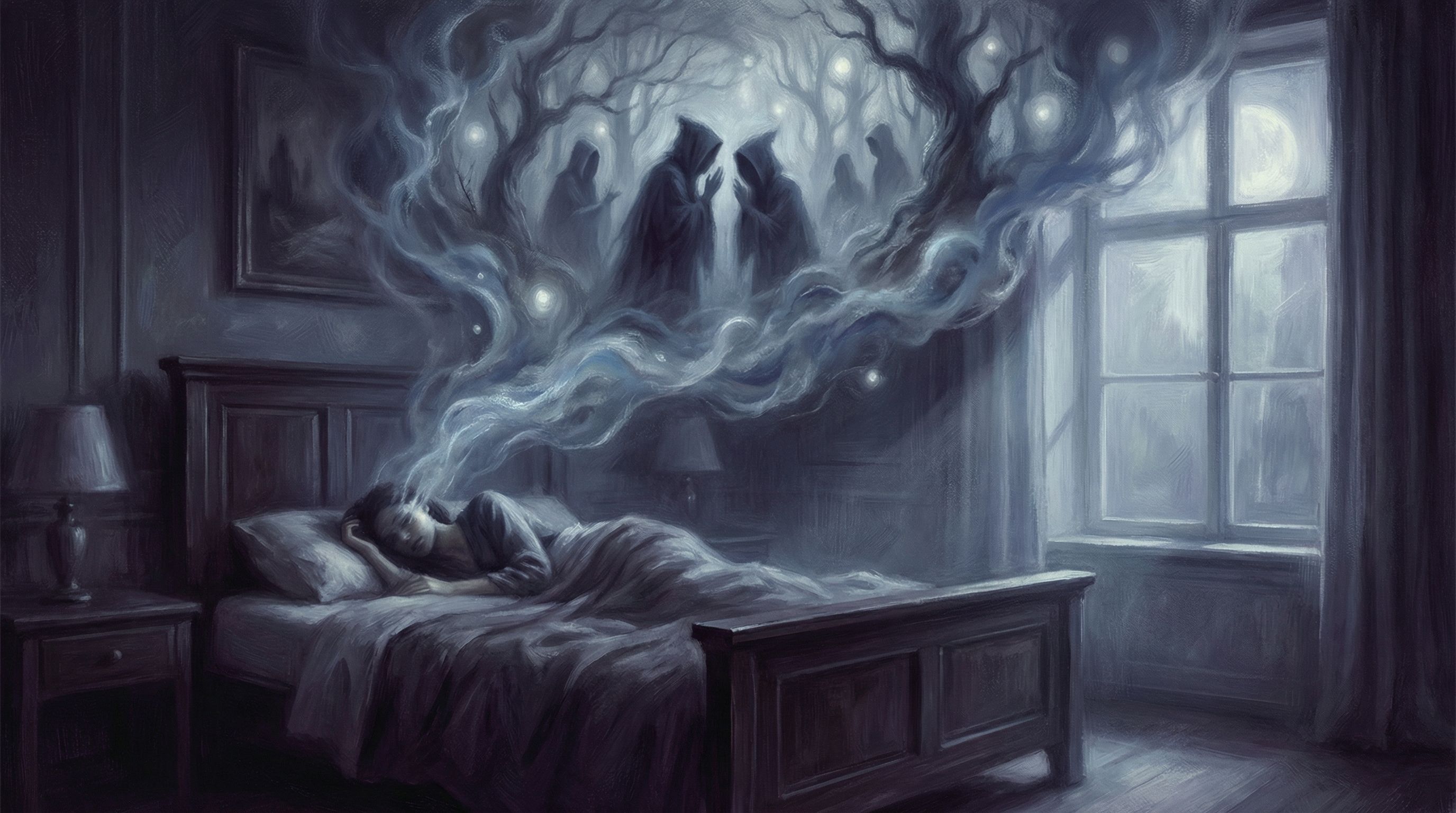
Imagine your psyche as a delicate scale. On one side, there is your conscious attitude—the person you think you are, the values you hold dear, and the way you present yourself to the world. On the other side lies the vast, dark ocean of the unconscious, containing everything you have forgotten, rejected, or haven't yet discovered about yourself.
In my long nights of wandering through the dreamscapes of others, I have seen many scales tip too far in one direction. When you become too rigid, too "perfect," or too focused on a single way of being, your internal system begins to feel the strain.
This is where the concept of compensation comes in. For Carl Jung, the dream was never a random byproduct of sleep; it was a self-regulating biological and psychological necessity. If you are too humble in your daily life, to the point of self-effacement, your unconscious might gift you a dream of royalty or power. This isn't a sign that you are secretly a narcissist. Rather, it is your mind's way of saying: "You are neglecting your own strength. Look at this potential you carry."
The dream doesn't seek to replace your conscious personality, but to supplement it. It provides the missing piece of the puzzle. If you can learn to listen to these nocturnal corrections, you begin to walk a path of much greater stability.
---
Meeting the Shadow in the Mirror of Sleep
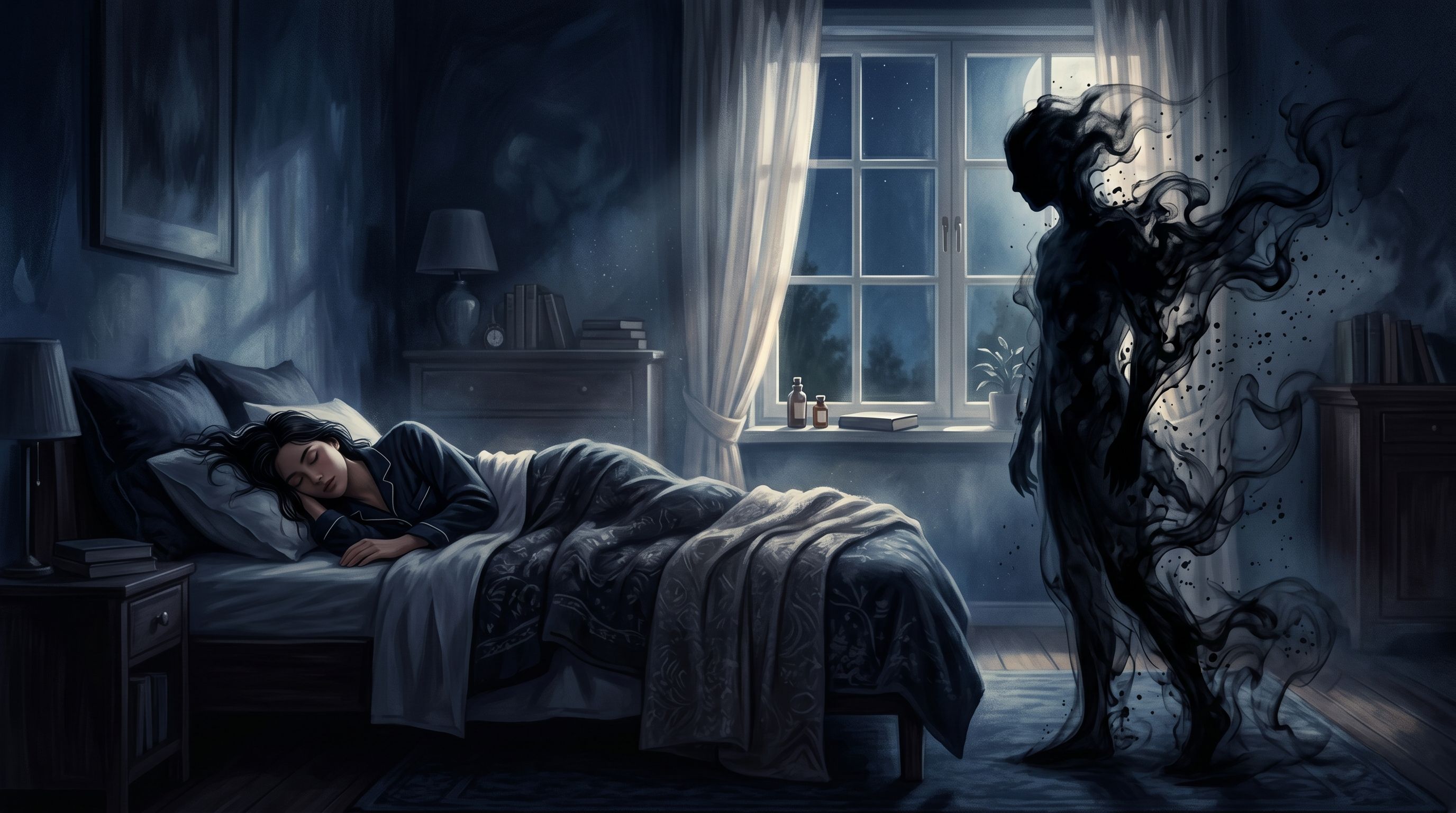
This balancing act is intimately linked to the notion of the Shadow. Your Shadow consists of all the traits you’ve deemed "unacceptable"—perhaps your anger, your wildness, or even your unexpressed creativity. Because you don't allow these traits space in your waking life, they "compensate" by appearing in your dreams.
You might find yourself dreaming of a character who is your polar opposite. If you are a person of strict logic, you might dream of a mystic or a chaotic artist. If you are someone who prides themselves on being "good," you might dream of committing a small, rebellious act.
It is easy to wake up and feel ashamed of these dreams, but I invite you to look closer. The Shadow isn't a monster; it is simply the part of you that has been left in the dark for too long. When the dream shows you these "negative" or "strange" traits, it is asking you to integrate these repressed aspects of your personality.
"We often spend our lives trying to be "light," forgetting that a person without a shadow is merely a flat projection, lacking the depth that makes us human."
When you ignore the compensatory message, the dreams often become more intense, sometimes even turning into recurring nightmares. The unconscious is persistent; it will keep shouting until you acknowledge the truth it is trying to show you.
---
Beyond the Surface: Why Fixed Symbols Fail You
It often irritates me to see simplistic interpretations of dreams that reduce everything to fixed symbols. A dream about a snake or a house doesn't mean the same thing for everyone. To understand the compensatory function, you must look at the relationship between the dream and your current waking life.
If a professional athlete dreams of being paralyzed, the meaning is entirely different than if a person with a sedentary lifestyle has the same dream. For the athlete, the dream might be compensating for an over-identification with physical prowess, reminding them of their inner vulnerability. For the sedentary person, it might be a reflection of their actual physical stagnation.
The dream is a living, breathing response to your specific choices. It is a dialogue, not a monologue. When you look at a dream, don't ask "What does this symbol mean?" instead, ask "What is this dream trying to balance in me right now?"
---
Concrete Example: The Architecture of the Self
To understand how this works in practice, let’s look at one of the most common compensatory motifs: The House.
In the language of the unconscious, a house often represents the totality of your psyche.
Imagine a woman who is incredibly successful, organized, and in control of every aspect of her life. She lives in a minimalist, perfectly clean apartment. However, she repeatedly dreams of finding a hidden basement in her childhood home—a basement that is overgrown with vines, filled with old, dusty books, and slightly damp.
The Analysis: Her conscious life is "too clean," too controlled. There is no room for the "organic" or the "ancient" parts of her soul. The dream is compensating for her hyper-modern, sterile lifestyle by showing her the "damp, overgrown" basement. It is an invitation to explore her roots, her messy emotions, and the wisdom that doesn't fit into a spreadsheet.
By acknowledging this dream, she might decide to take up gardening or spend more time in nature, allowing that "overgrown" part of her psyche to have a place in her waking world. The dreams of the basement will then likely evolve, perhaps becoming a library or a workshop, as she integrates that energy.
---
How to Listen to Your Inner Compensator
If you want to use this knowledge to evolve, you must approach your dreams with a mixture of scientific curiosity and mystical humility. Here is how you can begin:
1. Practice Radical Honesty: When you wake up, ask yourself: "What was the dominant emotion in the dream?" and "How is this the opposite of how I felt yesterday?" 2. Look for the "Missing" Quality: If you were aggressive in the dream, where are you being too passive in life? If you were lost, where are you being too controlling? 3. Avoid Literalism: If you dream of cheating on a partner, it rarely means you want to leave them. It often means you are "cheating" yourself out of a certain type of energy or passion that you are currently suppressing. 4. Trust the Feeling: Sometimes, the "meaning" of a compensatory dream isn't a thought, but a feeling. If you wake up feeling strangely empowered after a dream of being a hero, carry that feeling into your day. That is the integration.
Describing the psyche is like describing the wind; we only see its effects on the things it touches. Your dreams are the rustling of the leaves, telling you which way the wind is blowing.
---
Sometimes I watch this nocturnal flow from the foot of a dreamer’s bed, marveling at how naturally the mind seeks its own center, much like the ancient Eastern concept of cosmic polarity. In Taoist philosophy, there is no good or bad, only the eternal, quiet dance of opposites. When your waking life is too bright and rigidly structured, your night-self instinctively conjures the dark and fluid. It is a necessary rhythm, like the quiet turning of a mystical yin-yang where one side always contains the seed of its opposite. If you have spent weeks forcing yourself to be the unbreakable pillar of your family, why feel guilt when dreaming of weeping? That dream is not weakness; it is the soft rain falling upon dry, hardened soil to keep it from cracking.
I once met a dreamer—a hyper-focused surgeon who spent his days dissecting reality with absolute precision. In his sleep, he was constantly lost in a vast, wordless mist where gravity behaved like water. He found it deeply distressing, but honestly? I think his spirit was simply gasping for air. His dreams were physically pulling him back from cognitive exhaustion. The unconscious doesn't speak in prose; it speaks in weight, temperature, and movement. It acts as an internal regulator, a silent force pulling you back when you swing too far, mimicking the rhythmic arc of a heavy brass pendulum. If you feel a strange, physical relief upon waking from a chaotic dream, it is because your soul has finally exhaled.
I once met a dreamer, a meticulous clockmaker, who spent his days in microscopic, painstaking stillness, barely breathing as he adjusted tiny gears. In his sleep, however, his soul refused to remain frozen. He didn’t dream of clocks; instead, he felt the wild, dizzying sensation of rushing down steep hills, a kinetic release closely resembling dreaming of skateboarding through a city with no brakes. His waking life demanded absolute, agonizing control, so his nighttime mind compensated with raw, physical surrender. When you force your body into a mold of rigid stillness during the day, your unconscious will often throw you into violent motion, or make you sway, just to remind your muscles how to breathe. It is a somatic protest. Your dreams do not just think in abstract symbols; they feel in gravity, momentum, and weight, correcting the physical imbalances you impose upon your waking flesh.