The Architect of the Basement: Freud and the Weight of Desire
When you close your eyes, you enter a space that Sigmund Freud famously called the "via regia"—the royal road to the unconscious. For him, your mind is a house where the most intense, uncomfortable, and raw parts of your being are locked in the cellar. These are your repressed desires, the urges that your waking self, or your "Superego," deems unacceptable.
In this framework, the dream is a master of disguise. Because your mind cannot face these raw desires directly without waking you up in a state of shock, it uses "dream-work" to mask them. It uses symbols as a form of internal censorship. That train entering a tunnel or that lost key? In a strictly Freudian sense, they are often stand-ins for physical longings or infantile anxieties that you haven't yet processed.
Freud believed that by tracing these symbols back to their roots, you could uncover the "latent content"—the true meaning hidden beneath the "manifest content" (the story you remember). He focused heavily on your history. To Freud, your dreams are a repetitive echo of your childhood and your biological instincts. If you find yourself trapped in recurring dreams, a Freudian approach would ask: what unresolved conflict from your past is still demanding your attention?
---
The Weaver of Myths: Jung and the Call of the Spirit
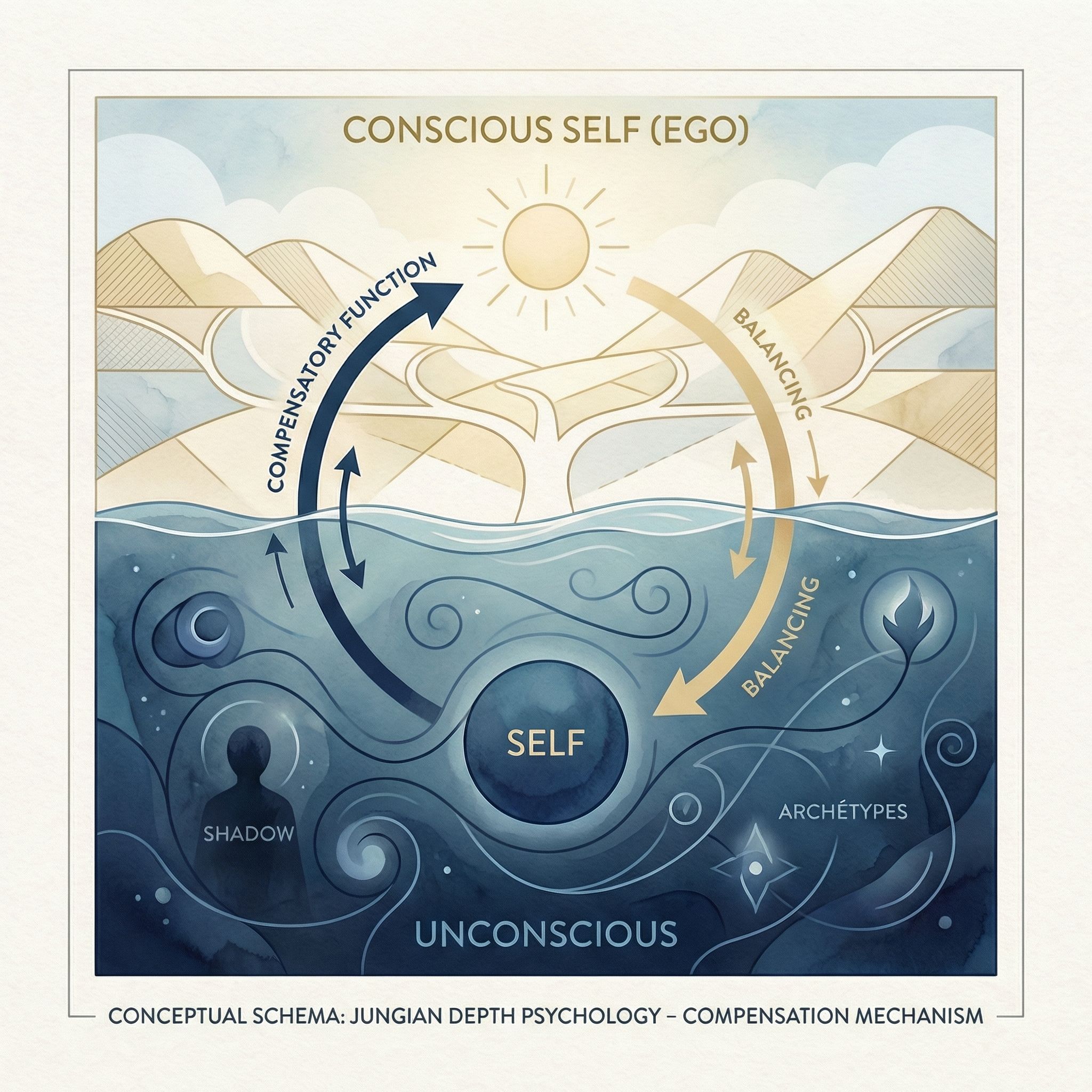
Carl Jung, once Freud’s protégé, eventually found the basement too small. He looked up at the attic and out toward the stars. For Jung, your dreams are not just a release valve for repressed "darkness." Instead, he saw the psyche as a self-regulating system, much like a biological organism that seeks health and balance.
Jung introduced the concept of the Collective Unconscious. This is a reservoir of experiences shared by all of humanity, populated by Archetypes. When you dream of a Wise Old Man, a Great Mother, or a Shadowy figure chasing you, you aren't just dreaming of your own life; you are tapping into the ancient myths of our species.
For Jung, the dream is a guide. It doesn't just look backward at what you’ve lost; it looks forward to who you are becoming. This is the process of individuation—the journey toward becoming your most authentic self. The dream compensates for your conscious ego’s imbalances. If you are too rigid in your waking life, your dreams might bring chaos to remind you of the beauty of spontaneity. The ultimate goal is to reach the Self, the center of your being where all opposites are reconciled.
---
A Concrete Example: The Golden Snake
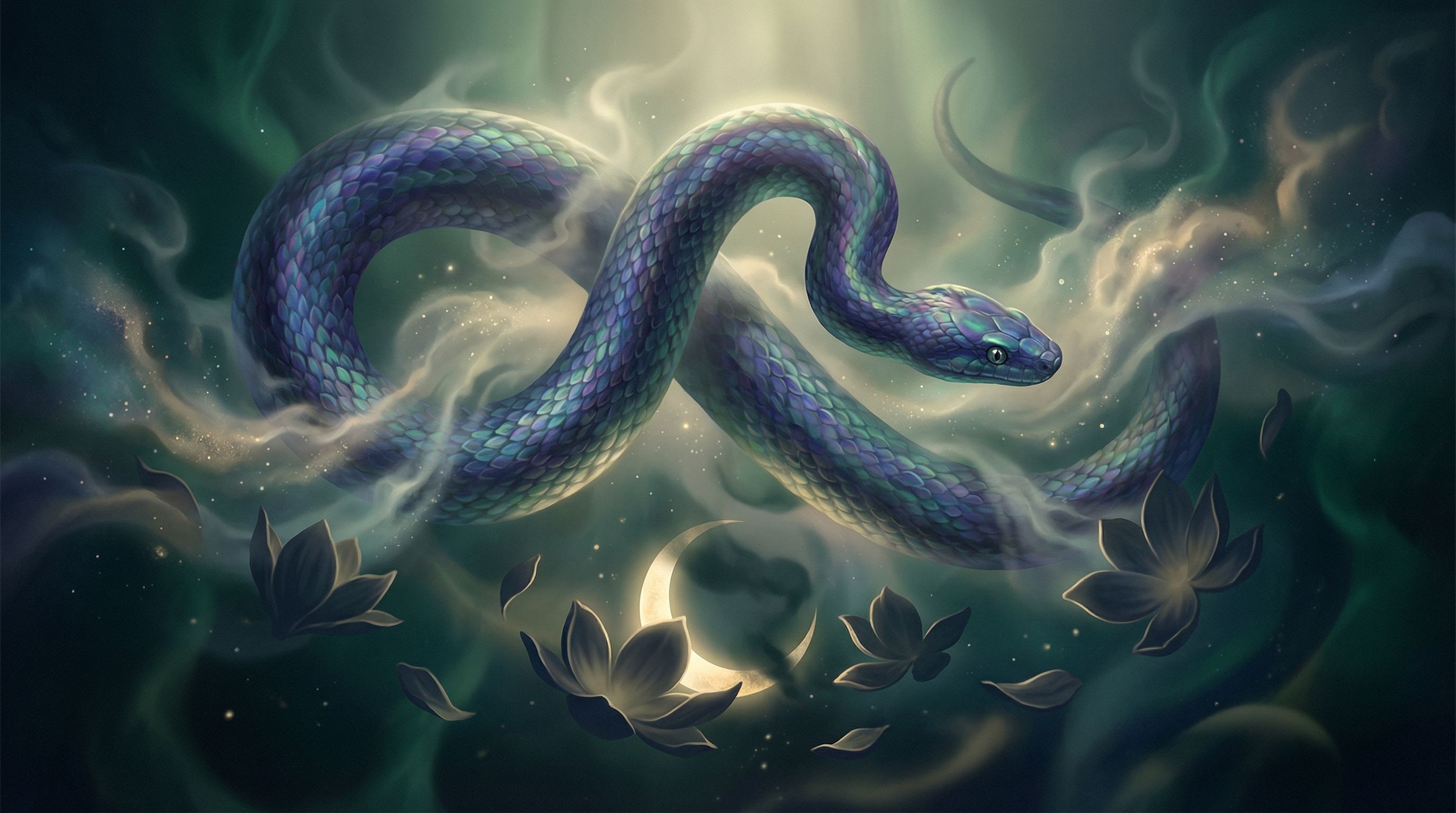
Imagine you dream that you are walking through a dark forest and encounter a golden snake coiled around your throat. It doesn't bite, but its weight is heavy and cold.
Through a Freudian lens, you might explore this as a symbol of repressed physical desire or a fear of being stifled by a dominant figure in your life. You would look at your childhood associations with snakes or authority. However, a Jungian approach would look at the snake as an archetype of transformation, healing, or the "Ouroboros." The gold color might suggest "alchemy"—the turning of leaden, heavy emotions into something precious.
As a Baku, I have observed that the truth usually sits in the intersection. The snake is both your biological instinct and your spiritual awakening. It is not an "either/or" situation, but a "both/and" revelation. You must sit with the discomfort of the image until its specific resonance for your current life stage reveals itself to you.
---
The Alchemy of Interpretation: How to Use Both
You do not need to choose a side. In fact, the most profound insights often come from holding both perspectives at once. Freud gives you the tools to clean your "internal house," while Jung gives you the map to explore the landscape outside.
To begin this work, you must cultivate a relationship with your symbols. Freud’s method of "free association"—where you say the first thing that comes to mind when thinking of a dream image—is incredibly effective for uncovering personal triggers. Jung’s method of "amplification"—where you look at how a symbol has appeared in mythology or art—helps you see the bigger picture of your life’s purpose.
🌙 Tsuki’s Echo: Your unconscious does not speak in prose; it speaks in poetry. Do not try to "solve" it like a math problem, but rather experience it like a song.
Interpretation is an art of patience. It is about listening to the whispers of your mind without judgment. Whether a dream is a reflection of a hidden wish or a nudge from the universe, it is always a gift of self-knowledge.
---
Rituals for the Modern Dreamer
If you want to bridge the gap between these two giants in your own practice, consider these gentle rituals:
1. The Threshold Journaling: Before you check your phone in the morning, write down the emotions of the dream first. Freud would care about the "why" of the fear; Jung would care about the "who" of the figure. 2. Archetypal Mapping: If a character appears in your dream, ask yourself: "What universal role do they play?" Are they the Hero, the Trickster, or the Shadow? 3. The Body Scan: When you remember a dream symbol, notice where you feel it in your body. Freud’s theories are deeply rooted in physical sensation and the "Id."
By treating your sleep as a sacred space for exploration, you honor both your biological nature and your spiritual potential. You are a complex tapestry of history and mystery.
---
Sometimes I watch dreamers wake up and immediately reach for their notebooks, desperately trying to categorize their experience. Is it a Freudian repressed urge or a Jungian shadow? They argue with themselves while the morning light filters through the blinds, completely ignoring how their chest actually felt during the dream. But dreams aren't just intellectual puzzles to be solved by dead European theorists; they are deeply somatic events. When you dream, does your throat tighten? Do you feel cold? Sometimes, the key to the mystery lies not in a complex psychological map, but in the flow of your breath as you wake. If you only look at your dreams through the lens of dry theory, you treat your soul like a specimen on a slide, forgetting that it is a living, breathing landscape that wants to be felt, not just dissected.
I often find myself gently sighing when modern minds reduce every dream creature to a mere projection of their own psyche. Freud calls them repressed desires; Jung calls them archetypes of the collective unconscious. But what if that golden snake isn't just a symbol of your inner world? In many older traditions, the dream is not a private theater but a meeting ground, a place where you cross the threshold to speak with the world's hidden forces, much like meeting a shaman in a sacred clearing. To the Taoists or ancient animists, the entities in your dreams have their own weight, their own lives. They are not merely mirrors reflecting your neuroses back at you. When you dream, you step out of the isolated fortress of your ego and enter a vast, shared ecology. Sometimes, the most healing thing you can do is stop asking what a dream says about you, and start listening to what it says to you.
I once met a dreamer who was utterly consumed by a simple dream of a wooden bowl filled with clear water. He spent weeks trying to decode it. He read Freud, convinced it was a womb symbol linked to infantile regression; he read Jung, searching for ancient alchemical vessels. He grew so anxious that he stopped sleeping well. Honestly? It broke my heart a little. When I swallowed the residue of his restless nights, I tasted only the pure, uncomplicated peace that the bowl was actually trying to offer him. His waking mind had weaponized interpretation against his own healing. Sometimes a dream is not a code to be cracked by rival psychological empires, but a quiet gift to be received. You do not need to choose a camp. You only need to let the image wash over you, trusting that your soul already knows how to heal itself without your conscious permission.