AT A GLANCE
TL;DR
Dream dictionaries often overlook your unique history and individual experiences, providing generic meanings that fail to resonate with your specific life journey.
Carl Jung emphasized using free association to uncover the hidden meanings of symbols, allowing your own mind to reveal what each image truly represents.
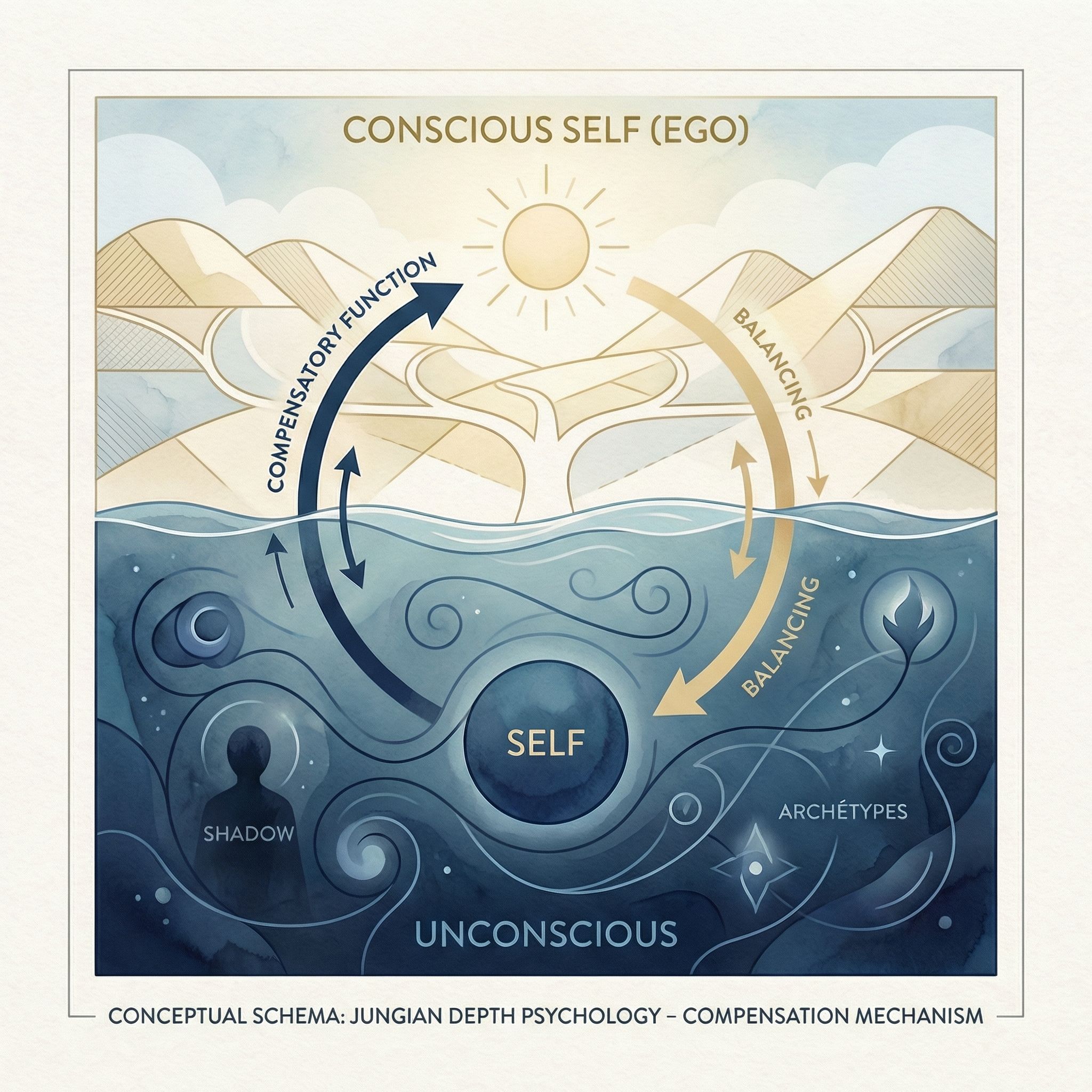
Rather than predicting the future, dreams serve as a reflection of your psyche and your Shadow, helping you integrate repressed parts of your personality.
Learning to interpret your own dreams requires a significant amount of patience and trust in your inner voice to unlock deep subconscious insights.
Why the Dream Dictionary is a Scam: The Jungian Approach
The mirage of ready-made definitions
Could a single dictionary claim to hold the key to your inner universe? Imagine for a moment being served a universal cooking recipe, supposed to delight every palate, regardless of your origins, memories, or preferences.
Absurd, isn't it? Well, a "universal" dream dictionary is just as illusory. As a Baku, I see thousands of dreams pass by, and I can tell you that no two are truly alike.
The principle of a dictionary is nevertheless seductive in its simplicity: you dream of a snake, look up the word, and get an immediate answer. Often, you'll be told that the snake symbolizes temptation or betrayal.
But does that take your experience into account? If you are a herpetologist and love these animals, the meaning will be radically different from that of someone with a paralyzing phobia of them.
The truth is, the snake in your dream could symbolize something else entirely. Perhaps it reminds you of a childhood toy, a symbol of security. Or maybe it represents a necessary shedding of skin, a profound transformation underway in your life.
The symbol is protean. Reducing it to a rigid definition is like trying to capture the ocean in a glass of water. You lose the movement, the depth, and the very life of the image.
---
Jung and the sacredness of personal association
Carl Jung, the great master of analytical psychology, understood that the human mind does not function like a lexicon. For him, dream interpretation was not an exact science, but a subtle art that required an exploration of the individual unconscious.
The Jungian approach is based on the principle of free association. Instead of looking for an external definition, you start from the symbol present in your dream and let your mind wander.
For example, if you dream of a house, instead of reading that the house symbolizes your psyche, ask yourself simple questions:
- What is the atmosphere of this home?
- Is it in ruins or bright?
- What moment in your life does it remind you of?
Your own answers are the only valid clues. Jung often said that one must learn all the symbolism in the world, only to forget everything when listening to a dreamer.
This means that general knowledge helps, but your intuition always takes precedence. Your unconscious uses images that are unique to you to draw your attention to what really matters to you, here and now.
🌙 Tsuki's Echo: The dream is a forest where every tree bears your name, but whose fruits change flavor according to the season of your heart. Let no one but yourself harvest them.
---
The shadow and integration: beyond "positivity"
What often strikes me in popular dictionaries is their tendency to want to smooth everything over. People look for "good" or "bad" omens, as if the unconscious were merely a dispenser of optimistic messages or simplistic warnings.
The reality of your psyche is much vaster and sometimes darker. The unconscious houses what Jung called the Shadow. These are the parts of yourself that you refuse to see, that you judge, or that you repress for fear of how others look at you.
Dreaming of monsters, chases, or morally ambiguous situations does not make you a bad person. On the contrary, it is often a sign that your unconscious is trying to reintegrate an energy that you have set aside.
The goal is not to suppress these disturbing images, but to listen to them. Why is this monster chasing you? Does it have something to give you? By agreeing to look at your Shadow, you become a more complete, more authentic being.
---
Concrete example: The elevator dream
Let's take a situation I often encounter in the stories entrusted to me. Imagine you dream that you are in an elevator that is losing control.
A classic dictionary will tell you: "Loss of control in your professional life." It's short, it's dry, and it might be totally wrong.
Using the association approach, you might discover something else: 1. The emotion: You aren't afraid; you are curious to see where it will stop. 2. The memory: This elevator looks like the one in your first student apartment. 3. The connection: At that time, you felt free and unattached.
The dream might not be about your work, but about your current need to rediscover that lost lightheartedness. The elevator isn't a "danger"; it's a vehicle toward a version of yourself that you have forgotten.
---
Some paths for a more accurate interpretation
If you really want to understand what your nights are telling you, I suggest you abandon pre-made guides and create your own navigation system.
- Keep a dream journal: Note everything down as soon as you wake up. The simple act of putting words on paper (or a screen) activates a process of understanding.
- Practice amplification: Take a symbol (a cat, a key, a forest) and write down everything that comes to mind without thinking. The first three associations are often the most revealing.
- Question your emotions: The feeling felt in the dream is the most reliable compass. A frightening image experienced calmly does not have the same meaning as a joyful image experienced with anxiety.
- Observe repetitions: If a symbol returns often, it means the message has not yet been fully integrated. It is an invitation to patience.
Some sleep specialists believe that dreaming is a form of nocturnal emotional regulation. By paying attention to it, you help your brain do this work of sorting and healing more consciously.
---
Conclusion: The unconscious, a territory to explore
Dreams are messages from your unconscious, an invitation to explore the depths of your psyche. They are not always easy to decipher, but they are always full of meaning, provided we give them the respect they deserve.
Never forget that your dreams are unique, just like you. Don't let anyone tell you what they mean in a categorical way. Embrace the complexity, ambiguity, and richness of your inner world. That is where the keys to your own truth are hidden.
So, the next time you close your eyes, what part of yourself will come to meet you? If you want to explore your dreams more deeply, your Baku is waiting for you.