The Alchemy of the Soul: The Union of Opposites
When you dream of being with someone else, your first instinct might be to feel shame. But as a Baku, I see these dreams differently. I see them as a search for balance.
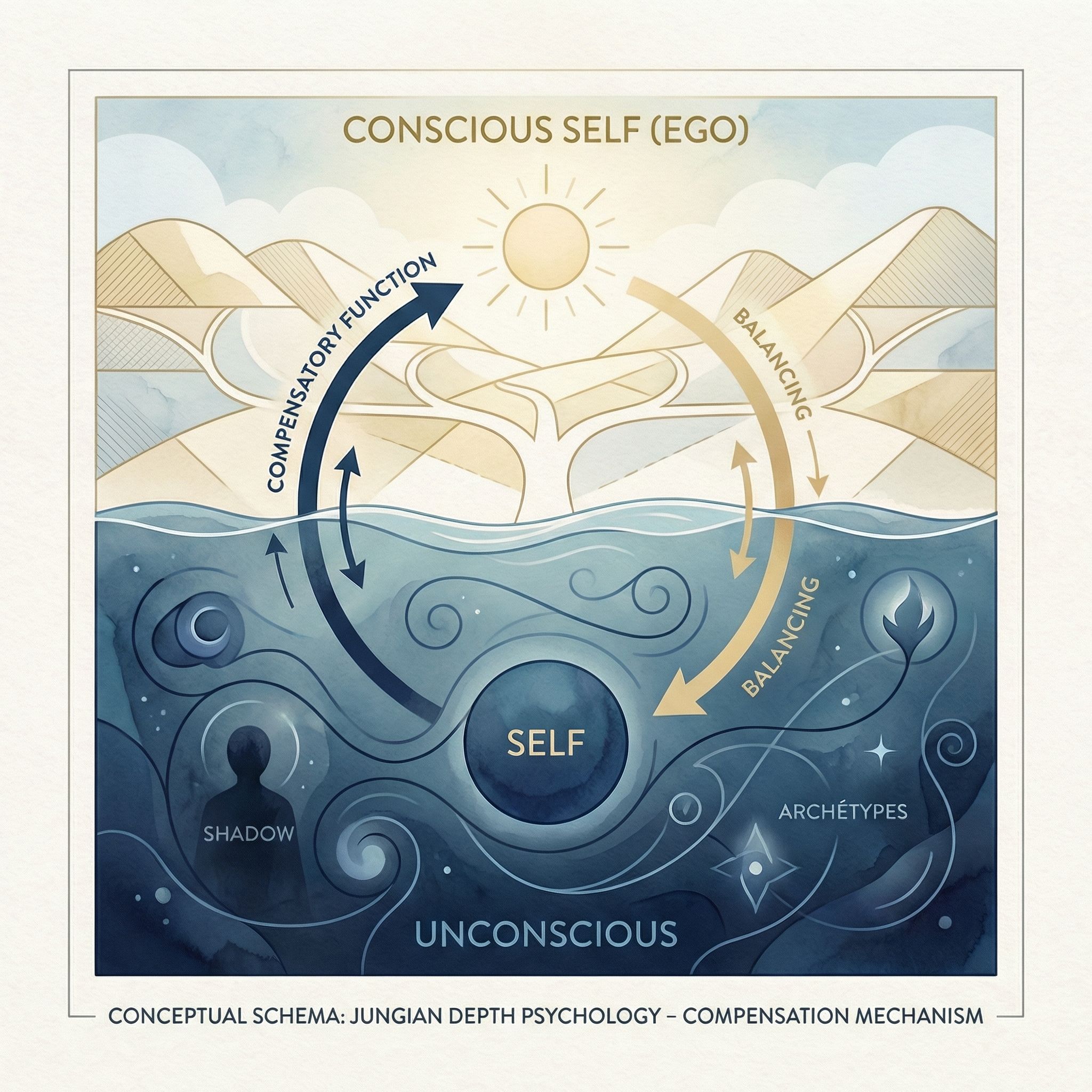
Carl Jung, one of the pioneers of depth psychology, spoke of the Coniunctio—the union of opposites. In this view, adultery in a dream isn't about the person you are "cheating" with. Instead, that person represents a quality or a part of yourself that you have suppressed.
Perhaps you have become too rigid, too focused on your career, or too caught up in the mundane details of life. The "lover" in your dream might embody the playfulness, the rebellion, or the passion that you have pushed into your shadow.
By "uniting" with this person in the dream state, your unconscious is attempting to integrate aspects of yourself that are missing from your waking life. It is an act of psychological alchemy, trying to make you whole again.
---
When the Betrayal is Internal
Sometimes, the guilt you feel in the dream isn't about your partner at all. It is a reflection of a different kind of betrayal.
Ask yourself: have you been true to your own values lately? Have you made compromises at work or in your social life that leave a bitter taste in your mouth?
The dream of adultery can be a powerful metaphor for betraying your own integrity. Your unconscious uses the shock of infidelity to grab your attention. It is saying, "You are being unfaithful to who you really are."
I once encountered a dreamer who felt immense guilt over a dream affair. We discovered that he had recently accepted a promotion that required him to sacrifice his creative freedom for a higher salary. His dream wasn't about his marriage; it was about the heartbreak of leaving his true passion behind.
🌙 Tsuki's Echo: The lover in your dream is often just a mirror, reflecting a beauty you have forgotten you possess.
---
The Compensatory Function of the Dream
The mind has a natural way of seeking equilibrium. If your daily life feels restricted or predictable, your dreams might offer an expression of a need for adventure.
This is what specialists often call the compensatory function of dreaming. The dream provides what is lacking in reality. It doesn't mean you want to leave your partner. It might simply mean you are craving a sense of novelty or a break from the routine.
Instead of fearing the dream, try to look at the "lover" as a symbol. What qualities do they have? Are they adventurous? Are they calm? Are they assertive? These are the qualities your soul is currently thirsting for.
---
A Concrete Example: The Artist in the Shadows
Consider the story of a dreamer who repeatedly dreamt of a passionate affair while in a stable, loving marriage. Initially, the guilt was crushing, and she feared she was falling out of love. However, upon deeper reflection, she realized the "lover" in her dream was a vibrant, rebellious artist—a side of herself she had completely abandoned years ago to pursue a high-pressure corporate career.
The dream wasn't about wanting a new partner; it was a plea from her unconscious to reclaim her lost creativity. By starting to paint again in her waking life, the dreams of infidelity ceased. The "lover" had finally been integrated back into her daily existence, and the internal tension was resolved.
---
Navigating the Relationship Mirror
While most dreams of adultery are about your internal world, they can sometimes reflect tensions within your relationship.
If you feel neglected, unheard, or disconnected from your partner, your mind might simulate intimacy with someone else as a way to process that loneliness. It is a safe space to explore what those unmet needs feel like.
However, before you assume the dream is a sign to end things, use it as a tool for communication. Instead of saying, "I dreamt I cheated on you," you might say, "I’ve been feeling a bit disconnected lately, and my dreams are reflecting a need for more closeness."
Honesty with yourself is the first step. Honesty with your partner is the second.
---
Listening to the Whisper of the Night
So, should you worry? My answer is no—but you should listen.
Your dreams are not there to judge you. They are there to guide you back to yourself. Every character you meet in the theater of your mind is a facet of your own being, waiting to be recognized and understood.
When you stop running from the guilt and start asking what the dream is trying to give you, the fear dissolves. You begin to see your inner landscape with more clarity and compassion.
If you want to explore your dreams more deeply, your Baku is waiting for you.
Have you noticed how hot these dreams feel? It is not just the metaphorical heat of passion, but a very physical, suffocating warmth that wakes you up, chest tight, skin flushed with a phantom sweat. I often see dreamers wake in a panic, mistaking this somatic alarm for proof of their moral failing. But your body is merely translating the high psychological stakes of this internal confrontation. When your unconscious stages such a dramatic union, your brain works in overdrive, raising your heart rate and disrupting your body's natural cooling cycle. Sometimes, simply managing your physical sleep environment and supporting your body's thermoregulation can quiet these intense physical reactions, allowing you to wake with a clear head. The heat is just energy trying to find a way out; it is not a verdict.
It honestly exhausts me to see how quickly modern dream dictionaries reduce these complex, twilight visitations to simple warnings of real-world betrayal. What a tragic waste of a beautiful mystery. I once met a dreamer—a new mother—who was tormented by recurring dreams of a passionate affair with a faceless nomad. She loved her husband deeply, yet the guilt was eating her alive. When we looked closer, the nomad wasn't a replacement for her partner; he was the ghost of her own lost freedom, the wild, unburdened self she had to bury when she stepped into the demanding role of motherhood. Her dream was not a sin, but a temporary sanctuary where she could drop her heavy responsibilities and breathe. Your sleeping mind knows exactly what you have sacrificed to keep your waking life intact.
It honestly tires me to see how modern dream guides rush to brand these nightly betrayals as signs of a failing relationship or deep-seated insecurity. What a dry, anxious way to look at the theatre of the mind! Centuries ago, in the mist-draped villages I used to wander, a dream of an unknown lover wasn’t met with suspicion. People believed it was a visitation—perhaps an ikiryō, a wandering soul drawn to your latent warmth, or a quiet blessing from a passing spirit. They understood that the dreaming soul has its own wild geography, completely separate from the contracts we sign in the waking world. When you embrace a stranger in the dark, you aren’t breaking a promise; you are stepping into a sacred, temporary space where the rules of gravity and society simply dissolve to let you feel alive again.
Have you ever noticed the heavy, stifling atmosphere that often wraps around these dreams? You wake up gasping, your skin flushed, the sheets tangled around your limbs like a physical manifestation of your guilt. Sometimes, the drama of the subconscious is amplified by the simple, quiet reality of your bedroom. A room that is too hot can trigger vivid, turbulent dreams of passion and escape, making it crucial to understand how regulating your sleep temperature affects your nocturnal world. When your body overheats, your brain struggles to navigate the delicate cycles of REM sleep, turning a quiet whisper of self-reflection into a scorching, guilt-ridden fever dream. It is not always a moral crisis; sometimes, it is just your physical body crying out for a cool breeze while your mind tries to process its hidden fires.