The Architecture of Your Hidden Self
You are much more than the person you show to the world. In the quiet corners of your mind, there is a space that Carl Jung called the Shadow. It is not a "dark side" in the sense of being evil, but rather a reservoir of everything you have deemed unacceptable.
Think of it as a basement where you have stored every emotion, ambition, or trait that didn't fit the image you wanted to project. That anger you were told was "unbecoming"? It’s there. That wild creativity you suppressed to be "realistic"? It’s there too.
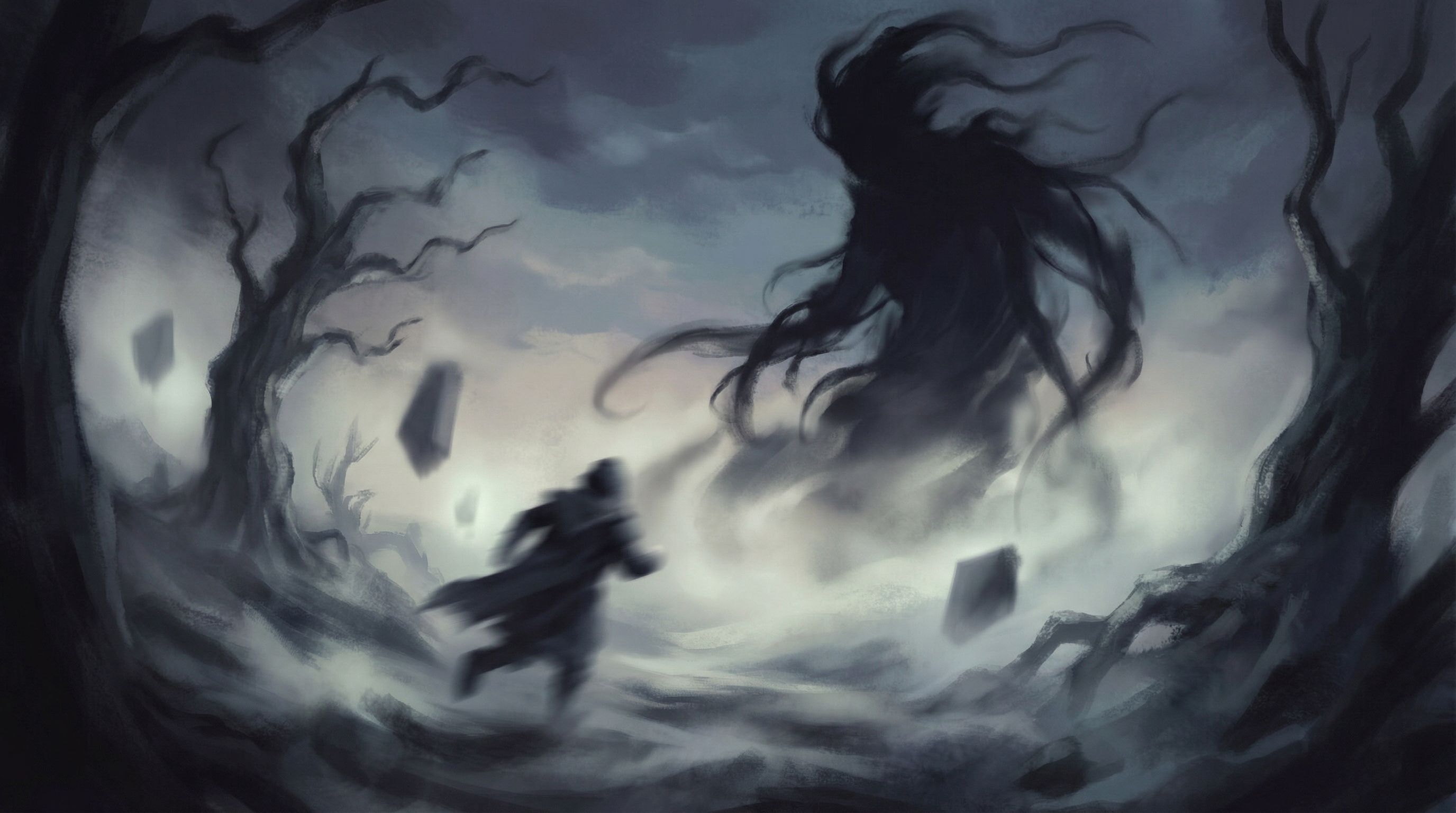
When you deny these parts of yourself, they don't just disappear. They wait in the unconscious, growing more distorted and intense. They manifest in your dreams as monsters, or in your waking life as sudden outbursts and repetitive mistakes.
Some specialists in analytical psychology suggest that the more we ignore the Shadow, the more it "leaks" into our reality. It influences your choices and your relationships in ways you don't even notice until the damage is done.
---
Why Your Monsters Are Actually Messengers
It might seem counterintuitive to welcome a nightmare. Your instinct is to run, to wake up, to forget. But as a Baku, I have seen that these frightening figures are often just your authentic desires wearing a scary mask to get your attention.
The Shadow is the source of your vitality. When you integrate it, you aren't becoming a "worse" person; you are becoming a whole person. You are reclaiming the fire that was trapped in your anger and the vision that was trapped in your envy.
Integration is a slow, rhythmic process. It is a descent into the depths followed by a gradual ascent. It requires you to look at your reflection without flinching, accepting both the light and the cracks in the glass.
🌙 Tsuki’s Echo: A monster in a dream is often just a part of you that has been lonely for a very long time.
---
A Practical Exercise: The Dialogue with the Monster
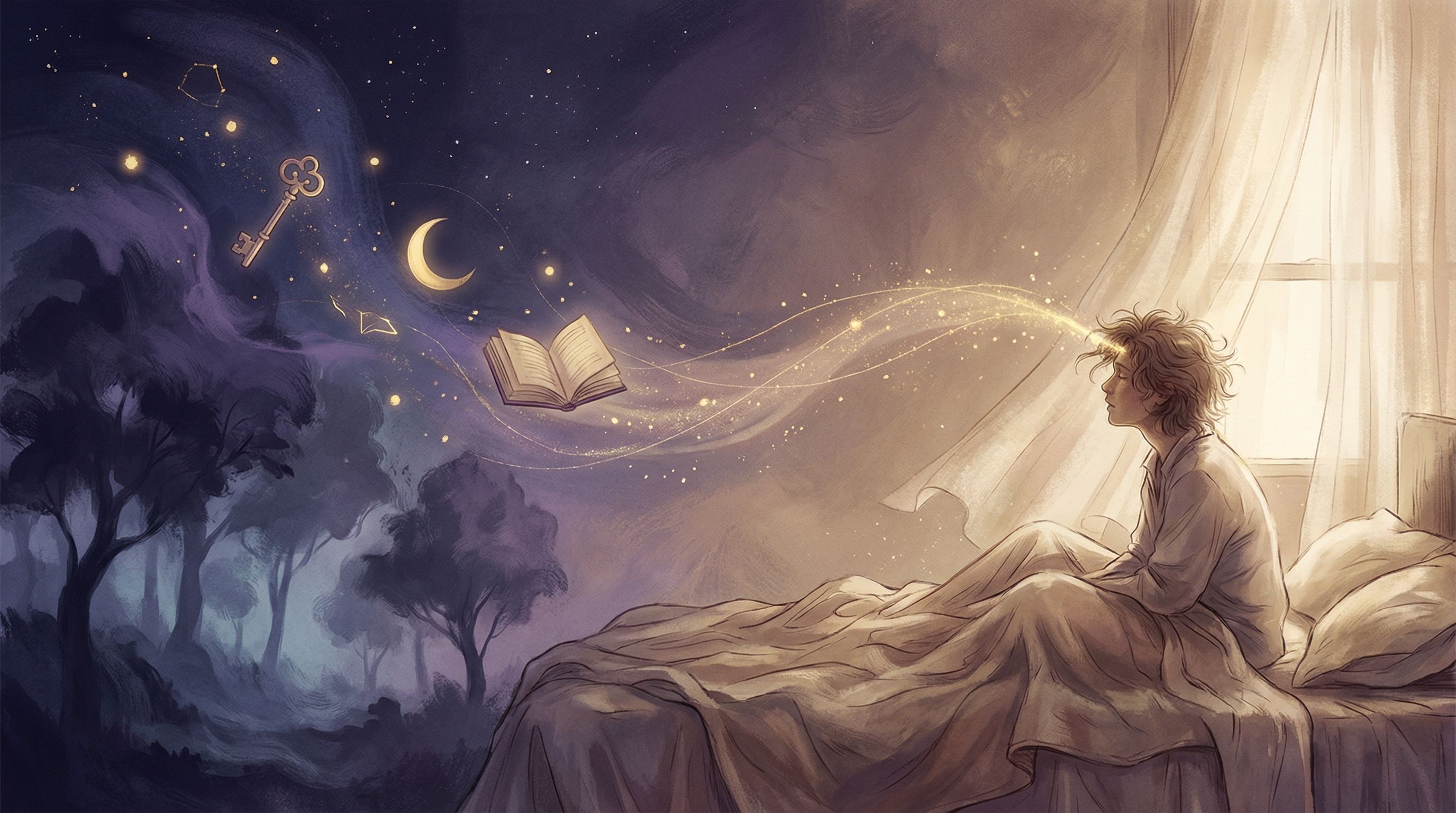
If you are ready to stop running, you can begin a conscious dialogue with these shadow figures. You don't need to wait for a nightmare to do this; you can use your imagination to bridge the gap.
1. Capture the Image: Close your eyes and recall a figure from a recent dream or a recurring fear. Don't judge it. Just observe its texture, its weight, and the way it makes your chest feel.
2. Give it Form: Bring this figure into the physical world. You might draw it, write a description of it, or even sculpt it. Making it tangible takes away its power to haunt you from the dark.
3. The Face-to-Face: Sit with this image in a quiet space. Breathe deeply. Look at it not as an enemy, but as a guest.
4. Ask the Hard Questions: In your mind or on paper, ask it: "What do you want from me?" and "What are you trying to protect?"
5. Listen Without Censure: Let the answers arise naturally. They might come as words, images, or sudden realizations. Write them down exactly as they appear.
6. Negotiate the Peace: Ask how this part of you can be expressed safely in your daily life. If it represents suppressed power, how can you be more assertive? If it represents suppressed grief, how can you give yourself space to cry?
---
Use Case: The Man and the Wolf
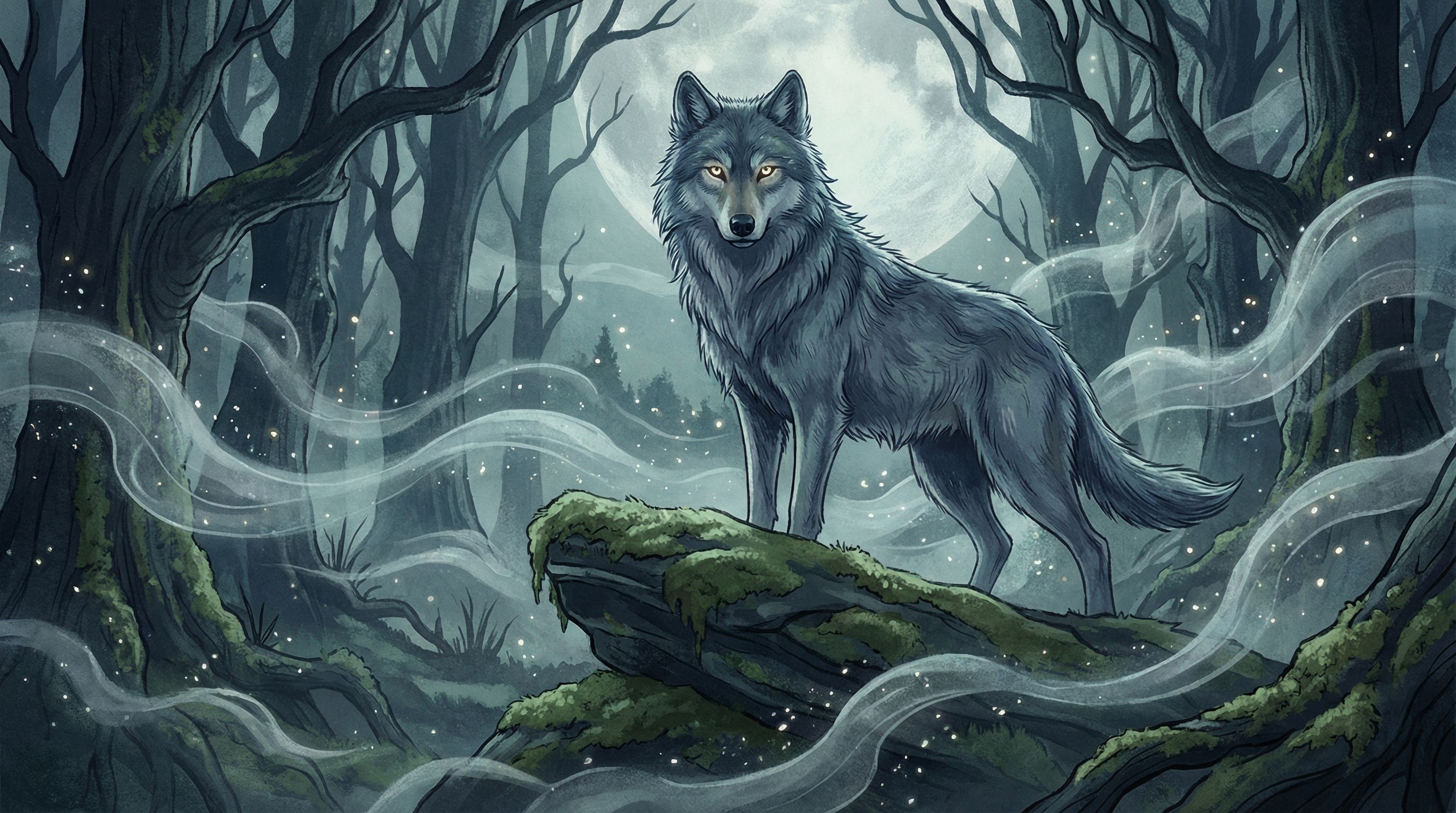
I once encountered a dreamer who spent years fleeing from a massive, black wolf in his sleep. Every night was a frantic chase through a frozen forest. He was exhausted, both in his dreams and in his waking life, where he felt constantly "hunted" by stress.
One night, he decided to stop. In the dream, he turned around and looked the wolf in the eyes. He asked, "Why are you following me?"
The wolf didn't attack. It sat down and whimpered. The dreamer realized the wolf wasn't a predator; it was his own wildness and instinct that he had caged to work a corporate job he hated. The wolf was starving for freedom.
By acknowledging this "wild" side, the man began to make small changes in his life—spending more time in nature and speaking his mind more clearly. The nightmares didn't just stop; they transformed. The wolf became a guide that walked beside him in his dreams, leading him to places of deep peace.
---
The Science of the Unseen
While the concept of the Shadow is deeply rooted in Jungian theory, modern psychological research often explores similar themes through the lens of "emotional regulation" and "repressed affect."
Some researchers suggest that the act of naming and externalizing our fears—much like the dialogue exercise—can reduce the activity of the amygdala, the brain's fear center. By bringing the "monster" into the light of conscious awareness, you are literally retraining your brain to feel safe.
It is important to remember that this is a journey of self-discovery, not a medical treatment. If you find that your shadows feel too heavy to carry alone, seeking the guidance of a professional can provide a safe container for this deep work.
---
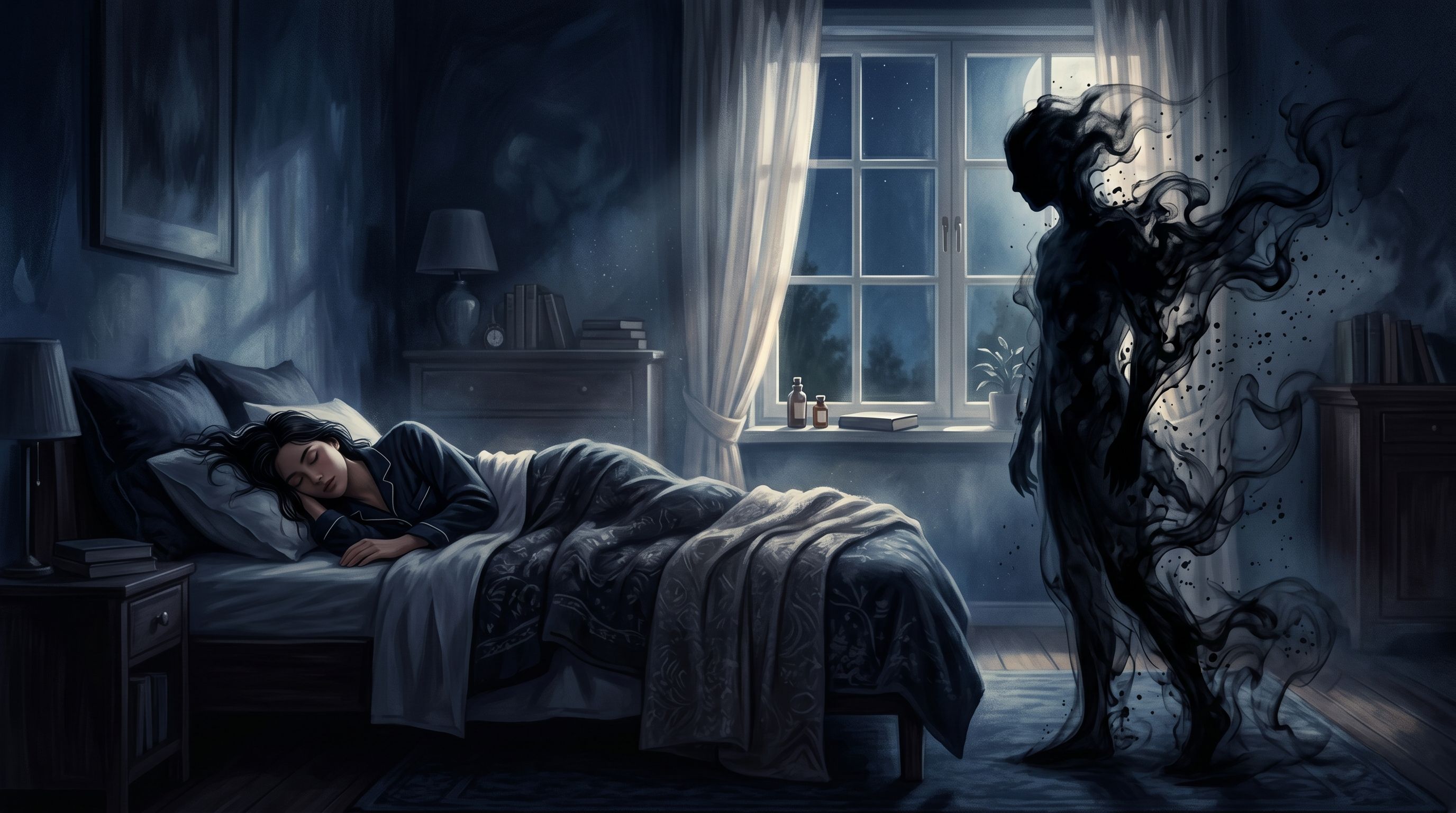
Have you noticed how these shadow encounters feel in your body before your mind even labels them? It frustrates me when modern manuals treat shadow integration like a neat, intellectual checklist. In the dreamscape, the shadow is rarely an abstract concept; it is heavy air, a sudden drop in temperature, or a suffocating pressure on your chest that smells of old dust and damp earth. I once met a dreamer who was haunted by a thick, oily black smoke rising from her floorboards. She didn't need to analyze it to know it was her unexpressed grief. When you wake up shivering or with your heart hammering, your body has already understood the encounter. The physical weight of these dreams is a reminder that your suppressed emotions are not just thoughts—they are trapped energy looking for a physical release.
There is a strange paradox here that many dream interpreters completely miss, and it is something I have marveled at for centuries. Your shadow is not merely a dumpster for your flaws; it is also where you bury your greatest strengths. If you were raised to be quiet and compliant, your natural brilliance and power might feel terrifyingly loud. In your dreams, this "golden shadow" might not appear as a violent beast, but as an intimidatingly beautiful figure, a towering giant of light, or a silent, majestic stranger. We are often more afraid of our light than our darkness. Encountering this luminous power in the shadow can feel overwhelming because it demands that you step out of the comfortable safety of your self-imposed smallness.
I often wonder why we are so quick to run. When you are being pursued in a dream, the act of running away actually breathes life into the pursuer. It is your own momentum, your own panic, that feeds the speed of the shape behind you. I once watched a dreamer run from a formless black silhouette through endless corridors, entirely unaware that the moment they tripped and collapsed in exhaustion, the shadow would simply stop, sit beside them, and wait patiently. It had no teeth; it only had the hunger to be looked at. The exhausting loop of flight and fear ends the second you realize that the hunter is merely your own discarded power, desperately trying to catch up with the rest of you.