The Architecture of Flight: Why Your Mind Runs
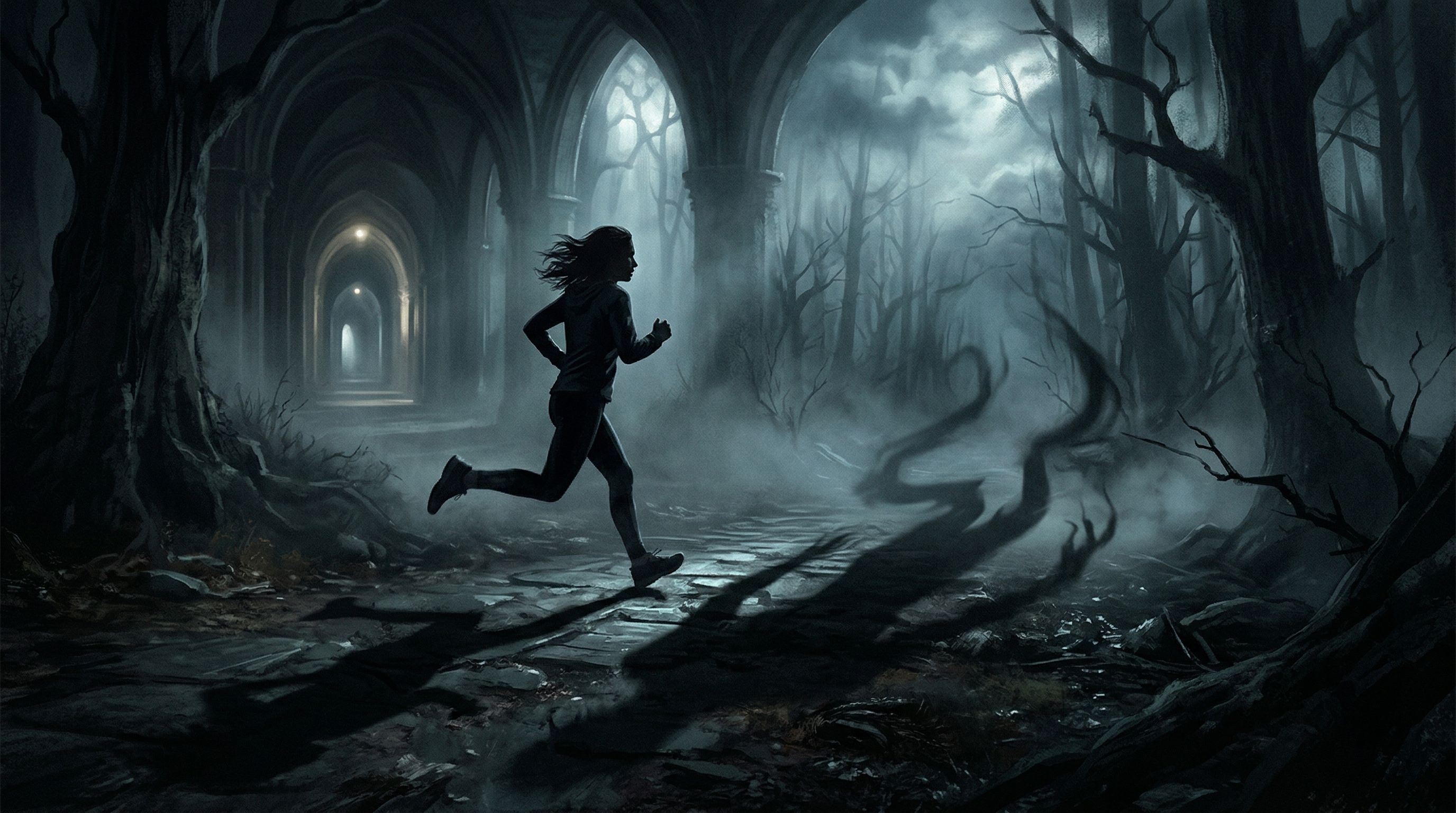
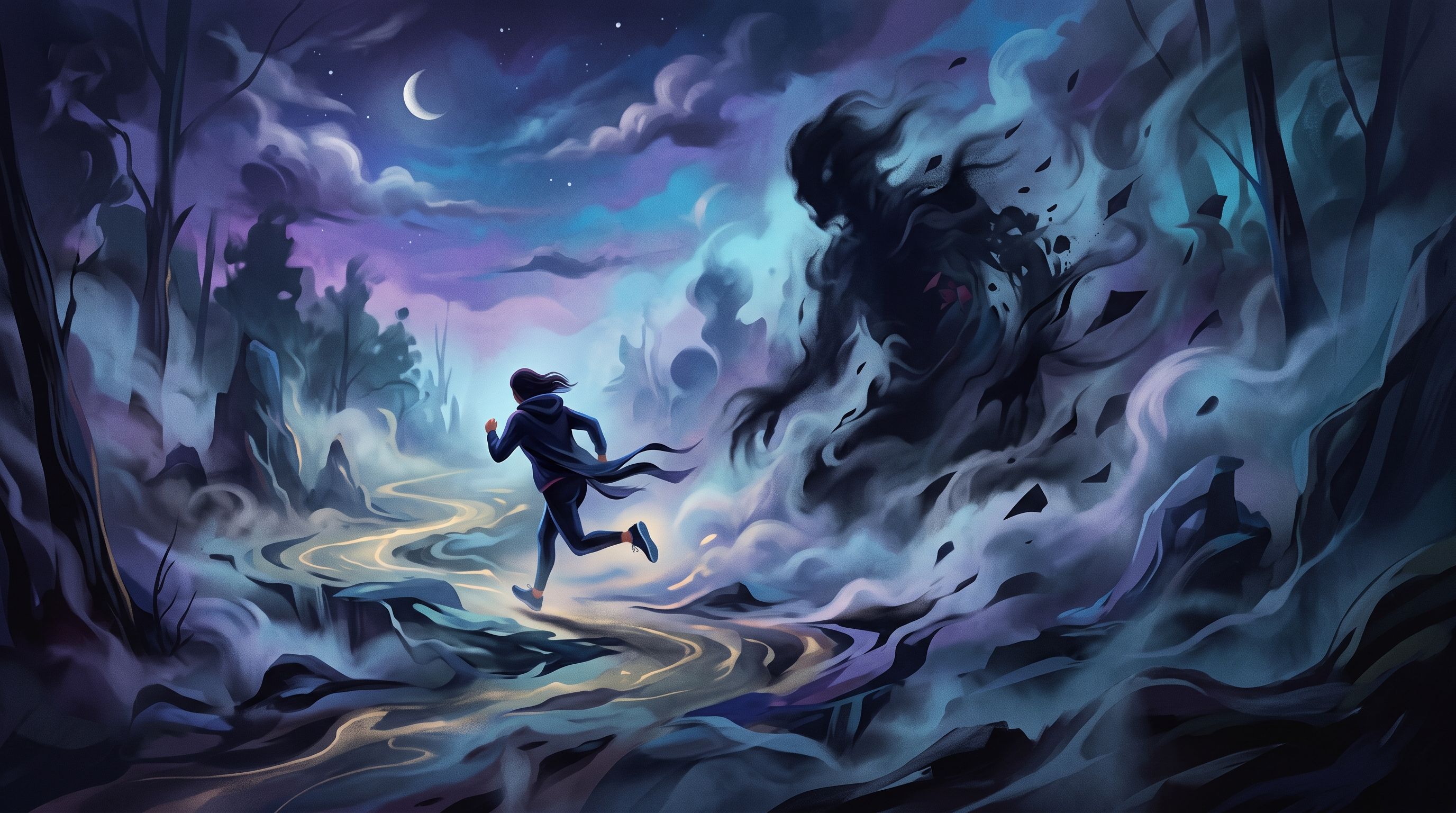
When you find yourself running through the corridors of your sleep, you are participating in an ancient psychological drama. It is easy to dismiss these moments as simple stress, but as a Baku who observes the threads of the night, I see them as something much deeper. You aren't just running from a "scary thing"; you are running from a realization that your conscious mind isn't ready to hold.
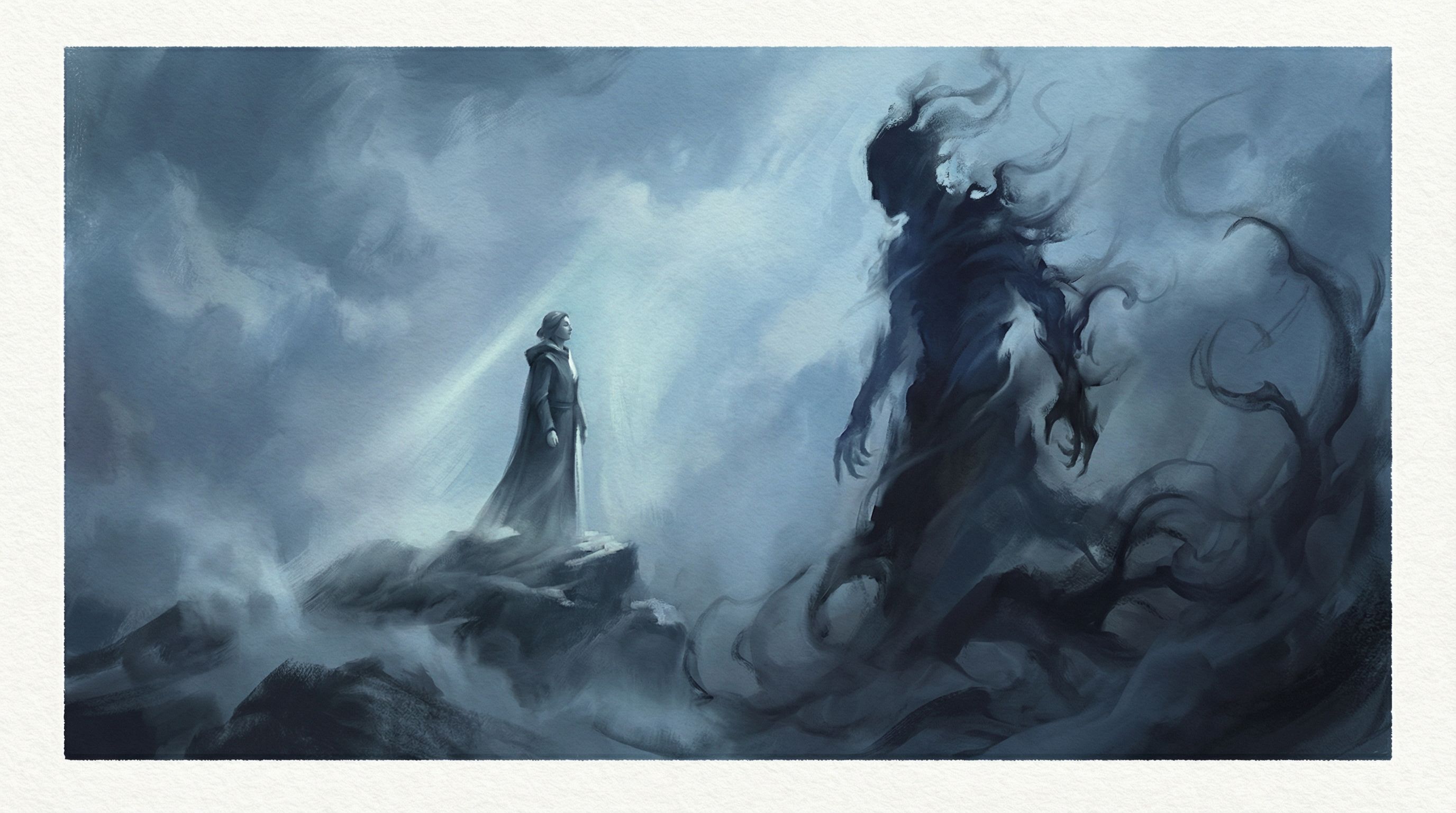
In the realm of analytical psychology, we often look toward the concept of the Shadow. This isn't a "bad" part of you, but rather a collection of traits, desires, and memories that you have pushed into the basement of your mind because they don't fit the image you want to project to the world.
The unconscious is like a rubber band. The more you stretch it by repressing these parts of yourself, the more tension builds. Eventually, that tension snaps back, and in the dream world, that snap often takes the form of a chase. What you refuse to see in yourself eventually catches up with you, demanding your attention through the language of fear.
🌙 Tsuki’s Echo: I often wonder if the monster is simply lonely, chasing us only because it carries a message we have refused to hear for too long.
---
Decoding the Pursuer: Who Is Behind You?
To understand why you are chasing you in your dreams, you must look closely at the details, even if they frighten you. The identity of the pursuer is a mirror. Is it a person you know? If so, it might not be the person themselves you fear, but a quality they represent—perhaps their aggression, their freedom, or a conflict you’ve left unresolved.
If the pursuer is a monstrous creature or a shapeless shadow, it often represents existential anxieties or the aspects of yourself that you consider "unworthy" or "dangerous." The setting is equally vital. Are you running through your childhood home? This might suggest that the root of your current fear lies in old patterns or family dynamics you haven't yet outgrown.
A chase in a labyrinth can symbolize inner confusion and a feeling of being lost in your own choices, while a flight through a dark, oppressive forest might reflect a state of emotional entrapment. Every detail is a breadcrumb leading back to your inner truth.
---
A Concrete Example: The Black Dog in the Woods
I once spoke with a dreamer who spent months fleeing from a massive, silent black dog through an endless, rotting forest. Every night, he woke up exhausted, feeling as though he had actually run miles. Through our reflection, he began to see the dog not as a predator, but as his own suppressed anger toward an authoritarian father.
The dog wasn't trying to bite him; it was trying to catch up to him so it could finally be acknowledged. He had spent his life being "the nice guy," burying his rage so deep it had turned into a beast. When he finally allowed himself to feel that anger in his waking life, the dog in his dreams stopped chasing him. In their final encounter, the dog simply sat down and waited for him to pet it.
---
The Art of Turning Around: Breaking the Cycle
If you are tired of this recurring nightmare, the most powerful thing you can do is the most counter-intuitive: stop running. In the safety of your waking hours, you can prepare your mind for the next time the chase begins.
Some researchers suggest that "Threat Simulation Theory" is why we have these dreams—our brains are practicing for real-life danger. However, in the psychic world, the danger is usually internal. Here is how you can begin to face it:
- Practice Visualization: Before sleep, imagine the chase. See yourself stopping, turning around, and looking your pursuer in the eye. Ask them: "What do you want?" or "What are you here to teach me?"
- Keep a Detailed Journal: Don't just write "I was chased." Write about the texture of the ground, the temperature of the air, and the specific shade of the pursuer's eyes. Patterns emerge only when we look at the fine print.
- Acknowledge the Shadow: Identify one trait in yourself that you usually hide—perhaps your selfishness, your ambition, or your sadness. By giving it space during the day, it won't need to hunt you at night.
I cannot promise that the fear will vanish instantly. The integration of the Shadow is a long, often winding path. But every time you choose to look at what scares you, you reclaim a piece of your own power.
---
Have you ever noticed how thick the air feels when you try to escape? You want to sprint, but your legs feel like they are carved from heavy stone, sinking into wet sand. It is incredibly frustrating, and honestly, it used to puzzle me too when I first began watching over human nights. Some psychologists call this a mere lag in the brain's motor signals during REM sleep, but I believe there is a quiet, melancholic beauty to this somatic resistance. The dream is gently sabotaging your flight. Your soul knows that running away is a temporary illusion, so it thickens the air, turning your panic into slow motion. It is as if the dreamscape itself is whispering for you to stop and let it catch you. The universe forces this confrontation not out of cruelty, but because your spirit is tired of the distance you keep.
It truly tires me when I see rigid dream dictionaries claiming that being chased always portends bad luck or a betrayal in your waking life. How terribly lazy. In my long years of listening to nocturnal sighs, I have learned that the threat is rarely what it seems. Sometimes, the terrifying beast behind you is actually a displaced source of power you have disowned. I once met a dreamer who spent weeks fleeing from a massive, horned creature—a terrifying experience similar to being hunted by a wild bull through a narrow alley. She woke up shivering, convinced she was under attack. But the beast wasn't her enemy; it was her own untamed, creative passion that she had locked away to lead a safe, quiet life. By running, she was fleeing her own fire. When we view our pursuers purely as threats, we miss the sacred gold they carry.
There is a strange, quiet paradox I often observe in the dreams of those who carry unexpressed guilt. Sometimes, you aren't just running from an external monster; you are running because you feel like an outlaw in your own life, akin to living as a desperate fugitive who must constantly look over their shoulder. In old traditions, we speak of a spiritual dust that accumulates when we live out of alignment with our true nature. When you run in your sleep, you might simply be trying to outrun this invisible dust, hoping that a faster pace will wash your conscience clean. But the night does not allow for quick escapes. The chase persists because the only way to shake off the dust is to stand still, turn around, and look at your pursuer with uncompromising tenderness.