Do you ever wake up with the lingering scent of a hallway you haven't walked down in twenty years, or the specific creak of a floorboard from a house that no longer belongs to your family? You might feel a strange mix of nostalgia and unease, wondering why your mind insists on dragging you back to the playground or the primary school classroom. This article explores how these nocturnal journeys serve as a bridge to your "Inner Child," offering you a profound opportunity to decode buried emotions, resolve old tensions, and reclaim forgotten parts of your authentic self through the lens of Jungian symbolism and modern sleep science.
---
The Architecture of the Soul: Why the House Matters
When you close your eyes and find yourself standing in front of your childhood home, you aren't just visiting a memory. In the realm of dream analysis, particularly from a Jungian perspective, the house represents the psyche. It is a physical manifestation of your internal world, where every floor and every corner holds a specific meaning for your current life.
Think about the layout. Are you in the cellar? The cellar often symbolizes the "Shadow"—those parts of yourself you’ve pushed away or hidden because they felt "too much" or "not enough" when you were young. If the cellar is flooded or dark, it might suggest that some repressed emotions are demanding your attention.
Conversely, the attic represents the higher mind, your memories, and perhaps the dusty "relics" of your potential that you’ve left behind. If you find yourself wandering in a ruined childhood home, it isn't a sign of literal disaster. Instead, it might be your unconscious telling you that your old ways of protecting yourself—the "walls" you built as a child—are no longer serving you and need to be rebuilt.
🌙 Tsuki's Echo : I often see dreamers trying to lock the doors of their childhood homes in their sleep. But in the dream world, a locked door is simply an invitation to find the key you hid from yourself long ago.
---
The Classroom of the Unconscious: Tests and Transitions
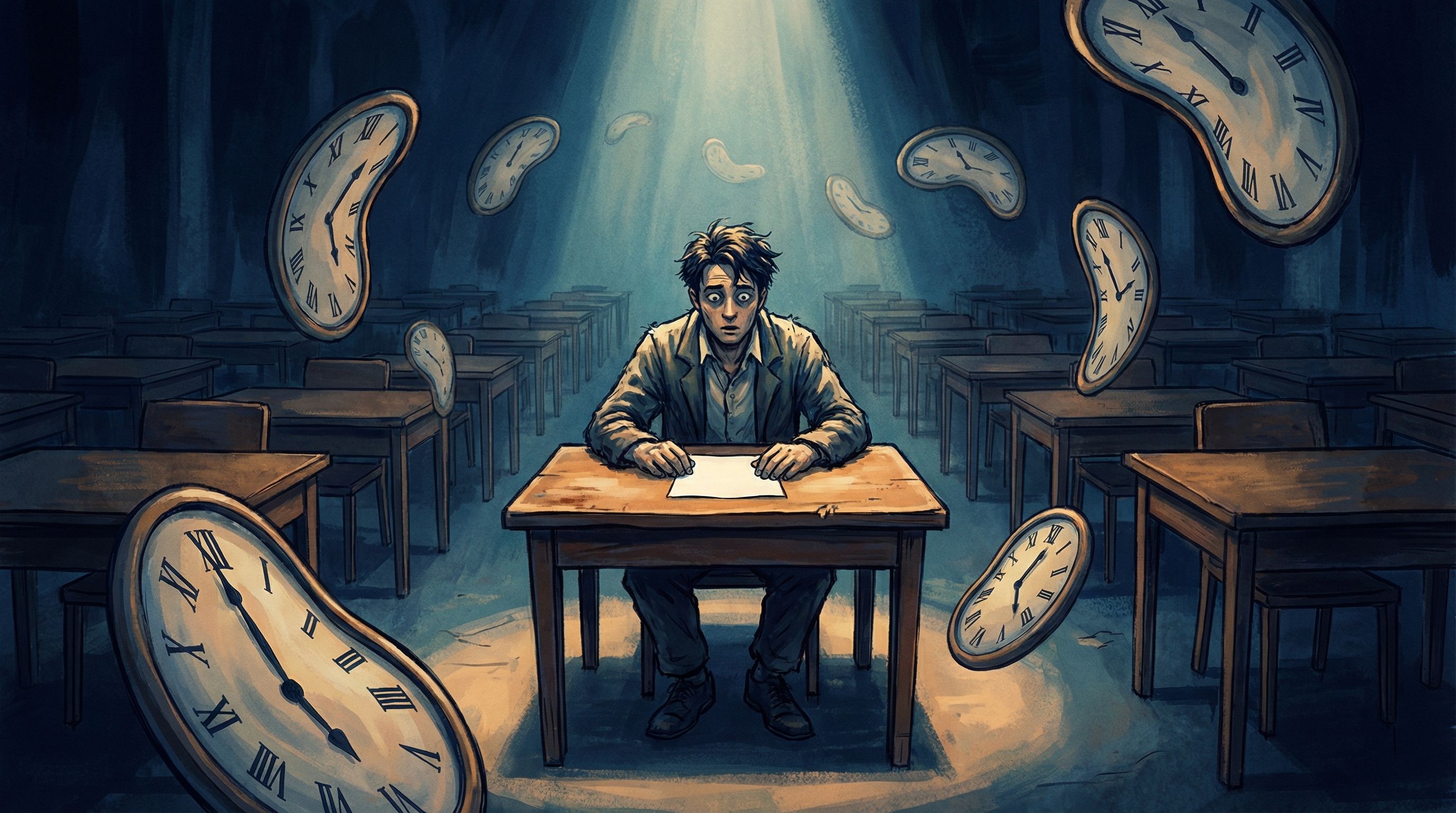
If you aren't in your old bedroom, you are likely back at your desk. school is one of the most common universal dream themes. Even decades after graduation, you might find yourself panicking over a math test or unable to find your locker.
This happens because school was your first major encounter with the "System." It was where you first learned about competition, social hierarchy, and the fear of failure. When you dream of these places today, your mind is usually drawing a parallel between a current stressor—like a high-stakes project at work or a new relationship—and that original feeling of being evaluated.
Are you naked in the hallway? Are you late for a class you didn't know you had? These aren't signs of a failing memory. They are reflections of "Imposter Syndrome" or the feeling that you are being "tested" by life and aren't quite ready. Your unconscious uses the school setting because it is the most potent symbol of "performance anxiety" it has in its library.
---
Concrete Example: The Locked Music Room
Imagine a woman in her thirties, successful in finance but feeling a profound sense of emptiness. She repeatedly dreams of her elementary school, but in the dream, there is a music room at the end of the hall that is always locked. She hears a piano playing inside but can't find the handle.
In her waking life, she had abandoned a passion for music at age twelve to focus on "serious" studies. The dream wasn't telling her to quit her job and become a concert pianist. It was her Inner Child reminding her that her creative, playful side was "locked away" and needed to be integrated into her adult life to restore her sense of joy.
---
Meeting the Child Within: A Path to Integration
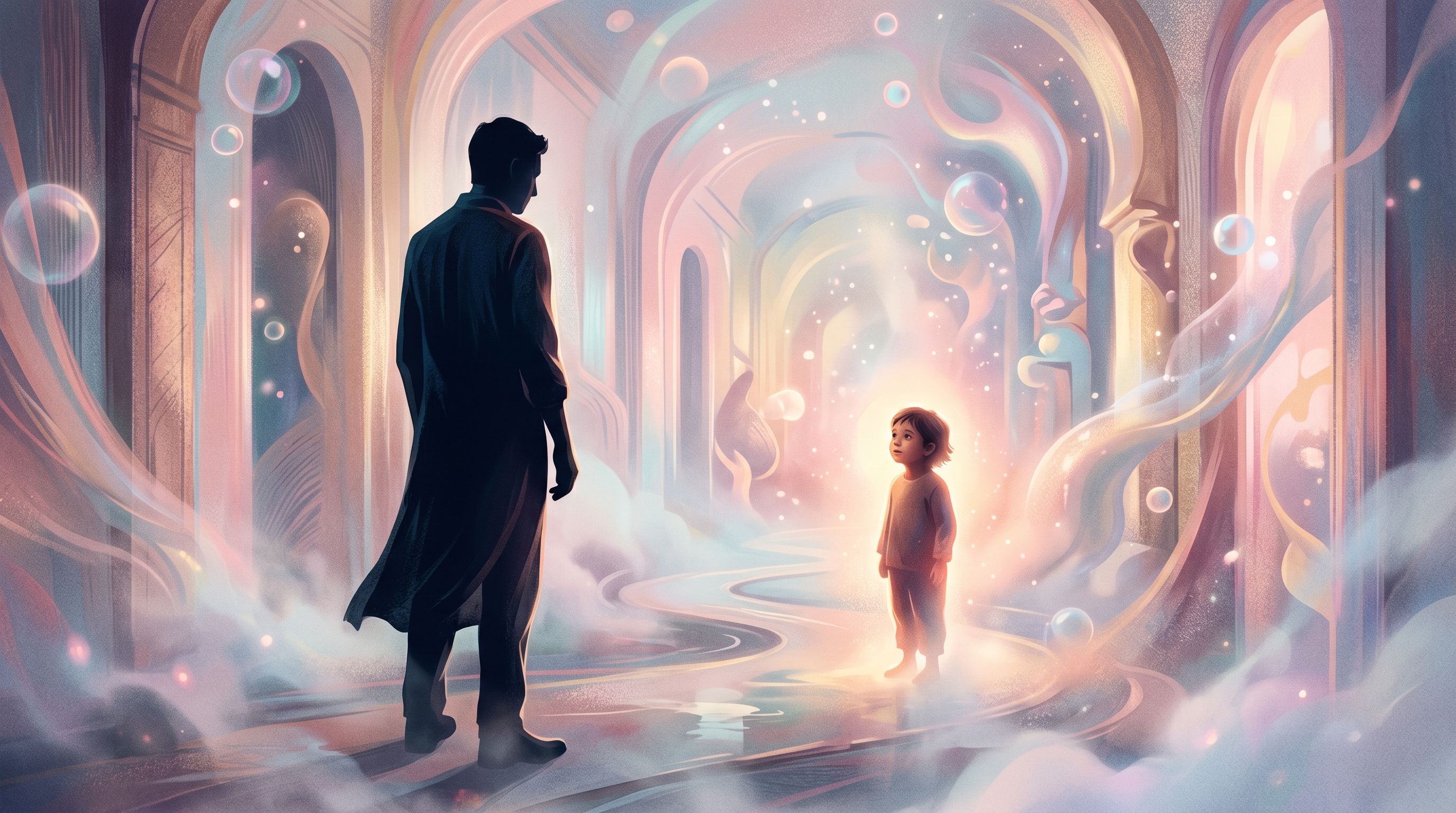
The "Inner Child" is not a literal child living inside you, but a psychological metaphor for the part of your personality that remains curious, vulnerable, and spontaneous. It also carries the "wounds" of your first rejections. When you dream of your childhood, that child is calling you on a private line.
Some researchers suggest that dreaming serves a function of "emotional regulation." By revisiting these old settings, your brain may be trying to "re-process" old emotions with the wisdom of the adult you are now. It’s a form of internal diplomacy.
If the child in your dream is crying, lost, or angry, don't turn away. Ask yourself: what did I need back then that I can give myself now? Sometimes, the simple act of acknowledging the dream version of yourself—offering that "dream-child" a hand or a kind word—can shift your mood for the entire following day.
---
How to Work With Your Childhood Symbols
You don't need to be a psychoanalyst to start understanding these messages. It requires patience and a bit of "dream hygiene."
- Observe the state of the building: Is the childhood home clean, or is it falling apart? This reflects your current level of self-care and internal stability.
- Identify the "Grown-ups": Who else is in the dream? If your parents appear as they were twenty years ago, they might represent "internalized voices" of authority or criticism that you are still listening to.
- Track the emotions, not just the plot: The "vibe" of the dream is more important than the actual events. Feeling "trapped" in a childhood bedroom is a different message than feeling "safe" there.
- Practice kindness: If you encounter a younger version of yourself, treat them with the compassion you would show a real child.
I often find that these dreams become less frequent or more peaceful once the dreamer acknowledges the underlying message. The unconscious doesn't like to repeat itself if it feels it has been heard.
---
I once met a dreamer who was haunted—not by ghosts, but by a faded, threadbare rabbit she had discarded decades ago. In her dreams, this toy would appear in the most unexpected places: under the sink of her sleek modern apartment, or sitting silently on her office chair. She felt a bizarre wave of shame every time she saw it. We often forget that our childhood objects carry the literal imprint of our earliest coping mechanisms. When you find yourself dreaming of a stuffed animal or a dusty toy from your past, your sleeping mind isn't just being sentimental. It is holding out a physical anchor of safety. That worn-out fabric represents the exact moment you learned how to soothe yourself when the world felt too loud. Don't sweep it under the rug; hold it. It still knows how to quiet your racing thoughts.
Honestly, it tires me to see those popular dream dictionaries declare that returning to your childhood home always means a longing for simpler times. What a lazy, privileged assumption. For many of us, childhood was a battlefield, or at least a highly confusing play of shadows. What does it mean when you dream of a peaceful afternoon in a house where you actually felt miserable? Or conversely, why does a happy childhood home feel so threatening in your sleep? The psyche doesn't follow chronological facts; it works in emotional truths. Your mind might use the house as a mirror of the psyche to stage a reconciliation. It recreates the old hallways not to trap you in past wounds, but to let you walk through them now with the strength and agency of the adult you have become. You are finally big enough to face the monsters under that old bed.
Have you noticed how these dreams tend to flood your nights when you are on the precipice of a massive life change? Perhaps you are about to start a family, change careers, or step into a quiet isolation you aren't used to. In the ancient, quiet ways of looking at the spirit world, we don't see time as a straight road. It is a spiral. When you loop back over the vertical axis of your life, you find yourself directly above the child you once were. Your unconscious is simply checking in, making sure that as you step into this new chapter, you aren't leaving your core behind. Reconnecting with your inner child in these threshold moments is a beautiful, sometimes painful reminder that you are a composite of all your ages. Every version of you is still awake, waiting to see how you will handle the journey ahead.