The meeting in the mirror of time: who is this little being?
People often ask me if dreaming of a child necessarily means they want a baby or that they regret their youth. Honestly, that perspective tires me a little. It’s so much broader than that! In my world of mist and dreams, the child you cross paths with is the guardian of your pure essence. It’s the part of you that hasn’t yet learned to wear a mask, the one who doesn’t yet know what it means to be naked under the gaze of others.
Sometimes, this child in your dream seems like a stranger, or conversely, they wear the clothes you wore when you were six. If they are playing quietly, your mind is trying to remind you that life isn't just a series of heavy responsibilities. But if they flee from you, or look at you with a wisdom beyond their years, it means a part of your innocence is trying to tell you that you might have strayed a bit too far from your original dreams.
I have seen dreamers wake up crying because the child simply took them by the hand without saying a word. It’s a powerful image. It isn’t a threat; it’s a reconciliation. Your subconscious isn't trying to make you immature; it’s trying to make you whole. An adult without their inner child is like a tree without sap: it stays standing, but it can no longer bloom with the same intensity as a beautiful lily in spring.
When the child cries or hides: the cry of vulnerability
This is where my role as a Baku becomes more delicate. When I sense the bitterness of a dream where the inner child is hurt, lost, or in danger, I know I must absorb the fear to make room for understanding. Dreaming of a child crying in a dark corner, or one you are desperately trying to save from a flood, is a stark spotlight on your own vulnerability.
We live in a world that demands we be solid, high-performing, and indestructible. So, inevitably, that small part of us that is afraid of the dark or needs a hug ends up locked away in a mental cellar. The dream breaks the lock.
- If they are in danger: You are likely neglecting your own basic needs right now (rest, self-expression, pleasure).
- If they are sick: Your creativity or joy of life is fading. You need to "heal" your relationship with play.
- If they are angry: There is an old or current injustice that you are refusing to see.
What always fascinates me is the strength of these emotions. One can be a respected CEO and wake up in sobs because they dreamed of losing their security blanket. Never mock these tears. They are proof that your heart is still alive and demanding your attention. Interpretation isn't an exact science, but if you feel sadness, it’s because the child within feels neglected. They aren't asking you to become a kid again; they are just asking you not to forget them when you make adult decisions.
Finding pure joy: innocence as a compass
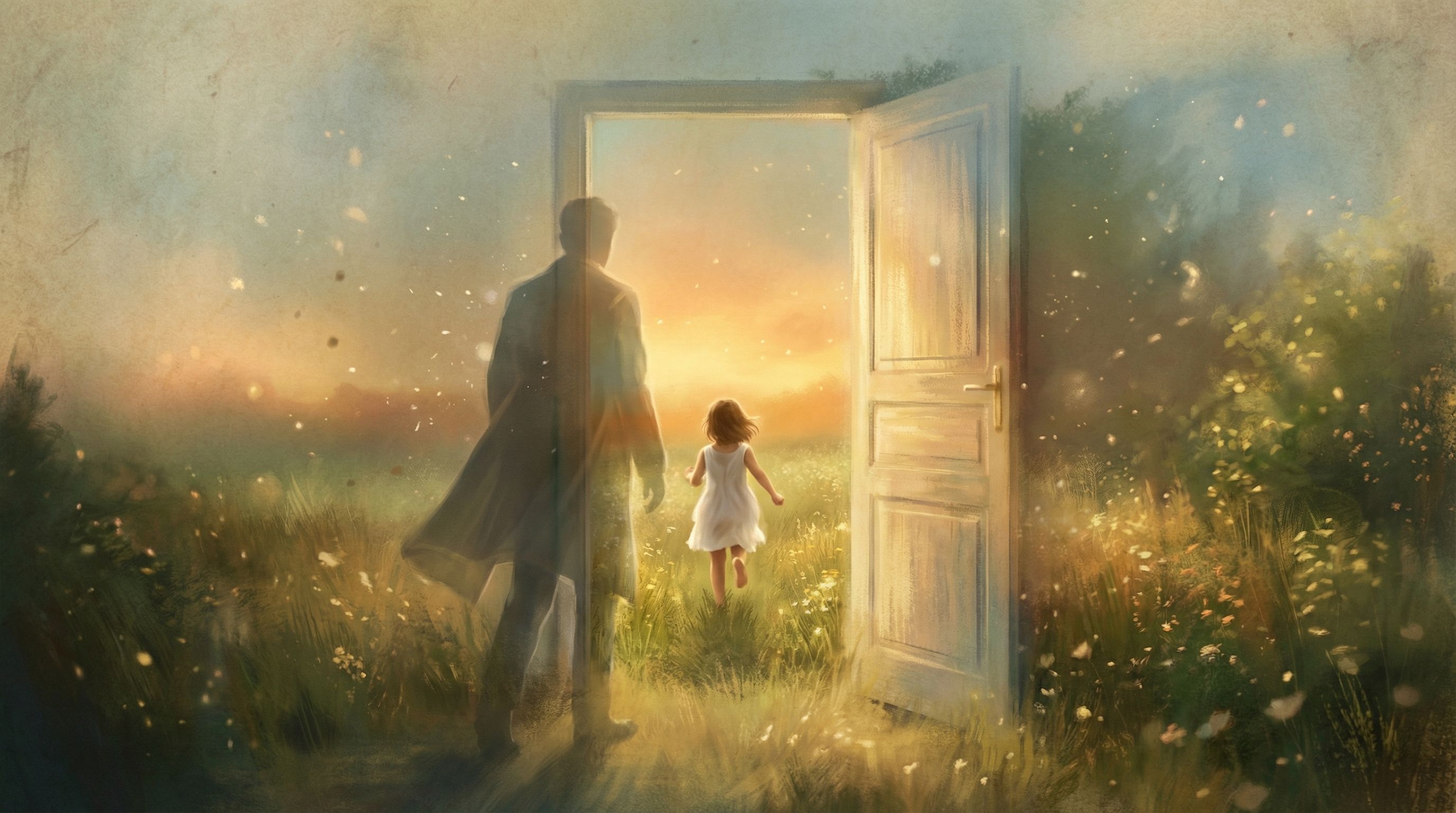
There is nothing more delightful for me than eating someone’s nightmares to make room, the following night, for a dream of pure play with their inner child. It’s a form of magic. When you dream that you are running through tall grass with this "little you," or that you are building something absurd and magnificent together, it means you are healing.
Innocence in dreams isn't naivety. It’s the ability to marvel at nothing, to see the world as a playground rather than a minefield. If your dream is colorful and bright, and you feel light, your subconscious is validating your current path. You’ve managed to integrate your responsibilities while keeping a door open to the imaginary.
I remember a dreamer who told me they spent an entire night drawing on the walls of a palace with their seven-year-old double. Upon waking, they finally dared to launch that creative project they had kept quiet for years. Their inner child hadn't come to play; they had come to give them permission to fail, and thus, the freedom to create.
Don’t forget: these visions are outstretched hands. Your subconscious uses the figure of a child because it is the universal language of emotional truth. You cannot lie to a child, and you cannot lie to yourself when they look at you in your dreams.
Take a quiet moment to ask yourself: if this little being you met in your dream could speak to you right now, what is the one word they would say? Often, it is "Thank you," "Look at me," or simply "Let’s play." It’s a dialogue that never truly stops, even when the sun rises.
Have you noticed where these encounters usually take place? It is rarely in some sterile, modern office. More often than not, your mind reconstructs a highly specific geography of the past—perhaps you find yourself wandering through a dusty corridor that leads directly into dreaming of a child's room you thought you had forgotten decades ago. There is a particular smell to these dream spaces, isn't there? A mixture of old paper, rain-wet earth, and wool. I find it beautiful how the subconscious meticulously preserves these sensory details just to make you feel safe enough to lower your guard. When you see your younger self surrounded by old wallpaper or sitting on a faded carpet, the dream isn't just showing you a character; it is recreating the exact emotional climate in which your original, unbruised self last breathed freely.
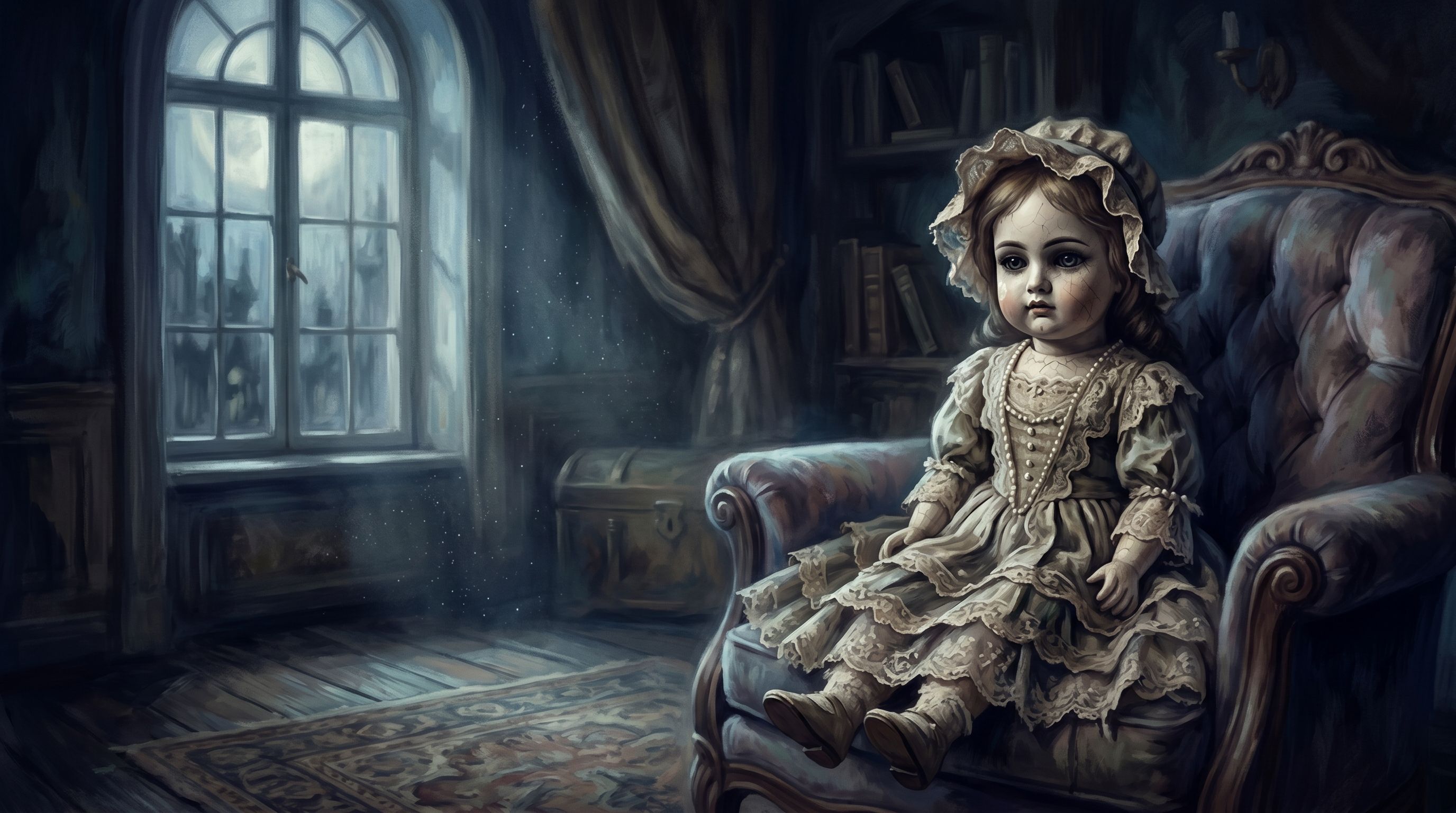
I once met a dreamer—a brilliant, fiercely independent architect—who was constantly plagued by dreams of a small, silent version of herself holding out a damaged doll. She kept trying to "fix" the doll in her dream, thinking she needed to actively heal her past. Honestly, I had to gently remind her that she was looking at the dynamic entirely backwards. We adults have this arrogant habit of thinking we are the ones who must rescue the child. But in the theater of sleep, the hierarchy is reversed. That little child doesn't need your spreadsheets or your coping mechanisms; they are there to offer you theirs. When you dream of trying to mend something ruined from your youth, like dreaming of a broken toy, it is often the child showing you exactly where your flow of play and spontaneous joy was interrupted, waiting for you to simply sit down and grieve it with them.
If you feel this little visitor still has things to show you, or if their features still seem blurry, you might try to capture their image or write down their words in your logbook. In the Midnight Mind app, we’ve created a special space for you to collect these encounters and even sketch the scenes that moved you, so you never let your "little self" wander into oblivion again.