Why does this sob resonate so deeply within your soul?
I have spent eons wandering through the landscapes of the human mind, and I can tell you that few symbols carry as much weight as a child in distress. When you see a crying child in your sleep, it is easy to fall into the trap of fear. You might worry about the future or feel a sense of impending gloom. However, I want you to set aside those dusty, old interpretations that speak of "bad luck."
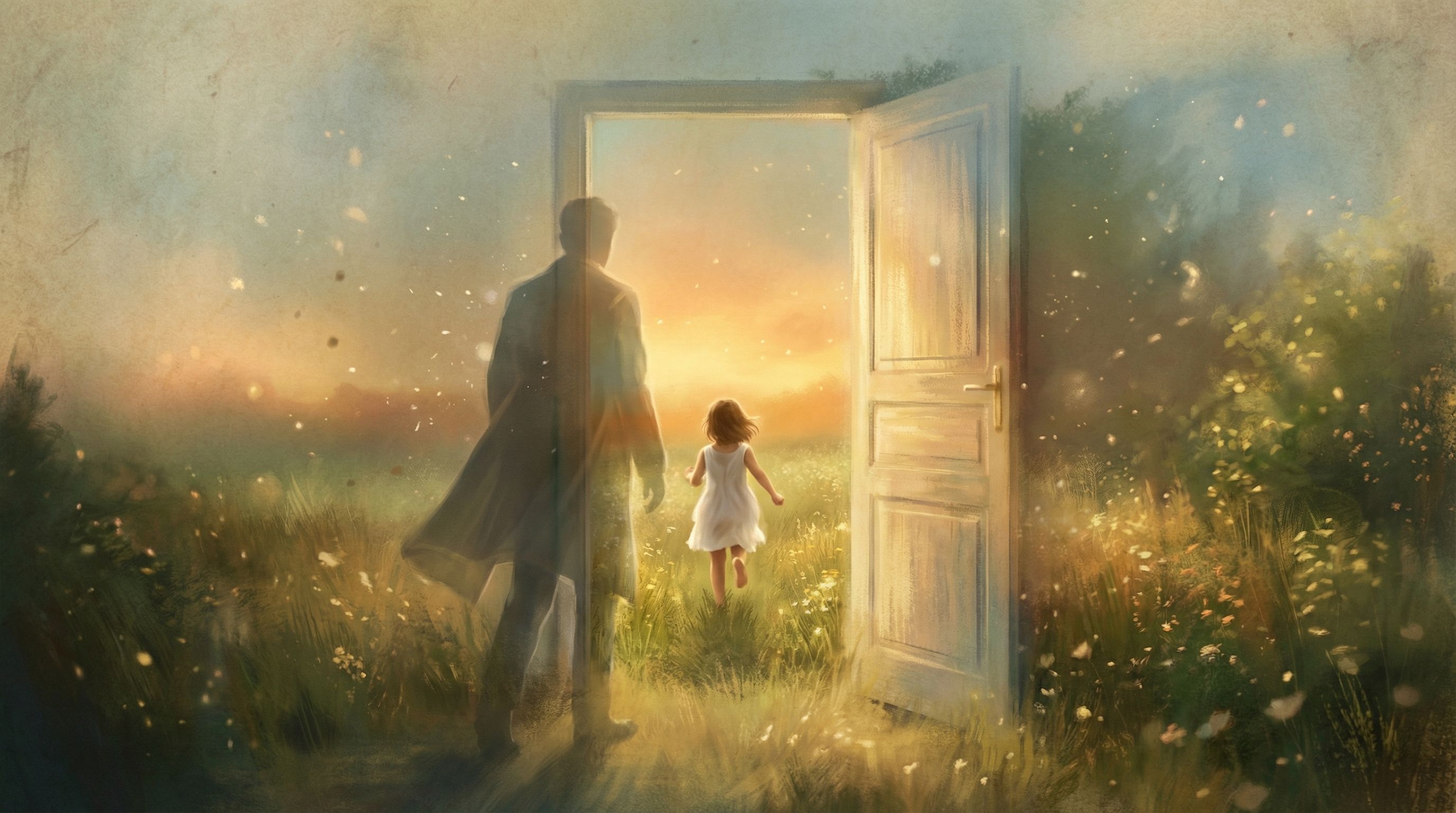
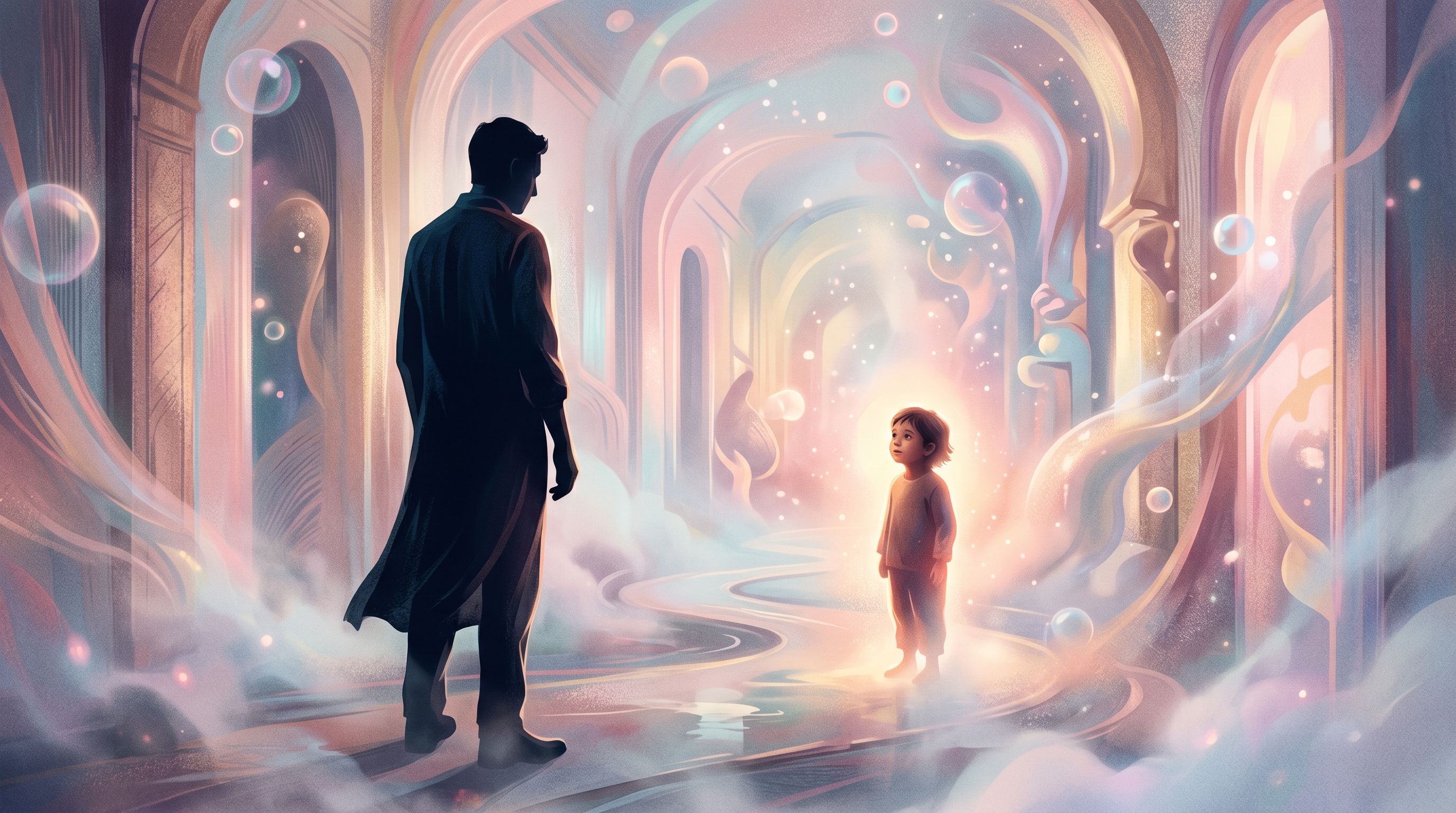
In the language of your psyche, a child represents potential, purity, and the most authentic version of yourself. When this child cries, it is a call for help from your own internal world. Perhaps you have been "too much of an adult" lately—too rigid, too focused on productivity, or too concerned with the judgments of others.
This dream often surfaces when you have stifled your simplest desires or ignored your intuition. Imagine a tiny version of yourself sitting in a quiet corner of your mind, waiting for you to notice them. Your subconscious uses the sound of a sob because it knows you cannot ignore it. It is an emotional lever designed to make you stop and look inward. Your vulnerability is not a weakness you must hide; it is the very doorway to your true strength.
---
The nuance of the tears: What your dream setting reveals
In the realm of dreams, the context is just as important as the symbol itself. I have watched dreamers encounter weeping children in crowded train stations, ancient forests, or even their own childhood homes. Each detail is a brushstroke in the portrait of your current emotional state.
If you find the child is lost, it often points to a feeling of disorientation in your waking life. You might feel as though you have lost your way or that your inner compass has become blurred by the expectations of society. This is a common vision when you are waking up with a start, feeling the pressure of a path that doesn't truly belong to you.
If the child is crying out of anger or frustration, the meaning shifts. This is often a part of you that feels unfairly treated. Do you allow yourself to say "no"? Do you respect your own boundaries? A child screaming in a dream is frequently the spokesperson for an anger that you deem "immature" and refuse to express during the day.
And then, there are those rare, deep dreams where you are the child. In these moments, the connection is direct and raw. You are diving into your emotional memory, touching a stored feeling that needs to be "cried out" to be released. As a Baku, I see these tears as a healing rain. They wash away the dust that has accumulated on your spirit, leaving you refreshed, provided you don't turn away from the pain.
---
A scientific perspective on emotional processing
While the mystical side of dreams is beautiful, we must also look at what the science of sleep tells us. Researchers in the field of psychology suggest that dreaming serves as a form of nocturnal therapy. During REM sleep, your brain processes complex emotions in a state where stress chemicals, like noradrenaline, are remarkably low.
Some specialists believe that dreaming of a crying child is your brain's way of "simulating" a vulnerable state to help you build emotional resilience. By facing this distress in the safety of your sleep, you are practicing how to handle your own fragility. It is an act of integration, where your mind tries to weave a difficult emotion into the larger tapestry of your identity.
🌙 The echo of Yume : Tears in a dream are never wasted; they are the ink with which your soul writes its most honest stories.
---
Concrete Example: The Architect's Hidden Garden
Consider the story of a dreamer I once visited—a successful architect who spent her days designing rigid, functional structures. For weeks, she dreamt of a small boy crying in a garden she couldn't enter. She felt a deep sadness every time she woke up.
Through reflection, she realized the boy represented her lost love for painting—a "useless" hobby she had abandoned to focus on her career. The garden was her creativity, locked away. Once she picked up a brush again, not for profit but for play, the child in her dreams stopped crying and began to show her his drawings instead. This is the power of saving a child within your own subconscious; it restores the flow of your life.
---
How to soothe this little being (and yourself)
I would be quite pretentious if I told you there was a single "fix" for this dream. Interpreting your inner world is a personal journey, not an exact science. However, my experience as an eater of nightmares has taught me that running away from the sound only makes it louder.
If you encounter this child again, try not to wake up immediately. If you can, stay in the moment. Ask the child: "What do you need?" or "Why are you sad?" The answer is rarely about something material. Usually, it is a need for recognition, rest, or tenderness.
Sometimes, the child just needs to know they are safe. By looking after this symbolic being, you are repairing circuits within yourself that you thought were broken. You are telling your subconscious that you are a safe harbor for all your emotions, even the "loud" ones.
Dreams are not threats. They are coded messages—slightly crumpled love letters sent by your deepest self. Welcome these tears as a chance to renew the dialogue with who you truly are. It is an act of immense bravery to look your own sadness in the face and say: "I hear you, and I am here."
If this little being continues to visit you, or if you feel the need to document these nightly encounters to find a pattern, your Baku is always waiting to help you listen. Keeping a record of these visits can help you transform those tears into a quiet, enduring strength.
Has this symbol stirred something in you? Don’t hesitate to explore your other visions to see how they fit together, like pieces of a puzzle just waiting to be assembled.
Honestly? It tires me to see how modern manuals treat these nocturnal tears as a crisis that needs immediate fixing. "Heal your inner child," they scream, as if the soul were a broken clock to be repaired. I once met a dreamer, a weaver from Kyoto, who dreamt of a weeping toddler sitting beside her loom night after night. She desperately tried to feed it, sing to it, and make it stop. But the child didn't want a lullaby; it simply wanted her to stop weaving for a moment and look out at the falling rain. Sometimes, when you dream of a crying child, you are actually experiencing the raw, unfiltered ache of dreaming of abandonment—not as a permanent curse, but as a quiet, sacred space where you finally allow yourself to feel lonely without trying to "cure" it.
There is also a strange, heavy physical sensation that often accompanies this dream—a feeling of leaden limbs or a voice that refuses to make a sound as you try to reach out. You want to cradle the weeping infant, but the distance between you feels infinite, almost as if you are observing them from a parallel world. This somatic frustration is a profound teaching. It mirrors the invisible walls we build around our own tenderness during the waking hours. When you cannot physically comfort the child in your sleep, it is because your waking mind is still too guarded, too wrapped in its armor of adulthood. The dream is not punishing you; it is showing you the exact thickness of your defenses. It invites you to soften, to realize that reclaiming your inner child is not an overnight victory, but a slow, necessary melting of winter ice.