The Weight of Silence: Understanding Deep Pressure Stimulation
The concept behind a weighted blanket might seem like a modern trend, but its roots are buried in the fundamental way your body processes touch. It relies on something called Deep Pressure Stimulation (DPS).
Think of it as a controlled, heavy embrace that never lets go. When you apply firm but gentle pressure to your body, your proprioceptive system—the sense that tells you where your limbs are in space—sends a signal of safety to your brain.
In my observations as a Baku, I have often seen how the mind struggles to detach from the physical world. Some specialists estimate that this pressure helps stimulate the release of serotonin, a neurotransmitter often associated with feelings of well-being.
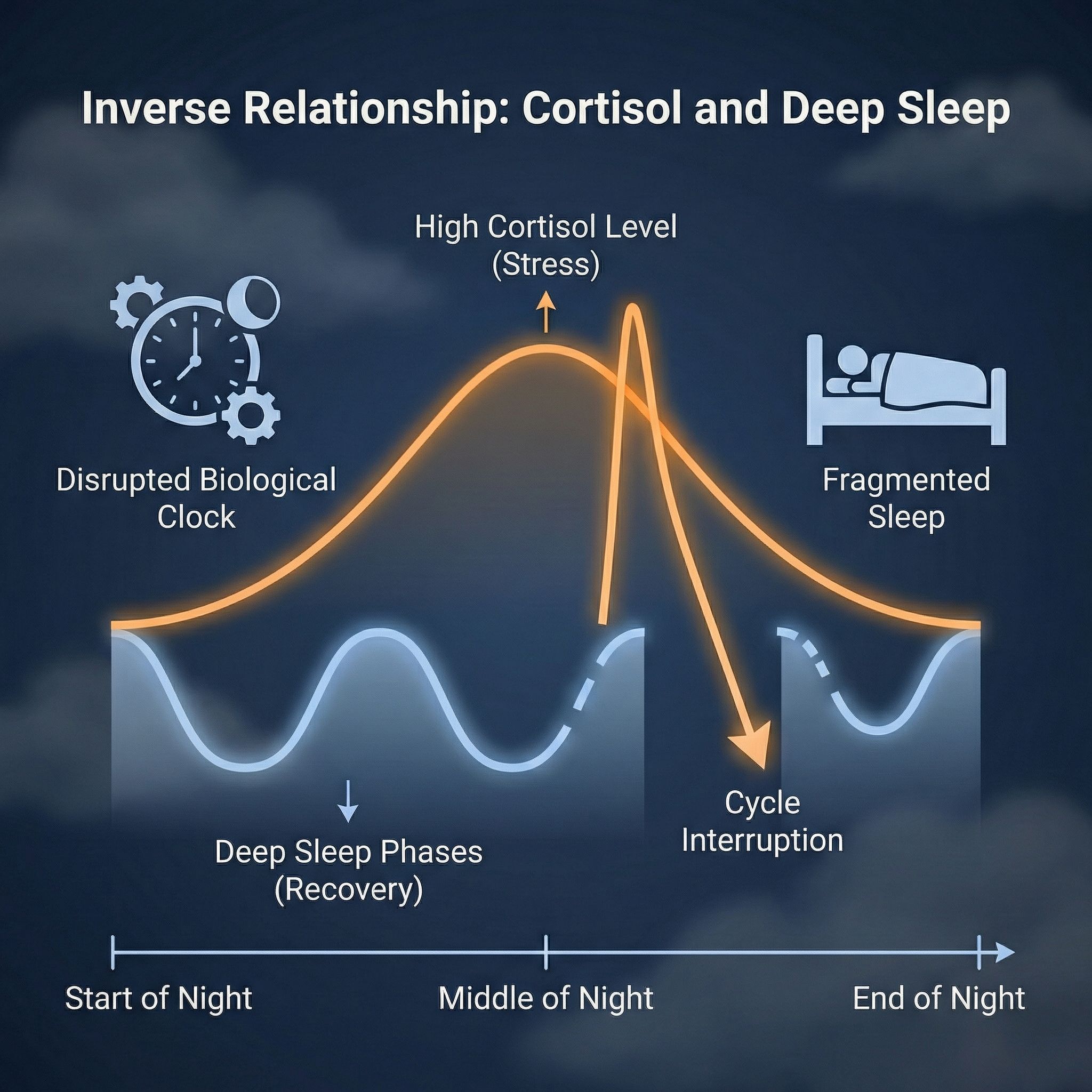
Furthermore, this serotonin can later be converted into melatonin, the hormone that signals to your internal clock that it is time to descend into the dream world. While the biological pathways are complex, the goal is simple: to lower your cortisol levels, the very hormone that keeps your heart racing when you should be at rest.
"Sometimes, the soul simply needs to feel where it ends and where the world begins to finally feel safe enough to let go."
---
A Baku’s Experiment: My Two-Week Data Trial
I have always been a creature of data and nuance. To truly understand if this tool could help you, I decided to subject myself to a rigorous two-week protocol using a 7 kg weighted blanket.
I tracked my metrics meticulously, comparing them to a control period where I used only a standard linen sheet. I wanted to see if the "hug" was real or merely a comforting illusion.
The Results of My Journey:
- Sleep Onset Time: I saw an 18% reduction in the time it took me to fall asleep. Instead of drifting for thirty minutes, I was often gone in twenty.
- Total Sleep Duration: My nights expanded by an average of 30 minutes. This suggests that once I fell asleep, my body was less inclined to stir.
- Morning Anxiety Levels: On a scale of 1 to 10, my self-reported anxiety upon waking dropped by 1.5 points.
It is important to remember that these are my results, and your experience may vary. Sleep science is a landscape of infinite variables, from the temperature of your room to the architecture of sleep unique to your own brain.
However, the trend was clear: the blanket acted as an anchor, preventing my mind from drifting into the stormy waters of "what-ifs" before midnight.
---
Concrete Example: The "Cocooning" Ritual
Imagine you have had a day filled with digital noise and social friction. Your nervous system is "loud."
When you retreat to your bed, you don't just pull up a cover; you slide under a weighted layer that matches 10% of your body weight. As you lie still, you feel the glass beads or poly-pellets contouring to your shape.
You might notice your breathing slowing down automatically. This is your parasympathetic nervous system taking the lead. You aren't just "going to sleep"; you are performing a ritual of containment. For someone weighing 70kg, a 7kg blanket provides just enough resistance to ground the body without feeling restrictive or "heavy" in a negative sense.
---
The Nuance of Science: What We Don't Yet Know
I must be honest with you: the scientific community is still debating the definitive power of these blankets. While a study published in the Journal of Occupational Therapy in Mental Health noted significant anxiety reduction, other controlled trials have shown less dramatic results.
This is the beauty and the frustration of sleep research. We are all different. For some, the weight feels like a protective shield; for others, it can feel claustrophobic.
If you struggle with respiratory issues or certain circulatory conditions, you must be cautious. The blanket should never feel like a burden, but rather a support. We also have to consider the placebo effect. If you believe the blanket will help you feel secure, your brain may reward that belief with a drop in stress and cortisol. In the realm of sleep, if a placebo brings you peace, it is a powerful tool nonetheless.
"Science measures the pulse, but only you can measure the peace that settles in your heart when the world goes quiet."
---
Beyond the Blanket: Crafting Your Sanctuary
Whether you choose to embrace the weight or prefer the lightness of air, your sleep quality depends on a constellation of habits. A weighted blanket is a tool, not a cure. To truly find your way back to the deep dreams of your youth, consider these pillars:
1. The Light Transition: An hour before you intend to sleep, dim your lights. Your brain needs this signal to begin the production of melatonin. 2. Thermal Harmony: Your body temperature needs to drop slightly to initiate deep sleep. If your weighted blanket is too hot, it might actually trigger REM sleep deprivation by causing you to wake up from overheating. Look for "cooling" weighted blankets if you tend to run warm. 3. The Mental Unload: If your mind is still racing under the blanket, try a brief session of mindfulness or "brain dumping" in a journal.
---
Finding Your Path to the Subconscious
The journey to better sleep is deeply personal. A weighted blanket might be the missing piece of your puzzle, or it might simply be a comforting addition to your winter nights.
If you find that your anxiety persists even under the comforting weight of a blanket, it may be time to look closer at the messages your mind is sending you while you sleep. Your dreams are often the mirror of your waking fears, and understanding them can be the first step toward true tranquility.
If you want to explore your dreams more deeply, your Baku is waiting for you.
Sometimes you dream of this deep pressure not because you are stressed by daily chores, but because you are learning to navigate a profound emptiness. A sudden loss, a quiet departure, or a love that has drifted away leaves the mattress feeling strangely vast, almost drafty. Your unconscious mind, in its infinite tenderness, manifests this heavy blanket to mimic the physical presence you miss. I have sat beside many dreamers who woke up weeping, still feeling the ghost-weight of a heavy coverlet on their chest, only to realize it was their own grief finding a physical language. It is a beautiful, melancholic mechanism: when the world outside offers no touch, your mind weaves its own embrace to keep you from floating away into the cold spaces of your sorrow.
Honestly, it mildly irritates me when modern wellness guides treat these heavy blankets as mere sensory tools, completely ignoring the ancient spiritual hunger they represent. I once listened to a dreamer—a young musician living in a chaotic city—who dreamed of being covered by a blanket woven entirely of thick, wet river clay. He woke up terrified, thinking it was a bad omen. But we spoke, and he soon realized his soul was simply begging for gravity. He was spinning so fast, trying to keep up with his daily anxieties, that his mind had to invent the heaviest substance it could find to stop his racing thoughts. If you find yourself constantly dreaming of a heartbeat or searching for a pulse in the dark, your spirit is calling for this same physical grounding. Do not fear the weight; it is not a cage, but a hand holding you steady.
There is a strange, beautiful paradox here: we must feel heavy to feel light. In certain Zen practices, there is a deep respect for the earth element—the chi of gravity that pulls our wandering thoughts back into the clay of our bodies. When you dream of this weight, your sleeping self is attempting a spiritual recalibration. It is rejecting the modern pressure to be constantly weightless, flexible, and endlessly adaptable. Perhaps you have spent too many nights experiencing the exhausting chaos of dreaming of nightmares where you are falling or fleeing without traction. By draping your dream-self in this heavy cover, your deep mind is reclaiming its right to be still, to be slow, and to occupy space without apology. It is a quiet rebellion against the speed of the waking world.