The Decline in Sleep: A Global Phenomenon Fueled by Technology?
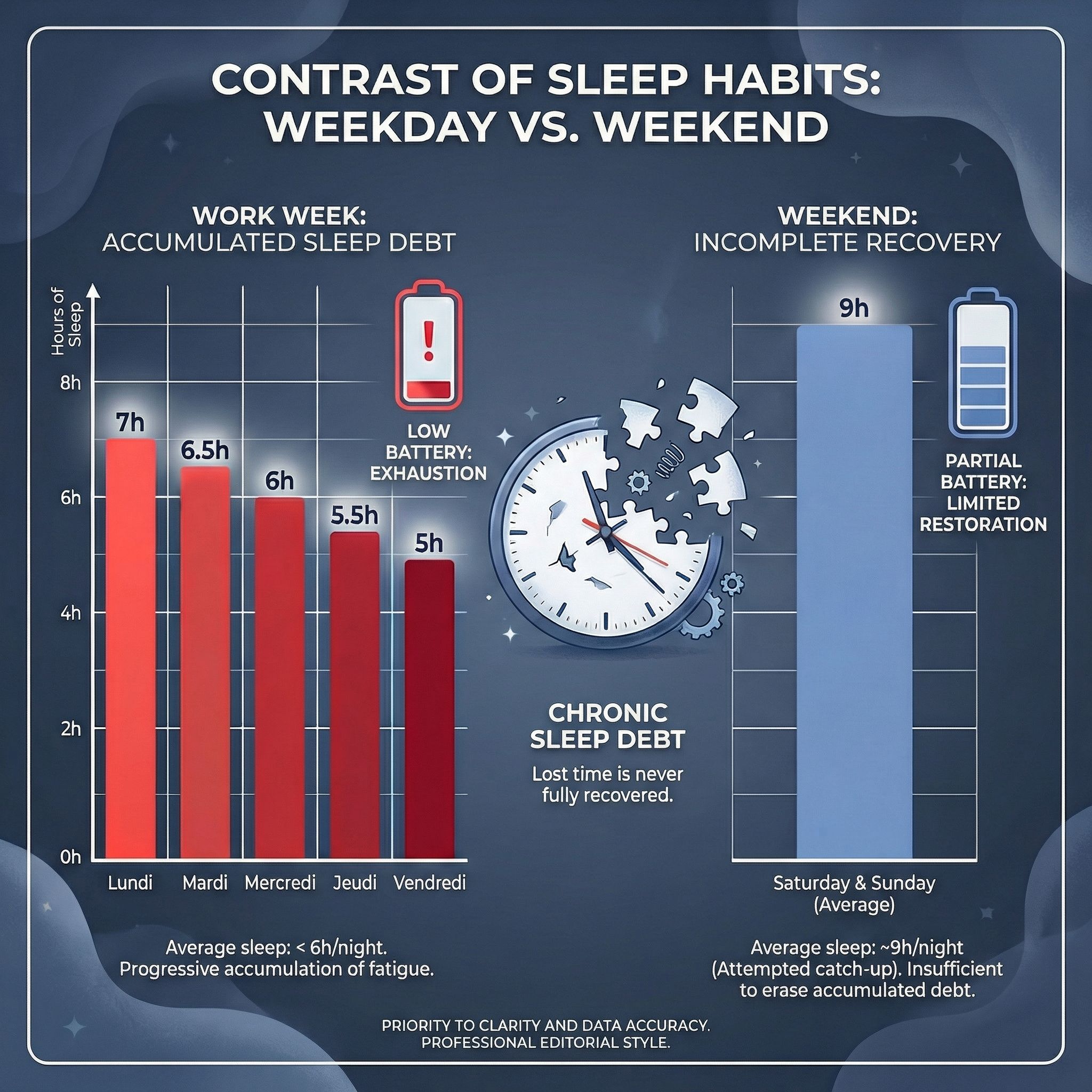
We've seen a constant erosion of sleep time for decades. But 2025 marks a breaking point. The data from our sleep sensors (and yes, I emphasize our to stress that this isn't just an American study) shows a clear acceleration of this trend. Why? Several factors are at play.
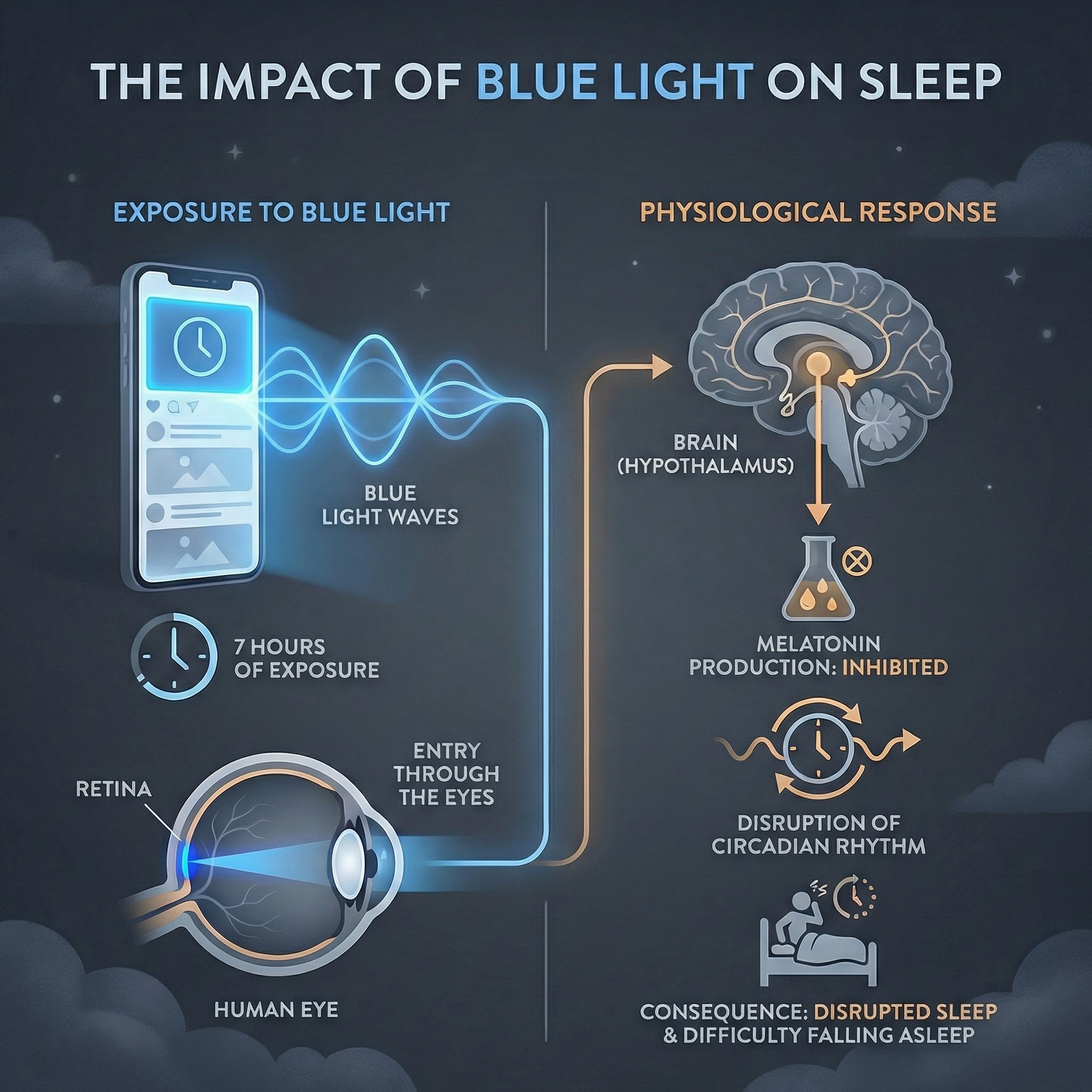
- Hyper-Connectivity: We know it, but we don't measure it enough. The blue light from screens, the constant stimulation of notifications, the social pressure to always be available... All of this literally messes with our circadian rhythms. And that's not a metaphor. Recent studies show a direct correlation between heavy social media use in the evening and the drastically reduced production of melatonin, the sleep hormone.
- Chronic Stress: Inflation, geopolitical uncertainty, work pressure... Admit it, you're overthinking things, aren't you? Mental rumination before sleep is a real scourge. We go around in circles, anticipate the worst, and simply forget to relax.
- Ambient Temperature: With global warming, nights are hotter, even with air conditioning. However, the ideal temperature for sleeping is between 60 and 66 degrees Fahrenheit (16 and 19 degrees Celsius). Beyond that, sleep quality decreases significantly. It's silly, right? But it's proven.
- Noise: Noise pollution is constantly increasing, especially in urban areas. It's hard to find peace and quiet when sirens, horns, and nocturnal conversations are omnipresent. Earplugs can help, but it's only a partial solution.
Macroeconomic Impact: The Sleep Debt
We talk a lot about public debt, but rarely about sleep debt. Yet, it costs a fortune. A study by the RAND Corporation estimated that lack of sleep costs billions of dollars each year in lost productivity, workplace accidents, and healthcare expenses. In 2025, it's estimated that productivity loss due to lack of sleep increased by 15% compared to 2020. That's huge.
And that's not all. Lack of sleep also affects:
- Creativity and Innovation: A tired brain is a less efficient brain. Innovative ideas have a harder time emerging.
- Decision-Making: Lack of sleep impairs our ability to assess risks and make informed decisions.
- Interpersonal Relationships: We're more irritable, less empathetic, and we have more trouble managing conflicts.
In short, sleep debt is a major problem that hinders economic and social development.
Beyond the Numbers: The Impact on Dreaming
As a Baku, I can't ignore the impact of this lack of sleep on dream activity. Recent studies show that decreasing REM sleep (the sleep phase where we dream the most) leads to a reduction in the vividness and complexity of dreams. We remember our dreams less, and they are less rich in emotions and symbols. And that, frankly, is a shame. Because dreams are an invaluable source of information about our unconscious, our fears, our desires, our aspirations...
I remember a dreamer who, after improving the quality of his sleep, saw his dreams become much clearer and more meaningful. He was thus able to identify emotional blockages and limiting thought patterns.
How to Reverse the Trend: Some Optimization Strategies
Okay, we've painted a somewhat grim picture. But it's not too late to act. Here are some optimization strategies:
1. Optimize your sleep environment: A cool, dark, and quiet room. Invest in a good mattress, comfortable pillows, and blackout curtains. It's basic, but it works.
2. Establish a bedtime routine: Create a relaxing ritual to signal to your body that it's time to sleep. Read a book (a real book, not on a screen!), take a warm bath, listen to soft music... To each their own.
3. Avoid screens before sleeping: I know, it's hard. But try to disconnect at least an hour before going to bed. And if you really have to use a screen, activate the blue light filter.
4. Manage your stress: Meditation, yoga, breathing exercises... Find a technique that allows you to relax and release tension.
5. Take care of your diet: Avoid heavy and sugary meals in the evening. Favor foods rich in tryptophan, an amino acid that promotes the production of melatonin (it's found in almonds, walnuts, chicken...).
Honestly, I'm not sure it will work for everyone right away. Sleep optimization is a process that takes time, patience, and perseverance. But it's worth it.
Technology at Your Service (and Not the Other Way Around)
Technology can be part of the problem, but it can also be part of the solution. There are many apps and connected devices that can help you track your sleep, identify the causes of your problems, and implement improvement strategies.
Have you ever noticed how a dehydrated night tastes in your mouth when you wake up? It is not just about physical thirst; it is a spiritual dryness. When your internal thermostat is skewed by stress and screens, your dreams lose their fluid, watery grace. I often see people wandering through deserts or trapped in small, windowless rooms in their sleep, unaware that their own bodies are crying out for coolness. We ignore the physical weight of our exhaustion, yet the soul registers every degree. This is why I always feel that preparing your physical environment is a sacred act of preparation, not just a matter of comfort. In fact, aligning your bedroom, perhaps by understanding why you should sleep at 18c, can completely shift the landscape of your subconscious from a dusty, barren wasteland back into a fertile garden.
It honestly saddens me when dreamers tell me they only dream of filing papers, sorting endless emails, or navigating grey, repetitive corridors. When we lose those precious minutes of deep rest, the poetic language of the unconscious is replaced by a sort of mechanical anxiety. Your mind, starved of deep REM cycles, defaults to a survival mode where it merely processes the stressful residue of your day job. You find yourself dreaming of a factory instead of soaring through the cosmos. I am not a fan of how modern productivity culture has managed to colonize even our sleeping hours, turning our sacred healing theater into a night shift of unpaid mental labor. If your nights feel like an assembly line, it is not a sign that you are efficient—it is a gentle, desperate plea from your soul to unplug.
I once met a dreamer who was utterly terrified because her nights had become silent, empty voids, occasionally interrupted by sharp, fragmented jolts of panic. She thought she was losing her mind. But the truth was far gentler: she was simply running on empty, leaving no time for her mind to weave real stories. As a Baku, I must confess that the quality of my own meals has changed over the centuries. I used to feast on grand, dramatic fears—monsters, bottomless oceans, ancient forests. Now, I often eat the dry ash of artificial stress, the tasteless static of blue-light insomnia. True nightmares are not your enemies; they are the smoke alarms of your inner world, reminding you that you cannot burn the candle at both ends without eventually breathing in the soot.
And speaking of helpful technology, imagine being able to track your own sleep "carbon footprint" and understand how different factors affect the quality of your nights. Midnight Mind can help you do that. The app helps you detect patterns in your dreams and understand if certain types of dreams are correlated with specific moments in your life. This way, you can better manage your sleep!