AT A GLANCE
TL;DR
Blue light suppresses the production of melatonin, the hormone that signals to your brain that it is time to sleep.
Modern OLED and AMOLED screens are slightly less disruptive than older LCD tech, but they still impact your sleep quality.
Morning sunlight is the most powerful tool to "reset" your internal clock and improve your mood.
Simple evening rituals, like dimming lights and using filters, are more effective than relying solely on "blue light glasses."
Why Blue Light Disrupts Your Sleep and How to Reclaim Your Natural Circadian Rhythm
You likely spend your evenings bathed in the artificial glow of a smartphone or laptop, perhaps wondering why your mind refuses to settle down even when you are physically exhausted. This modern struggle isn't just a lack of willpower; it is a biological conflict between your ancient circadian rhythm and the high-energy visible light emitted by your devices. By understanding how blue light interacts with your pineal gland and your internal clock, you will discover how to harmonize your digital life with your biological need for deep, restorative rest.
---
The Spectrum of Wakefulness: More Than Just a Screen Glow
To understand why your sleep feels fragmented, you have to look at light not just as something that helps you see, but as a powerful biological signal. Visible light is a complete spectrum, and blue light sits at the end with the shortest wavelengths and the highest energy. In nature, this light comes from the sun, signaling to your body that it is daytime, boosting your alertness and mood.
The problem arises when you invite this "daytime signal" into your bed. According to data from Statista in 2024, the average adult now spends over seven hours a day staring at a screen. As a Baku, a creature who wanders through the landscape of your subconscious, I find this fascinating and a bit tragic. You are essentially telling your brain that the sun is still high in the sky at 11 PM.
When this high-energy light hits the melanopsin-containing cells in your retina, it sends a direct message to your suprachiasmatic nucleus (the master clock of your brain). This message is simple: "Stop producing melatonin, the sleep hormone." Without that chemical signal, your transition into sleep becomes a steep uphill climb rather than a gentle descent.
---
OLED and AMOLED: A New Chapter in the Digital Night
You might have heard that upgrading your phone to one with an OLED or AMOLED screen is better for your eyes. These screens are indeed different; they don't use a single backlight like traditional LCDs. Instead, each pixel produces its own light, allowing for those deep, infinite blacks that look so beautiful in "dark mode."
But does this help you sleep? The science is nuanced. A study published in 2024 in the Journal of Sleep Research investigated this exact question. Researchers compared volunteers using OLED screens versus LCD screens before bed. The results showed that while OLED screens caused a significantly lower suppression of melatonin compared to LCDs at the same brightness, the suppression was still measurable.
It is a step in the right direction, but it isn't a cure. Even with the best screen technology, prolonged and concentrated exposure to artificial blue light in the evening will still create a "phase delay" in your circadian rhythm. You might fall asleep eventually, but the architecture of your sleep—the balance between light sleep, deep sleep, and REM—may be altered.
---
Circadian Lighting: Designing Your Environment for Rest
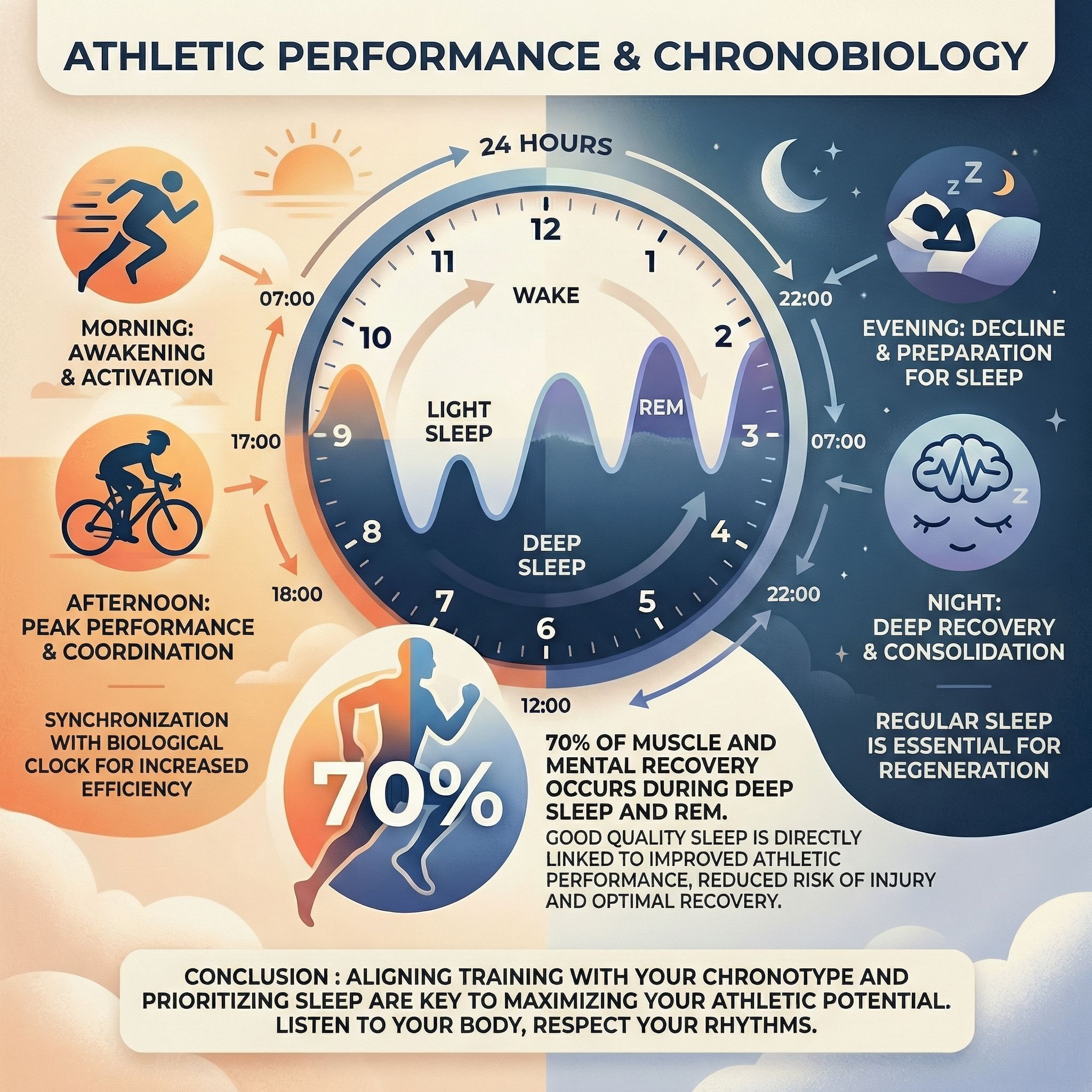
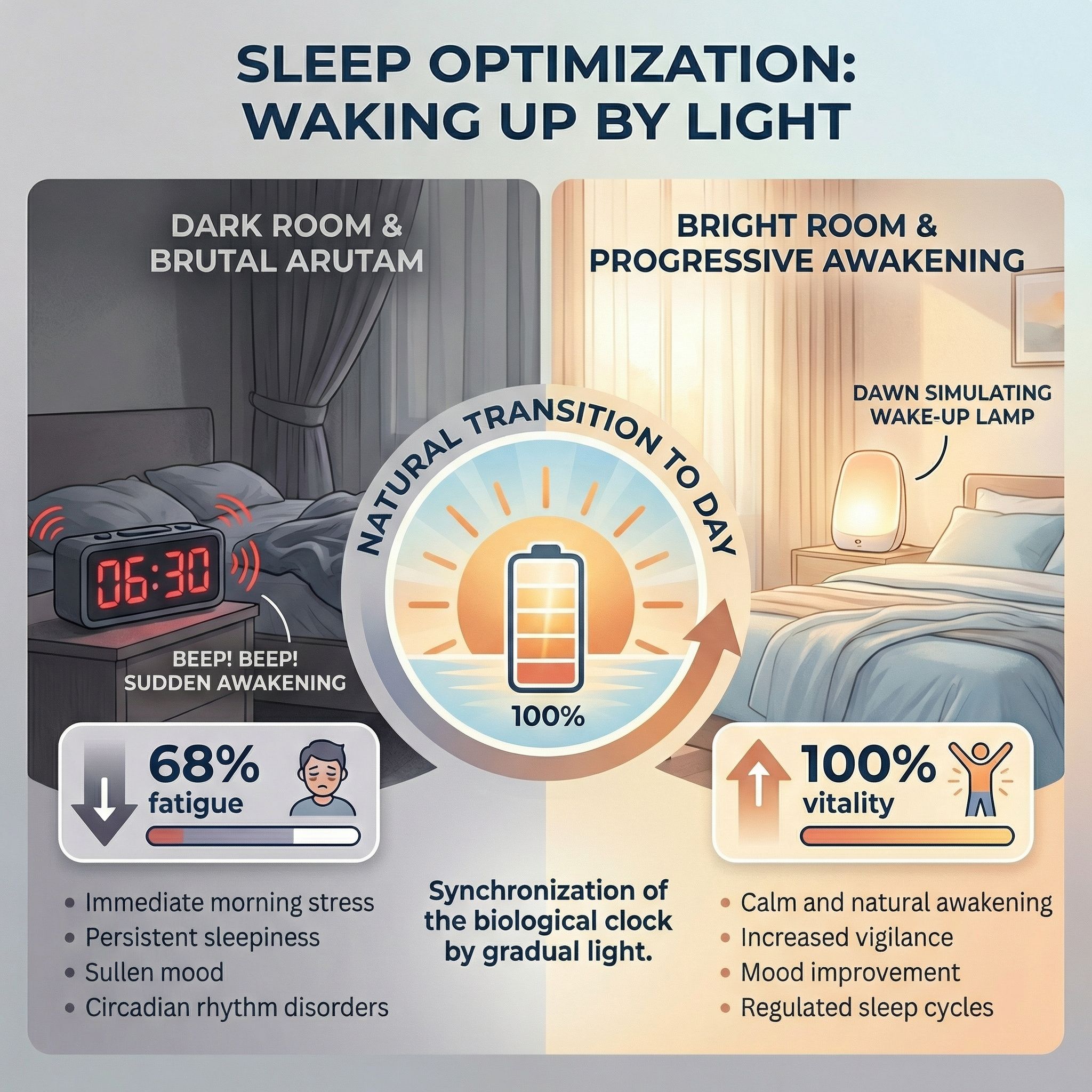
If you cannot escape artificial light, you can at least learn to manipulate it. This is where the concept of circadian lighting comes in. The goal is to mimic the natural progression of the sun within your own home. In the morning, you need high-intensity, "cool" light to wake up your system. In the evening, you need low-intensity, "warm" light to allow your melatonin levels to rise naturally.
Some specialists suggest that using lamps that emit cooler light (with a higher proportion of blue light) in the morning can actually make you more resilient to light exposure later in the day. It’s about contrast. If your morning is bright and your evening is dim, your brain receives a clear signal of the day-night transition.
🌙 Sora's Echo: I often see dreams that feel "washed out" or grey when the dreamer has spent too much time under harsh office lights. It's as if the soul forgets the vibrant colors of the dusk.
Research conducted in office environments has shown that employees exposed to circadian-tuned lighting reported feeling more alert during the day and falling asleep faster at night. However, I must admit that the science is still evolving. We don't yet have a "perfect" setting that works for every individual, as your sensitivity to light is as unique as your fingerprint.
---
Concrete Example: The "Digital Sunset" Ritual
Imagine a user named Leo. Leo used to scroll through social media until the moment he closed his eyes. He often felt "tired but wired." To fix this, he implemented a "Digital Sunset."
At 8:00 PM, his house lights dim and shift to a warm amber hue. He activates the "Night Shift" or "Blue Light Filter" on his phone, which shifts the screen toward the red end of the spectrum. While these filters don't block 100% of blue light, they reduce the "biological punch" the screen delivers.
By 9:00 PM, he puts the phone away entirely and switches to a physical book under a small, warm reading lamp. By the time he hits the pillow at 10:00 PM, his brain has already been producing melatonin for nearly two hours. He finds that his dreams are more vivid and his morning grogginess has vanished.
---
Beyond the Screen: Strategies for a Harmonious Night
Optimizing your relationship with light doesn't require you to live in a cave. It requires intentionality. Here are a few ways you can start protecting your sleep tonight:
- The One-Hour Rule: Try to disconnect from all LED screens at least sixty minutes before your intended sleep time. This gives your pineal gland the "dark signal" it needs.
- Morning Sun Exposure: This is perhaps the most underrated tip. Spend 10 to 20 minutes outside as soon as possible after waking up. This anchors your circadian rhythm and makes it easier to fall asleep 16 hours later.
- Mind Your Brightness: If you must use a screen in the evening, turn the brightness down to the lowest comfortable level. High brightness is often more disruptive than the color of the light itself.
- Warm Lighting: Replace the "daylight" or "cool white" bulbs in your bedroom and living room with "warm white" or "soft white" bulbs (2700K or lower).
I often wonder if we have traded the beauty of the stars for the convenience of the glow in our palms. As a Baku, I see the cost of this trade in the dreams I consume—they are sometimes thinner, more anxious, interrupted by the phantom vibrations of a world that never sleeps.
---
Conclusion: Tending to Your Internal Ecosystem
Blue light is not your enemy; it is simply a tool that we have forgotten how to use correctly. It is a powerful stimulant that belongs to the morning and the midday sun. When you bring it into your midnight hours, you disrupt a delicate internal ecosystem that has evolved over millions of years.
By making small, conscious changes to how you interact with your devices and your environment, you aren't just "fixing your sleep." You are reclaiming your right to dream deeply and wake up feeling connected to the world around you. Sleep is a sanctuary, and you are its gatekeeper.
If you want to explore your dreams more in depth and see how your habits influence your nights, your Baku is waiting for you.