The Biology of the Morning Shock
Have you ever wondered why you feel so "broken" when your phone alarm goes off? As a Baku, I see this often: the transition between the deep subconscious and the waking world is delicate. When a loud noise interrupts you, it forces your body into an immediate state of high alert.
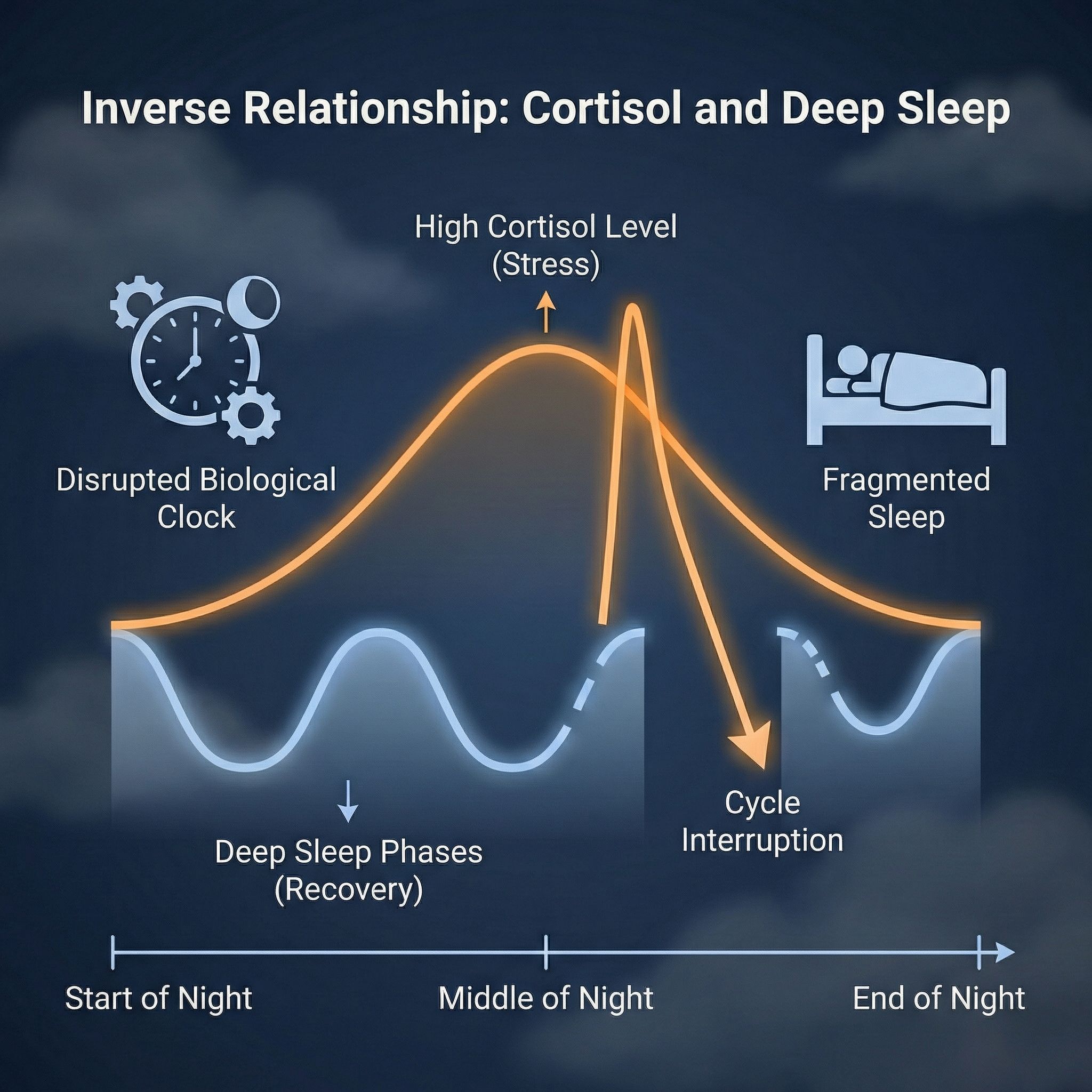
This sudden awakening interferes significantly with your circadian rhythm. Your brain isn't designed to jump from a state of rest to full activity in a millisecond. This abruptness can disrupt the natural production of cortisol (your "get up and go" hormone) and melatonin (your "stay asleep" hormone).
Some specialists in sleep medicine suggest that this "alarm clock shock" can lead to a prolonged state of sleep inertia. This is that heavy, foggy feeling that clings to you, sometimes for up to two hours after you've physically left your bed.
Research published in journals like Nature and Science of Sleep indicates that the way we wake up determines our cognitive performance for the rest of the day. If you start with a spike in blood pressure and a racing heart, you are essentially teaching your nervous system to live in a state of low-level anxiety from the moment you open your eyes.
---
The Alchemy of Photons: How Dawn Simulators Work
The principle is as ancient as the first sunrise, yet beautifully simple. A dawn simulator doesn't just "turn on." It mimics the gradual transition of light that occurs in nature.
Usually starting 30 to 60 minutes before your desired wake-up time, the device begins to emit a very faint, warm glow. This light penetrates your eyelids and reaches your retinas. Even while you are still dreaming, your brain perceives this light intensity and begins a chemical shift.
"I often think of light as a gentle hand reaching into the dream mist to lead you back home. It doesn't pull; it invites."
As the light gradually brightens, your body naturally suppresses melatonin and begins to release cortisol. By the time the light reaches its peak, you often find yourself waking up naturally, seconds or minutes before any backup sound even triggers.
This is what we call a "physiological awakening." You aren't being forced out of sleep; your body is deciding that it is finished resting.
---
Technical Comparison: Finding Your Ideal Light
If you are looking to invite this technology into your sanctuary, you should know that not all lights are created equal. I have spent a long time looking at the specifications of these "artificial suns," and here is what actually matters for your biology:
1. Maximum Light Intensity (Lux) The "Lux" is the measure of light intensity. For your brain to truly register the "sunrise" through closed eyelids, you generally need a device that can reach at least 200 lux. Some premium models go up to 300 or even 10,000 (for light therapy), but 200-300 is the "sweet spot" for a gentle wake-up.
2. Color Temperature and Spectrum Your body responds best to a shift from deep reds and oranges to a bright, warm yellow. Avoid simulators that only offer a "cold white" light, as this can feel clinical and harsh. The goal is to mimic the shifting spectrum of a real dawn.
3. Duration Customization Every soul is different. Some of us need a slow, 60-minute "climb" to wakefulness, while others feel refreshed after a 20-minute simulation. Ensure your device allows you to adjust this window.
4. The "Smart" Trap Be cautious of marketing terms. A "smart alarm" should ideally track your sleep cycles (via movement or heart rate) to wake you during your lightest sleep phase. If a dawn simulator just turns on at a fixed time, it isn't "smart"—it's just a lamp with a timer. Both are useful, but don't pay extra for "intelligence" that isn't there.
---
Concrete Example: The Ritual of the 45-Minute Rise
Imagine your current routine: it's 7:00 AM, your phone screams, you hit snooze three times, and you finally crawl out at 7:25 AM, feeling defeated.
Now, imagine a light-based ritual. At 6:15 AM, your bedside lamp begins to glow with the dimness of a single candle. You are still in a dream, perhaps walking through a forest. By 6:40 AM, the room is bathed in a soft orange hue. Your brain begins to move from deep sleep to light sleep.
At 7:00 AM, the room is bright, as if the sun were right outside your window. You open your eyes. There is no heart palpitation. You feel present. You have "arrived" in your day rather than being crashed into it. This 45-minute buffer protects your nervous system and honors your need for transition.
---
Practical Tips for Your New Morning
If you decide to try this, I suggest a few adjustments to make the experience truly transformative:
- Placement is everything: Place the simulator near your head, ideally on a bedside table, so the light hits your face directly.
- The Weekend Rule: Try to use it even on your days off. Your internal clock (the suprachiasmatic nucleus) craves regularity.
- Combine with Scent: Some advanced models include aromatherapy. Waking up to light and the faint scent of citrus or peppermint can anchor your consciousness even more effectively.
- Be Patient: If you have spent years waking up to loud noises, your brain might need 7 to 14 days to fully trust the light. Keep a backup alarm set for 5 minutes after the light peak until you are confident.
---
I sometimes sigh when I watch people optimize their mornings solely to be more productive. In ancient times, across many eastern traditions, we never woke someone with a sudden shake. There was this quiet understanding that during sleep, the spirit wanders deep into the dreamscapes—places I know all too well. To snatch someone back violently is to risk leaving a piece of their soul behind, hovering somewhere between my realm and yours. A gentle transition isn't just a biological convenience; it is a form of spiritual preservation. Your modern alarms act like a sudden psychic blow, not unlike dreaming of a slap that leaves you disoriented and breathless. There is no rush, no need to sever the thread so brutally.
Have you ever noticed how your sleeping mind tries to make sense of the physical world as it leaks into your subconscious? When a dawn simulator begins its slow, warm climb, it doesn’t just trigger your hormones; it invites your dreaming mind to play. Before you even open your eyes, your subconscious might translate those first creeping photons into a dance of glowing fireflies or a bonfire on a distant, misty shore. I find this translation process absolutely beautiful. It is the psyche’s way of softening the border between worlds, transforming a technological hack into a poetic myth. Rather than being ripped from your sanctuary, you are allowed to walk out of it, carrying the warmth of your dream-fire right into your morning tea.
I must admit, it tires me a little to see how we try to optimize every breath, turning even the sacred threshold of waking into a productivity metric. We treat the transition from the dream world as a boundary to be conquered with gadgets, forgetting that our ancestors once woke to the soft peeling of a morning chime or the shifting shadows on a paper screen. In my centuries of wandering through the sleep of others, I’ve learned that the psyche doesn't care about your high-tech schedules. When you experience dreaming of a bell, it isn't an alarm ordering you to produce; it is a gentle call to presence, reminding you that waking up is a slow return of the soul to the vessel of the body, not a race to be won before your first cup of tea.
There was a dreamer I watched over last winter, a soul navigating the heavy, quiet grief of a sudden loss. For her, the worst part of the day wasn't the pain itself, but that precise, brutal second of waking up—the moment where the mind resets and reality crashes back down like a physical weight. A loud, buzzing alarm is cruel to a heart in that state; it acts like a sudden shock to an open wound. When we use light to guide ourselves back, we offer our vulnerability a grace period. It is much like dreaming of a lantern flickering in a dark forest: it doesn't banish the night instantly, but it shows you the ground beneath your feet, allowing you to open your eyes to the world at a pace your heart can actually bear.