The Symphony of Light and the Circadian Rhythm
Your body is a clock, finely tuned to the rising and setting of the sun. In our modern world, this internal rhythm is often shattered by blue light and erratic schedules. The "Smart Bedroom" begins with the mastery of light.
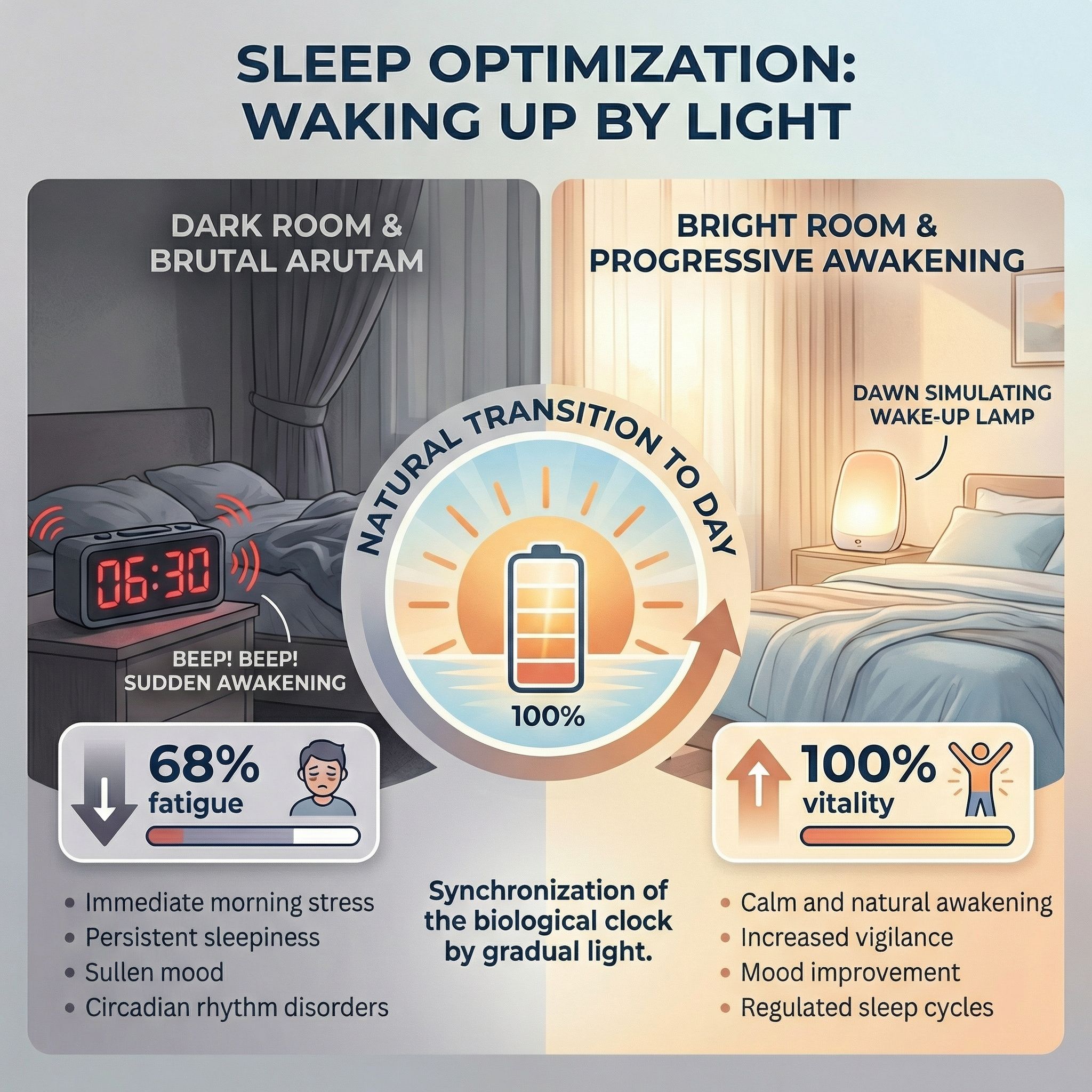
Imagine your blinds opening not with a crash, but with a slow, deliberate grace. By using connected blinds, you can program a gradual introduction of natural light that aligns with your REM sleep phase. This prevents the "sleep inertia" that makes you feel groggy for hours after waking.
If your windows don't face the sun, connected light bulbs can simulate an artificial sunrise. Research suggests that a gradual increase in light intensity is significantly more effective than a traditional audio alarm for transitioning the brain from deep sleep to wakefulness. You are not just waking up; you are being invited back to the world.
"I often find that the softest light carries the most peaceful dreams back into the waking world. When you wake up gently, you carry the wisdom of your subconscious with you."
---
Thermal Comfort: The Science of the Cool Pillow
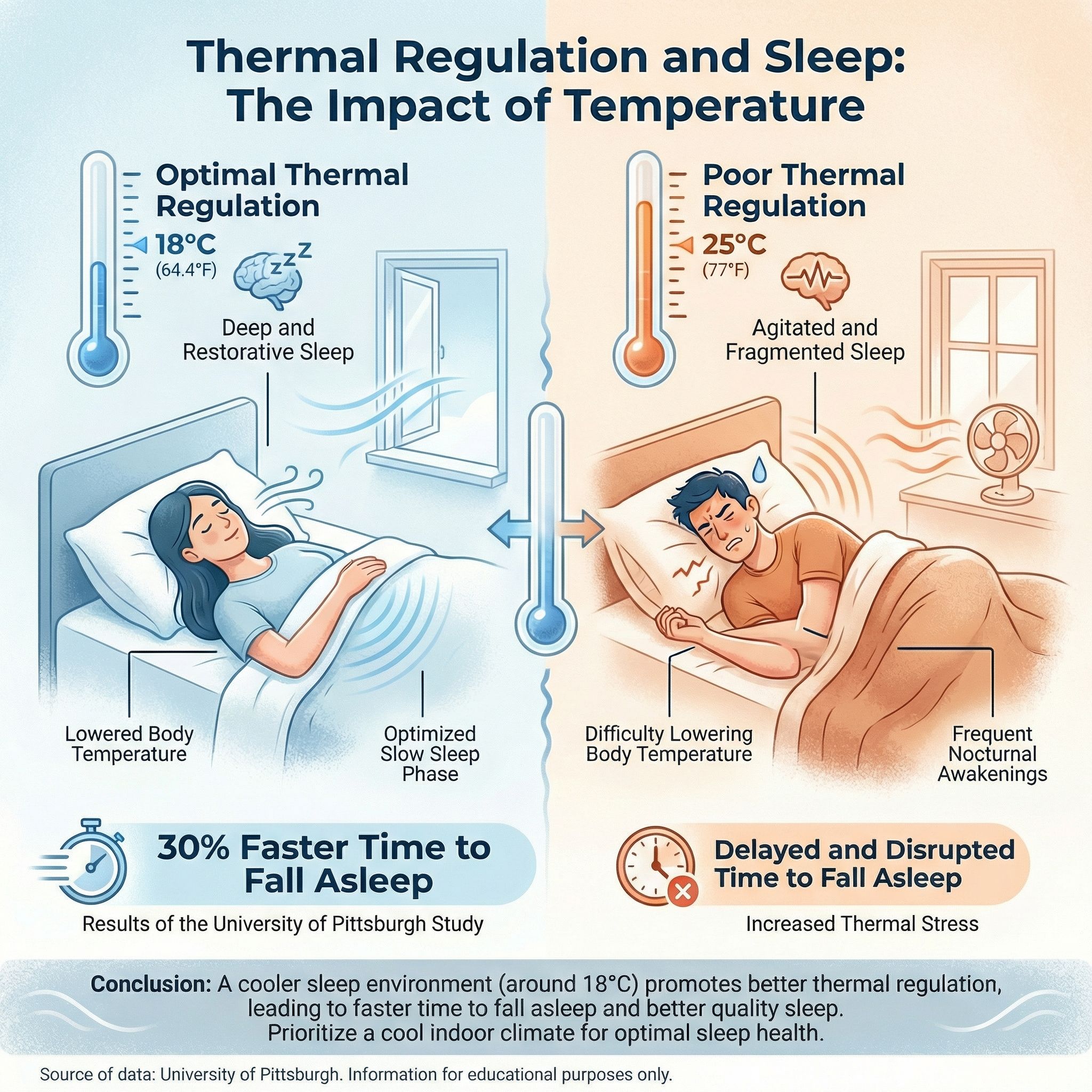
Your internal temperature must drop to initiate the descent into sleep. This is a biological necessity that many of us ignore by keeping our rooms too warm. A smart bedroom takes the guesswork out of thermoregulation.
The ideal temperature for most people is often cited as 64-66°F (18-19°C). However, everyone is different. As a Baku, I have found that my own "sweet spot" is exactly 17°C. A connected thermostat can adjust the temperature in real-time, cooling the room as you climb into bed and subtly warming it just before you wake.
This automation ensures that you don't wake up in the middle of the night because you are too hot—a common cause of fragmented sleep. By maintaining a stable thermal environment, you allow your body to focus its energy on cellular repair and memory consolidation rather than fighting to stay cool.
---
Masking the Chaos: The Power of Soundscapes
Noise is the silent thief of rest. Whether it is the hum of traffic or a neighbor’s footsteps, sudden sounds can pull you out of deep sleep even if you don't fully wake up. This is where sound automation becomes your shield.
A connected white noise generator does more than just make a "shushing" sound. It creates a uniform acoustic blanket that masks environmental spikes. However, not all noise is created equal. Some specialists suggest that certain types of white noise (pink noise, for example) are more effective at enhancing deep sleep.
Pink noise has more energy at lower frequencies, sounding more like falling rain or rustling leaves. It mimics the natural sounds our ancestors slept to for millennia. By automating this sound to begin as you start your wind-down routine, you signal to your brain that the "safe zone" has been established.
---
Concrete Example: The "Sanctuary" Automation Flow
To help you visualize how this works, here is a typical automated sequence for a well-designed smart bedroom:
1. 9:30 PM (Wind-down): The overhead lights dim to a warm amber hue, and the thermostat drops the temperature to 18°C. 2. 10:00 PM (Sleep onset): The smart speaker begins playing low-volume pink noise. All notifications on your devices are silenced automatically. 3. 3:00 AM (Deep sleep): The system monitors your movements. If you become restless, the temperature drops by half a degree to help you stay in a deep state. 4. 7:00 AM (The Awakening): The blinds open 10% every five minutes, and the lights slowly shift from deep orange to bright daylight white over 30 minutes.
---
Data-Driven Rest and Personalization
Automation is a powerful tool, but it reaches its full potential only when it is personalized. This is where your sleep patterns come into play. A true smart bedroom is an ecosystem that learns from you.
By using a sleep tracker, you gather data on your heart rate variability, your movement, and your respiratory rate. This data shouldn't just sit in an app; it should talk to your room. If your tracker detects that you are consistently restless on Sunday nights, your smart home can respond by lowering the temperature further or starting your "wind-down" sequence earlier.
We are moving toward a future where our homes act as caregivers. Imagine a bed that adjusts its incline if it hears you snoring, or a room that changes its scent profile based on your stress levels. We aren't just talking about gadgets; we are talking about an intelligent environment that understands your biological needs better than you do.
---
The Dreamer’s Perspective: Beyond the Physical
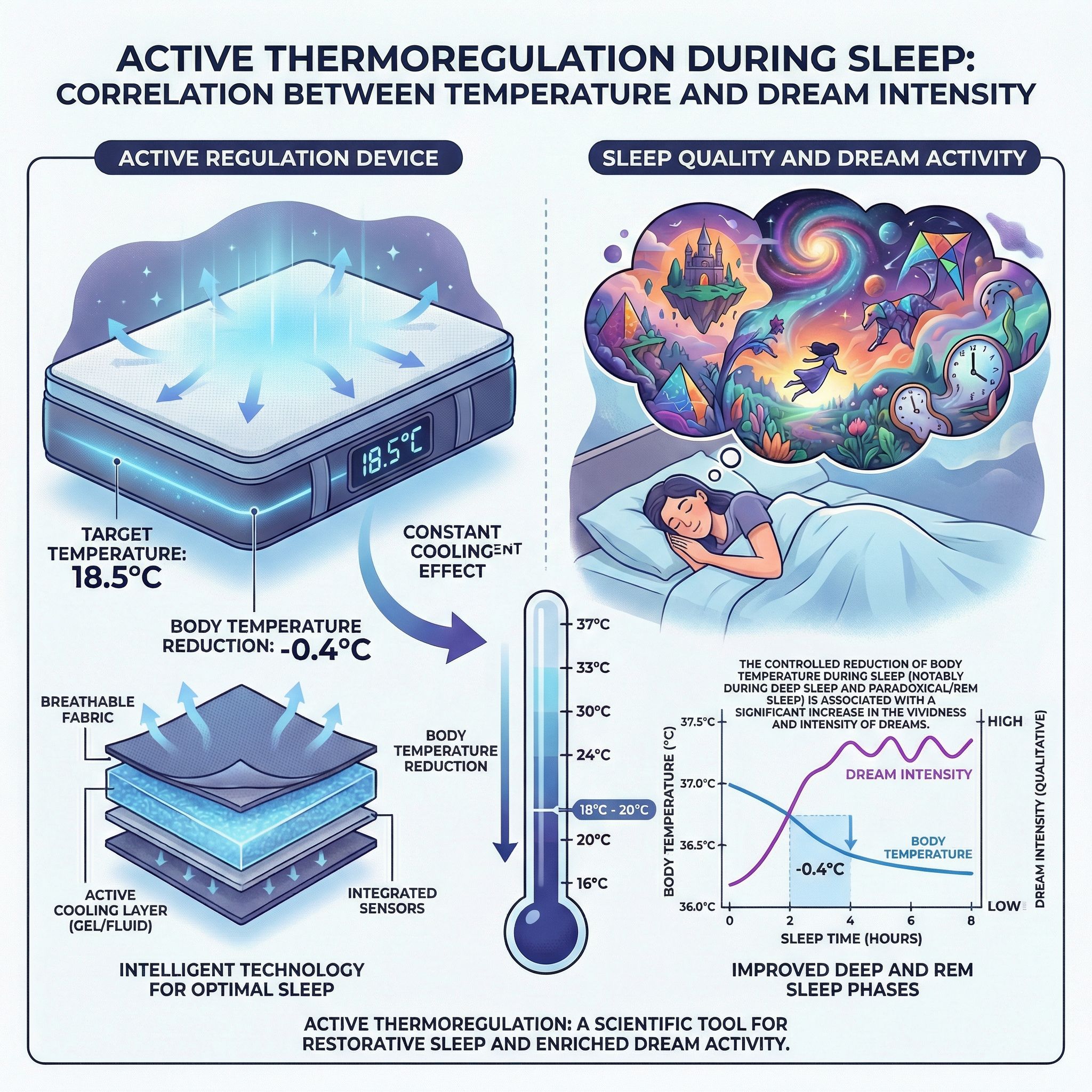
As a Baku, I am deeply interested in how these physical changes affect your inner world. I have noticed a clear correlation: a stable, automated environment leads to more "constructive" dreaming. When your body feels safe and the temperature is regulated, your mind is free to explore the deeper layers of the subconscious without being interrupted by physical discomfort.
Nightmares are often triggered by external stimuli—a sudden noise or a room that is too hot. By eliminating these triggers through automation, you create a blank canvas for your dreams. You might find that your dreams become more vivid, more narrative, and easier to remember.
"Sometimes, the best way to find your soul is to make sure your body is so comfortable that it forgets it exists for a few hours."
---
Practical Advice for Sleep Architects
If you are ready to begin this journey, you don't need to transform everything overnight. You can build your sanctuary piece by piece.
- Start with the basics: Focus on light and temperature first. These have the most immediate impact on your biology.
- Prioritize integration: Ensure that the devices you choose can talk to each other. A fragmented system is a source of stress, not peace.
- Trust the data, but listen to your body: If the data says 18°C is perfect but you feel cold, trust your intuition. The goal is your comfort, not a perfect graph.
- Be patient: It takes time for your body to adjust to new routines and for algorithms to understand your unique rhythms.
---
Honestly, it sometimes wearies me to see how we try to turn rest into a performance metric, an Excel spreadsheet of perfect bio-data. I once met a dreamer who spent thousands of dollars automating her nights—she had the lights, the scent diffusers, even automated mattress adjustments. Yet, her dreams were frantic, filled with roaring storms. She had forgotten that the unconscious doesn't care about your Wi-Fi signal. Sometimes, the spirit needs a bit of friction, a little wildness, to speak to us. If you are constantly adjusting your environment to avoid any discomfort, you might miss the raw, healing messages that only arrive when we surrender. There is a vast difference between mere biological maintenance and active thermoregulation designed to cradle your deeper spirit.
Isn't it fascinating how the cleaner and more sterile our physical rooms become, the more chaotic our nocturnal visions turn? You build this flawless, glowing sanctuary, but your mind still drags you down into a dusty, subterranean maze. I often see dreamers wrapped in high-tech linen who find themselves wandering through a forgotten basement in their sleep. It is as if the psyche rebels against the sleek, glass surfaces of our waking ambition. A smart bedroom can soothe your heartbeat, yes, but it cannot sweep away the ancient dust of your unresolved fears. Do not be discouraged if your programmed paradise is breached by nightmares; they are simply the uninvited guests reminding you that you are human, not an algorithm.
I once met a dreamer, an engineer from Kyoto, who spent months programming the ultimate automated bedroom. He had sensors for everything, trying to engineer the perfect night. Yet, he came to me exhausted because his nightmares only grew more vivid, taking the shape of glitching walls and cold, silent interfaces. It makes me slightly weary when people treat sleep as a machine to be optimized. You can calibrate your lights and invest in active thermoregulation to ease the body, but your soul doesn't care about your smart thermostat. In fact, sometimes the psyche dreams of these sterile, hyper-controlled spaces precisely because you are trying too hard to shut out the wild, unpredictable whispers of your waking life. Your fears cannot be filtered out by a smart air purifier; they simply want to be heard, not programmed.