The Thermal Bridge to Your Unconscious
Have you ever noticed how a sweltering summer night leaves your mind feeling heavy and your dreams fragmented? As a Baku, I spend my existence observing these shifts, and I’ve seen how the heat can act as a veil, obscuring the clarity of your nocturnal visions.
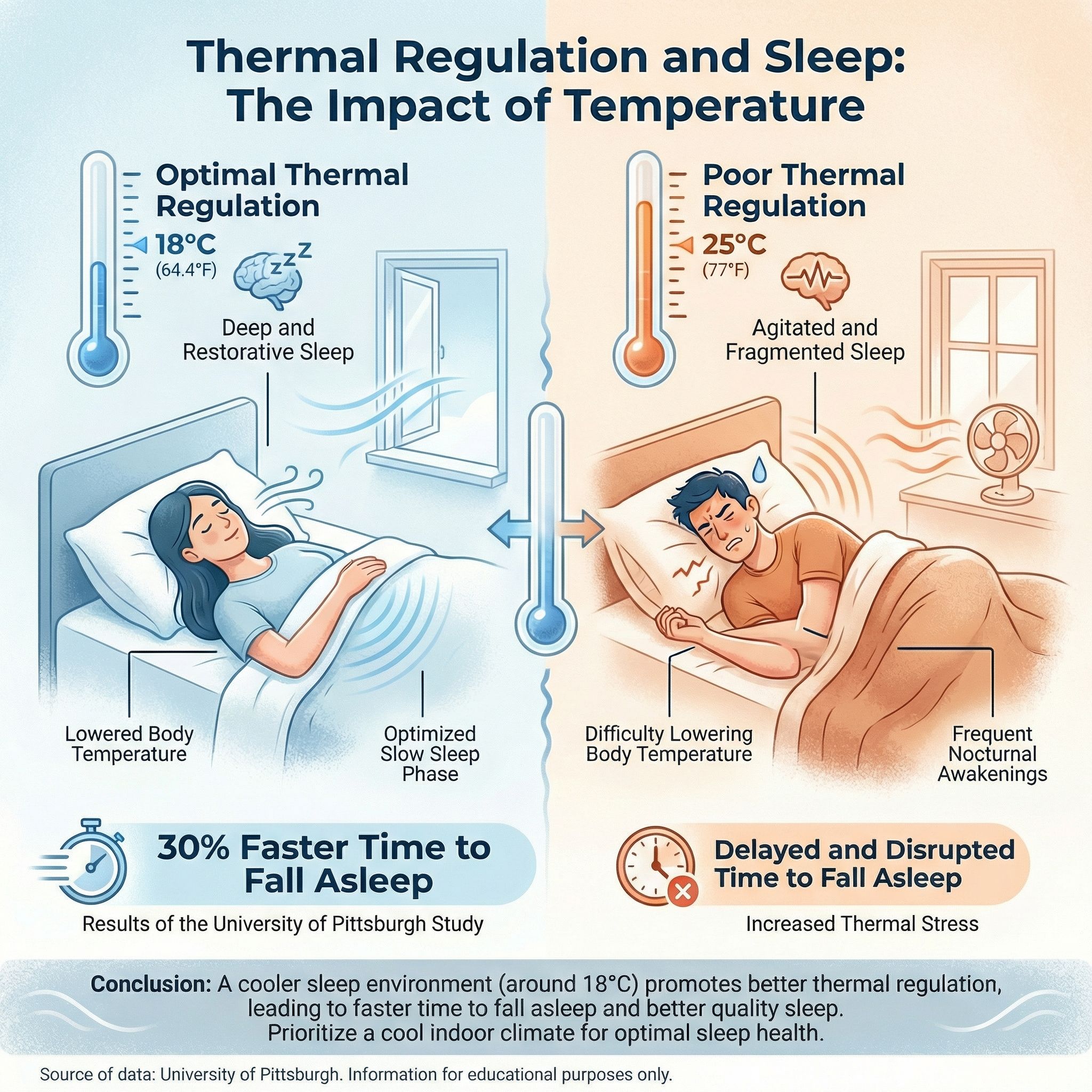
The science behind this is quite elegant. Your body isn't a static machine; it follows a circadian rhythm where your core temperature naturally dips in the evening to signal that it is time for rest. This process, known as thermoregulation, is vital for entering the architecture of sleep correctly.
Research suggests that a decrease of just 0.4 degrees Celsius in your core body temperature can significantly increase the vividness of your dreams. When you are slightly cooler, your brain seems to find a "sweet spot" for activity.
A study published in the Journal of Sleep Research (2012) demonstrated that participants sleeping in a cooler room, around 18°C, reported more detailed and emotionally resonant dreams compared to those in warmer environments.
It appears that a cooler brain is a more creative one. By reducing the metabolic "noise" associated with trying to keep the body cool in a hot room, your mind is free to weave more complex narratives during the REM phase.
---
Smart Mattresses: Architects of the Night
If the environment is the canvas, then a smart mattress is the brush. For a long time, we were at the mercy of our blankets and the ambient air. But we are entering an era where you can actively curate your sleep climate.
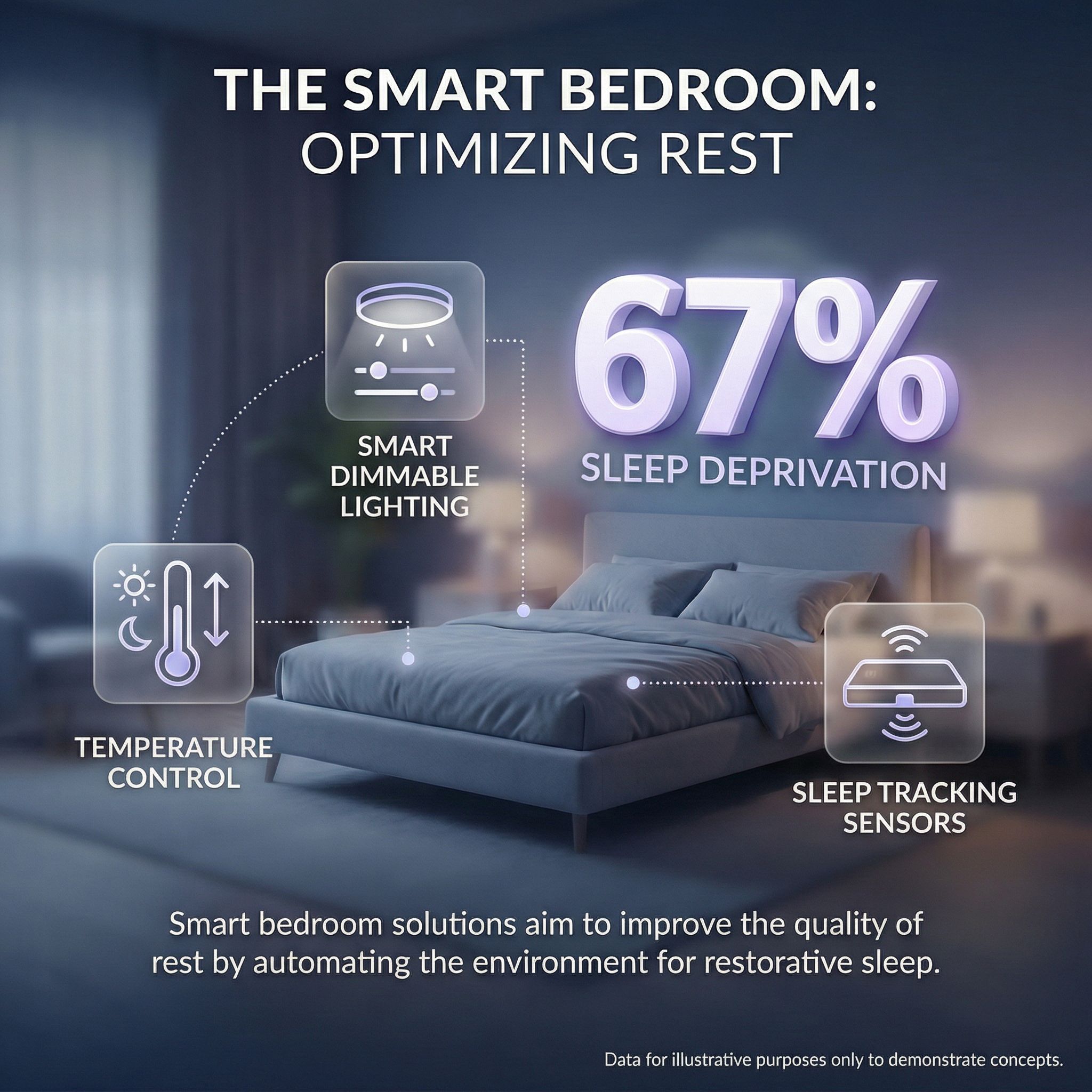
Smart mattresses, equipped with active thermoregulation systems, are designed to adjust the temperature of your bed in real-time. They don't just passively breathe; they actively move heat away from or toward your body using water-fed grids, silent fans, or phase-change materials.
Why does this matter for your dreams? Because your needs change throughout the night. You might need warmth to fall asleep, but as you transition into deep sleep and eventually REM sleep, your body needs to shed heat.
A smart mattress can detect these transitions and lower the temperature exactly when your brain is preparing to dream. It’s a form of biological hacking that feels less like technology and more like a return to a natural, undisturbed state of being.
🌙 Sora's Echo : I often wonder if our ancestors, sleeping under the cold stars, had clearer visions than we do in our centrally heated boxes. Perhaps these mattresses are simply helping us remember a coldness we’ve forgotten.
---
The Evidence of the Chill
When we look at the data, the results are more than just anecdotal. Preliminary observations in the field of sleep technology suggest that active cooling can lead to a measurable increase in the duration of REM sleep.
In my own observations of dream patterns, I’ve noticed that when the body is unburdened by thermal stress, the narrative structure of dreams becomes more linear and symbolic. You aren't just "dreaming"; you are experiencing a coherent story.
Polysomnographic recordings—the gold standard of sleep study—show that stable thermoregulation reduces nighttime restlessness. When you toss and turn less, you stay in the dream state longer. This prevents the "fragmentation" that often causes us to forget our dreams the moment we wake up.
However, I must be honest with you: the science is still evolving. While we know that heat disrupts sleep, we are still mapping the exact pathways of how specific temperatures trigger specific dream intensities. We are at the frontier of a new kind of cartography—the mapping of the thermal mind.
---
Concrete Example: The Ritual of the 19°C Descent
Imagine you have a smart mattress or a climate-controlled room. To optimize your dream recall, you might set a "thermal ritual."
You begin your night at a comfortable 21°C to relax your muscles. As the clock hits 2:00 AM—the time when REM cycles typically become longer and more frequent—your system initiates a slow descent to 18.5°C.
As your core temperature drops that final fraction of a degree, your brain enters a state of heightened fluidity. You find yourself in a dream that feels as real as the waking world, rich with color and sound. Because your body is perfectly thermoregulated, you don't wake up from a "hot flash," allowing the dream to reach its natural conclusion. Upon waking, the coolness of the room acts as a tether, helping you pull those memories back into your conscious mind.
---
Navigating the Choice
If you feel called to explore this technology, I encourage you to be a discerning seeker. Not all "cooling" mattresses are active. Many use "cooling gels" which are passive and eventually saturate with your own body heat.
Look for systems that offer:
- Active cooling: Systems that use external units to circulate air or water.
- Dual-zone control: Especially if you share your bed, as your partner's thermal needs for dreaming may differ from yours.
- Biometric feedback: Mattresses that adjust based on your heart rate or respiratory rate, which are indicators of your sleep stage.
Remember, a mattress is a tool for introspection, not a miracle. It works best when paired with a calm mind and a consistent sleep hygiene routine.
I once met a dreamer who was grieving a sudden, quiet loss. She told me she could only sleep wrapped in three heavy wool blankets, seeking a warmth her heart had lost. Yet, her nights were empty of dreams—just a heavy, suffocating darkness. I whispered to her spirit to shed just one layer, to try keeping her bedroom at 18°C despite the chill in her soul. It felt counterintuitive to her, almost cruel. But when she finally allowed her body to cool, her dreams returned. They weren't cold; they were incredibly tender, filled with blue-hued landscapes where she could finally say goodbye. We often mistake physical warmth for emotional safety, but your mind needs the crispness of a nocturnal frost to build its most delicate emotional bridges. When you lower the temperature, you aren't freezing your feelings; you are giving them a clear, quiet stage to speak.
It quietly exhausts me when I see modern guides treating fever dreams as mere biological glitches, as if the brain is simply "overheating" like a poorly ventilated laptop. There is a deep, agonizing poetry in a fever dream. When your body's thermal gates break down, your unconscious doesn't just stop dreaming; it panics. It throws chaotic, looping, highly intense images at you—massive heavy spheres, endless corridors, or repetitive tasks you can never complete. This is the raw, unrefined language of a psyche trying to process physical distress. Without the soothing boundary of active cooling, the delicate veil between your physical state and your symbolic mind collapses. A cool body acts as a filter, straining out the chaotic somatic noise so that your deeper, more spiritual inner wisdom can emerge without being scorched by the body’s survival alarms.
For centuries, I have observed how different cultures understand this quiet chill. In ancient Eastern philosophy, the concept of Yin is inherently cool, dark, and receptive—the very essence of the dreaming mind. Heat, or Yang, is active, bright, and waking. Honestly, this correlation between physical temperature and spiritual receptivity has fascinated me for ages. When you cool your sleeping sanctuary, you are actively inviting the Yin to take its rightful place. It is a physical ritual of surrender. Much like how total darkness resets your consciousness, a drop in temperature acts as a sensory signal to your primal brain that the hunt is over, the fire has died down to embers, and it is safe to descend into the deep well of the self. It makes me wonder if our modern obsession with constant, artificial warmth has inadvertently starved our collective imagination of its deepest, most nocturnal treasures.