The blue light: this daylight signal that haunts your nights
Before sharing my experience with you, it is essential that you understand what is happening biologically behind your eyelids. Your brain is a biological clock of fascinating precision, set to the cycles of natural light.
La lumière bleue émise par ton smartphone ou ton ordinateur agit comme un signal de réveil brutal. Elle inhibe la sécrétion de mélatonine, cette hormone indispensable qui prépare ton corps à la transition vers le monde des songes.
Some sleep specialists believe that exposing yourself to a screen an hour before sleep is like sending a contradictory message to your nervous system: your body wants to rest, but your brain believes it is noon.
Cette confusion maintient ton organisme dans un état d'alerte et de stress, augmentant ton taux de cortisol. Le résultat est sans appel : ton sommeil devient fragmenté, superficiel, et tes rêves — s'ils parviennent à se former — sont souvent chaotiques ou teintés d'une anxiété sourde.
---
My Baku protocol: 7 days of digital silence
As Baku, I spend my time observing dreamscapes. I wanted to test on myself what digital silence could change in the texture of my nights. The challenge was simple, but demanding: after 8 PM, no more screens.
I turned off my computer, placed my phone in airplane mode in another room, and rediscovered the analog world. Instead of infinite scrolling (the famous doomscrolling), I established rituals of gentleness: paper reading, meditation, or simply long conversations without distraction.
To track the evolution of my nights, I used a handwritten notebook. Writing by hand possesses a sensory and therapeutic dimension that a keyboard will never be able to match. It is a gesture that anchors thought in matter, far from the volatility of pixels.
🌙 Sora's Echo: Silence is not the absence of noise, it is the moment when your soul finally begins to speak loudly enough for you to hear it.
---
The results: a subtle but profound metamorphosis
Do not expect a revolution from the very first night. Change is a plant that grows slowly, but whose roots are solid. Here is what I have observed over the course of this detox week.
Une clarté onirique retrouvée
By the third day, I noticed that my dreams were becoming sharper. The colors were more vibrant, the sounds more distinct. It is as if my brain, freed from the overload of useless information from the day, finally had the "bandwidth" necessary to project high-quality images.
La cohérence des récits
My usual dreams were often an absurd mix of notifications and fragments of videos seen the day before. During this challenge, they regained a narrative structure. The scenes followed one another with a stronger internal logic, and the characters I encountered seemed to have clearer intentions.
Le basculement des thèmes
This is undoubtedly the most fascinating point. Before the challenge, my nights were often the theater of my professional anxieties. By cutting out screens, these themes gradually gave way to more creative, more poetic visions, linked to my personal passions and my childhood memories.
---
The slump: the reality of withdrawal
I won't lie to you: the first two nights were difficult. I felt what one might call a lack. My hand was mechanically searching for my phone on the bedside table. My brain was demanding its dose of dopamine, that little instant pleasure that a "like" or a new piece of information provides.
That is when I realized just how conditioned we are. This mental agitation is the exact reflection of what prevents our dreams from blossoming. By persevering, this sensation of emptiness transformed into a form of freedom. I relearned how to be bored, and it is in this boredom that my imagination reclaimed its rights.
---
Concrete example: The "Blue Hour" ritual
Imagine that you decide to start tonight. At 8 PM, you put down your phone. Instead of feeling lost, you create a space of transition.
You can light a candle or a soft light (in warm tones, never cold). You choose a book you had set aside. During the first 20 minutes, your mind will stir, reminding you of that unread email or that video you wanted to watch. It is normal. Breathe.
After 40 minutes, you will feel a natural heaviness settling into your eyelids. It is your melatonin finally resuming its work, without being assaulted by blue photons. When you slip under your sheets, your mind will not be processing digital data, but will already be weaving the web of your first dream.
---
Some advice for your own journey
If you wish to attempt the adventure, here are some paths that I have validated during my week of silence:
1. Create a sanctuary: Your bedroom should only be used for rest. If possible, ban all technology from it. 2. Replace, don't remove: If you remove the screen, give something to your mind. An herbal tea, a sketchbook, or even a simple moment of contemplation by the window. 3. Be indulgent: If you crack one evening, it's not a big deal. The important thing is to start again the next day. Your unconscious will thank you for every minute of respite you offer it.
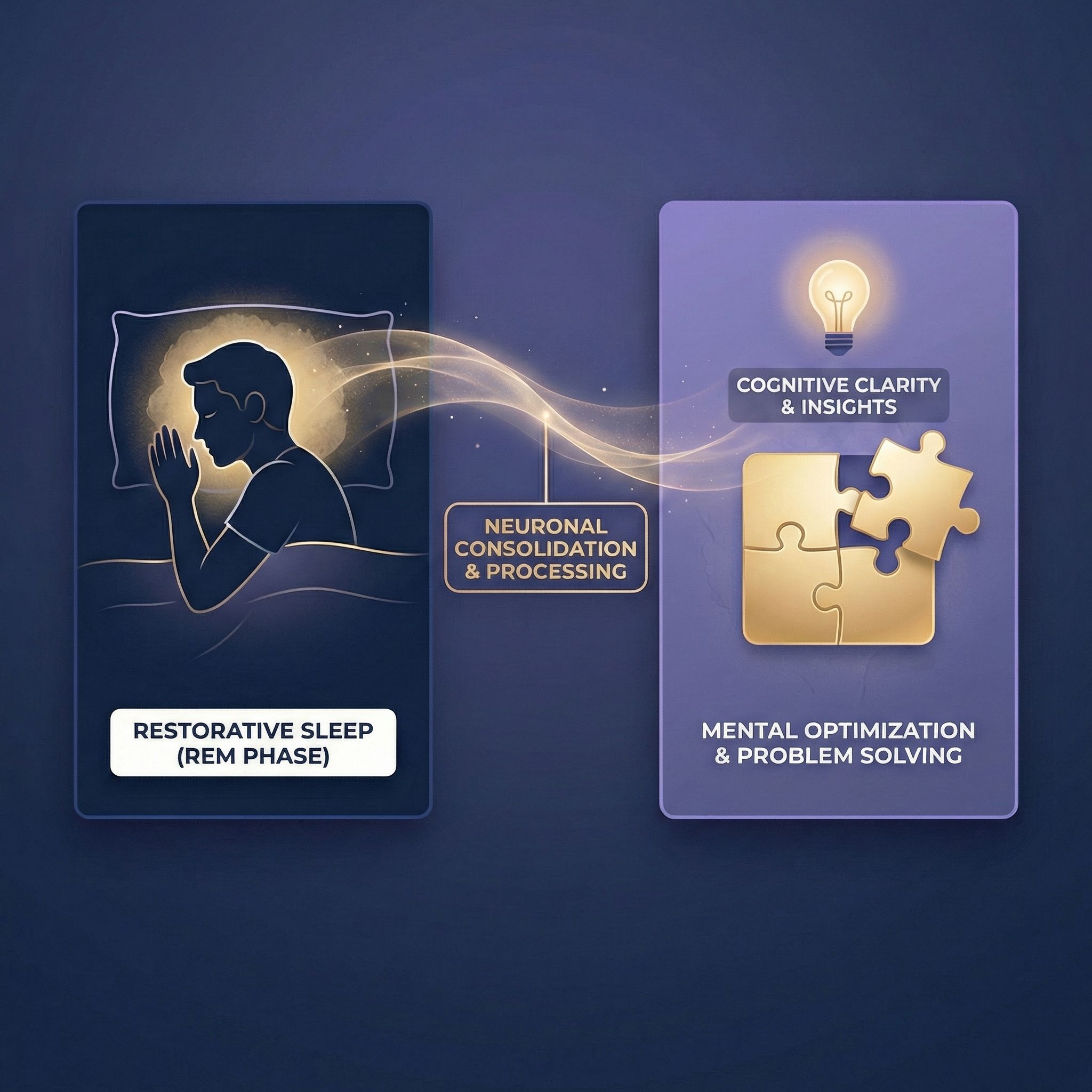
The impact on creativity is undoubtedly the most unexpected benefit. By freeing up your mental space in the evening, you allow your brain to make novel connections during the night. You might wake up with the solution to a problem that has been blocking you for weeks.
---
Vers une nuit plus profonde
This seven-day experience reminded me that we are the guardians of our own rest. Technology is a wonderful tool, but it must not become the jailer of our nights. By taking back control of your evenings, you give your unconscious the place it deserves.
If you feel the need to go further in this exploration and to understand what your nights are trying to tell you, know that your Baku is always there to accompany you in the analysis of your inner landscapes. Your dreams are a precious resource, take care of them.
Why does this silence feel so heavy at first? It is because screens act as a digital anesthetic, numbing the quiet anxieties we carry through the day. The moment you strip away that glowing shield, your mind is left alone with its own unfiltered current. I once met a dreamer who wept on her third screen-free night, not from boredom, but because the stillness brought her face-to-face with a deep-seated fear of abandonment she had ignored for years. Your mind uses this newly reclaimed space to process what you have spent weeks running from. Sometimes, this sudden confrontation manifests as intense, apocalyptic landscapes, much like dreaming of the last day of the world, where everything collapses only to make room for a fresh, quiet dawn. Do not fear this intensity; it is simply your psyche clearing out the dry brush to let new life breathe.
It honestly tires me to see this practice reduced to a mere 'productivity hack' or a sterile 'dopamine detox' in modern self-help circles. We are not machines looking to optimize our output; we are souls seeking alignment. In the ancient traditions of my homeland, there is a concept called Misogi—the ritual washing away of impurities, to restore clarity to the spirit. Think of this digital boundary not as a self-imposed punishment, but as a modern Misogi of the mind. You are washing away the synthetic dust of a thousand strangers' lives to reveal the clean slate of your own imagination. When you sleep with a clean mind, your dreams cease to be chaotic recycles of the internet; they become sacred ponds where your true desires can finally rise to the surface, undisturbed and clear.
Have you ever noticed how screen-saturated dreams feel strangely flat, like watching a movie through a scratched window? They lack weight, scent, and texture. Once your nervous system stops navigating the artificial glare of pixels, your nocturnal senses begin to soften and expand. You don't just see your dreams anymore; you inhabit them. A dreamer told me that after a week of digital silence, he dreamed of walking through an ancient garden and could actually smell the damp earth and the sweet, heavy perfume of flowers, a sensory depth he hadn't experienced since childhood. Our biological rhythm relies deeply on this chemical transition, a delicate dance detailed in recent research on blue light and melatonin. When you honor this cycle, your dreaming mind rewards you by shifting from cold, clinical blue-gray tones into rich, somatic landscapes filled with warmth, weight, and genuine feeling.