AT A GLANCE
TL;DR
L'incubation de rêves est une technique structurée pour orienter ton inconscient vers un problème spécifique.
Elle s'appuie sur la plasticité cérébrale et la capacité du sommeil paradoxal à créer des connexions inédites.
Le protocole de Deirdre Barrett repose sur la définition claire d'une intention avant l'endormissement.
La capture immédiate au réveil est l'étape cruciale pour ne pas perdre les pistes de réflexion générées.
How to Use Dream Incubation to Solve Your Most Complex Problems While You Sleep
You have undoubtedly already felt this dull frustration: that of staring at a screen or a notebook for hours, waiting for a spark that refuses to ignite. Your mind is saturated, fatigue sets in, and the solution seems to drift away as you try to grasp it by force. By learning the art of dream incubation, you will discover how to transform your nights into a laboratory of deep reflection, allowing your unconscious to untangle the complexities that your daytime logic cannot grasp.
---
The invisible architecture of your nocturnal brain
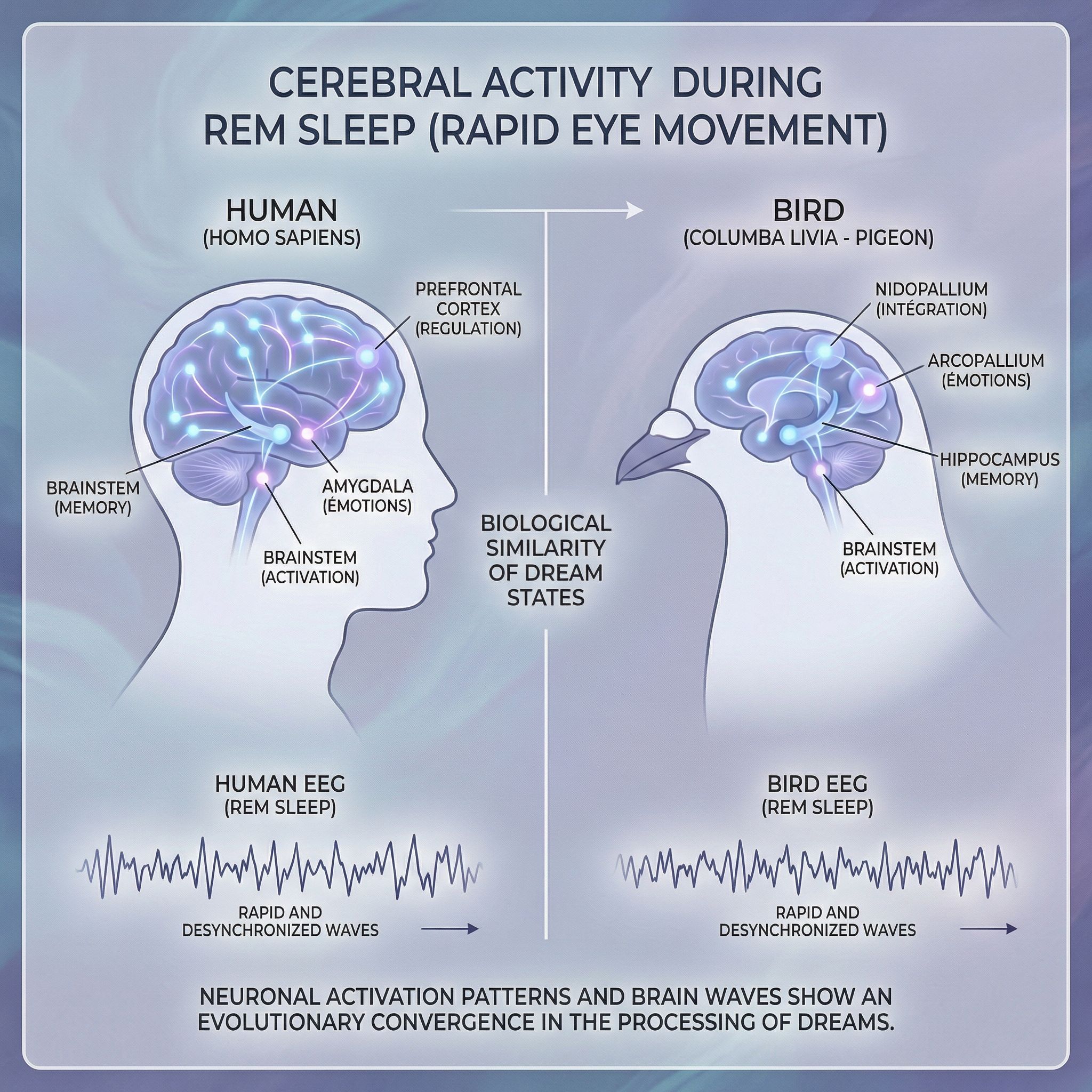
When you close your eyes, your brain does not shut down; it simply changes its operating mode. While your body rests, your neurons activate in a complex dance, freed from the constraints of linear logic and the inhibition of the prefrontal cortex. It is in this space of total freedom that the most audacious solutions are born.
Some sleep specialists believe that dreaming is not a simple biological "noise", but an essential cognitive process. A study published in the journal Dreaming in 2021 suggested that nearly 70% of participants who followed a rigorous incubation protocol reported dreams directly related to the problem they were trying to solve. This figure, while impressive, highlights above all a fascinating reality: your mind continues to work for you, even when you are not aware of it.
L'incubation de rêves n'est pas une pratique mystique sans fondement, mais une méthode qui exploite la plasticité de ton cerveau. En orientant tes pensées juste avant de sombrer dans le sommeil, tu donnes une "feuille de route" à ton inconscient. C'est une manière de hacker ton propre système de traitement de l'information pour explorer des pistes que tu aurais jugées trop absurdes ou illogiques durant la journée.
🌙 Sora's Echo: Your mind is like a deep ocean. By day, you see only the restless surface. At night, you dive into the silent currents where the treasures you seek are hidden.
---
The Barrett Protocol: Guiding the unconscious with precision
Si tu souhaites explorer cette voie, les travaux de Deirdre Barrett, professeure de psychologie à Harvard, sont une référence incontournable. Elle a consacré une grande partie de sa carrière à étudier le potentiel créatif des rêves. Sa méthode ne consiste pas à attendre passivement une illumination, mais à préparer activement le terrain.
Here is how you can apply this protocol, step by step, for your own challenges:
1. Choose your problem with clarity
Avoid vague requests like "how to be happy". Your brain needs a concrete target. Formulate a precise question: "How can I structure the third chapter of my novel?" or "What ecological alternative can I find for this packaging?". The more defined the question, the more likely the dream response is to be useful.
2. L'immersion cognitive
Before you go to sleep, immerse yourself back into the details of your problem. Reread your notes, observe your sketches, or rethink the obstacles you have encountered. The idea is to saturate your mind with relevant data just before the transition into sleep. It is a strong signal that you are sending to your nervous system: "This is the priority of the night".
3. La déclaration d'intention
C'est le moment où tu "passes commande". Juste avant de t'endormir, répète-toi une phrase simple qui exprime ton souhait. Tu peux dire : "Je veux que mon rêve me montre une nouvelle perspective sur ce projet". Répète-la comme un mantra, doucement, jusqu'à ce que les frontières de la veille s'estompent.
---
The capture and the alchemy of waking
The most critical moment of incubation lies in the first few seconds after you wake. The dream is a volatile substance that evaporates upon contact with light and the first rational thoughts. If you do not immediately note down what comes back to you, the night's effort risks being lost.
Always keep a notebook and a pen (or a voice recorder) close at hand. Do not try to craft elegant sentences. Note down fragments, colors, emotions, or strange dialogues. Sometimes, the solution does not present itself in the form of a direct answer, but as a metaphor.
Analyzing these fragments requires nuance. Avoid generic dream dictionaries that claim "seeing a cat means X". The symbolism of your dreams is a language that is your own. If you dream of a labyrinth while you are working on complex software, the labyrinth is perhaps the architecture of your code. Ask yourself the question: "What does this element evoke for me in relation to my problem?".
---
Concrete case: The architect's creative block
Imagine you are a designer and you are stuck on the layout of a small living space. You have tried every possible configuration on your software, without success.
By using incubation, you immerse yourself in the planes before sleeping. During the night, you dream that you are a bird trying to build a nest in a matchbox. Instead of seeking to push the walls, you observe in your dream how you weave the twigs vertically to gain space.
Upon waking, this image of "vertical weaving" becomes your solution: you decide to create suspended and modular furniture that utilizes the full ceiling height, an idea that you had dismissed because it seemed too technically complex, but that your dream presented to you as a natural certainty.
---
Optimize your chances of success
As Baku, I have observed that certain rituals greatly foster the mind's receptivity. Incubation is not an exact science, but you can refine your practice with these few pointers:
- Cardiac coherence: Practicing rhythmic breathing before sleeping calms your autonomic nervous system. A calmed mind is a much more fertile ground for lucid or productive dreams.
- Creative visualization: In addition to your intention phrase, try to visualize the feeling you will experience once the problem is solved. Relief, joy, enthusiasm. Your brain is very sensitive to emotional markers.
- Patience : Do not be disappointed if the first night produces nothing conclusive. Incubation is a skill that strengthens. Sometimes, the brain needs several cycles to "digest" the information and offer a coherent synthesis.
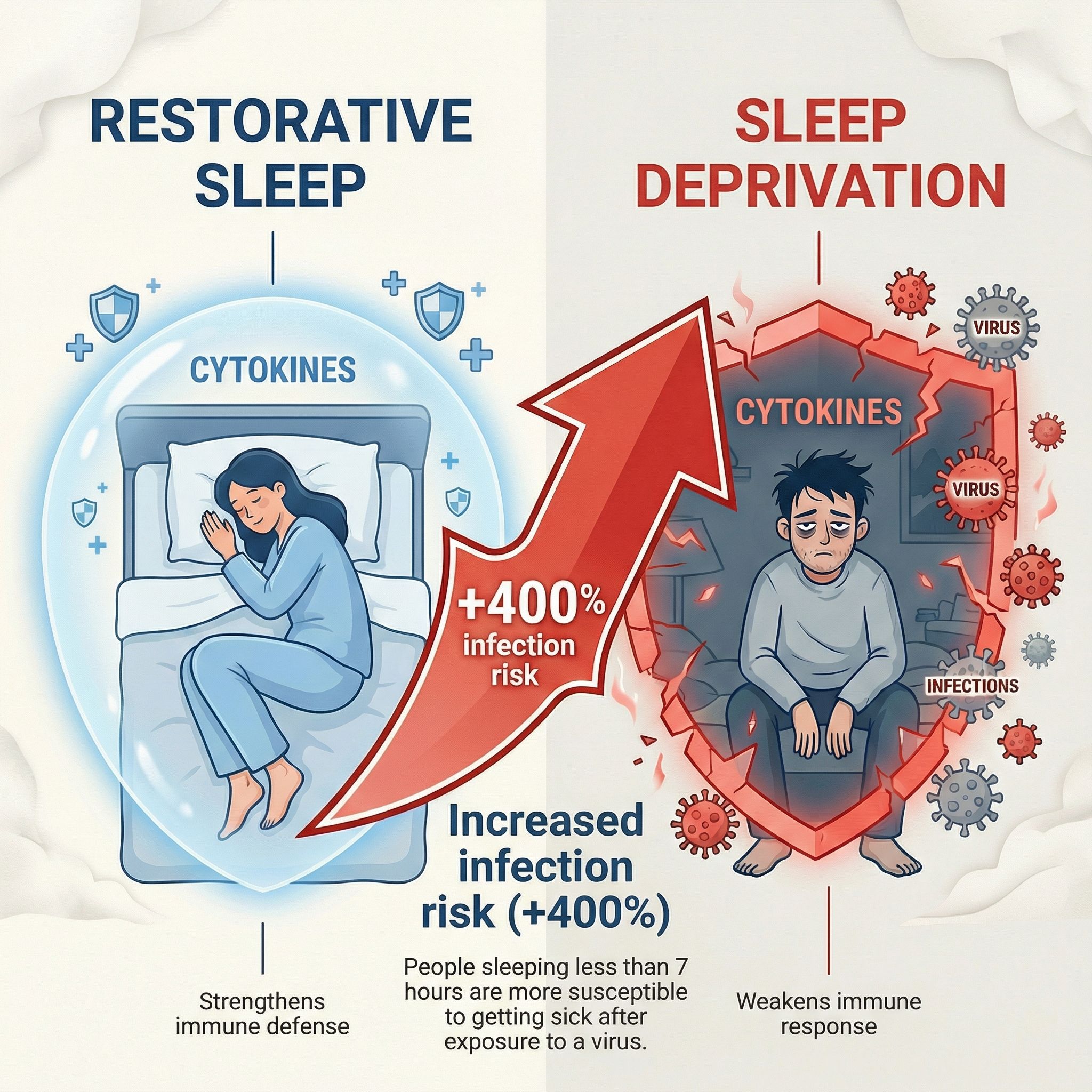
It is also interesting to note that the quality of your sleep directly influences the richness of your dreams. If you are in sleep debt, your brain will prioritize physical recovery at the expense of REM sleep, where creativity unfolds.
---