The Invisible Ledger: Understanding Your Sleep Debt
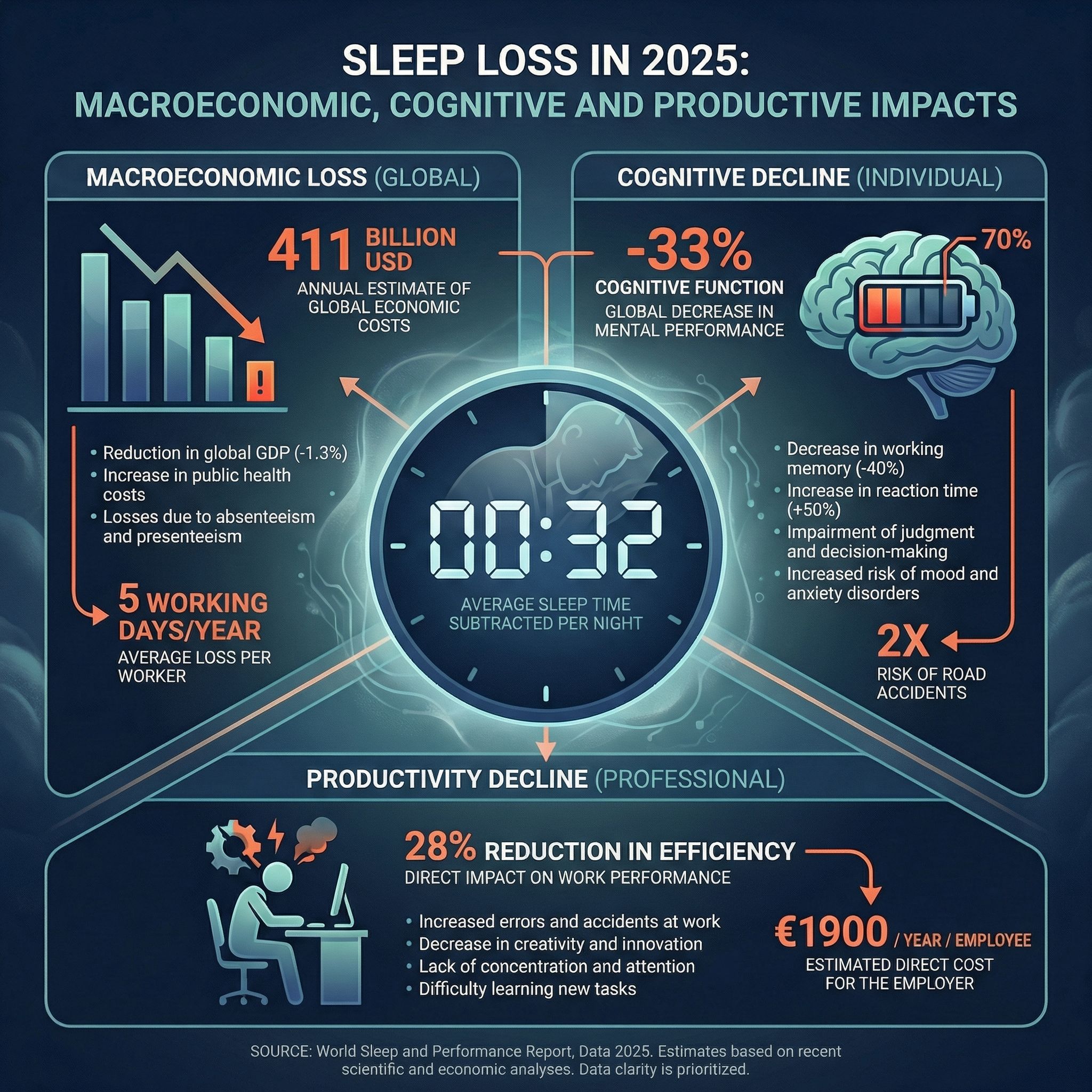
When you cut your night short, you aren't just losing time; you are creating a physiological deficit. Think of sleep debt as a silent weight you carry. It is the mathematical difference between your biological requirement—usually between 7 and 9 hours—and the reality of your short nights. If you miss two hours of sleep every night for a week, you don't just feel "a bit tired." You have accumulated a ten-hour void in your recovery.
You might think you are adapting to less sleep, but your brain is simply losing the ability to notice its own decline. Research suggests that while you may feel "fine" after a few days of restriction, your objective performance continues to slide. A study published in the journal Sleep (Van Dongen et al., 2003) demonstrated a direct correlation between sleep debt and reduced cognitive performance.
The researchers found that participants restricted to six hours of sleep for two weeks performed as poorly as those who had stayed awake for two full days. You become a slower version of yourself—less attentive, less creative, and more prone to emotional volatility. Your memory begins to fray at the edges, and the sharp clarity you rely on for your daily life starts to dim.
---
The Weekend Trap: Why Saturday Isn't a Savior
The idea that the weekend can erase a week of neglect is a seductive one. You imagine waking up at noon, feeling the sunlight on your face, and believing that your debt is paid. However, your biology doesn't work on a weekly billing cycle. It works on a 24-hour rhythm that demands consistency.
Researchers at the University of Colorado Boulder (Depner et al., 2019) conducted a pivotal study on this exact behavior. They observed a group that had restricted sleep during the week but was allowed to sleep as much as they wanted on the weekend. While these "weekend warriors" saw a slight, temporary improvement in their alertness, the underlying damage remained.
Most alarmingly, the study found that weekend recovery sleep did not prevent the metabolic disruption associated with sleep loss. Specifically, the participants' muscle and liver-specific insulin sensitivity decreased. In simpler terms, your body struggles to process blood sugar correctly when your sleep is inconsistent. By trying to "catch up," you might be inadvertently increasing your long-term risk of metabolic issues.
"Time in the dream world doesn't follow the ticking of your alarm clock. You cannot negotiate with the moon; she demands a presence that is steady, not a presence that is desperate."
---
The Fragile Architecture of Your Night
To understand why you can't just "binge-sleep" your way back to health, you have to look at what happens when you close your eyes. Sleep is not a monolithic block of unconsciousness. It is a complex, choreographed dance of stages, each with a specific purpose.
When you drastically change your sleep duration on the weekend, you disrupt the architecture of sleep. Your body prioritizes different types of sleep depending on when you fall asleep and how long you have been awake.
1. The Circadian Rhythm: Your internal clock thrives on predictability. When you sleep in late on Sunday, you shift your clock forward. This makes it harder to fall asleep on Sunday night, leading to the dreaded "Monday morning blues." This is what specialists call social jetlag. 2. Sleep Homeostasis: This is your internal "sleep pressure." The longer you stay awake, the more adenosine builds up in your brain, making you sleepy. When you oversleep on Saturday, you clear this pressure too effectively, leaving you wide awake when you should be preparing for the coming week. 3. Phase Displacement: By shifting your sleep window, you might miss the optimal timing for deep sleep or REM sleep, which are crucial for physical repair and emotional processing respectively.
---
Concrete Example: The Cycle of the Weekend Warrior
Imagine a 28-year-old graphic designer named Leo. During the week, Leo sleeps 5 hours a night to meet deadlines. By Friday, he has a 10-hour sleep debt. He feels irritable and his creativity is stagnant.
On Saturday and Sunday, Leo sleeps for 11 hours each night. He wakes up feeling physically "heavy" (sleep inertia) but believes he is recovered. However, because he woke up at 1:00 PM on Sunday, his brain doesn't start producing melatonin until much later that night.
He tosses and turns until 3:00 AM Monday morning. He starts his work week with a fresh deficit, but now his internal clock is also misaligned. Leo isn't just tired; he is biologically confused. This cycle creates a permanent state of low-grade exhaustion that no amount of caffeine can truly fix.
---
How to Actually Manage Your Rest
If the weekend binge isn't the answer, how do you handle the reality of a busy life? You must move away from the idea of "repaying" and toward the idea of "stabilizing."
- The 30-Minute Rule: Try to keep your wake-up time within 30 to 60 minutes of your weekday routine, even on Saturdays. If you need extra rest, go to bed earlier rather than waking up later.
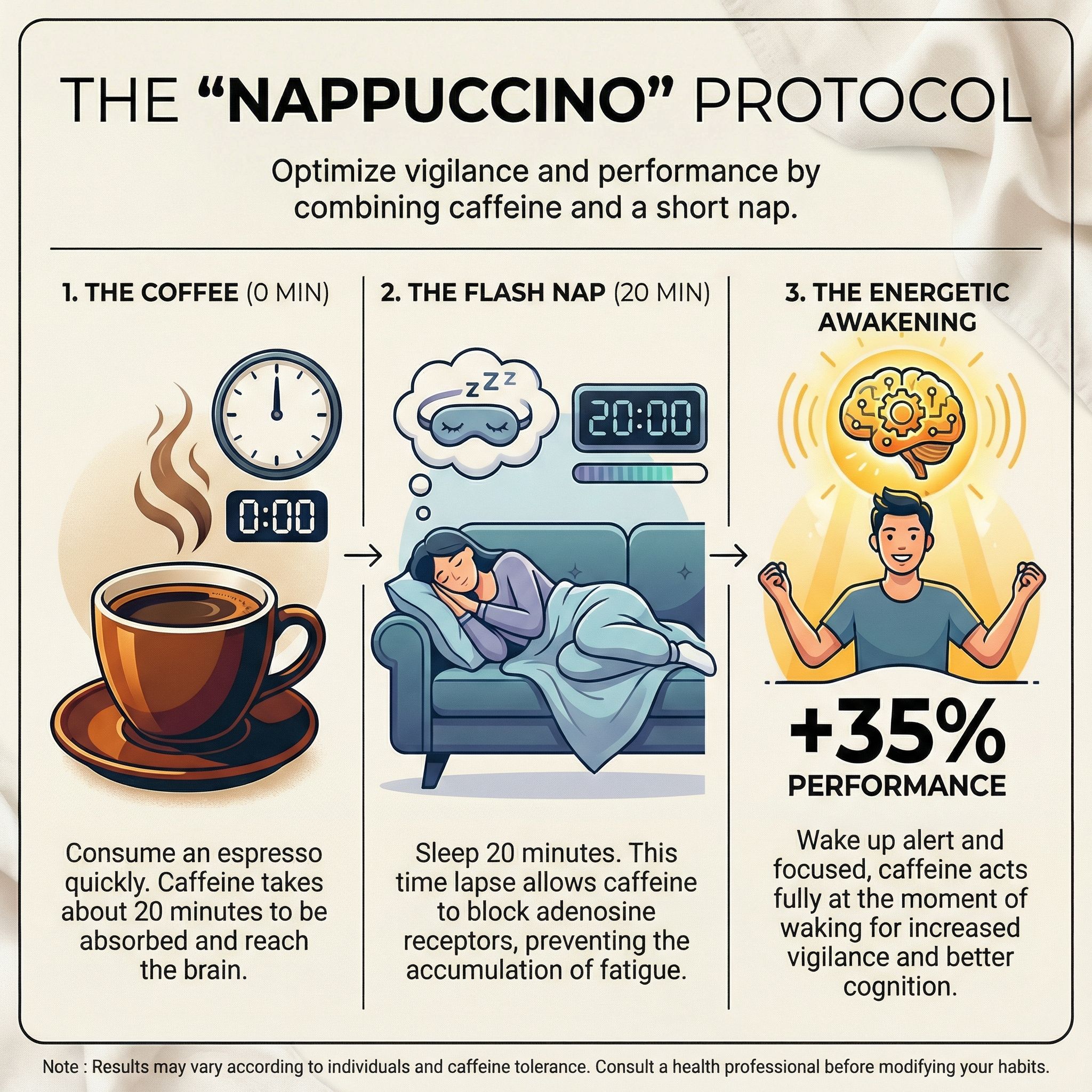
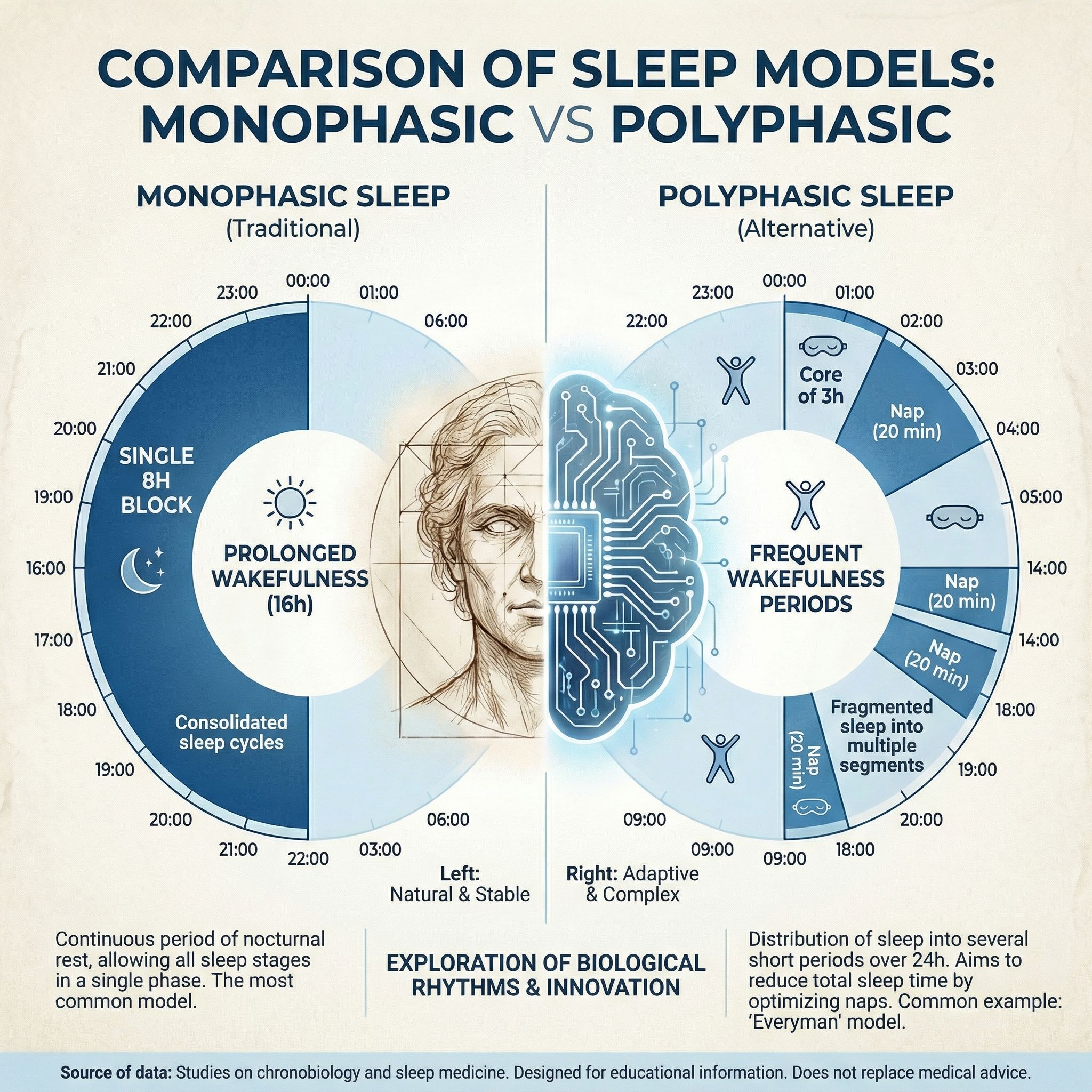
- Strategic Micro-Naps: Instead of waiting for the weekend, use polyphasic sleep principles to your advantage. A 20-minute "power nap" between 1:00 PM and 3:00 PM can dampen the build-up of sleep pressure without ruining your nighttime rest.
- Light Exposure: Seek bright, natural light as soon as you wake up. This anchors your circadian rhythm and helps mitigate the effects of a short night.
- The "Carbon Footprint" of Your Night: Be aware of how your environment impacts you. Every minute of lost sleep has a cost. You can read more about the carbon footprint of your nights to understand the broader impact of modern rest patterns.
---
I once met a dreamer—an exhausted teacher—who constantly dreamed of carrying waterlogged books across an endless, shallow lake. He was so focused on not dropping them that he never noticed the water was warm, inviting him to lie down and float. This is how your unconscious speaks. When you accumulate a sleep debt, your dreams rarely show you a neat mathematical ledger; instead, they wrap you in heavy coats, turn your limbs to lead, or place you in slow-motion chases where gravity feels overwhelming. These sensory weights are not punishments. They are your soul's clumsy, poetic way of slowing you down, forcing you to recognize the exhaustion you try to ignore. In trying to outrun this weight, you might be blocking the quiet, restorative process of dreaming of physical healing that your body desperately craves.
To be honest, it wearies me to see how modern dreamers treat their rest like a bank account to be balanced by silicon sensors and ring metrics. We have turned sleep into a transaction, a commodity to be optimized, as if the night were just another productivity hack. But you cannot negotiate with the dark. Sleep is not a ledger of hours to be paid back with clinical efficiency during an annual review of your unconscious. When you try to force sleep into a rigid schedule or treat it as a task to master, you strip away its sacred, wild nature. Your biological clock demands surrender, not optimization. Sometimes, the most spiritual thing you can do is to stop counting the hours entirely, let go of the sleep-debt math, and simply allow yourself to fall into the quiet emptiness without expecting anything in return.
I once met a dreamer who came to me tasting of copper and dry dust, haunted by a recurring vision of carrying heavy clay urns filled with leaking water across a cracked desert. He was desperate to reach an oasis, but the water slipped through the ceramic pores before he could take a single sip. To me, this wasn't a nightmare of drought, but a somatic plea—his body’s way of translating the silent ledger of his exhaustion into a language his stubborn, waking mind couldn't ignore. When you starve your nights, your unconscious doesn't just calculate hours; it paints the deficit in heavy limbs, sinking floors, and endless, exhausting journeys. Your dreams become the stage where this debt is dramatized, gently nudging you toward the necessity of dreaming of physical healing rather than constant survival. You cannot outsmart the loom that weaves your rest; sometimes, the only way to pay what you owe is to simply lie down and let the desert disappear.