AT A GLANCE
TL;DR
Polyphasic sleep involves breaking your rest into multiple short intervals rather than one long block.
The famous "Da Vinci schedule" is largely a modern myth with no historical evidence to back it up.
Science suggests that extreme schedules like "Uberman" can lead to severe cognitive impairment and health risks.
True productivity is often found in the quality of your the architecture of sleep rather than the quantity of hours you stay awake.
Beyond the Da Vinci Myth: Is Polyphasic Sleep a Productivity Miracle or a Biological Nightmare?
The Legend of the Renaissance Genius: Fact or Fiction?
You have likely heard the story: Leonardo da Vinci, the ultimate polymath, supposedly slept for only 15 to 20 minutes every four hours. This legend suggests that his immense creative output was fueled by this "extra" time. It is a romantic idea—the notion that by simply changing how you sleep, you could unlock a hidden level of human potential.
However, as a Baku who wanders through the history of human nights, I must tell you: there is no historical record to support this. No diary entry, no contemporary account, and no witness from the 15th century confirms that Leonardo followed such a grueling regime.
The myth likely persists because we love the idea of a "secret" to genius. We want to believe that productivity is a matter of scheduling rather than the mysterious, slow-cooked process of the unconscious mind. By attributing this to Da Vinci, modern "biohackers" give a veneer of historical prestige to a practice that is, in reality, quite modern and often quite taxing.
---
Understanding the Architecture: The Different Schedules
If you decide to explore the world of polyphasic sleep, you will encounter a variety of "protocols." Each one attempts to manipulate the architecture of sleep to maximize time spent in the most restorative phases.
The most famous, and perhaps the most dangerous, is the Uberman schedule. It consists of six 20-minute naps spaced equally throughout the day, totaling only two hours of sleep. The theory is that your brain will eventually adapt by entering REM (Rapid Eye Movement) sleep almost instantly.
Then there is the Everyman protocol, which is slightly more grounded. It involves a "core" sleep of about three hours, supplemented by several 20-minute naps. While it feels more sustainable, it still requires a level of discipline that few humans can maintain without significant social and physical cost.
Finally, the Dymaxion schedule—four 30-minute naps every six hours—is often linked to the architect Buckminster Fuller. While he reportedly followed it for a couple of years, he eventually stopped because his business associates couldn't keep up with his "always-on" lifestyle.
"I often wonder if, by chasing every waking second, you might lose the very dreams that give those seconds meaning. A fragmented night often leads to a fragmented soul."
---
The Biological Cost: What Happens When You Hack Your Brain?
Your body is not a machine that can be overclocked indefinitely. It is governed by a complex internal clock known as the circadian rhythm, centered in the suprachiasmatic nucleus of your brain. This clock is naturally programmed for a monophasic (one long block) or, at most, a biphasic (a long block plus a siesta) rhythm.
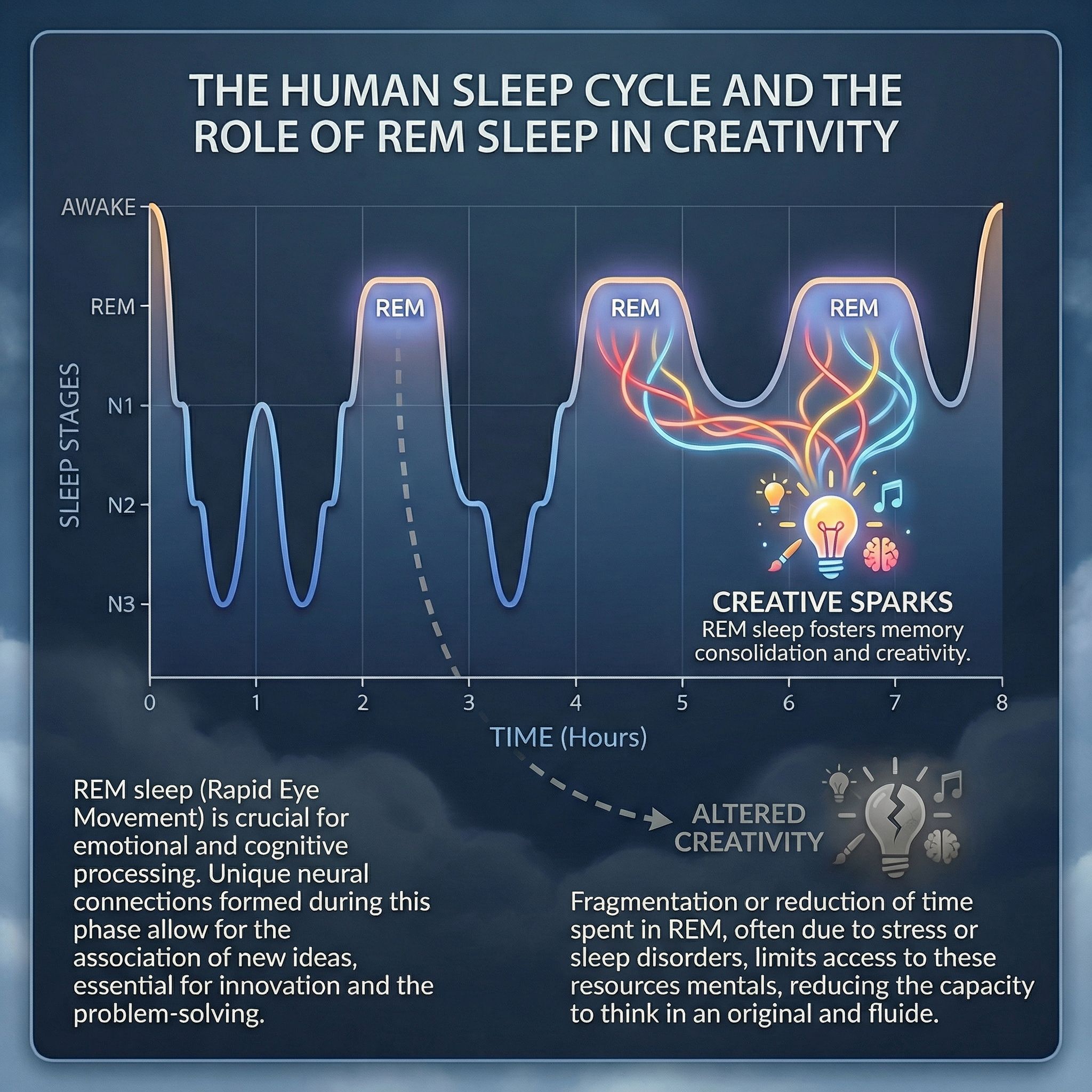
When you attempt to force a polyphasic schedule, you are essentially living in a state of permanent jet lag. Some researchers suggest that while the brain can prioritize REM sleep during extreme deprivation—a phenomenon known as "REM pressure"—it cannot fully compensate for the loss of deep, slow-wave sleep.
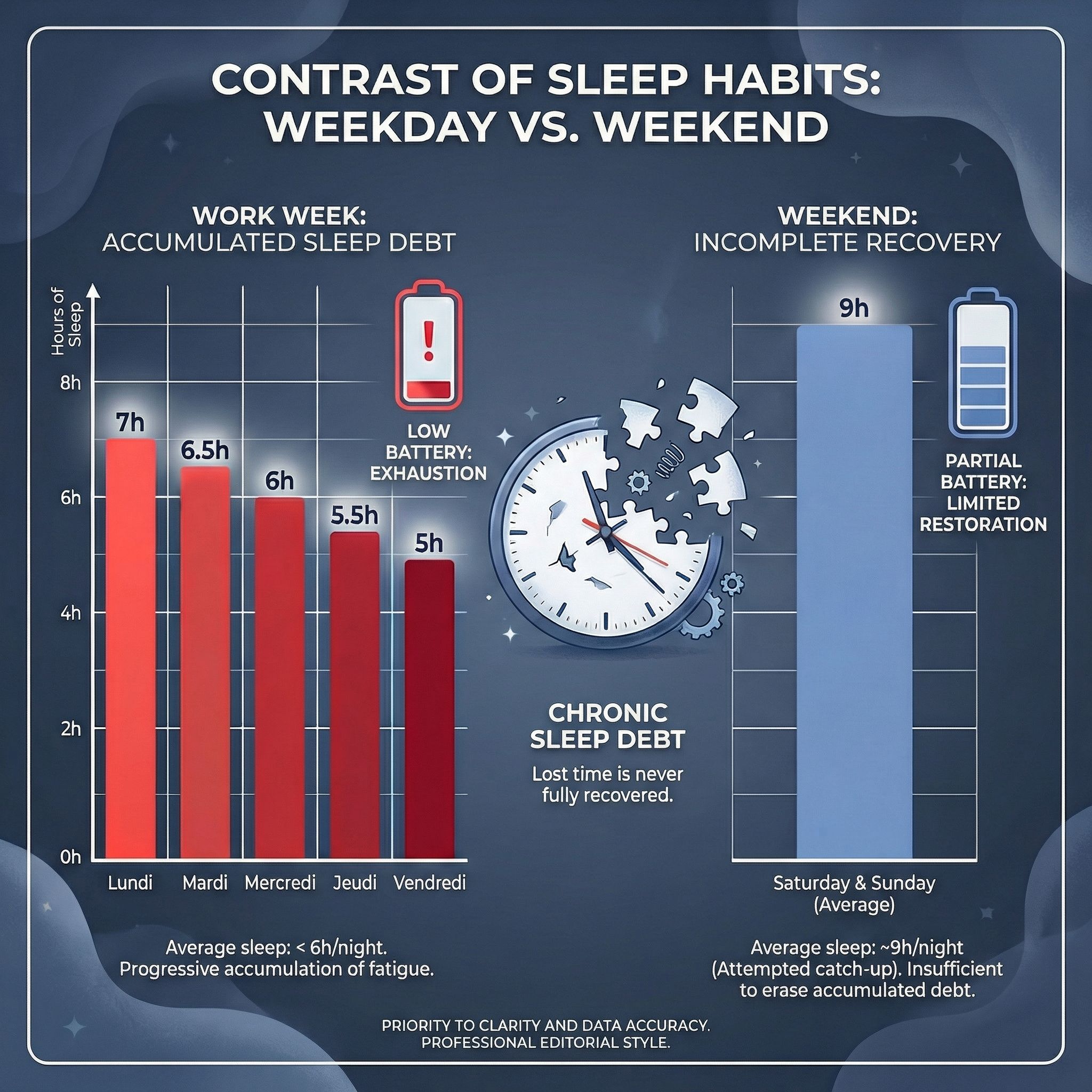
This deep sleep is crucial for your physical recovery and the clearing of metabolic waste from your brain. Without it, you may find that your "extra" hours are spent in a cognitive fog. You might be awake, but are you truly present? Studies on sleep debt show that even minor deprivation can impair your judgment, memory, and emotional regulation.
---
A Concrete Example: The Designer’s Experiment
Imagine a freelance designer named Elias. Driven by a heavy workload, he decides to adopt the Everyman schedule: a 3.5-hour core sleep at night and three 20-minute naps during the day.
For the first week, Elias feels a strange, jittery euphoria. He finishes his projects early. But by week three, the "dark side" emerges. He finds himself staring at his screen for an hour, unable to choose a color palette. His irritability grows; a simple email from a client feels like a personal attack.
Most importantly, he stops dreaming. His naps are too short to enter the deep narrative states of the mind, and his core sleep is too brief to sustain them. He has gained four hours a day, but he has lost his creative spark and his emotional equilibrium. Eventually, his body makes the choice for him: he falls asleep during a nap and doesn't wake up for fourteen hours.
---
Why Silicon Valley Still Chases the Ghost of Sleep
In the high-pressure environments of tech hubs, sleep is often viewed as a "bug" in the human operating system. The culture of performance values the "grind," and polyphasic sleep fits perfectly into the narrative of the superhuman entrepreneur.
There is also a powerful placebo effect at play. When you believe you are part of an elite group of "sleep hackers," the initial rush of adrenaline (caused by your body’s stress response to deprivation) can feel like a new kind of energy. You feel productive because you are busy, but business is not the same as effectiveness.
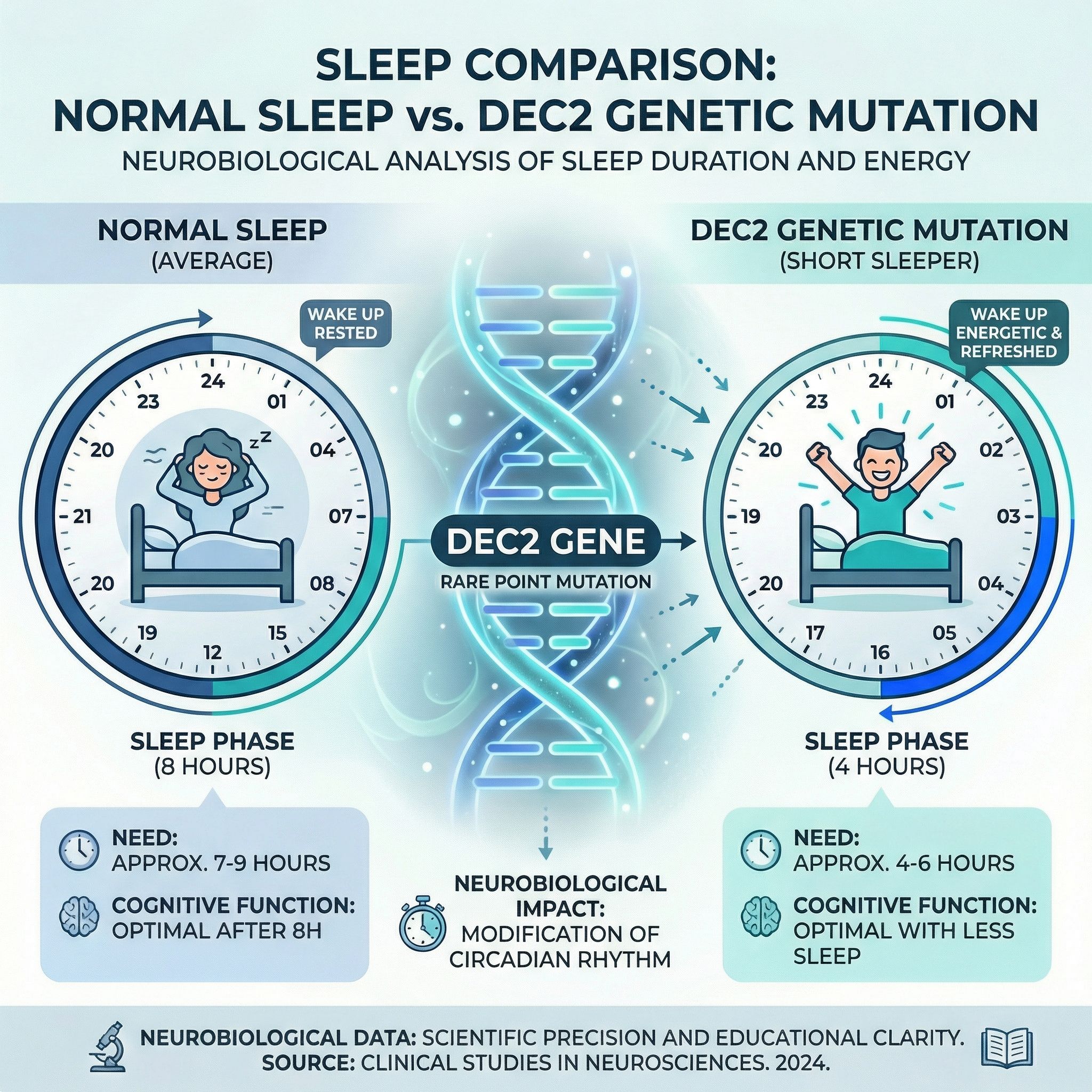
Furthermore, sleep genetics play a role. A very small percentage of the population possesses a mutation (like the DEC2 gene) that allows them to function perfectly on very little sleep. If you aren't one of them, trying to mimic their lifestyle is not an optimization—it is a slow form of burnout.
---
The Baku’s Path: Healthier Ways to Optimize Your Mind
Instead of fighting your biology, why not work with it? You don't need to sacrifice your health to find more time or better focus. True optimization comes from the quality of your rest, not just the quantity of your waking hours.
- Respect the Rhythm: Try to go to bed and wake up at the same time every day. This stabilizes your hormones and makes falling asleep effortless.
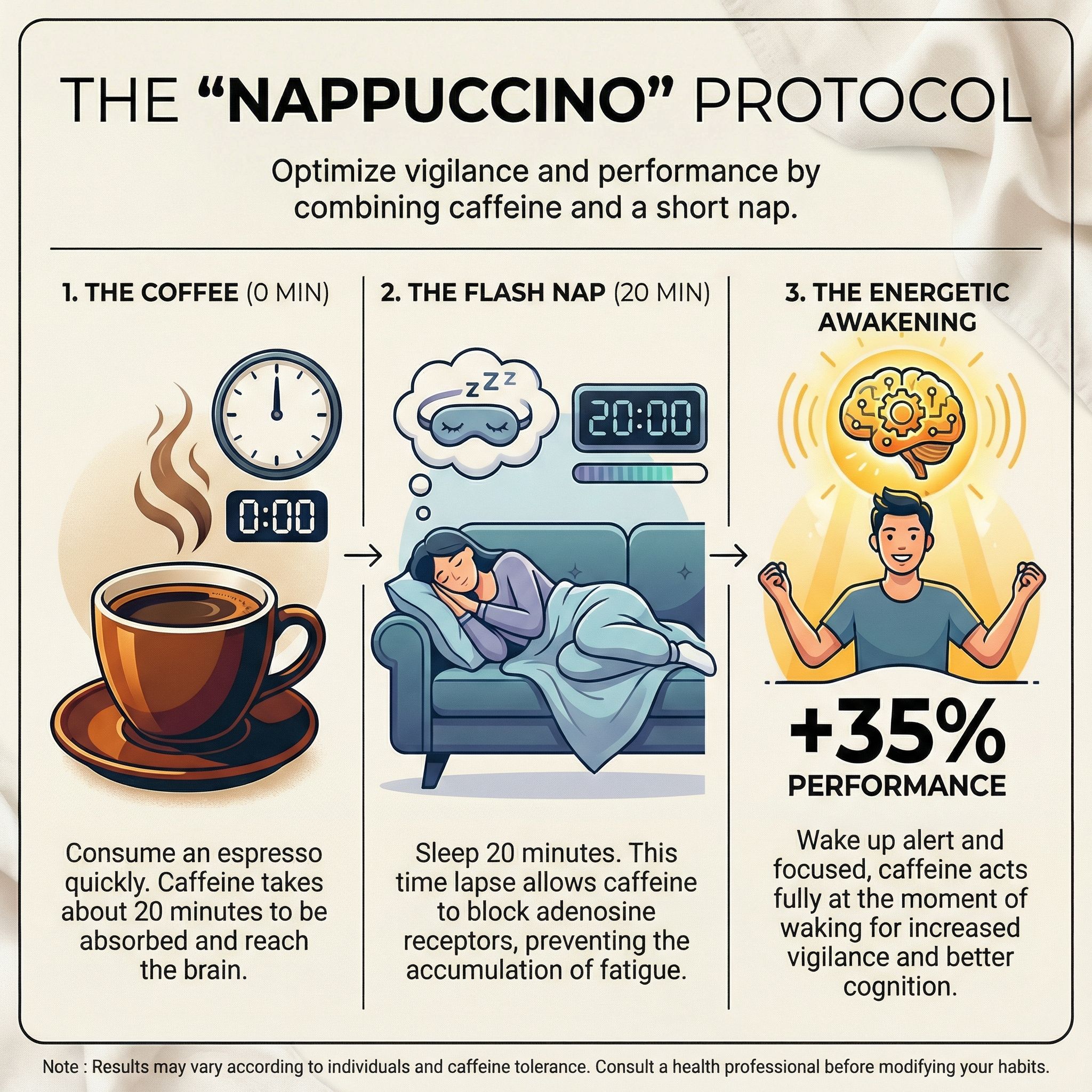
- The Power of the 20-Minute Nap: You don't need a polyphasic schedule to benefit from naps. A single, well-timed "power nap" in the early afternoon can boost alertness without disrupting your night.
- Digital Sunset: Your brain needs a signal that the day is over. Dimming the lights and putting away screens an hour before bed allows melatonin to rise naturally.
- Listen to Your Dreams: Your unconscious mind uses sleep to solve the problems you couldn't crack during the day. When you cut your sleep short, you cut off your most creative collaborator.
---
Conclusion: The Wisdom of the Long Night
Polyphasic sleep is a fascinating experiment, but for most of us, it remains a false promise. It treats the human experience as a series of tasks to be completed, rather than a life to be lived. As your Baku, I have seen that the most profound insights and the deepest healing happen when you allow yourself to sink fully into the darkness of a long, uninterrupted night.
If you truly want to understand the mysteries of your mind, don't try to shorten your nights. Instead, try to remember them. Noting your dreams and reflecting on their symbols can reveal more about your potential than any productivity hack ever could. If you want to explore your dreams more in depth, your Baku is waiting for you.
Remember: you are not a machine. You are a living, breathing mystery, and you deserve the rest that allows your soul to flourish. If you want to explore your dreams more in depth, your Baku is waiting for you at Midnight Mind.