Behind the Curtain: What You Hide from the World
In my work as a Baku, I have tasted thousands of theater dreams. What strikes me every time is the sense of clutter that reigns behind the velvet. Unlike the stage, which is clean, lit, and orderly, the backstage is often crowded. This is exactly what your subconscious represents: a space where everything is piled up—where old emotions and unfinished projects are stored.
Sincerely, this symbol has fascinated me for years because it reminds us that we are all artisans of our own identity. We too often forget that for a single "brilliant" minute in public, hours of doubt and internal tinkering are required. If you see yourself rummaging through trunks, perhaps you are looking for a tool or a skill you have forgotten. Sometimes, we encounter those industrious little beings working tirelessly in the depths of our psyche; they are there to remind us that every detail counts in the construction of our destiny.
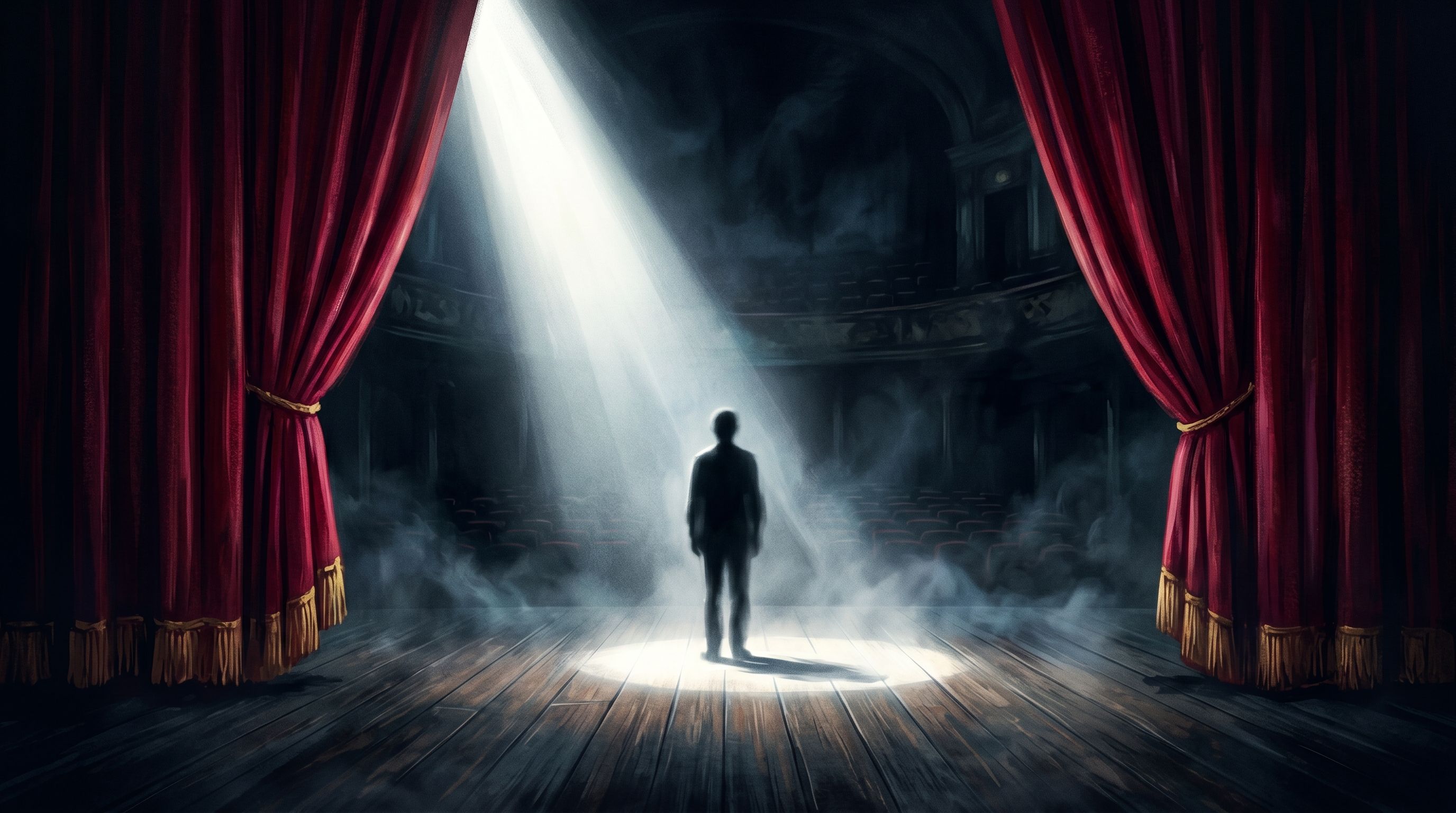
I am not a fan of dream dictionaries that tell you backstage necessarily means shyness. That is far too reductive. To me, being backstage is like being in the belly of the whale—it is a moment of gestation. If the place feels oppressive, it is likely because you feel forced to play a role that no longer fits you. You fear the curtain will rise and the audience will see that you aren’t "ready." But who truly is? The subconscious shows you the backstage to tell you: "Look at all the work you have already accomplished. This is where the magic is created, not under the spotlights."
The Tumult of Preparation and the Anxiety of the Curtain
I often hear dreamers tell me they feel lost backstage even though the show has already begun. You can hear the applause or the music on the other side of the velvet, but you are unable to find your shoes or your script. It is a poetic, albeit stressful, metaphor for our feelings of imposter syndrome.
This agitation often reflects intense mental preparation. You may be on the verge of a major project, a wedding, or a career change, and your mind is tirelessly rehearsing every possible scenario. The backstage then becomes the laboratory of your fears. But be careful—the mess you see there is not your enemy. Amidst the old props and dust, you sometimes find unexpected treasures, much like stumbling upon a rare pearl hidden at the bottom of a dusty costume crate. This pearl is a truth about yourself that you had hidden away to please the crowd.
Personally, I love those dreams where the backstage is calm. This happens when the dreamer has finally accepted that perfection is an illusion of the stage. If you sit quietly on an equipment trunk in your dream, it is a magnificent sign. It means you are at peace with your creative process, and that you accept the shadow as much as the light. You are no longer in a rush to "appear"; you are in the joy of "preparing."
Honestly, this symbol remains mysterious even to me after so many centuries, because every backstage is unique. Some look like modern factories, others like childhood attics. But the message remains the same: what is hidden is often richer than what is shown. Do not fear the darkness behind the curtain; it is there that your soul catches its breath between two acts.
My humble advice, if you often return to these nocturnal places of preparation, is not to try and force your entrance onto the stage. Take the time to observe the objects surrounding you in these dreamlike wings. An old hat, a crumpled letter, a broken mirror? Each of these elements is a piece of your inner puzzle that you do not yet dare to bring into the light. Dreams are not threats of failure; they are dress rehearsals where you have the right to make a thousand mistakes.
Why do we fear this clutter so much? To me, the backstage functions very much like a cluttered basement of the soul—a repository for all the versions of yourself you chose not to play. In the light of the stage, you are one thing: a partner, a boss, a reliable friend. But in the shadows of the wings, the unlived lives wait quietly. Honestly, it tires me when modern psychology treats these hidden spaces as mere anxiety. There is a quiet, necessary melancholy here. You are allowed to grieve the roles you didn't take, the scripts you abandoned. When you find yourself touching old fabrics or staring at unused props in your dream, you aren't failing; you are visiting your personal museum of 'what-ifs.' It is a sacred holding space, not a graveyard. Let yourself sit among the dust for a moment.
I once met a dreamer, an architect by day, who kept returning to a dimly lit backstage where she was handed a heavy leather-bound volume. Every time she opened it, expecting her cues, she found nothing but empty sheets. She woke up panicking, but we talked about how dreaming of a book with blank pages in that specific, silent wings-of-the-stage environment is actually a profound gift. It means the play hasn't been written yet. The audience is waiting, yes, but you hold the pen, not the director. Sometimes we get so caught up in the dread of missing our cue that we forget we are allowed to improvise. If you are wandering backstage with no script in hand, do not panic. The silence between the acts is not a void; it is a canvas of pure, unmapped potential.
In the ancient traditions of Noh theater, there is a special room backstage called the Kagami-no-ma, the mirror room. Before stepping onto the stage, the actor sits in absolute silence, staring at the mask they are about to wear, waiting for the spirit of the character to merge with their own. I find this ritual deeply beautiful because it treats the backstage not as a chaotic mess, but as a threshold of sacred transformation. When your dream self lingers behind the heavy curtains, you are in your own mirror room. You are deciding which face to show the world. It is a slow, meditative transition that cannot be rushed. Do not let the frantic demands of the external world make you feel guilty for pausing here. The threshold is where the soul decides how it wants to be seen.
If you feel that the threads of your nights are getting a bit too tangled in the theater rafters, perhaps the Midnight Mind app could help you see more clearly: there, you can record every detail of your secret sets and even see your backstage come to life through its creative studio. Don't forget: the performance is important, but it is in the shadows that you learn how to truly shine.