The Fabric of Our Roles: Why is your mind dressing you this way?
To be honest, I am growing a little tired of those interpretations found in dusty old grimoires—the ones that claim a suit always signifies a wedding or a funeral on the horizon. That is far too narrow. For me, as I taste the substance of your dreams, a costume is above all a question of vibration and posture.
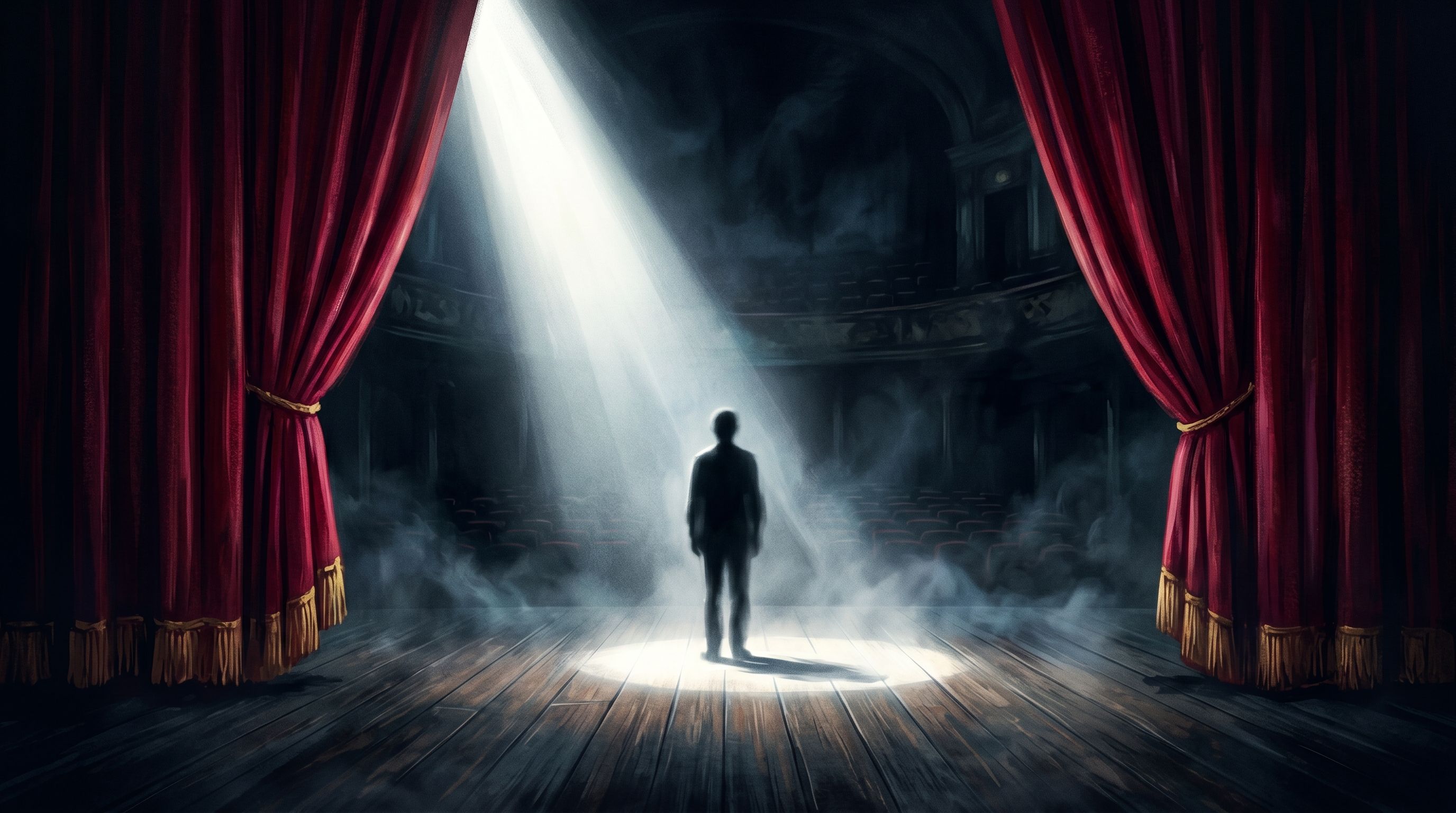
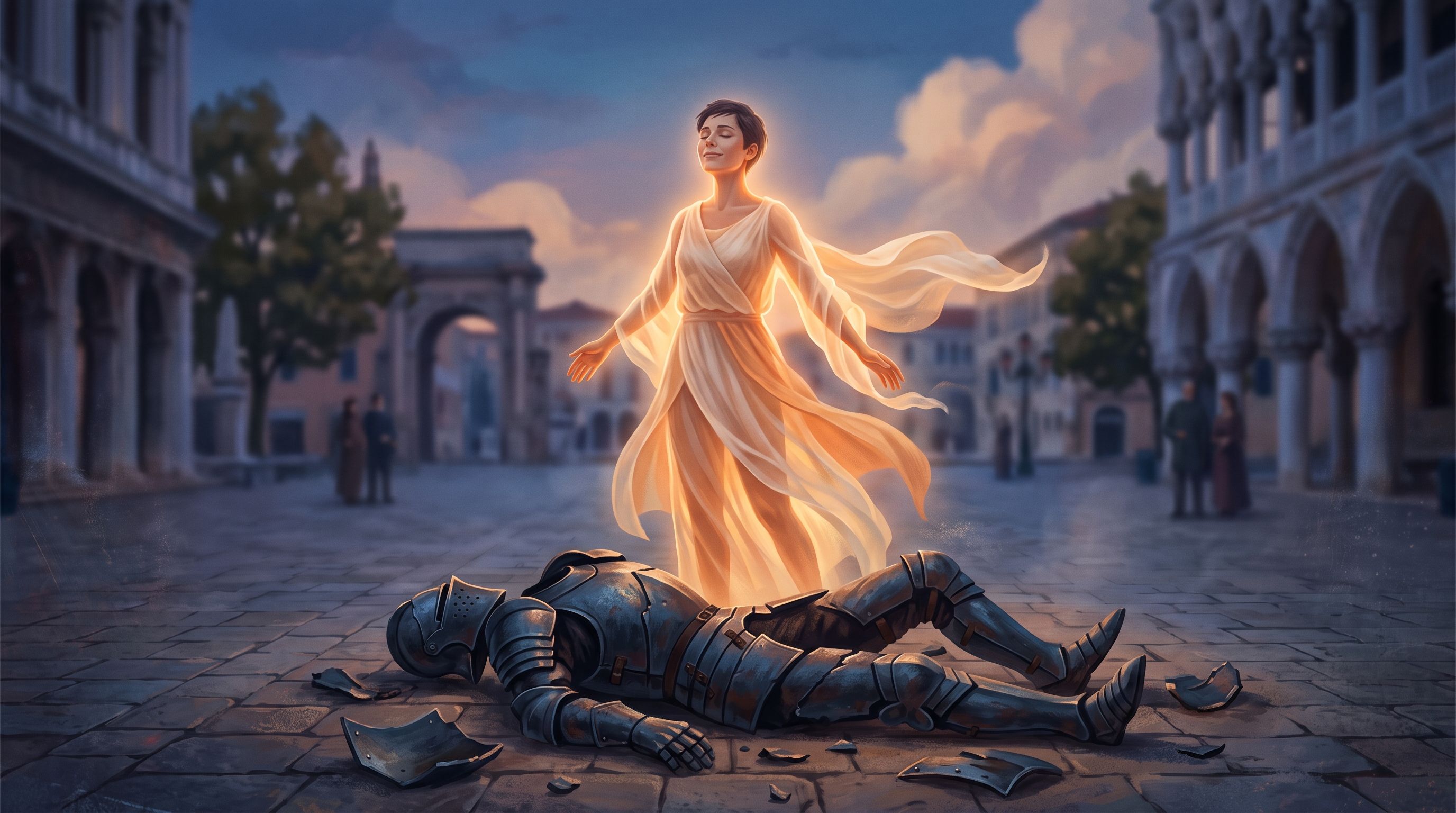
When your subconscious presents you with a costume, it is questioning your "stage performance." We all play roles: the exemplary parent, the devoted employee, the friend who is always cheerful. These are tools for communication. But when the dream insists on the clothing, it is often because the role has become too heavy. I met a dreamer recently who saw himself wearing samurai armor in a modern office; he wasn't fighting enemies, he was simply trying to maintain a facade of strength while he was collapsing internally.
The costume is your appearance—the one you have polished so that you will be accepted. If you feel elegant and comfortable, it means your current role nourishes you, as if you have finally found the right rhythm. It’s similar to the fluidity one feels when dreaming of a bicycle, where effort and movement are perfectly balanced. But if the collar feels tight around your throat, it is time to ask yourself what part of your true self you are stifling just to please the crowd.
When the Costume Scratches, Tears, or No Longer Closes
There is something fascinating—and terrifying, I admit—in those dreams where you realize, in the middle of an important meeting, that your suit is made of cardboard or, even worse, that it is stained. These visions are not predictions of social catastrophe. They are messages from your deeper self saying: "Look, this image of perfection is fragile, and that is okay."
The subconscious has a rather unique sense of humor, don't you think? It uses the absurd to set us free. If you see yourself in a clown costume when you are meant to be serious, it isn't a mockery. It may be an invitation to bring lightness back to a place where you have become too rigid. Conversely, if you are naked under a gala suit, it is a feeling of extreme vulnerability expressing itself. You fear that if the finery is stripped away, nothing will remain.
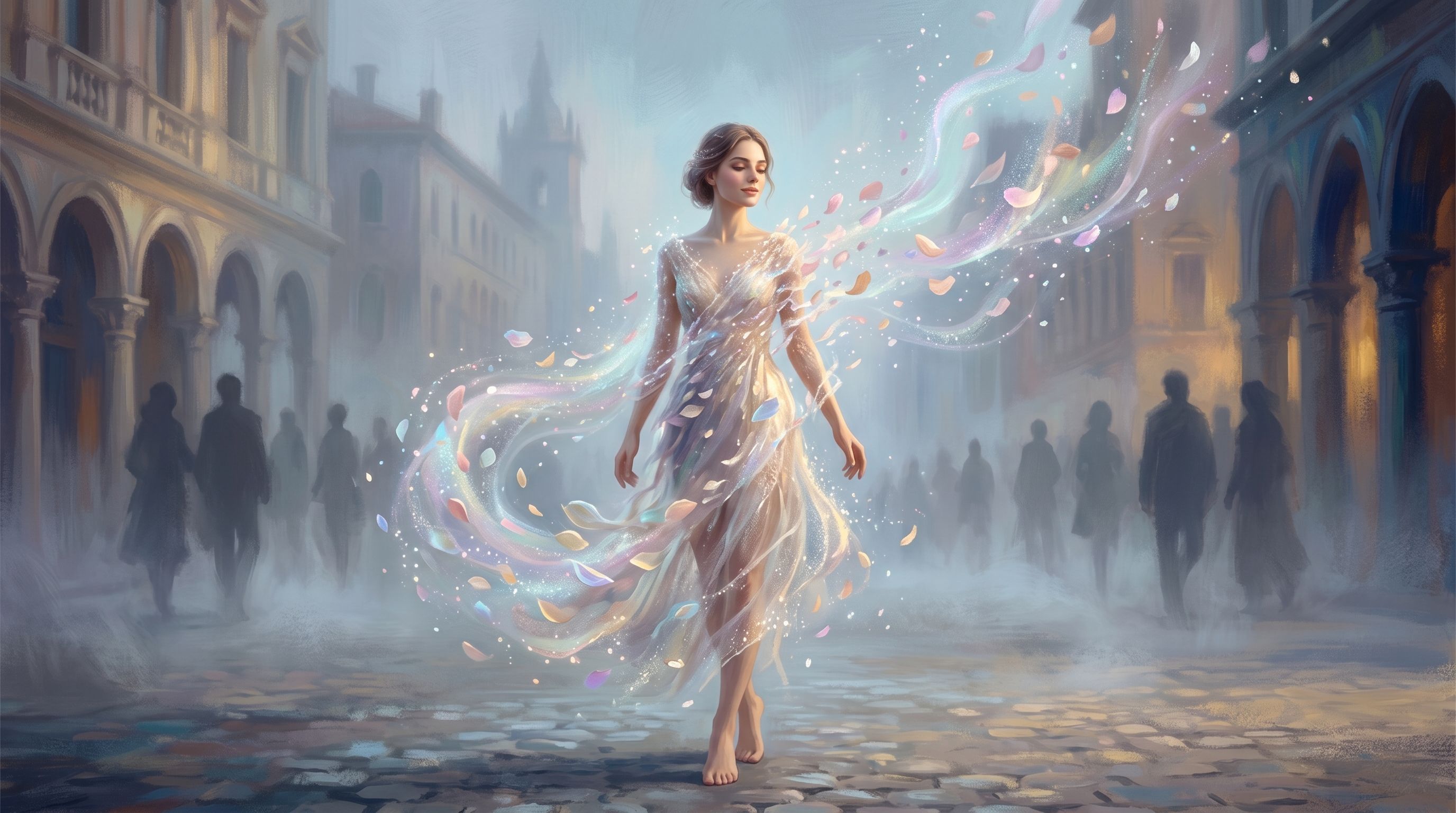
Yet, the truth is much gentler. Behind the costume lies your essence, something as light and pure as a feather. The costume is merely a passing envelope. I have often noticed that people in the middle of a career change or a breakup have these "dressing room" dreams: they try on clothes, look for the right size, and look at themselves in distorted mirrors. They are in the process of sewing their new skin.
Is interpretation an exact science? Honestly, I don't think so. A police officer's uniform doesn't mean the same thing to someone who fears authority as it does to someone who dreams of protecting others. That is why I prefer to listen to you rather than give you a fixed definition. A dream is a dialogue, not a verdict.
My humble advice, if you have had this dream recently: the next time you get dressed in the morning, take a moment to feel if your "outer" clothes match your "inner" climate. If the gap is too wide, your subconscious will continue to send you increasingly strange costumes to get your attention.
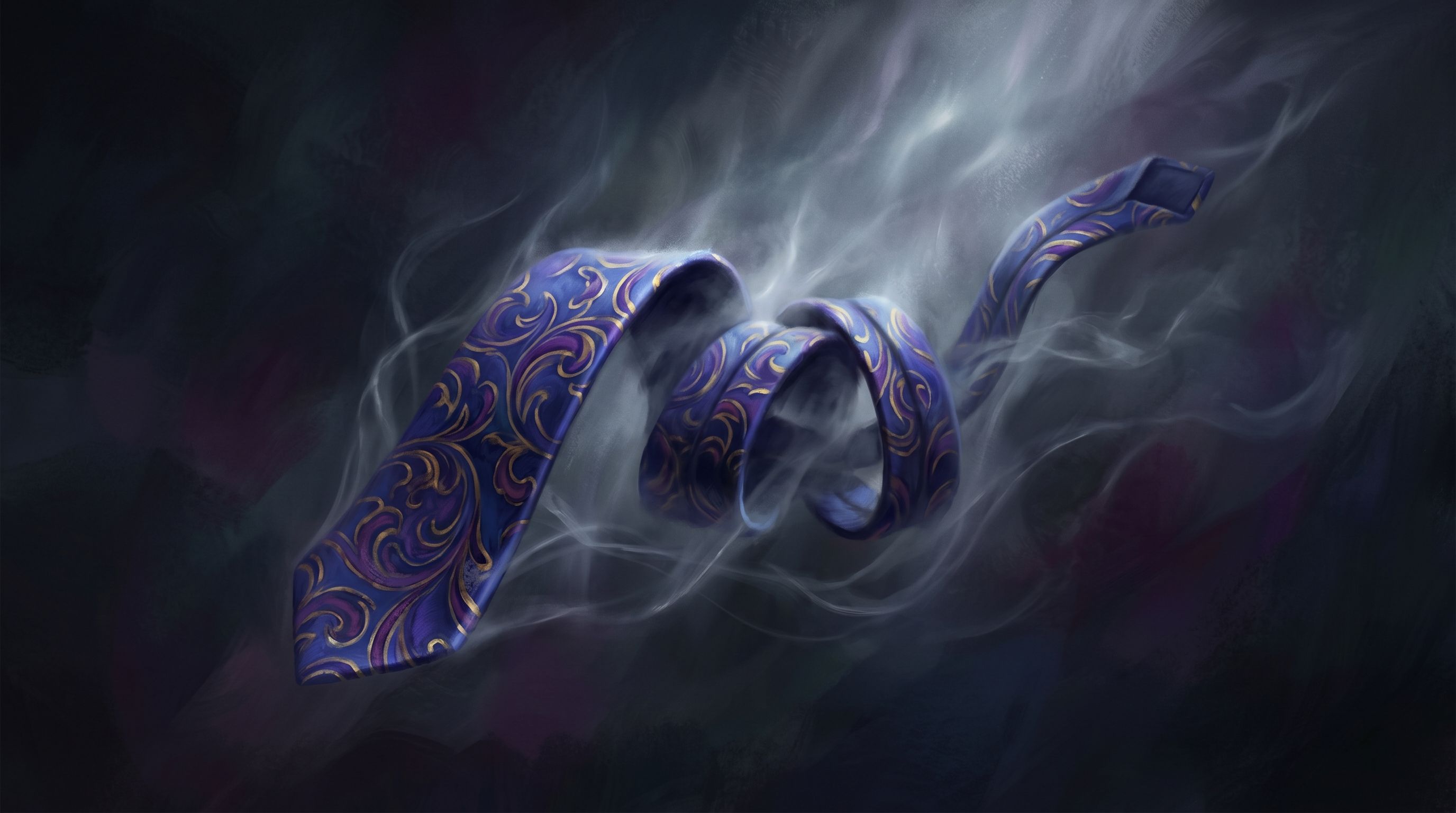
Have you ever paid attention to the fabric itself? In the quiet dark of your mind, a suit isn't just a visual; it has a weight, a texture, sometimes even an old, musty smell. I often see dreamers struggling with a tweed jacket or a heavy wool coat that feels far too warm, only to realize it belonged to their father or a distant ancestor. We don't just inherit eye color; we inherit expectations, unspoken family scripts that we drag into our closets. If you find yourself struggling to breathe under a weight that isn't yours, your dream might be pointing out that you are wearing someone else's clothes to keep a legacy alive at the expense of your own breath. It is a tiring way to live, trying to fill sleeves cut for a ghost.
Sincèrement, this symbol of the tight suit fascinates me because it mirrors the natural world so beautifully. We tend to view a ripping seam or a popped button in a dream as a failure, a moment of deep embarrassment. But why? When a cicada or a crab grows, its outer shell must crack; there is no other way for it to expand. Your psyche works the same way. That uncomfortable tightness across your shoulders in the dream is actually a sign of your internal expansion. Your soul has grown too vast for the container you built for it years ago. Instead of panicking over the torn fabric, perhaps you can welcome this quiet process of molting as a necessary, albeit messy, initiation into a larger version of yourself.
I once met a dreamer who dreamt of wearing a pristine, double-breasted tuxedo while walking slowly through a dense, muddy swamp. He was terrified of getting it dirty, stepping gingerly over roots, completely ignoring the wild beauty of the forest around him. That dream stayed with me because it perfectly illustrates our obsession with decorum. We wear our social armor even when stepping into the deep waters of our instinctual selves, terrified of what will happen if we let the mud touch our skin. Honestly? It is quite exhausting to watch. The wild spaces of your unconscious—your desires, your raw grief, your unspoken passions—do not care about dry-cleaning labels. Sometimes, the best thing you can do with a perfectly tailored suit is to leave it on the shore and dive in.
If you need to keep track of these nightly metamorphoses and see how your "dream collection" evolves, you can note every detail, every button, and every seam in your personal journal. The Midnight Mind app actually has a rather wonderful creation studio that allows you to visualize these costumes you wear at night, helping you better understand the character you are becoming.
No matter the outfit, never forget that it is the heart beating beneath it that interests me the most. Sleep peacefully; I am watching over your dreams.
Yume