The Whisper of the Reptilian Brain: Instinct and Survival
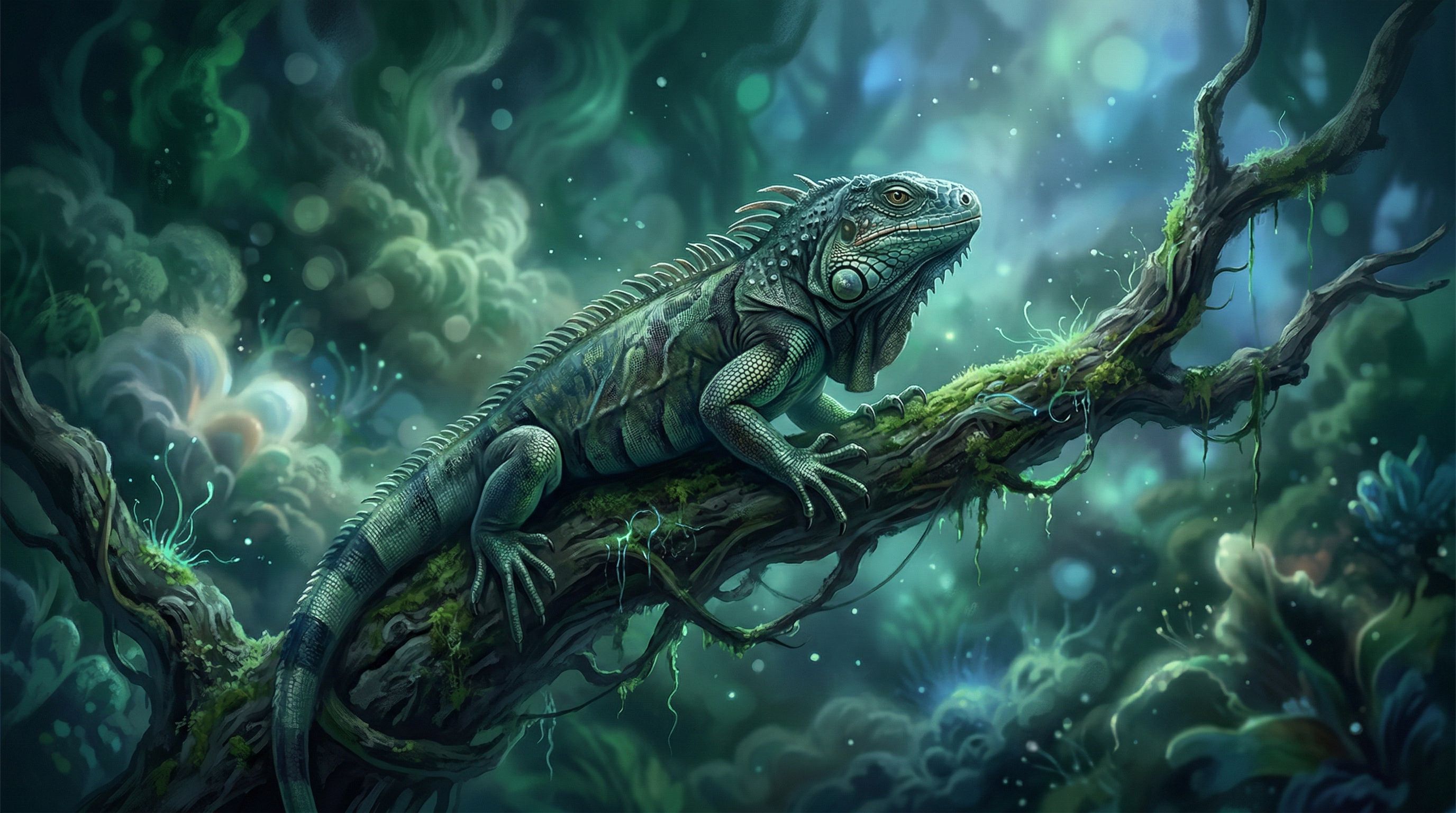
I have a secret to share with you: I am fascinated by the way your modern minds react to the most ancient of symbols. The lizard is one of the oldest messengers of the subconscious. Unlike the mammals that often populate your dreams and carry complex emotional weights—as I explained in my analysis of Animals in Dreams: Instincts and Desires—the lizard belongs to a world of simplicity. It does not burden itself with sentiment. It is a pure reflection of your "reptilian brain."
When a lizard appears, it is often asking you: "What do you truly need to survive today?" Sometimes, we lose ourselves in metaphysical or existential anxieties when our bodies are actually crying out for a basic, neglected need: rest, warmth, or simply safety. The lizard basking in the sun in your dream isn't being lazy. It is recharging its batteries. It is optimizing its energy. It is an invitation for you to do the same. Might you be exhausting yourself trying to solve problems that only require a bit of withdrawal and silence?
Some time ago, a dreamer told me he saw dozens of tiny green lizards running over his hands. He was terrified, thinking it was an invasion. In speaking with him, we realized those lizards were the image of his own reactivity: he had become so high-strung that he was merely reacting by reflex, never taking a moment to think. The lizard wasn't the enemy; it was the thermometer of his inner state. Learning to observe this little reptile without fear is learning to tame your own defense mechanisms.
The Art of Losing to Better Rebirth: Regeneration
What touches me most about this creature, and what I find to be of absolute poetry, is autotomy. You know, that ability the lizard has to detach from its own tail to escape a predator. In the world of dreams, this is a powerful symbol of regeneration. How many of us cling to pieces of our past, to toxic relationships, or to obsolete versions of ourselves simply out of a fear of the void?
The lizard losing its tail in your dream whispers that you can survive a loss. Even better: that this loss might be the very condition of your survival. There is a form of brutal but necessary wisdom in this idea. Sometimes, to move forward, one must accept leaving a part of oneself behind. This isn't a failure; it is a life strategy. And the most beautiful part of all? The tail grows back. Life reforms—different, certainly, but functional. This is the very heart of psychic regeneration.
Furthermore, this idea of transformation and shedding skin is closely linked to the notion of movement. We often see the lizard when we change environments, much like that strange phenomenon humans experience when they sleep somewhere other than home, which I call Travel and Dreams: The First Night Effect. The lizard is the one who slips into the cracks, who climbs walls, who changes perspective. It tells you that you have the necessary flexibility to inhabit this new chapter of your life, even if the walls seem slippery or the temperatures too cool.
Sincerely, this symbol has fascinated me for years because it is the antithesis of rigidity. The lizard doesn't try to fight the rock; it becomes the rock. It doesn't struggle against the sun; it absorbs it. It is a lesson in humility and efficiency that your subconscious offers you on a silver platter (or perhaps, a tray of dust and light).
Do not fear the lizard's bite; it is rare and without venom in the world of dreams. Fear instead the stillness of a mind that refuses to evolve. The lizard is here to remind you that you are a being of flow, capable of recreating yourself infinitely, provided you agree to let go of what holds you back.
Honestly, what always strikes me when I taste these dreams is the temperature. The lizard is a cold-blooded creature. In your nights, touching its dry scales or watching it freeze on a cold stone can leave you with a strange feeling of numbness, almost an emotional void. Quick-fix dream dictionaries often see this as a sign of a cold heart—what nonsense! That completely misses the wisdom of the living world. When your waking life becomes too hostile or overwhelming, your subconscious might choose to lower its internal temperature to protect you. This immobility isn't death; it is a sacred state of hibernation. It is a necessary cooling down, not unlike the primal element of heat we seek when dreaming of a salamander to balance our inner fires. Do not mistake the paralysis of fear for the quiet, vital art of energy conservation.
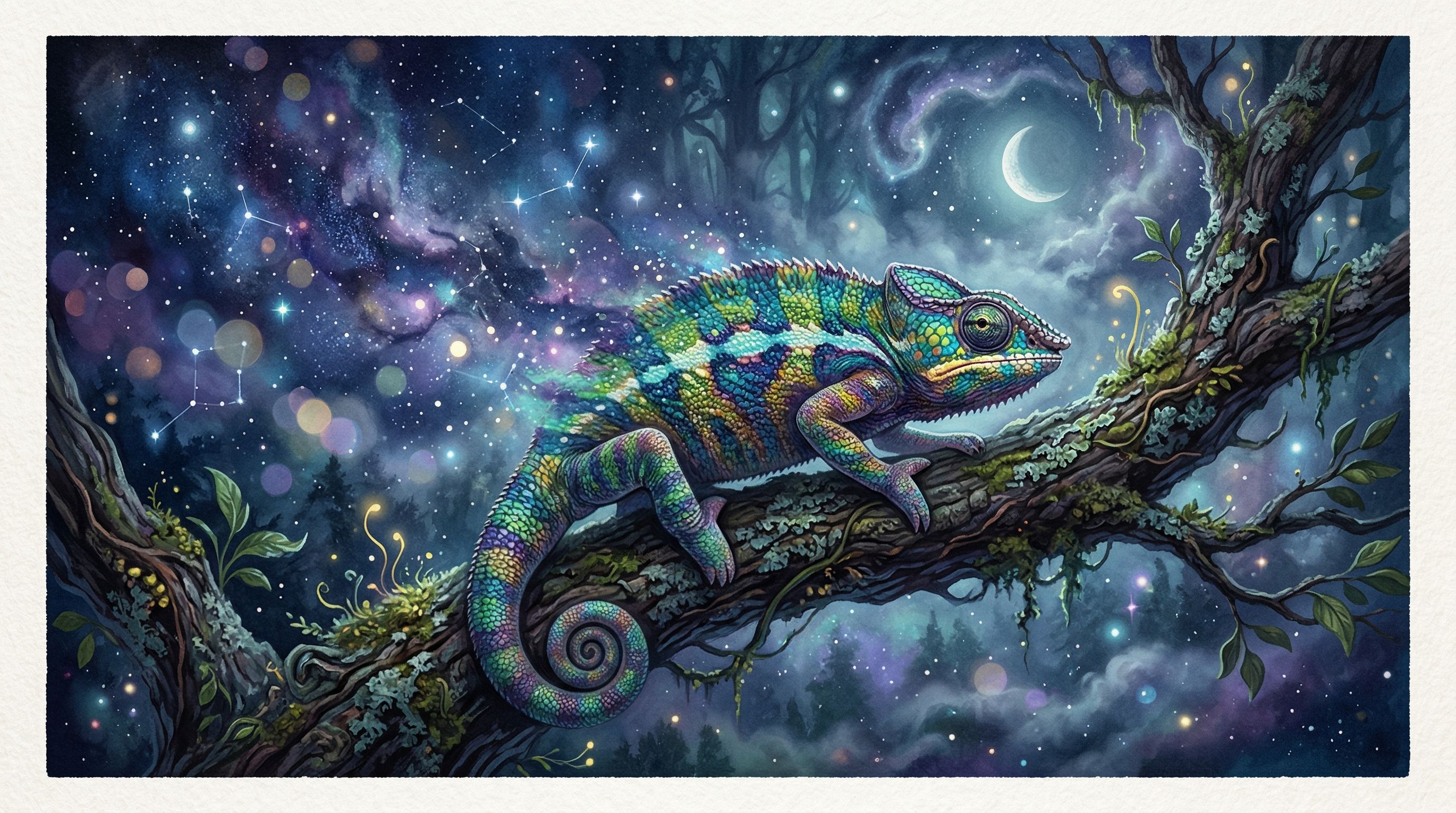
I once met a dreamer who was obsessed with keeping her house perfectly clean, yet in her nights, a single grey lizard kept emerging from a tiny crack in her bedroom wall. She woke up frustrated, wanting to seal the breach. We often forget that lizards are creatures of the threshold. They live in the places you try to plaster over—the gaps in your logic, the fissures in your carefully constructed identity. In many ancient traditions, the lizard is the guardian of the shadow self precisely because it slips through the smallest openings. It is a different, more grounded kind of survival than the camouflage of a chameleon, which changes to blend in; the lizard simply knows how to hide in plain sight within the cracks. What are you trying so hard to plaster over in your waking life?
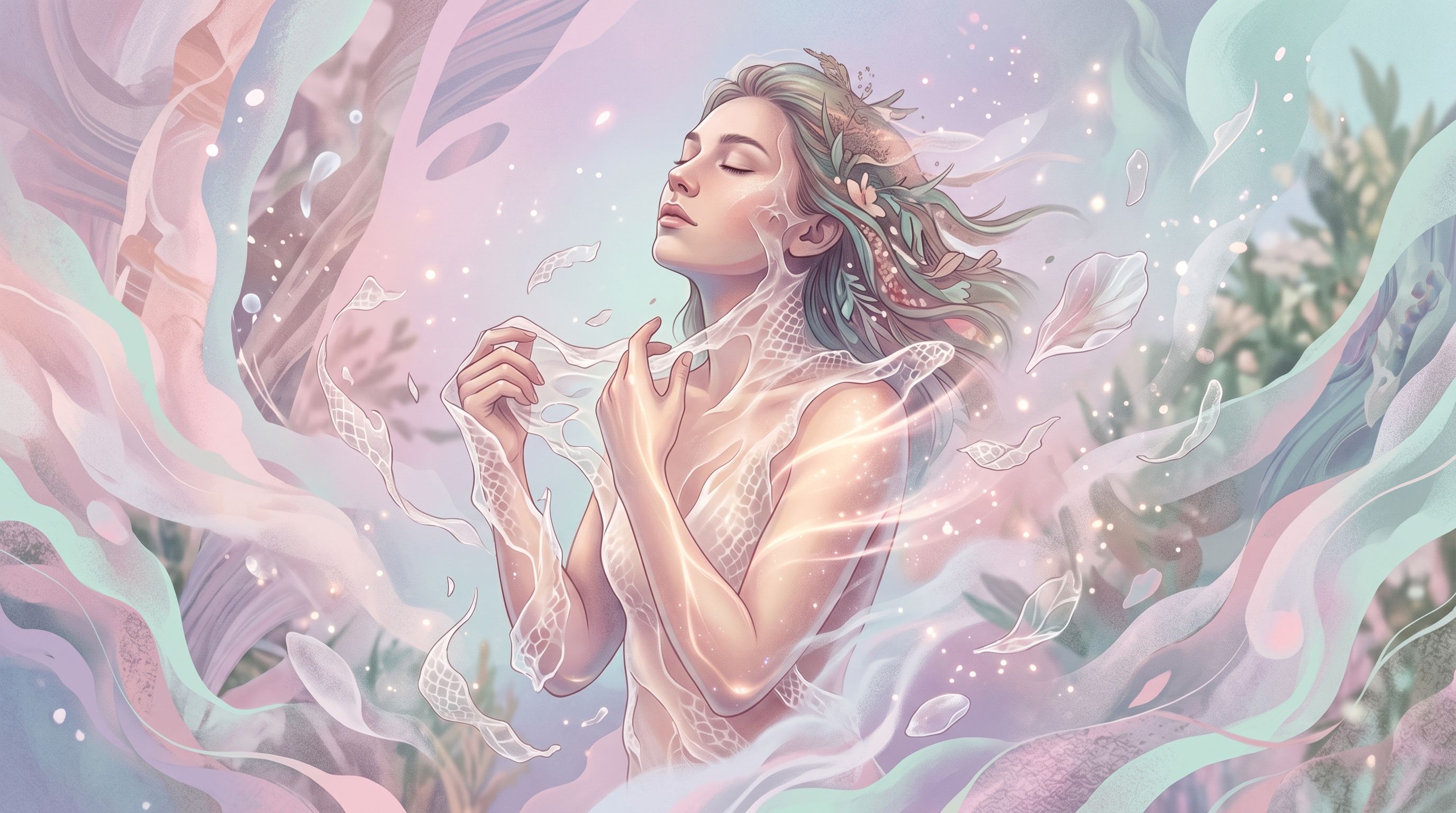
There is a delicate, almost melancholic beauty in watching a lizard shed its skin in a dream. This process of ecdysis is not a clean, sudden transformation; it is patchy, itchy, and leaves the creature incredibly vulnerable for a time. I often see this symbol when a dreamer is going through a silent transition, like a career shift or the slow ending of a long-held belief. You might feel raw, exposed, as if your protective layer has been stripped away. It is an uncomfortable phase where you are neither who you were nor who you are becoming. Yet, your subconscious brings you this image to reassure you that this awkward, fragile state is entirely natural. You cannot grow a stronger, more resilient skin without first allowing the old, suffocating one to peel away piece by piece. Let yourself be unfinished for a while.
If this little scaled visitor continues to haunt your nights, or if you feel it is trying to show you a specific path between the stones of your mind, you might try noting its movements in Midnight Mind. It is by collecting these appearances, much like observing the wildlife in a secret garden, that one eventually understands the silent language of one's own instinct.
What piece of yourself are you ready to let go of so that you can, finally, run lighter toward the light?