Playing a Role or Inhabiting Your Life?
In all honesty, this symbol of the stage has fascinated me for years. Why does our mind choose such an artificial setting to speak to us about our deepest truths? I am not a fan of dream dictionaries that simply tell you: "Stage = Lies." It is much more subtle than that.
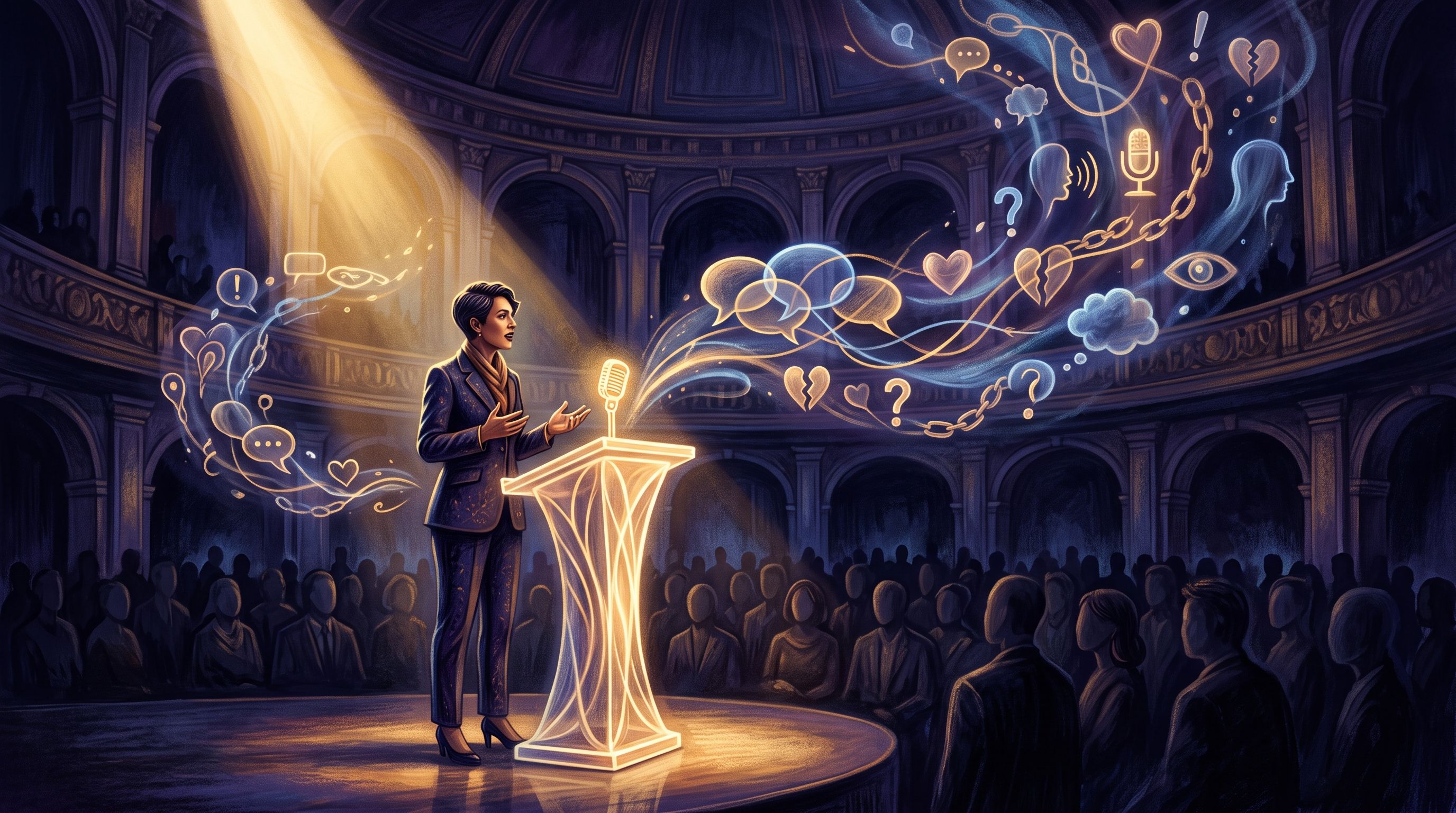
The theater stage is the ultimate place of performance. In your waking life, you inevitably play roles. You are the exemplary parent, the devoted employee, the funny friend. This isn't necessarily dishonest; it’s a social necessity. But when the stage invades your nights, it means the boundary between the "acted" and the "real" has become too thin. Your subconscious is asking: "Are you the lead actor in your own life, or merely an extra in someone else's?"
I often encounter dreamers who feel trapped in a paper-thin cardboard set. One once told me they were performing a tragedy even though, deep down, they wanted to laugh. It’s a bit like finding yourself in a strange circus without having learned to juggle: you feel forced to put on a show that doesn't reflect who you truly are. If the set feels fake or starts to collapse, it’s actually an excellent sign! Your mind is telling you it’s time to leave the make-believe behind and return to something more authentic.
The Gaze of Others: Invisible Audience or Harsh Judge?
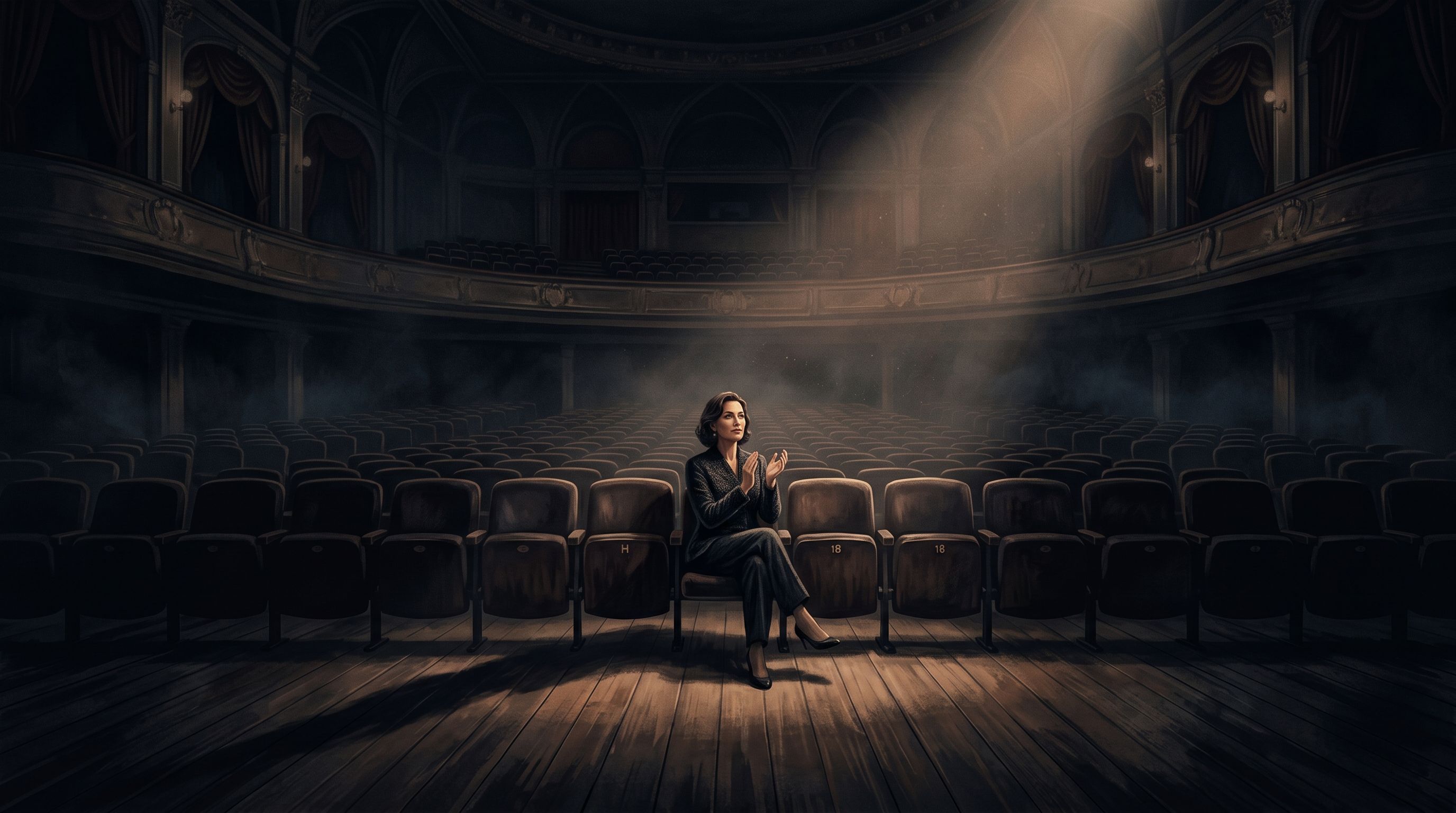
What transforms a simple wooden platform into a stage is the audience. In your dreams, who is sitting in the shadows of the hall? Sometimes, the theater is empty, and that is perhaps the most melancholic dream of all. An empty house can mean you feel you are making monumental efforts without anyone noticing. You are performing, giving an exhausting show, but there is no applause at the end.
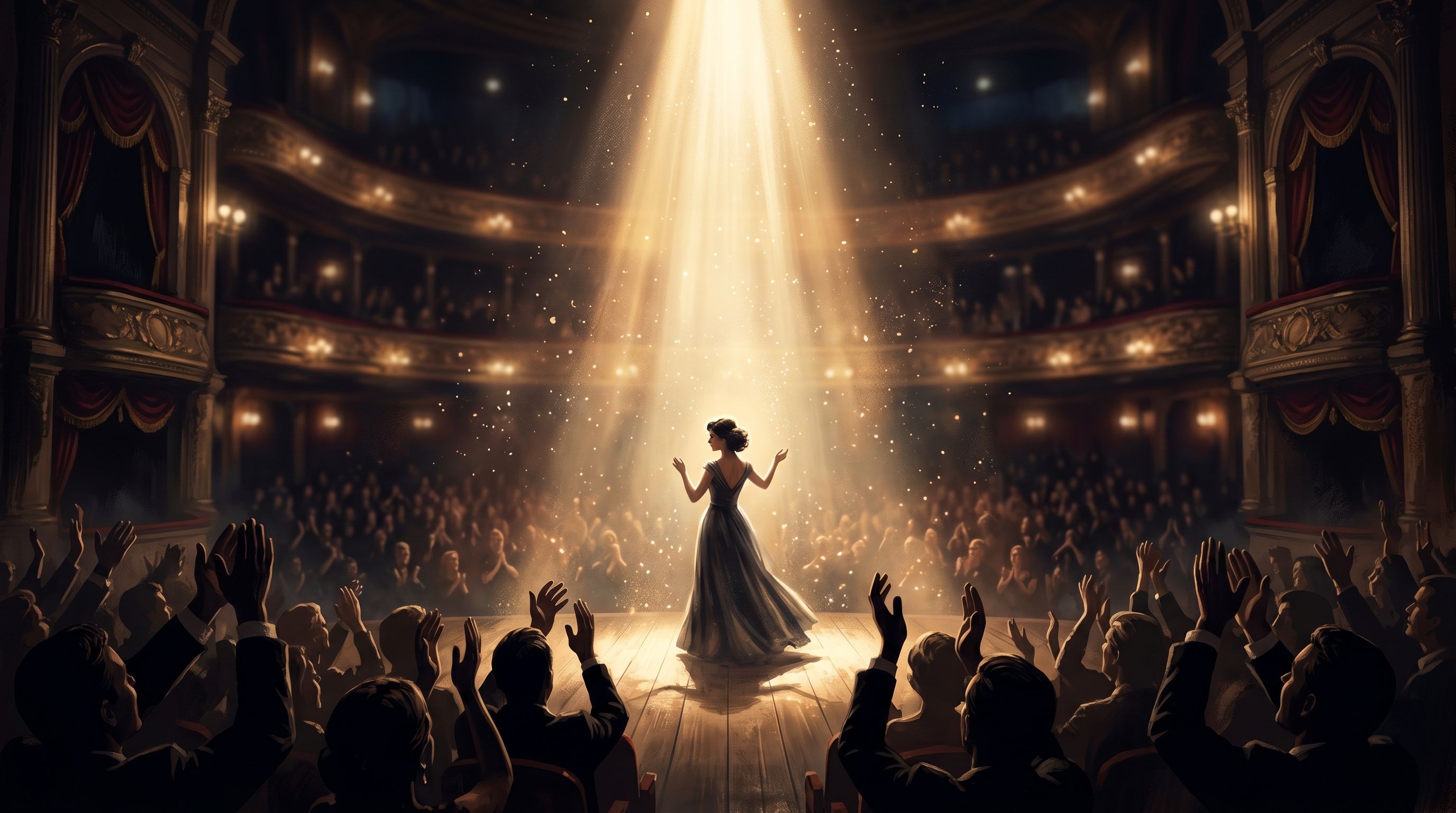
If an audience is present, observe how you feel. Are they harsh judges or kind spectators? Often, this audience is merely a projection of your own self-criticism. You are your own most ferocious spectator. Stage fright is almost always linked to a fear of exposure: the fear that people will see your flaws, your doubts, or simply your vulnerability.
It’s similar to the sensation of being watched in a glass elevator: you are simultaneously protected by a barrier and completely exposed. On stage, there is nowhere to hide. But remember, dear dreamer: in the theater of the mind, you are the actor as well as the director. If the audience hisses at you, it is you who wrote their reaction. Why are you being so hard on yourself?
Improvisation and the Forgotten Script
Honestly? The symbol of the forgotten script remains mysterious even to me because of how universally it recurs. You’re on stage, silence falls, and the "black hole" arrives. It’s the nightmare of the student, the executive, and the artist alike. We often call this "the failed exam dream," reimagined for the theater.
Yet, it is a message of liberation. When you forget your lines, you are forced to improvise. Improvisation is the moment where instinct takes over from the analytical mind. Your dream might be suggesting that you are too rigid in how you plan your life. You are trying to follow a perfect script, but life—real life—never unfolds according to the scenario we envisioned. Forgetting your lines is an invitation to trust your intuition, to step off the beaten path of pure performance and leave room for spontaneity.
Sometimes, you might also find yourself in the wings. I love those dreams dearly. The backstage area represents everything you don't show: your preparations, your secrets, your doubts. If you are wandering backstage without finding the entrance to the stage, it means you don't yet feel ready to take on a new responsibility or to reveal yourself to the world. And that is perfectly okay. We all need to stay in the shadows sometimes to adjust our costumes before stepping into the light.
Never forget that dreams are messengers, not threats. If you dreamed of a stage last night, it wasn't to tell you that you will fail, but to ask you which part of your soul deserves to be highlighted today, far from any judgment.
Have you ever turned around in these dreams to look at what lies in the dim wings of the stage? It is a space I find far more fascinating than the spotlight itself. In the shadows behind the painted scenery, we pile up the scripts we refused to read, the impulses we deemed too wild, and the emotions that didn't fit the perfect character we present to the world. Some might call this the Shadow, but I prefer to think of it as a dressing room of forgotten souls. When you dream of a stage, the tension often comes from what is waiting in those wings, ready to walk on. Perhaps it is a long-abandoned passion, an old anger, or a soft vulnerability you've spent years hiding. They aren't monsters; they are just actors waiting for their cue, gently begging you to finally let them into the light.
There is a very specific physical texture to these nights that researchers often overlook. It is the smell of heated dust on heavy stage lamps, the slight creak of old pine boards beneath your bare feet, and that sudden, cold draft coming from the empty flies above. Your body remembers these sensations even if you have never set foot on a real stage. When you feel that draft on your skin, it is closely tied to the raw, shivering exposure of dreaming of being naked in public—a sudden realization that your social armor has evaporated. The heat of the spotlight isn't just light; it is a physical weight, a burning warmth that demands you stand still and look at your own truth, stripped of the comforting safety of your daily routines.
I once met a dreamer who came to me exhausted by a recurring dream of a grand opera, yet she was never the star. She found herself squeezed into the tiny prompt-box at the front of the stage, whispering forgotten lines to a mute, terrified actress who looked exactly like her. It made me reflect on how we assume we must always be the lead actor of our nights. Sometimes, your subconscious casts you as the stagehand, the director, or even the silent observer in the rafters. If you are watching yourself perform from the audience, you are practicing a necessary, quiet dissociation. You are stepping back to observe the drama of your waking life without being consumed by it. It is a moment of realization that the play is not the entirety of who you are, but merely a story you are currently telling.
If these questions of roles and the gaze of others stay with you, you might start by noting the faces that fill your inner audience. You can record them in your "Dream Characters" journal on the Midnight Mind app; this will help you see who, in your circle or within yourself, seems to be playing the role of the critic.
Sleep peacefully, little dreamer; the curtain will always rise eventually on a truer version of yourself.