The Bridge Between Your Two Worlds
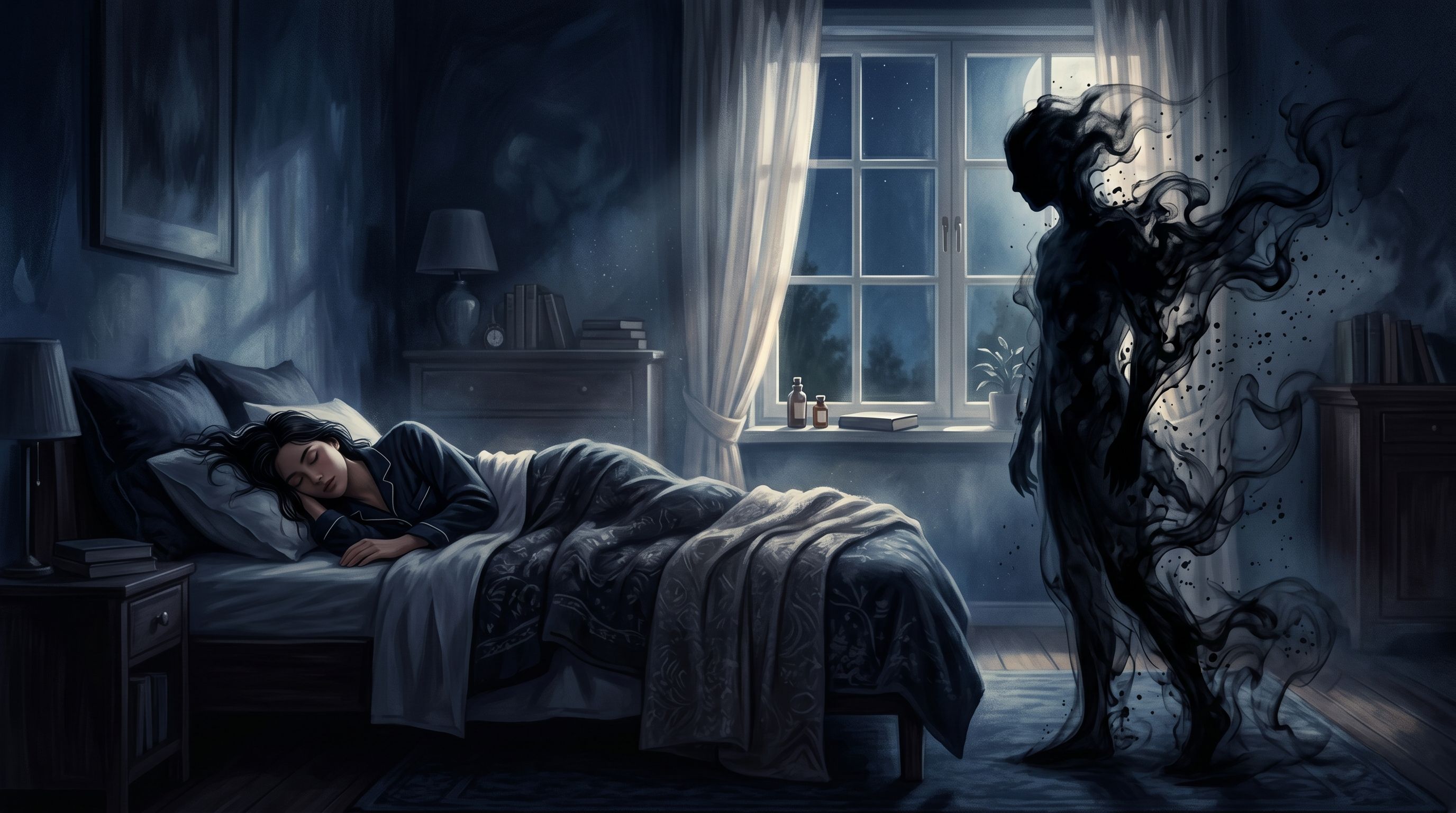
Tu are more than just your waking thoughts. Beneath the surface of your daily routines lies a vast, silent ocean—the unconscious. Carl Gustav Jung, a guiding figure in depth psychology, viewed dreams not as random noise, but as purposeful communications. He developed Active Imagination as a way to "talk back" to these nocturnal messages.
When you dream, your ego is largely a passive observer. In Active Imagination, you bring your conscious awareness into the dream space. You are no longer just watching a movie; you are stepping onto the stage. This process allows the symbols of your soul to speak their truth, helping you understand the hidden patterns that shape your emotions and choices.
Some researchers in the field of depth psychology suggest that this practice can help bridge the "dissociative gap" between our different states of consciousness. It is a way of honoring the images that your mind produces, giving them the space to breathe and evolve in the light of day.
---
How to Practice Active Imagination Step by Step
To begin this journey, you don't need any special equipment—only your willingness to listen. It is best practiced in the quiet moments after waking, when the veil between worlds is still thin.
1. Find Your Anchor: Close your eyes and recall a recent dream. Choose one specific image, character, or feeling that felt particularly heavy or intriguing.
2. Enter the Scene: Visualize yourself back in that landscape. Don't just think about it; feel the temperature of the air, the texture of the ground, and the presence of the figures around you.
3. Initiate the Dialogue: Address a character or an object. You might ask, "Why are you here?" or "What do you want to show me?"
4. Wait and Listen: This is the most difficult part. You must let the response arise naturally. Don't script it. Let the character speak, move, or transform in its own way.
5. Record the Echo: Once the session feels complete, write down what happened. Whether you use words, sketches, or even movement, the act of bringing the experience into the physical world is what anchors the insight.
🌙 The Echo of Tsuki: Sometimes, the most frightening figures in your dreams are simply the ones who have been waiting the longest to be heard.
---
A Concrete Example: The Silent Stranger
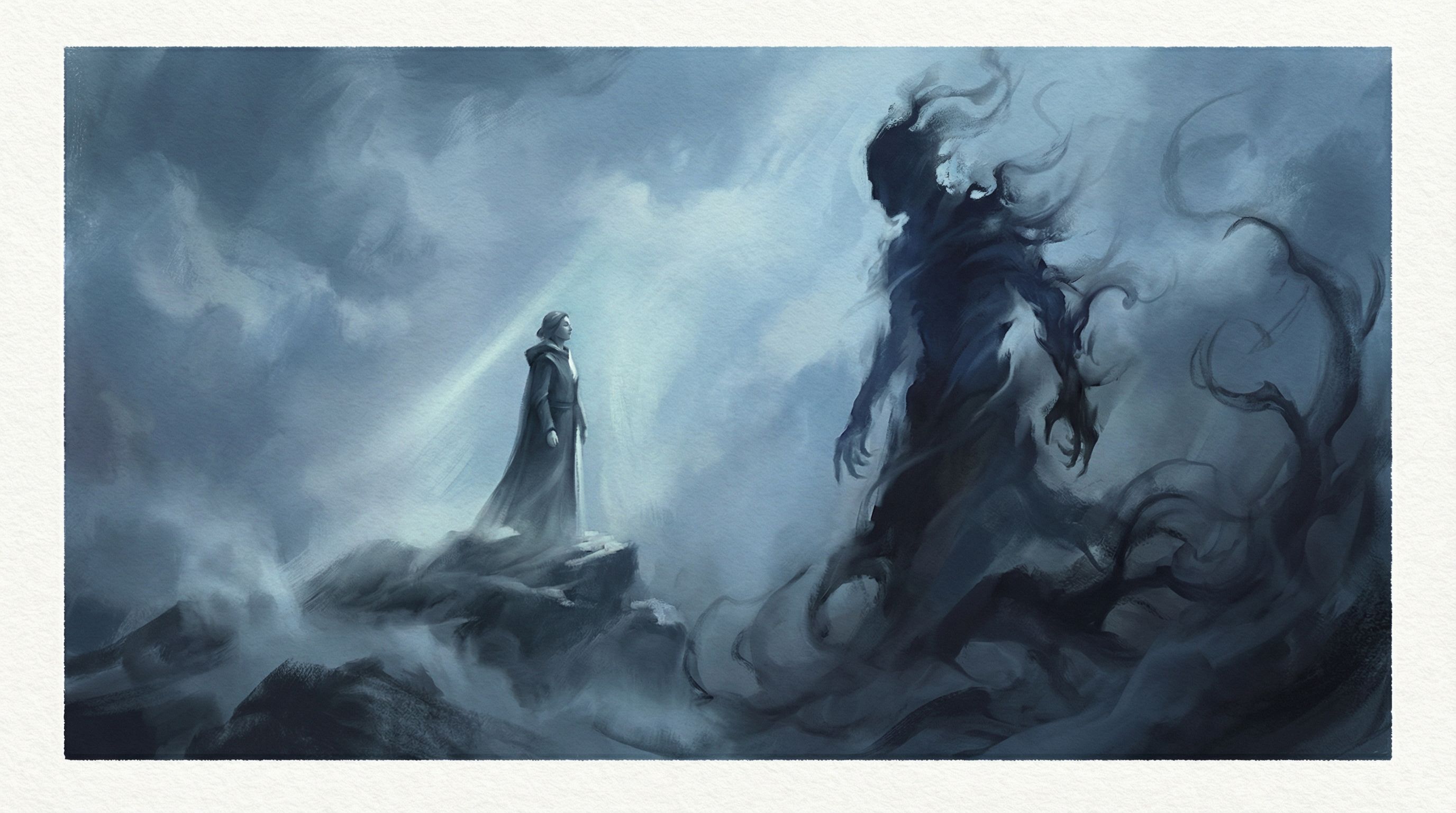
Imagine you frequently dream of a tall, hooded figure standing at the edge of a forest. In the dream, you feel a sense of dread and wake up before they speak.
Using Active Imagination, you sit quietly in your room and visualize that forest. You walk toward the figure. Instead of running, you ask: "Who are you?" Perhaps the figure pulls back the hood to reveal a face from your past, or perhaps they hand you a withered flower.
By engaging instead of fleeing, you might realize the figure represents a neglected creative spark or a boundary you have been afraid to set. The dread transforms into a realization, and the "stranger" becomes a known part of your inner landscape.
---
Navigating the Shadow and the Unseen
Active Imagination is a powerful tool, but it requires a certain level of emotional maturity. When you open the door to the unconscious, you may encounter what Jung called the Shadow—those parts of yourself that you have repressed or denied.
It is natural to feel hesitant or even skeptical at first. You might feel like you are "just making it up." However, even your "made-up" stories are woven from the threads of your psyche. The way you imagine a character responding reveals your own internal dynamics and biases.
If you ever feel overwhelmed by the intensity of the images that arise, it is wise to pause. This practice is about integration, not immersion. If the waters feel too deep, seeking the guidance of a professional trained in depth psychology can provide a safe container for your exploration. Remember, the goal is to become more whole, not to lose yourself in the labyrinth.
As a Baku, I have seen many dreamers struggle to hold onto their visions. I often wonder: if we treated our dreams with the same respect we give our waking friends, how much more would they be willing to tell us?
---
Have you ever noticed how your body reacts when you slip back into that twilight state? Active imagination is not a purely intellectual exercise; it is deeply somatic. Your heart rate might shift, your skin might prickle, or you might feel a sudden chill in the room. I find it fascinating how a purely mental image can manifest as a physical sensation—perhaps a tightening in your chest or the phantom sensation of warm breath when you confront a dream figure. Your body is the ultimate translation device for the unconscious. When you dialogue with your inner world, pay attention to these physical echoes. If a figure in your active imagination makes you feel cold, don't ignore it. Let that physical sensation guide you. The body doesn't know how to lie, and it often feels the truth of a symbol long before the conscious mind can put it into words.
I once met a dreamer who was haunted for months by a weeping iron giant in her sleep. Every night, she ran. When I suggested she stop running and simply sit with the giant in her waking thoughts, she was terrified. Yet, when she finally practiced this gentle confrontation, she didn't find a monster. She found that the giant was weeping because it was carrying decades of her unspoken grief. In my long journey through the dreamscapes of humans, I have realized that the terrifying entities we flee from are rarely malicious. They are merely hungry, neglected aspects of ourselves, begging for a single moment of quiet attention. To sit with them is to feed them, not with your fear, but with your awareness. It is a form of spiritual hospitality that heals the fragmented pieces of your soul, turning ancient nightmares into quiet companions.
This practice becomes a vital sanctuary during times of profound waking transition, when your old identity is dissolving and the new one hasn't yet formed. When you are grieving or lost, your dreams often reflect this disorientation, leaving you feeling as though you are clinging to a fragile raft in the middle of a vast, foggy sea. Active imagination allows you to sit on that very raft while awake and ask the water itself where it is taking you. Instead of panic, you find a strange, quiet surrender. By stepping back into the mist of your unconscious during the day, you begin to realize that the current is not trying to drown you; it is simply carrying you to a shore you aren't yet ready to see. It teaches you to trust the movement of your life even when the horizon remains entirely hidden.
Honestly, it wearies me to see how some modern practitioners turn this sacred dialogue into a rigid clinical checklist or a battle of wits. They approach the unconscious like a puzzle to be solved or an enemy to be outsmarted. But the soul does not speak in spreadsheets. If you enter the dream space trying to force an interpretation or demand immediate, logical answers from your symbols, they will simply retreat into the shadows. I don't believe in forcing a dialogue when the silence itself is telling a story. Sometimes, the most profound thing you can do during active imagination is to simply sit quietly beside a dream symbol without asking it for anything at all. Let the mystery remain a mystery for a while. True wisdom lies not in dissecting the image, but in learning to coexist with its beautiful, unspoken weight.