The modesty of feelings: when the soul lowers its voice
Honestly, I find it fascinating that our minds, capable of creating worlds of striking realism, sometimes choose to "wash out" reality. I was speaking about this the other day with a dreamer who was worried because she only saw her inner world in sky blue and pale pink; she feared she was losing her passion, her "fire." I told her that pastel is not an absence of strength—it is a strength that no longer needs to shout.
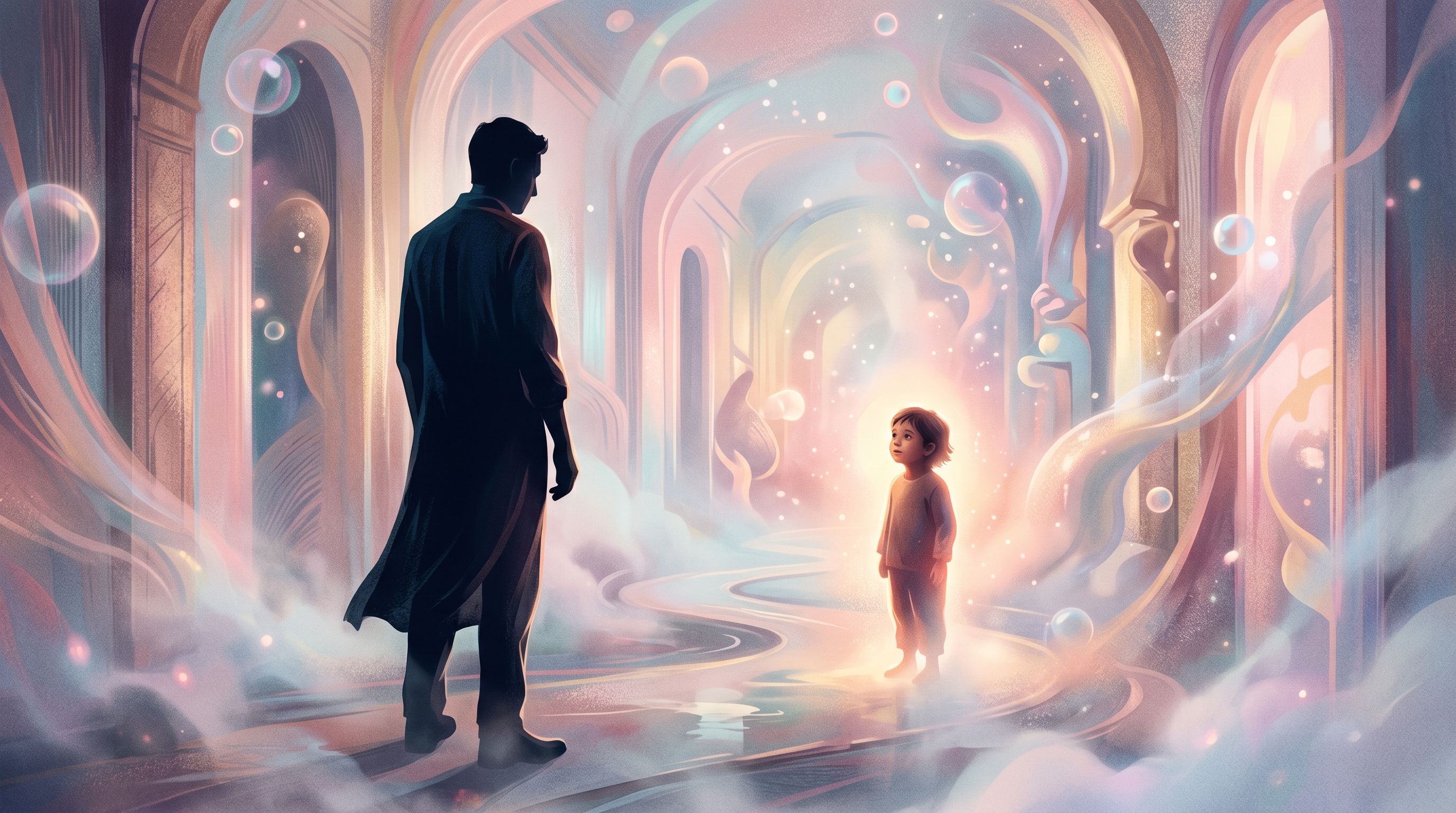
In the space of dreaming, pastel acts as a protective filter. It is often a sign that you are moving through a period where your emotions are raw. Your subconscious, in its great wisdom, drapes your thoughts in shades of mauve or seafoam green to allow you to process messages without being overwhelmed. It is a form of inner diplomacy. If bright red is a command for action or anger, pastel pink is an outstretched hand, a suggestion of tenderness toward oneself.
I am not a fan of dream dictionaries that claim "pastel = weakness." That is such a reductive view. For me, it is quite the opposite. It takes great spiritual maturity to accept that not everything is black and white, or even saturated with primary colors. A dream is a complex weave, much like the patterns of a rug being revealed under a dimmed light: you might not grasp every harsh detail, but you understand the overall harmony.
The inner dawn and the need for renewal
Pastel is also the color of dawn—that suspended moment where the sun has not yet imposed its dictatorship of light, and the night has not quite disappeared. If your dreams are tinted with these shades, perhaps you are in a phase of "becoming." You are no longer quite the person you were yesterday, but the person of tomorrow has not yet been firmly drawn.
I have noticed that these hues often appear after great emotional storms. It is the convalescence phase of the soul. We seek softness everywhere, even in the landscapes we visit at night. It is as if your subconscious is repainting the walls of your mind to make it more livable, more serene.
Here are a few shades I often encounter and what they whisper in my ear:
- Baby blue: A form of communication that seeks peace, a need to say things without causing pain.
- Straw yellow: A discrete, almost shy joy that is beginning to dawn after a period of sadness.
- Almond green: A slow healing, a growth that does not want to be rushed.
Occasionally, I have doubts about dreams that are too uniformly pastel. Sometimes, this can indicate a form of denial, a desire to see only the "pretty" to avoid facing the grayness of a situation. But even then, is that such a bad thing? Sometimes, the spirit simply needs a truce, a pastel space to catch its breath before diving back into the tumult of the world.
Nostalgia for a world without sharp edges
There is a deep spiritual dimension to these colors. They remind us of childhood, that state where the boundaries between reality and the imaginary were porous. To dream in pastel is often to return to a mental childhood bedroom, a place where nothing was truly dangerous, where everything was still possible.
I am always marveled by how much these dreams soothe sleepers upon waking. They don’t necessarily remember a precise plot, but they carry that cotton-like atmosphere within them. It is an invitation to slow down. In a society that pushes us toward efficiency and visual saturation, pastel is a form of silent rebellion. It says: "Today, I choose the nuance. Today, I allow myself to be blurred."
If this type of dream repeats itself, do not try to analyze it with cold logic. Feel it instead. Ask yourself in which area of your life you might need to add a little more grace, a little less harshness. Dreams are not mathematical riddles; they are emotional landscapes that I am tasked to protect.
Take the time to savor this chromatic interlude. Your mind knows exactly what it is doing by choosing these tints. It is offering you a breathing space, a safety zone where dreaming takes precedence over urgency. Let yourself be cradled by these gentle waves; they are preparing the ground for new, more vivid blooms when the time is right.
Have you ever touched a pastel drawing? There is a dry, powdery vulnerability to it; the pigment sits on the paper, waiting for a stray breath to blow it away. In the dream realm, this tactile quality is incredibly important. I once sat beside a dreamer who described her pastel-colored world not as a painting, but as a place made of fine, fragrant dust. She felt that if she stepped too heavily, the lavender hills would crumble. This tactile fragility is your mind’s way of asking you to tread lightly in your waking life. It is an invitation to handle your current circumstances with extreme gentleness, perhaps because you are carrying memories as fragile as a broken toy from your childhood. When your unconscious strips away the heavy, varnished oils of loud colors, it leaves you with this raw, velvety powder—beautiful, but easily bruised.
It is a common misconception that deep sorrow or major life endings must always paint your nights in pitch black or stormy greys. Honestly, I have watched so many dreamers wade through intense periods of grief only to find their nights bathed in soft peaches and faded mint. It is as if the mind, exhausted by the weight of waking tears, refuses to torture you further during sleep. Instead of the stark finality you might experience during the solemnity of a funeral, your subconscious offers a pastel purgatory—a place where the edges of your pain are rounded off, and the glare of your reality is temporarily dimmed. It is not denial; it is a mercy. If you are currently navigating a painful separation or a sudden professional fracture, do not mistake these soft colors for apathy. They are your emotional shock absorbers.
In my own long memories of watching human spirits, I have come to associate these washed-out tones with what we in Japan call mono no aware—the gentle, slightly melancholic appreciation of the impermanence of all things. Pastel colors do not promise eternity; they are, by their very nature, fading. They represent a beauty that is slipping away or just beginning to form, like cherry blossoms caught in a sudden spring drizzle. When you dream in these shades, your spirit is aligning with this quiet flow. You are learning the difficult art of letting go without screaming. I find it deeply moving when a dreamer stops fighting the current and simply allows themselves to float in these soft, temporary waters. It is a silent agreement with the universe: you accept that this chapter is fading, and you trust that the next sunrise will bring its own light.
If you wish to keep a record of these ethereal moods and explore the unique palette of your subconscious, you can note these shades in your symbol collection on Midnight Mind. It is a beautiful way to see how the colors of your nights evolve alongside your inner seasons.