The Piano as a Mirror of Your Inner Architecture
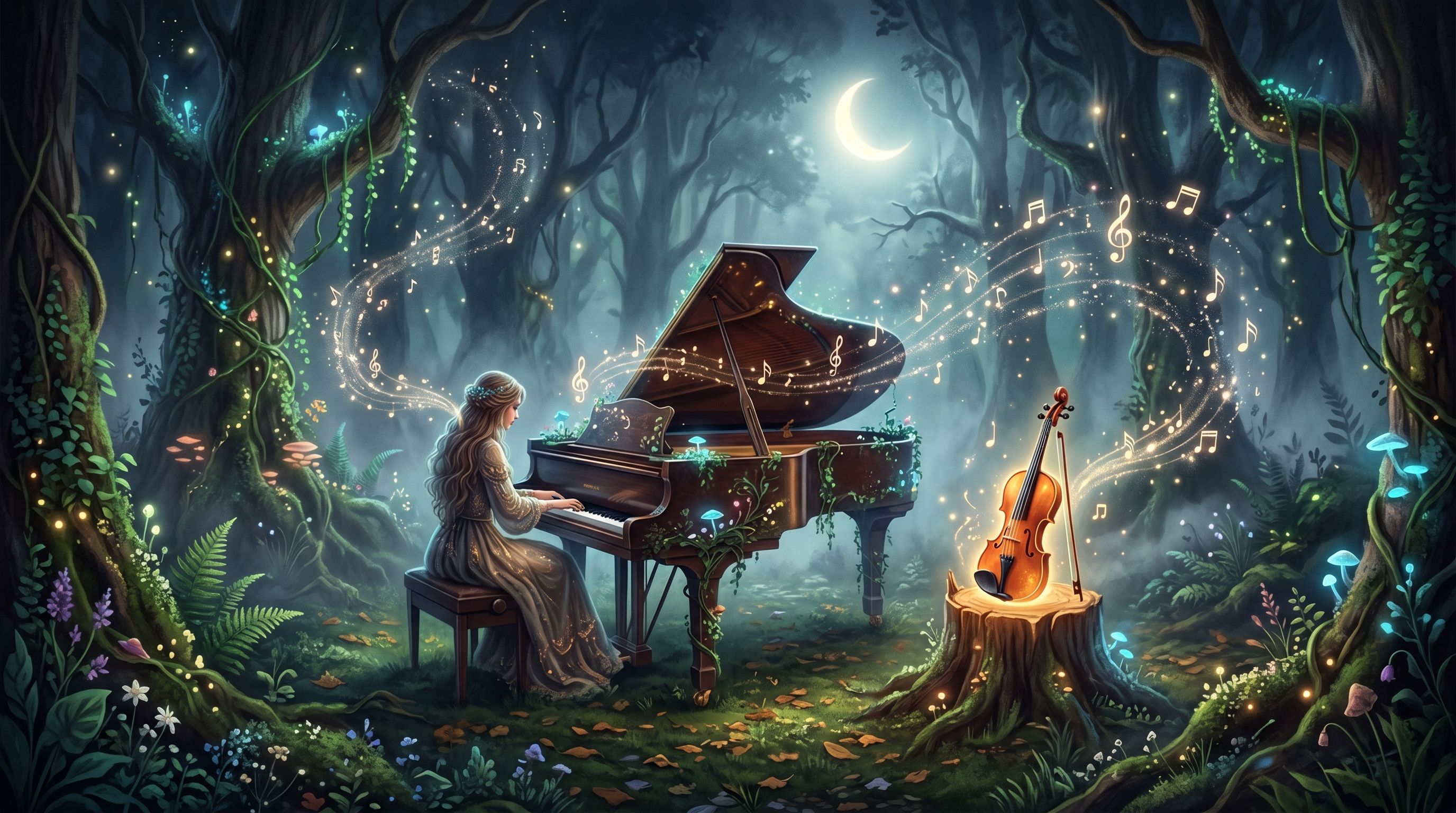
Sincerely, I find the piano to be one of the most fascinating symbols I encounter while nibbling on dreams. Unlike other objects, it possesses a complex, almost mathematical structure, while remaining the vehicle for the purest of emotions. When you see a piano in your dream, you are actually contemplating your own psychic mechanism.
Some dream dictionaries that are a bit too rigid might tell you that a piano announces "social success." What a narrow vision! To me, the piano is far more organic. It is a body. The strings hidden inside are your nerves, your memories, your most sensitive fibers. If the piano is closed, perhaps you are hiding a part of your sensitivity for fear that it might be too loud or too fragile. If it is open and you are admiring the mechanics, it means you are in a phase of introspection—much like when we observe life through a microscope to understand its smallest details. You are seeking to understand how you function, what makes you vibrate, or what makes you creak.
I often hear dreamers tell me they are sitting before an immense piano, far too large for them. This touches me deeply. It is the very image of feeling overwhelmed by the vastness of one's own feelings. One feels small, unable to cover the entire keyboard of their life. But do not forget: even the most beautiful melody begins with a single note, a single finger placed with sincerity.
When the Melody Falters: Wrong Notes and Silences
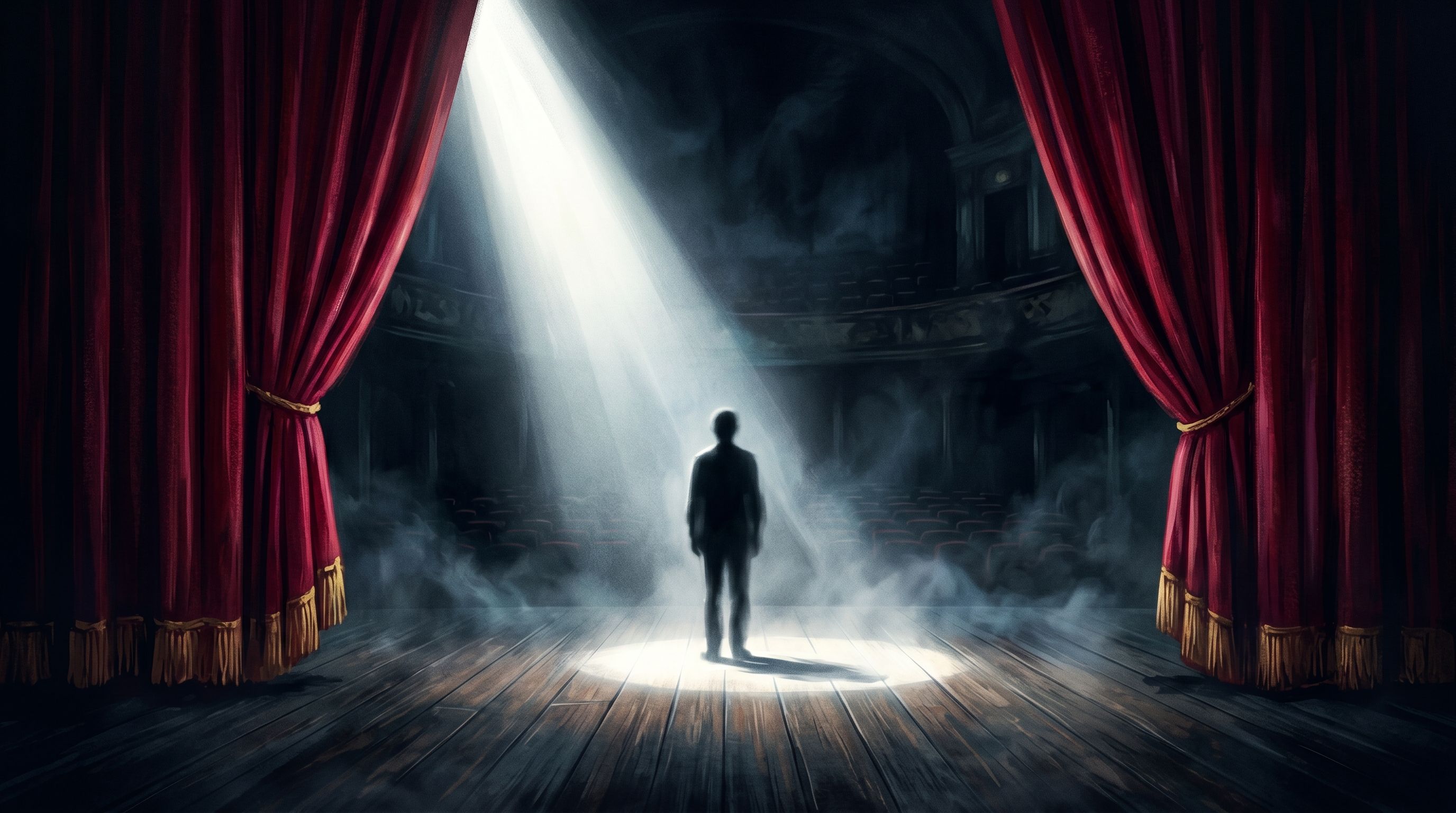
This is where my role as a Baku takes on its full meaning. Piano nightmares are frequent, and they are often linked to performance or judgment. You are on stage, the spotlights are burning your skin, and suddenly... the piano is made of cardboard. Or perhaps you press a key and a scream comes out instead.
These dreams are not predictions of failure; they are safety valves. They express the pressure you put on yourself for everything to be "perfect" in your daily life. Harmony is not the absence of wrong notes; it is the ability to integrate them into a larger score. If the piano in your dream is out of tune, ask yourself which part of your life no longer rings true. Is it your work? A relationship that requires too much "composition" and effort?
I have a particular affection for dreams where the piano plays all by itself. It’s unsettling, isn’t it? Like an invisible presence. To me, it is a sign that your unconscious is taking the lead. There are things playing out within you without your ego needing to intervene. Sometimes, you just need to know how to listen to the music that life composes for us, without trying to control everything. It is a feeling of lightness, a bit as if your spirit were becoming as airy as a feather carried by a nocturnal breeze.
I once spoke with a dreamer who was annoyed by a piano with sticky keys. She couldn't play. Through our talk, she realized it was her own fear of commitment that was "sticking" to her fingers, preventing her from moving forward with her projects. The dream does not judge; it shows. It makes the invisible visible.
The Art of Tuning Your Own Instrument
The piano is also defined by its chromatic duality—the white keys and the black keys. Many people forget that to play a rich and complex piece, you need both. In dream psychology, this represents the acceptance of our shadow parts and our light parts. If you only play on the white keys in your dream, your melody risks being a bit bland, don't you think? Your unconscious might be inviting you to explore your darkest, most melancholic emotions, for that is often where the depth of your soul resides.
The question of rhythm is also vital. Is it a fast, breathless piece that leaves you exhausted upon waking? Or is it a slow ballad that soothes your heart? Your dream gives you the tempo of your current life. If you are chasing after the rhythm in your sleep, it is a clear sign that it is time to slow down while awake.
My advice, if you wake up with the lingering memory of a piano, is not to look for a definition carved in stone. Instead, ask yourself: "What was the timbre of this instrument?" Was it crystalline, muffled, powerful? The answer lies in the vibration the dream left in your body. Dreams are echoes, and you are the resonance chamber.
I once met a dreamer who told me they were desperately trying to play a soft lullaby, but every time their fingers struck the keys, the sound emerged from the far corner of the room, detached and hollow. Honestly, this physical disconnect in dreams fascinates me. It points to a subtle state of splitting yourself during times of deep exhaustion, where your thoughts and your bodily sensations no longer seem to speak to one another. Your hands move, yet your emotions feel blockaded, echoing from a distance as if they belonged to a stranger. It is not a frightening omen, but rather a gentle request from your sleeping mind to stop performing. You do not need to play for the world; you simply need to slide back into your own skin.
There is also the heavy, silent weight of the piano itself—especially those ancient, dust-covered uprights sitting in the shadows of an unfamiliar house. To me, these dream instruments feel less like musical tools and more like a sacred repository of memory, similar to stumbling upon a long-forgotten chest filled with family heirlooms. We often inherit more than we realize: the unspoken grief, the quiet resilience, the unfinished songs of those who came before us. When you dream of such a heavy, silent giant, you are touching the collective history of your bloodline. You don't have to be a virtuoso to heal these old chords. Sometimes, just sitting quietly in front of the keys and allowing the silence to exist is the most profound music you can make.
If you feel that the melodies of your nights are becoming too heavy to carry, or if you want to keep a record of this nocturnal symphony before it evaporates in the morning light, you could entrust your inner sheet music to Midnight Mind. It is a beautiful place to collect your symbols and see how, over the months, the music of your unconscious evolves and finds its tune.
Take care of your silences as much as your notes, for it is between the two that the truth of your being is hidden.