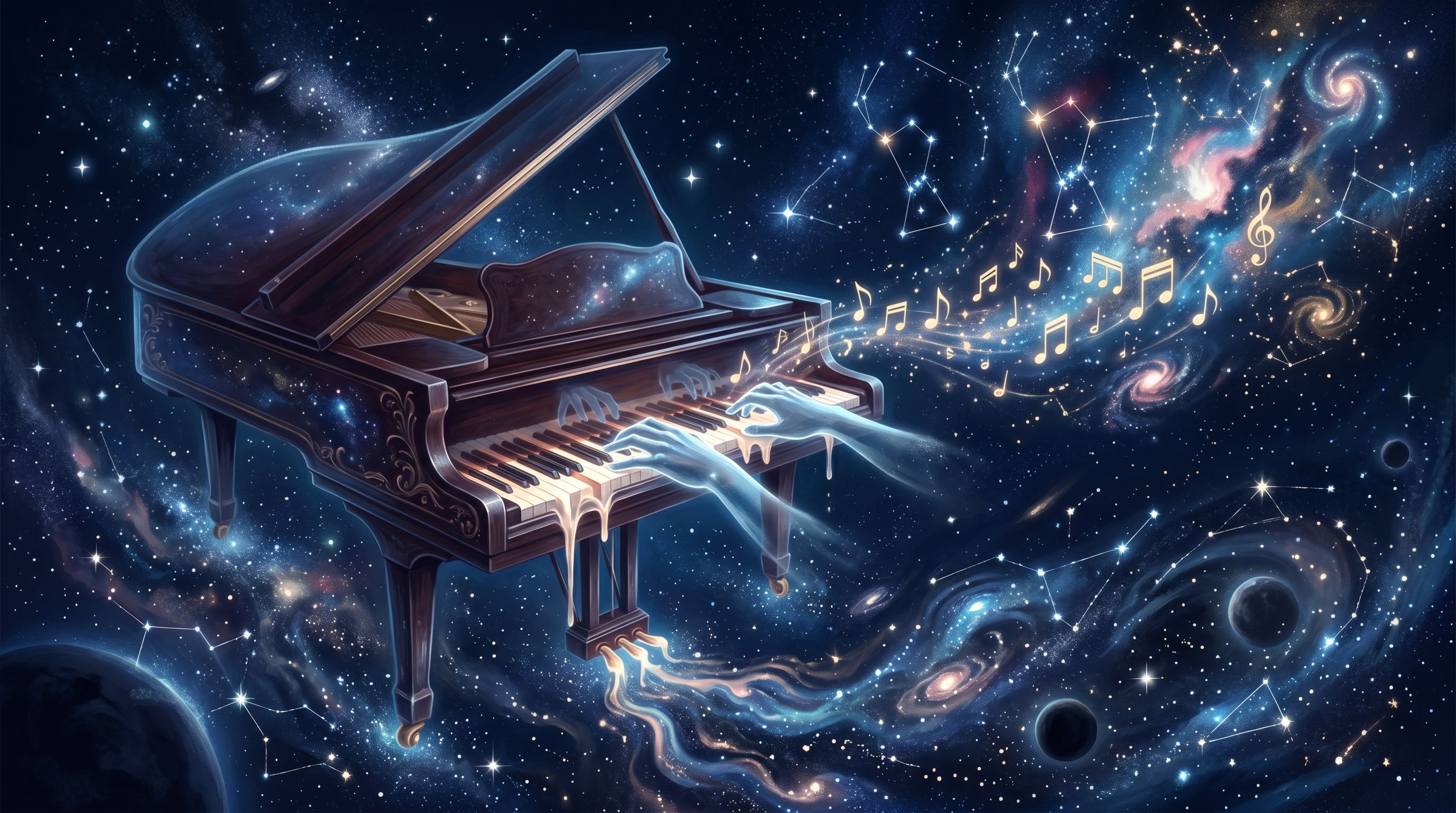
The echo of your breath and your hands: expressing the Self
Sincerely, if there is one symbol that fascinates me during my nightly wanderings, it is the musical instrument. For me, as a Baku, it is as if I am looking at the very framework of your soul. In your dreams, an instrument is never just an object made of wood or metal; it is a direct extension of your body and your heart.
You might ask me: "Yume, why did I dream of a flute when I actually hate them?" The answer doesn't lie in your musical taste, but in the breath. To make a flute sing, you must master your breathing—which is to say, your vital energy.
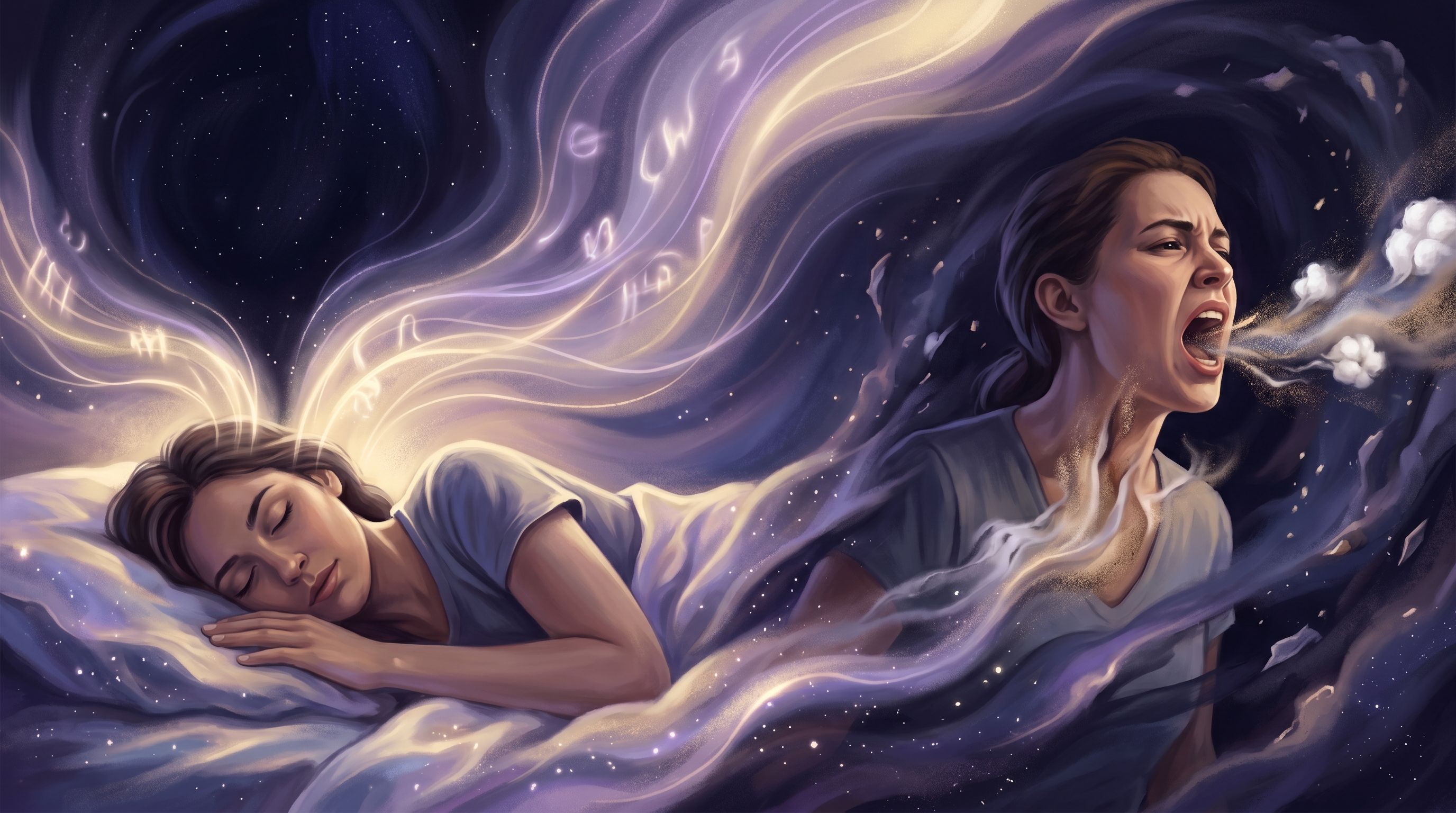
If, in your dream, you blow but no sound comes out, perhaps you feel that your voice doesn't matter. You might feel that you can't find the right words in a specific situation. It’s a bit like when we try to wear a mask to please others: we end up stifling our own inner music.
The harmony you feel—or desperately seek—is the heart of the message. If the instrument is imposing, like a grand piano, it speaks to your life’s structure and the complexity of your emotions.
If it’s an instrument you strum nervously, like an electric guitar without an amp, it whispers to me that you have incredible inner power just waiting to explode. However, you might be holding back for fear of judgment.
🌙 Yume's Echo: Sometimes, the most beautiful music isn't the one we play for others, but the silent rhythm we keep for ourselves.
---
When the string breaks or the note rings false
You shouldn't be afraid of performance nightmares. They aren't threats; they are invitations to observe where you are putting too much pressure on yourself.
An instrument that doesn't work is your mind telling you: "Stop, the tool you are currently using to communicate no longer fits." Sometimes, we persist in trying to solve a problem with surgical precision, as if we were trying to use a microscope to repair a harp.
Psychological perspectives suggest that these "broken" dreams reflect a perceived lack of control in your waking life. Here are a few nuances I have observed over the centuries:
- The out-of-tune instrument: This is often a sign of dissonance between your values and your daily actions. You are doing something that "rings false" within you.
- The unknown instrument: Playing an instrument that doesn't exist in reality is wonderful news. It is a sign that you are discovering a new facet of your personality.
- The orchestra: If you are part of an ensemble, observe your place. This reflects your position within your social group or your family.
Honestly, interpretation is not an exact science, and that is what makes it beautiful. Your instrument is unique. The way you touch it matters more than the name of the object itself.
I have seen people find immense peace simply by dreaming that they were tuning a guitar, without even playing it. The act of preparing the harmony is sometimes more powerful than the concert itself. Just as the tide pulls at the beach, your emotions have their own rhythm that needs careful preparation.
---
Use Case: The Cello of Yarn
Consider the experience of a dreamer who recently shared a recurring vision with me. He found himself on a massive stage in front of thousands of people, holding a beautiful cello. However, the moment he went to play, the strings turned into limp pieces of yarn.
The feeling of shame was overwhelming for him. In this case, the cello represented his professional expertise—something sturdy and classical. The yarn, however, revealed his secret feeling that his skills were "soft" or inadequate for the high-pressure environment he was in.
By recognizing this, he was able to address his imposter syndrome. The dream wasn't predicting failure; it was highlighting his need for more "solid" self-confidence.
---
Embracing your own melody
Do not be worried if your nightly music was cacophonous. Dreams are not judges; they are mirrors of water where the truth ripples. If you dreamed of an instrument, it is because your soul wants to be heard.
It is a call to creativity, beyond musical notes. Perhaps it is time to pick up that painting project again, or to write that letter you’ve been putting off. The intricate details of your inner life can be as complex as the structure of coral beneath the waves.
Take a moment to ask yourself: what sound did this instrument make? Was it a cry, a whisper, or a sacred song? Your answer is the key to your day.
If you want to explore your dreams more deeply, your Baku is waiting for you.
Sleep well, and let your heart beat the rhythm.
It honestly irritates me when I flip through modern dream dictionaries and see entry after entry claiming that playing a violin means a wedding or a drum predicts a quarrel. How terribly dull. They miss the entire sensory depth of the experience! When you dream of an instrument, you aren't reading a cold prophecy; you are feeling a living vibration. Sometimes, you don't even hear the music with your ears; you feel it rattling against your ribcage, a deep bass that resonates directly in your chest. If you are going through a heavy life transition—perhaps a quiet grief or a separation—the instrument in your dream might feel incredibly heavy, like a solid block of marble. It is your body translating the weight of what you cannot say. Your subconscious is physically grappling with the burden of your unexpressed emotions, reminding you that feelings, like sound waves, must move through us to be released.
In many ancient traditions, instruments were never treated as mere toys or tools for amusement; they were sacred vessels used to bridge the gap between the visible world and the spirits. When you find yourself dusting off an old keyboard or discovering an abandoned piano in a locked room of your childhood home, you are stepping into this ancient ritual. It is a sign of rediscovery. I often see this in dreamers who have sacrificed their creative spark to meet the demands of a exhausting career or domestic routine. The sleeping mind is a gentle archivist; it keeps your passions safe, tucked away under a layer of dream-dust, waiting for the moment you are ready to play again. You don’t need to be a virtuoso to wake that energy up; even striking a single, resonant note in the dark is enough to signal to your waking self that your spirit is still very much alive.
I once met a dreamer, a tired mother who carried the weight of her entire household on her shoulders, who dreamed night after night of a giant, booming taiko drum. She was hitting it until her hands bled, desperately trying to keep a frantic, chaotic rhythm for a crowd of invisible dancers. She woke up exhausted every morning. When we finally looked at the dream together, she realized the nightmare wasn't the drum itself, but her belief that if she stopped playing, everything would collapse. Sometimes, the kindest thing your subconscious can do is to break the drumsticks or mute the overwhelming voices demanding your constant performance. Letting the silence take over isn't a failure. It is a necessary pause, a deep breath between the notes, allowing you to finally step down from the stage and listen to what your own heart needs in the quiet.