When the subconscious scratches at the door
A few nights ago, a dreamer told me they heard a steady metallic clicking in their sleep, as if an invisible machine were idling in the void. What struck me wasn't the noise itself, but the irritation they felt. All too often, people search dream dictionaries for cookie-cutter answers: "the sound of chains means this," "a scream means that." Honestly, I find those rigid interpretations a bit limiting. A strange noise is, by definition, a break in the silence of your inner landscape.
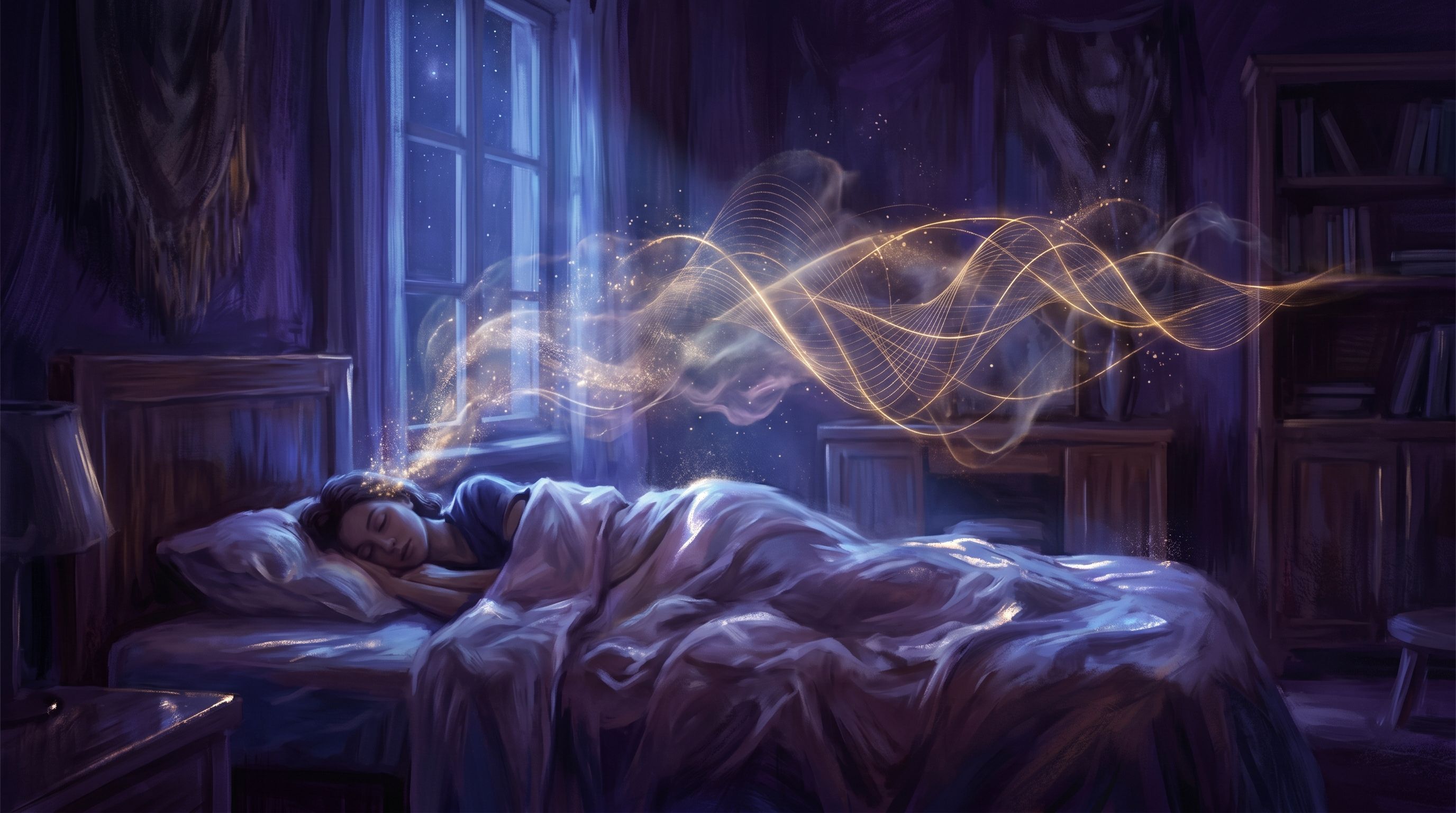
In my experience as a Baku, I see these sounds as "pre-thoughts." It’s a bit like a thought that hasn't quite found its visual shape yet. Imagine your mind is a vast library: sometimes, a book falls from a shelf you haven't visited in a long time. The sound of the fall is an alert, a signal that something is moving back there in the shadows. To dream of an undefined noise is often to be faced with an intuition knocking on the windowpane, waiting for you to let it in so it can finally become an image or a certainty.
It is, in fact, quite similar to the feeling of a sudden awakening. The sound acts as a poorly adjusted bridge between two worlds: it forces you to react even before you’ve understood the nature of the "threat." But, between us, is it really a threat? Or is it simply life insisting that you listen?
The texture of sound: from cracks to whispers
I am always fascinated by the diversity of sonic textures you humans produce in your nights. There are those noises that sound like a creak, evoking resistance—something that needs a little oil, whether it’s a relationship losing steam or a project that has stalled. Other times, it’s a more fluid, almost organic sound, reminiscent of the rhythm of a swing in a forgotten garden.
Here are a few nuances I’ve observed while nibbling on dreamscapes:
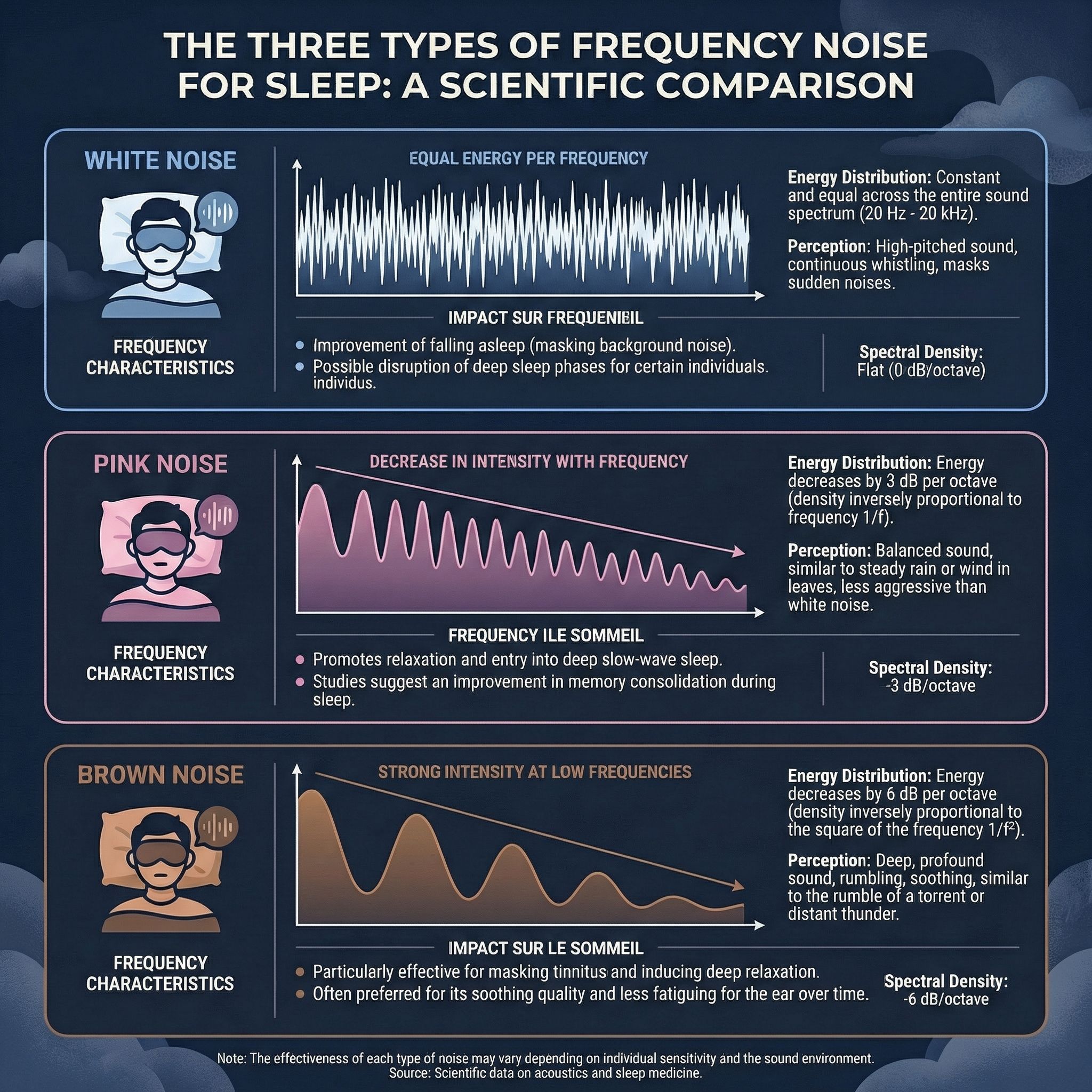
The constant hum: Often linked to mental overload. Your brain can no longer find silence, even when the body is resting. It is the echo of your stress "fizzing" in the background.
The sharp bang or explosion: Sometimes people refer to this as "exploding head syndrome," but symbolically, it’s a discharge. An emotion held in for too long that finally breaks through the membrane of the dream.
The rustle or whisper: This is the most subtle form of strange noise. Something is brewing, a truth is approaching, but you aren't quite ready to hear it clearly yet.
I’m not a fan of alarmist explanations. If you hear a bizarre noise, don't imagine your subconscious is predicting a catastrophe. See it instead as a way of tuning your antenna. You are picking up a frequency you’ve ignored until now. This might be the moment to ask yourself: "What am I trying not to hear in my waking life?"
Taming the invisible
One of the greatest challenges with a strange noise is that it offers no image to hold onto. It is a purely sensory form of anxiety. But that is also where its beauty lies. Without an image, you are free to interpret the vibration. Is it a warning? An invitation? A simple residue of your day?
Honestly, even for me, some symbols remain mysterious. Sound is one of the most complex because it touches the nervous system directly. If you wake up with your heart racing because of a sound you can't explain, take a moment to breathe. Don't try to run from it. Imagine that this noise is a small, lost animal in your mind simply looking for a little attention.
Dreams are never your enemies. They are messengers that sometimes use slightly noisy methods to ensure you don't ignore them. A strange noise is a sonic question mark placed upon your pillow. It’s up to you to decide if you want to answer it with fear or with a quiet curiosity.
Why are we so quick to search for ghosts when our own temples are so beautifully noisy? Sometimes, that strange scratching or deep thrum isn't an external message at all, but the amplified sound of your own blood rushing through your ears, or the sudden, tense release of a jaw muscle. In ancient Zen teachings, there is this lovely acceptance of makyo—the strange sensory tricks the mind plays when it enters deep stillness. Sincèrement, this sensory translation has fascinated me for centuries. I find it beautiful how a tiny somatic tremor, when wrapped in the velvet of sleep, can expand into the thunderous sound of a crumbling mountain. Your body is simply translating its physical transition into a language of echoes. You are shifting gears, letting go of the waking weight, and that transition naturally makes a sound. It is not a threat; it is just the machinery of your vessel settling down for the night.
A young illustrator once confessed to me that she was haunted by a dry, rhythmic scraping in her dreams, like coarse sandpaper on rough pine. She was terrified it meant some intellectual rot was setting in. But as we sat with the memory of that sound, it became clear: it was the friction of her own hesitation. She was standing on the edge of a massive creative leap, yet she was hiding, keeping herself safely tucked away dreaming of backstage instead of stepping into the light. The noise was the sound of her potential rubbing raw against her fear. When you hear something strange in the dark of your mind, ask yourself what is rubbing together in your waking life. Which two desires are grinding against one another because you refuse to let one of them win?
Honestly, it mildly irritates me when modern wellness guides insist that a healthy mind must always be a silent, placid lake. What a sterile, boring way to exist. The subconscious is not a sensory deprivation tank; it is a wild, untamed forest, and forests rustle, snap, and howl. Sometimes a sudden, loud bang in your sleep is just a cosmic joke, a sudden jump-start designed to shake loose a stubborn mental loop. It often triggers that confusing state of dreaming of a false awakening, where you sit up in bed, looking for the source of a crash that only existed in your mind. I love those moments of sudden disorientation. They remind us that the boundary between what is real and what is imagined is beautifully thin, like a paper screen shivering in a draft.
If these sounds continue to haunt your nights and you need to transform them into images to better understand them, you might try noting each sonic vibration in your secret journal on Midnight Mind. Sometimes, by lining up these echoes in your personal studio, the message finally becomes clear—like a melody you finally recognize.
Sleep peacefully; I am watching over your silences.