Why are dreams more effective?
When you are awake, your mind follows sequential logic (moving from point A to point B). This is useful for daily tasks but limiting for innovation. Dreams, however, dance through free associations. They break free from conventions and draw from an infinite database of memories to create brand-new blends. This is the incubation phase.
If you feel stuck, you need this shifted perspective. To dive deeper into this concept, explore Dream Incubation for Problem Solving. Adding sounds reinforces this intention: it’s like sliding a note under the door of your subconscious to let it know you are waiting for an answer.
---
The science of TMR: Whispering to the subconscious
Your auditory system remains a watchful sentinel while you rest. The brain can process external sensory information and weave it into the fabric of a dream without waking you up.
In TMR protocols, subjects are asked to learn a task while a specific sound (a note, a nature sound) is played. During REM sleep, that same sound is played at a low volume.
🌙 Yume’s Echo: Your brain is a sensitive harp; a light vibration of sound can make strings resonate that you thought were silent.
Studies show that participants stimulated this way perform better on their tasks upon waking. The sound acts as a beacon, guiding nocturnal attention toward the "file" marked before falling asleep.
---
Metaphors instead of equations
Why doesn't the brain simply give you the answer in writing? Because the prefrontal cortex (logic, language) steps back to let the limbic system (emotions, symbols) take the lead. Your brain won’t solve a conflict through an Excel spreadsheet, but rather through a visual or emotional metaphor.
By using sounds to stimulate Creative Incubation, you aren't imposing a solution; you are inviting your mind into a creative metamorphosis.
---
Protocol: Your sound incubation ritual
You don’t need a laboratory to experiment with this method. Here is how to proceed:
1. Choose your anchor
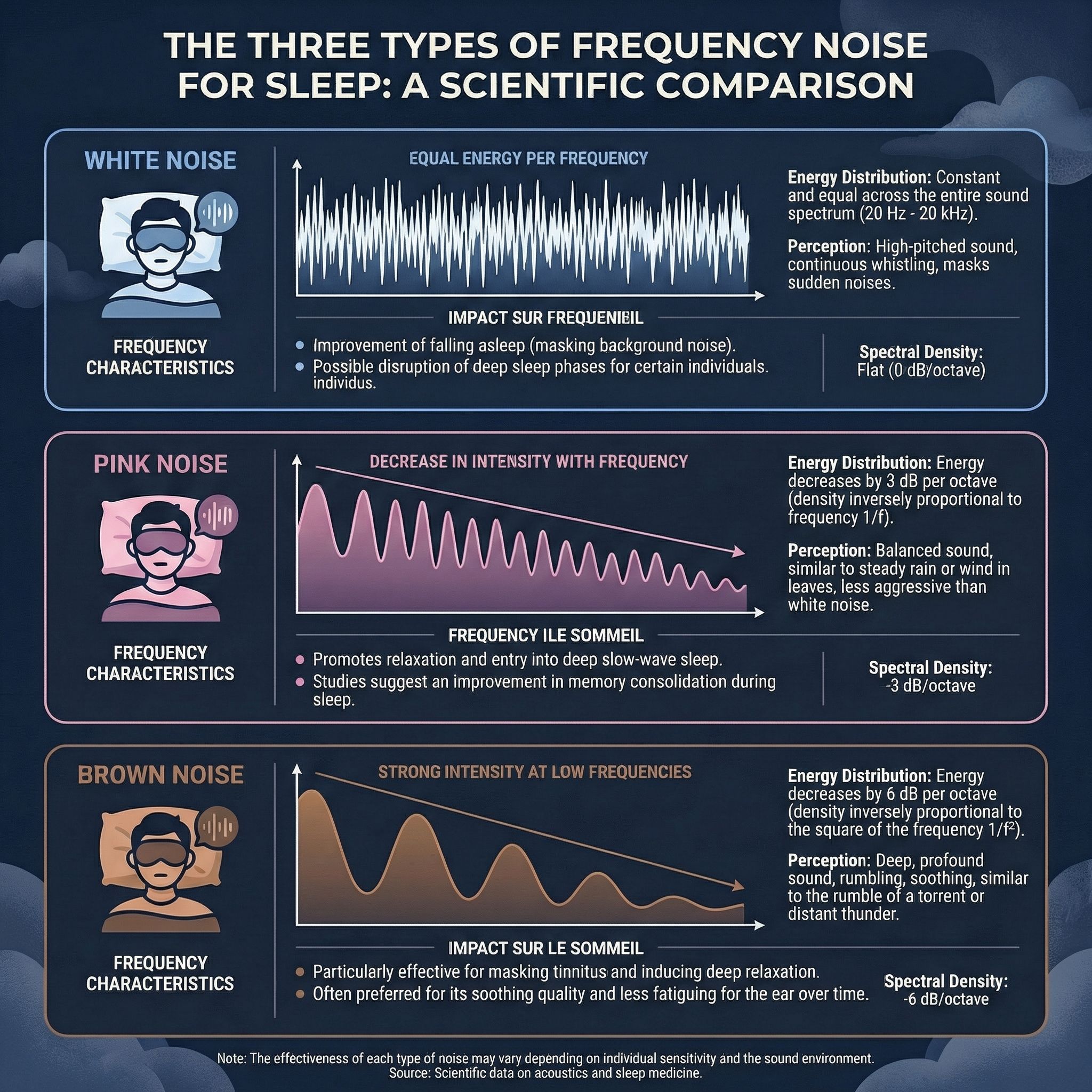
Find a neutral, short sound (a small bell, a piano chord, white noise). This will become your "companion for reflection."
2. Create the association (By day)
For 20 minutes before bed, think about your problem without forcing it. Play your anchor sound regularly during this session. Tell yourself: "When I hear this sound, my mind will look for the solution."
Honestly, it tires me to see how some people treat sleep as just another shift at the office. They want to optimize every cycle, squeeze every drop of productivity from their heavy eyelids, and force-feed their problems to the night like a machine processing data. But your subconscious is not a factory. It is a deep, dark pool. If you throw a stone into it too violently, you only muddy the waters. When you try too hard to control what your dreams should solve, you block the very freedom they need to breathe. Sometimes, the true "solution" the night offers isn't a brilliant business plan or a fixed formula; it is simply the grace of letting go, allowing the mind to wander in complete silence so you can wake up with a clean canvas.
I once met a dreamer who was utterly consumed by a sudden, painful ending in her waking life—a quiet tragedy that left her wandering her days like a ghost. She tried desperately to use sound anchors to "fix" her grief, hoping to dream of a path forward. But the mind has its own, wiser clock. Instead of showing her an escape route, her sleep brought her back to an old, dusty theater where she had to sit and watch her past self walk off the stage. It was painful, yes, but it wasn't a punishment. By allowing her to feel the weight of dreaming of a breakup without the waking pressure to "solve" it, her mind gently decoupled the memory from its sharpest agony. The resolution wasn't a logical answer; it was a quiet, internal shift that made her waking world feel lighter.
Have you ever woken up from a dream where you were endlessly running after a key, only to open a door that led to nothing but empty air? It is easy to feel frustrated by these half-baked nocturnal epics. Yet, there is a beautiful paradox here: sometimes, the resolution lies in the failure itself. When you are dreaming of solving a riddle and the puzzle remains unfinished as the morning light breaks, your brain has still done the heavy lifting. It has mapped the terrain, tested the dead ends, and accustomed your heart to the shape of the obstacle. The waking shift happens subtly. You sit at your desk hours later, and suddenly, without thinking, you reach for the very thread you thought you had lost in the dark. The dream didn't give you the key; it simply taught your fingers how to turn it.
3. Configure your night
Use an app like Midnight Mind to play this sound after a delay (about 90 minutes to 3 hours after falling asleep). The volume must be low enough not to break your sleep.
4. The morning harvest
Upon waking, stay still. Ask yourself: "What was the atmosphere of my dreams?" The solution might emerge as a clear idea, but it could also arrive as a new emotion or a lightened perspective toward the problem.
---
Kindness and limits
The subconscious is a wild territory, not a computer. Sometimes, it will decide that another memory or emotion takes priority. The effectiveness of TMR also depends on the quality of your rest. If you are in "survival mode" (intense stress), creativity will have little room to breathe. Be patient: the goal is to weave a bond with your deepest self, not to demand immediate productivity.
Conclusion
Dialoguing with your dreams through sound is a humble adventure. It is an acceptance that the light of day does not hold all the answers. By offering yourself these sonic clues, you transform your sleep into a space of collaboration between will and intuition.
The next time you hit a wall, smile: a little melody might just wake the genius slumbering within you.
If you wish to explore your dreams more deeply, your Baku is waiting for you.