Heartfelt discipline, far from the noise
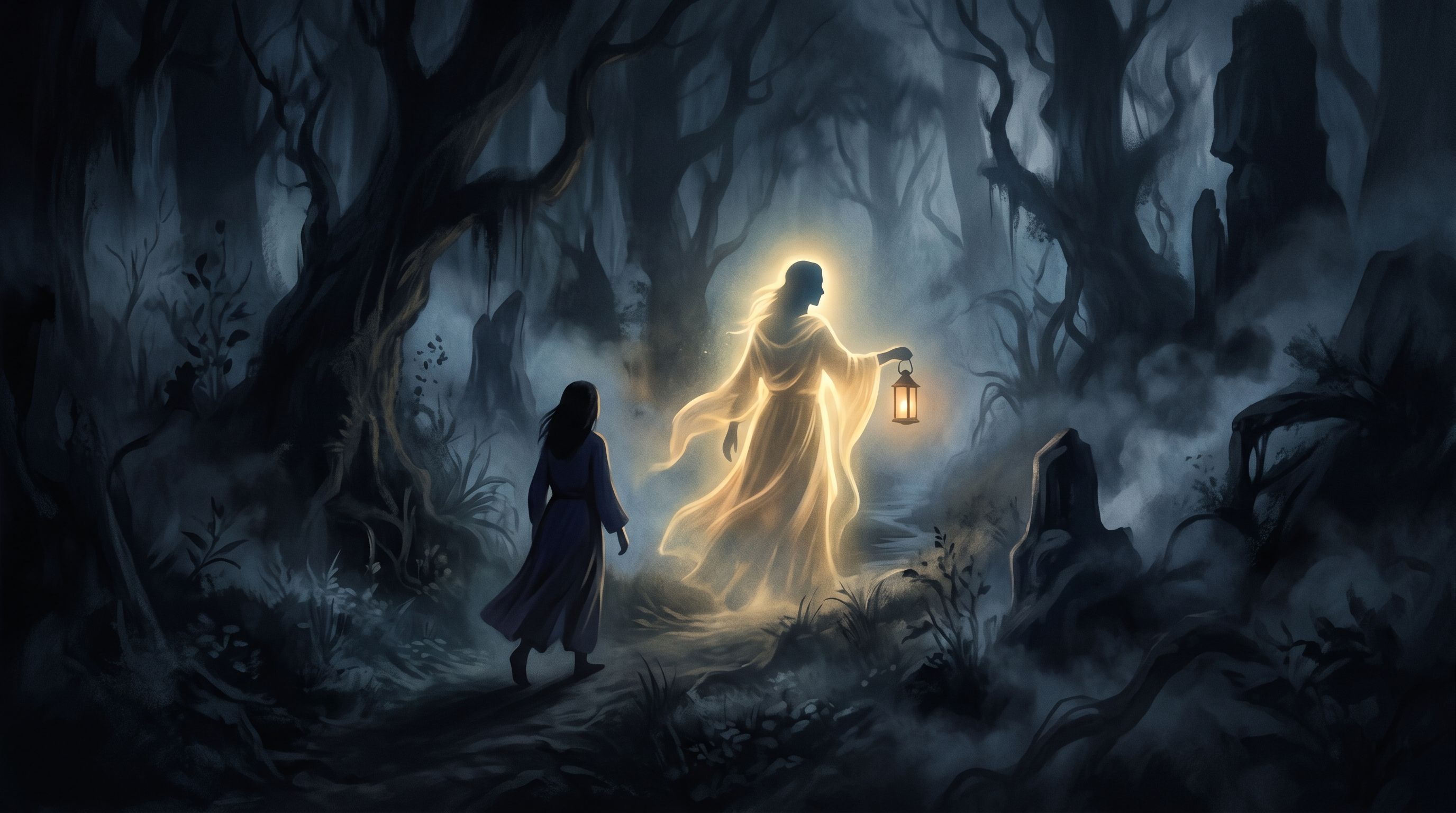
I find it fascinating to see how our dreams use archetypes to talk to us about our internal structures. When a monk appears, he carries with him a notion of discipline that is radically different from what one might find when encountering those who wear a soldier's uniform. Where the soldier imposes a rule through force or hierarchy, the monk suggests a chosen rule, a direction given to one's own life to no longer be a slave to one's impulses.
In my work as a Baku, I often see dreamers exhausted by a kind of chaos worthy of a retreating army. The monk then arrives as a mediator. He does not come to order you to march in step, but to ask you: "For what, or for whom, are you doing all this?". Does your current discipline serve to build your inner temple, or is it a prison you have built for yourself out of fear of judgment?
Honestly, I am not a big fan of interpretations that say seeing a monk is necessarily a sign of holiness. Sometimes, it is quite the opposite. It is a sign that you have become too rigid, that you are forbidding yourself from living due to an excess of principles. The monk in your dream, is he radiant or does he seem withered, lifeless? If he is austere and cold, perhaps your own quest for perfection is cutting you off from human warmth. This is a nuance I want to emphasize, because wisdom should never rhyme with the extinction of joy.
Renunciation as an act of freedom
The word renunciation is scary. We often see it as a loss, a painful sacrifice, a somewhat sad clean slate. But in the language of dreams, renunciation is one of the most beautiful gifts we can give ourselves. It is the act of putting down the heavy suitcases we have been dragging for years.
When you dream of a monk, your subconscious might be showing you that it is time to let go of an old grudge, an ambition that no longer suits you, or a habit that is consuming you. The monk owns nothing, and yet, in the dream, he often possesses a natural authority and a tranquility that kings would envy. It is a poetic metaphor for the fertile void: it is only once the cup is empty that it can be filled with something new.
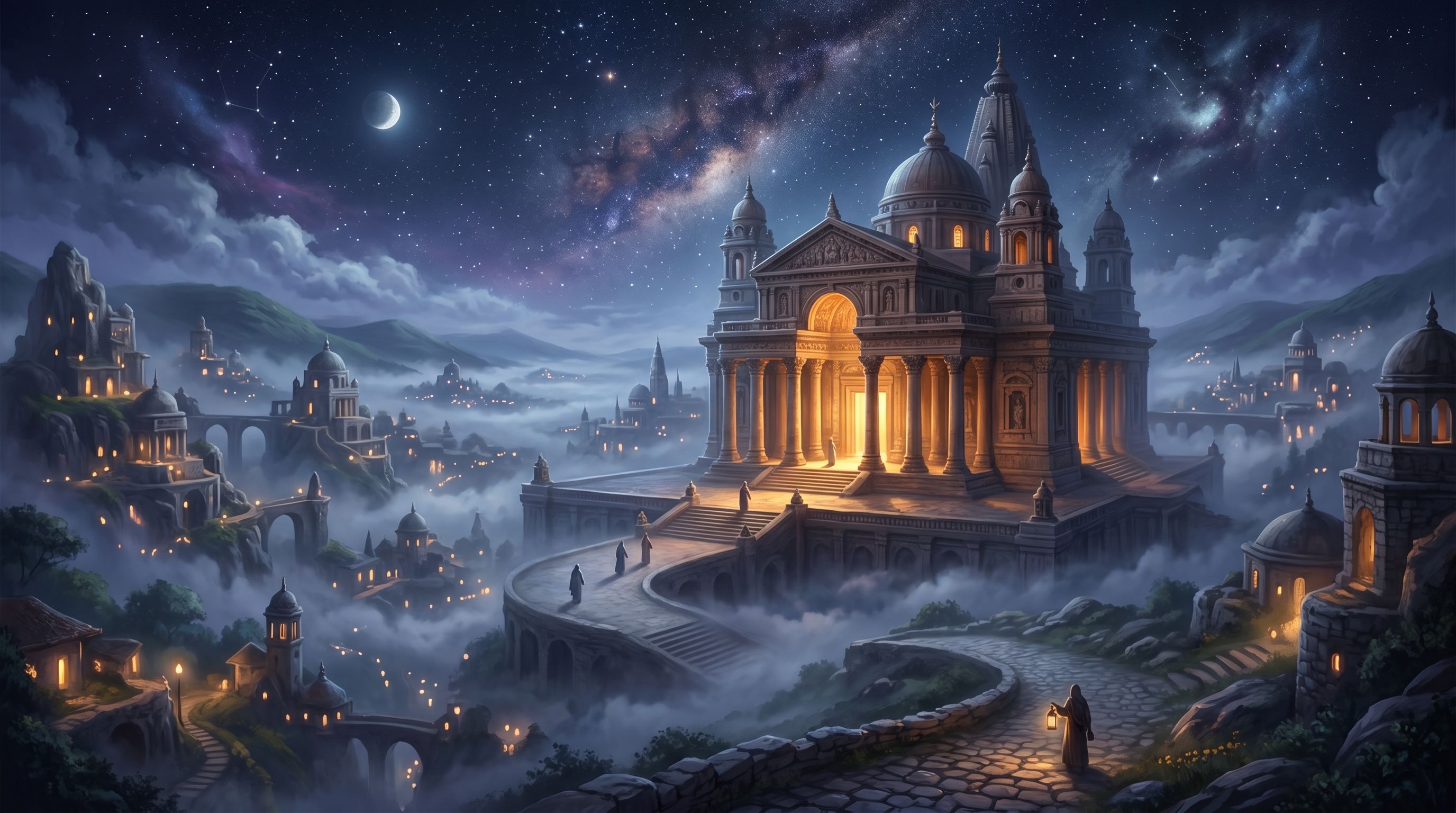
I remember a dreamer who constantly saw a monk sweeping an infinite temple courtyard. She found it absurd and tiring. By discussing it with her (through the threads of her dreams), she understood that this sweeping was a symbol of her need to sort through her thoughts every evening. She was trying to keep everything, memorize everything, control everything. The monk was simply showing her the beauty of the gesture of "cleaning" to make room for the present. Renunciation, here, was not about losing her memories, but about losing the obsession with possessing them all at once.
The faces of your inner monastery
It is rare for a dream of a monk to be devoid of emotion, even if that emotion is a flat calm. You must pay attention to the details, because that is where I often find the most savory crumbs of nightmares to transform.
If the monk speaks to you, his words are rarely complex. Often, he says nothing and simply points in a direction or looks at you with compassion. If you are the monk yourself in the dream, do you feel the weight of the robe or the lightness of the spirit? Becoming the monk is often a transition phase where one needs to withdraw from the world to better find oneself later. It is not an escape; it is an incubation.
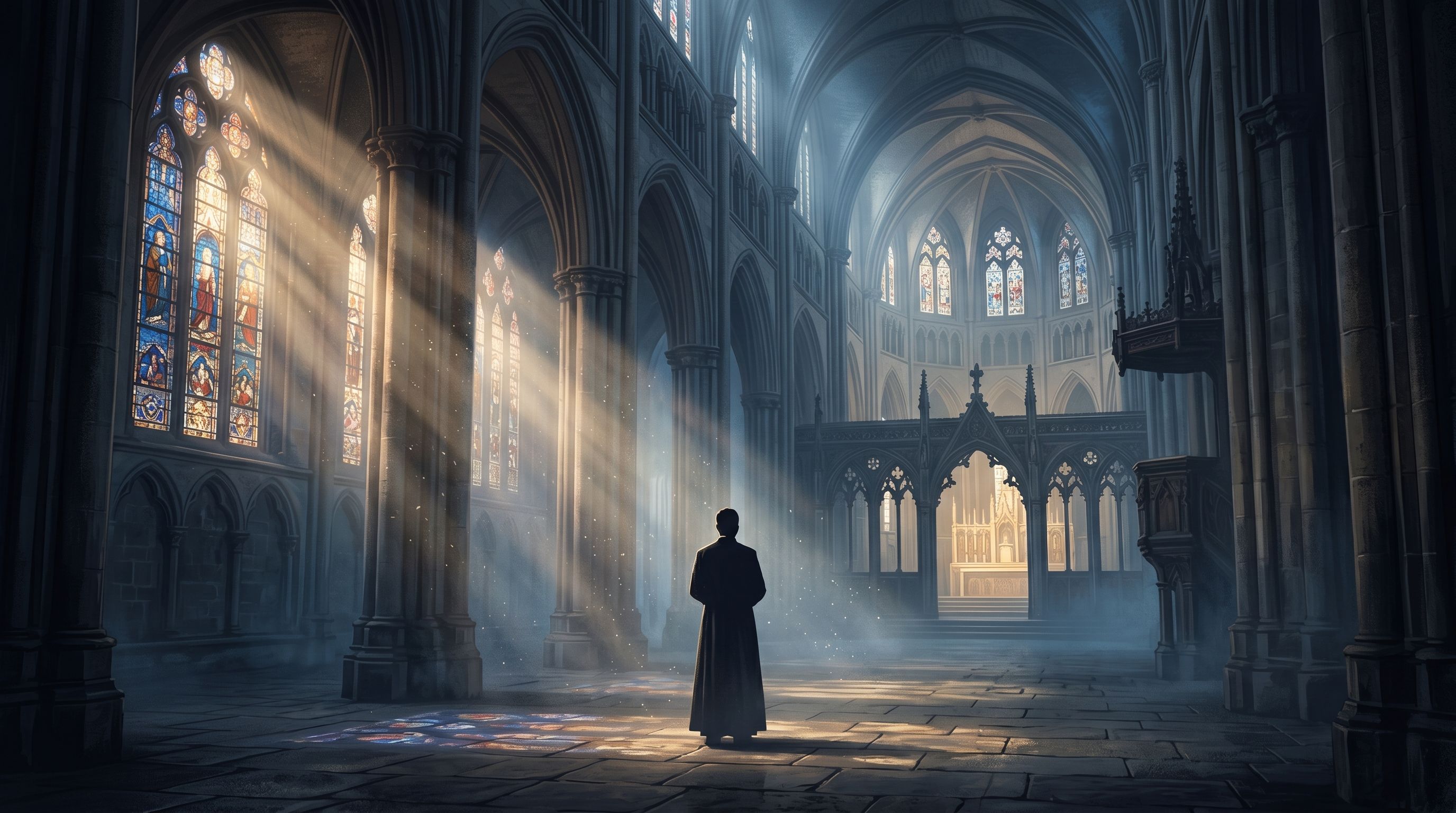
However, I must admit that I am wary of religious figures that are too perfect in dreams. If the monk seems too "cliché," as if straight out of a movie, ask yourself: is it truly a message from your soul, or an image you are projecting to flee your responsibilities? Sometimes, we dream of spirituality so as not to have to face the somewhat "dirtier" or more complicated reality of our human relationships. The true monk of the dream, the one who carries a truth, often has something a bit strange, a bit too human, or on the contrary, a simplicity that totally disarms the ego.
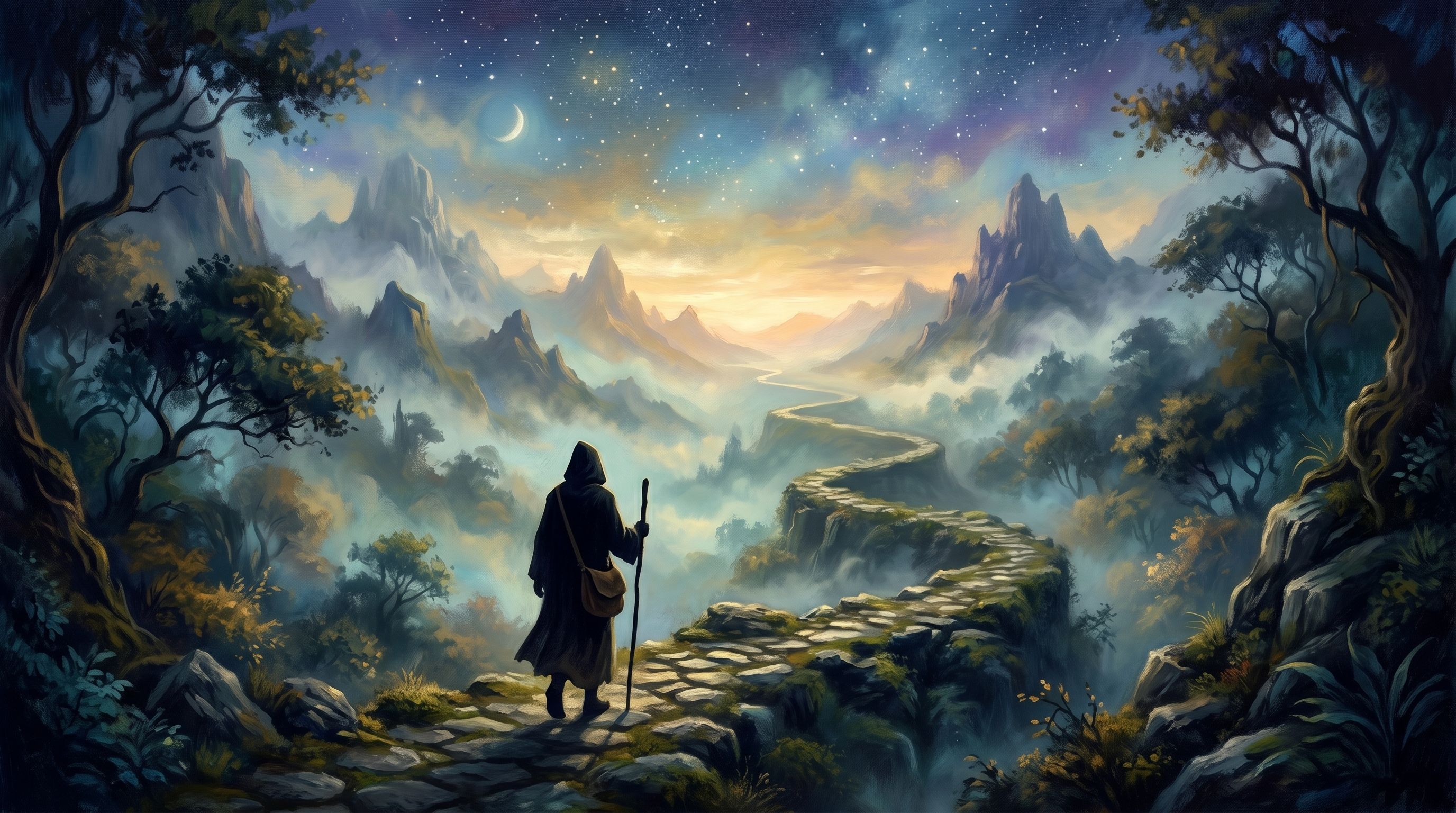
My humble opinion, after traveling through so many dream landscapes, is that this symbol is an invitation to verticality. We spend our days horizontally, chasing objects, people, validations. The monk, however, is a bridge between earth and sky. He reminds you that you have a spiritual backbone.
If this nocturnal encounter leaves you with a feeling of floating, do not try to analyze it with too much mathematical coldness. Simply breathe in the scent of this imaginary incense and ask yourself what you could simplify in your life tomorrow morning, at the first ray of sunlight.
We often envision monks as silent statues wrapped in heavy robes, but Eastern traditions have taught me to appreciate the "crazy monk" archetype—those eccentric, laughing wanderers who carry nothing but dirt and joy. If your dream-monk is laughing, behaving absurdly, or even drinking, do not dismiss it as mere nonsense. Your spirit might be craving a release from the suffocating burden of "doing things right." I sometimes worry when dreamers tell me they only seek pristine, quiet sanctuaries in their sleep. True spiritual freedom doesn't require a quiet room; it thrives in the mud of daily life. If a monk hands you a broken bowl or makes a joke in your dream, he is reminding you that enlightenment is not a museum of perfect behavior, but the ability to laugh at your own rigid expectations.
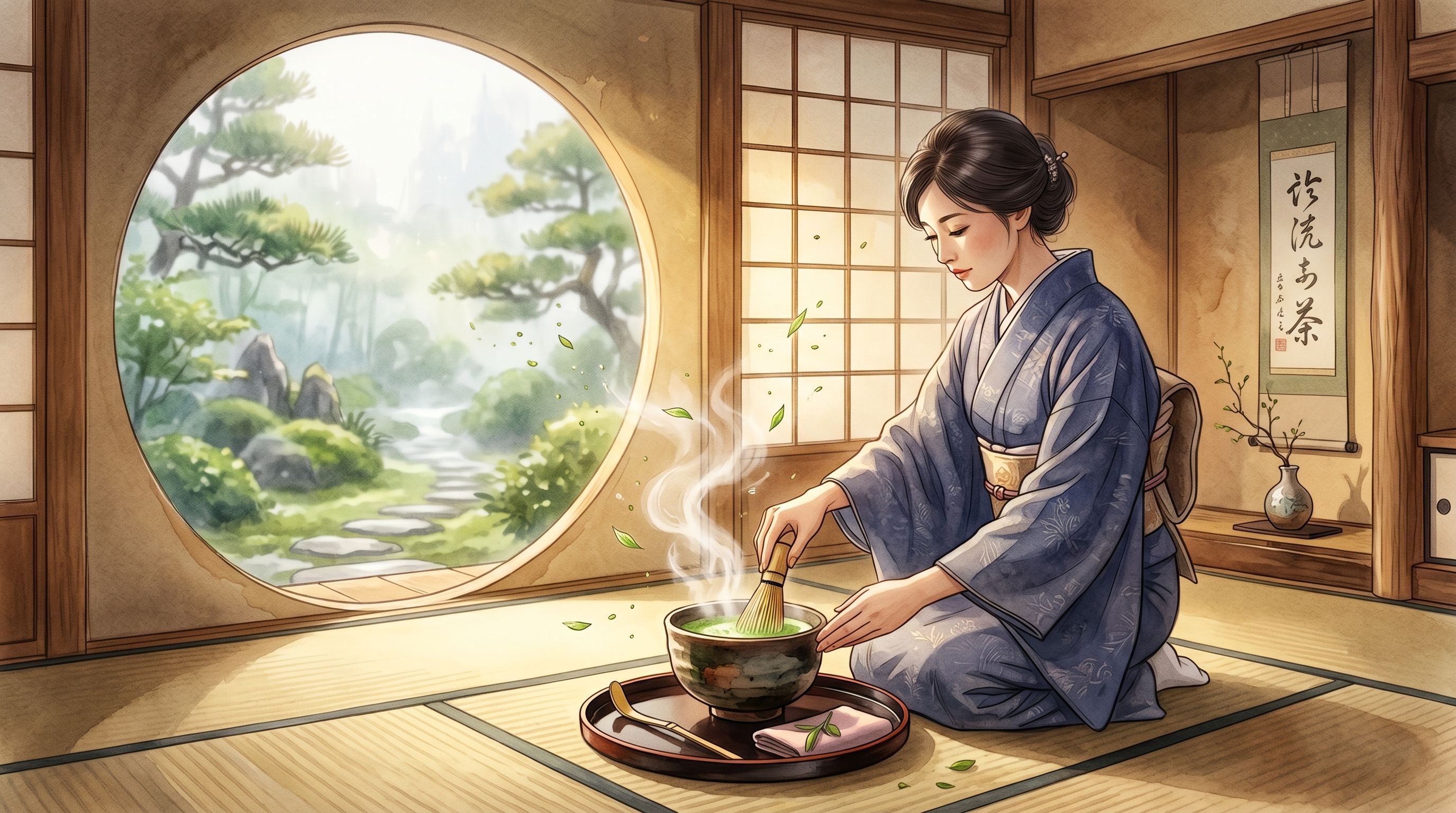
Have you ever touched the rough fabric of the monk’s robe in your dream, or felt the chilly air against a bare scalp? There is a profound vulnerability in these sensory details. When a dreamer experiences the nakedness of a shaved head in a temple setting, it is rarely about punishment; it is about exposing oneself to the elements without the armor of social status or vanity. I find this sensory stripping down incredibly beautiful. It is the skin-level realization that you have been hiding behind your hair, your clothes, or your titles. The dream-monk asks you to stand in your rawest state, shivering slightly perhaps, but finally honest. It is a gentle reminder that your soul does not need decoration to be worthy of peace.
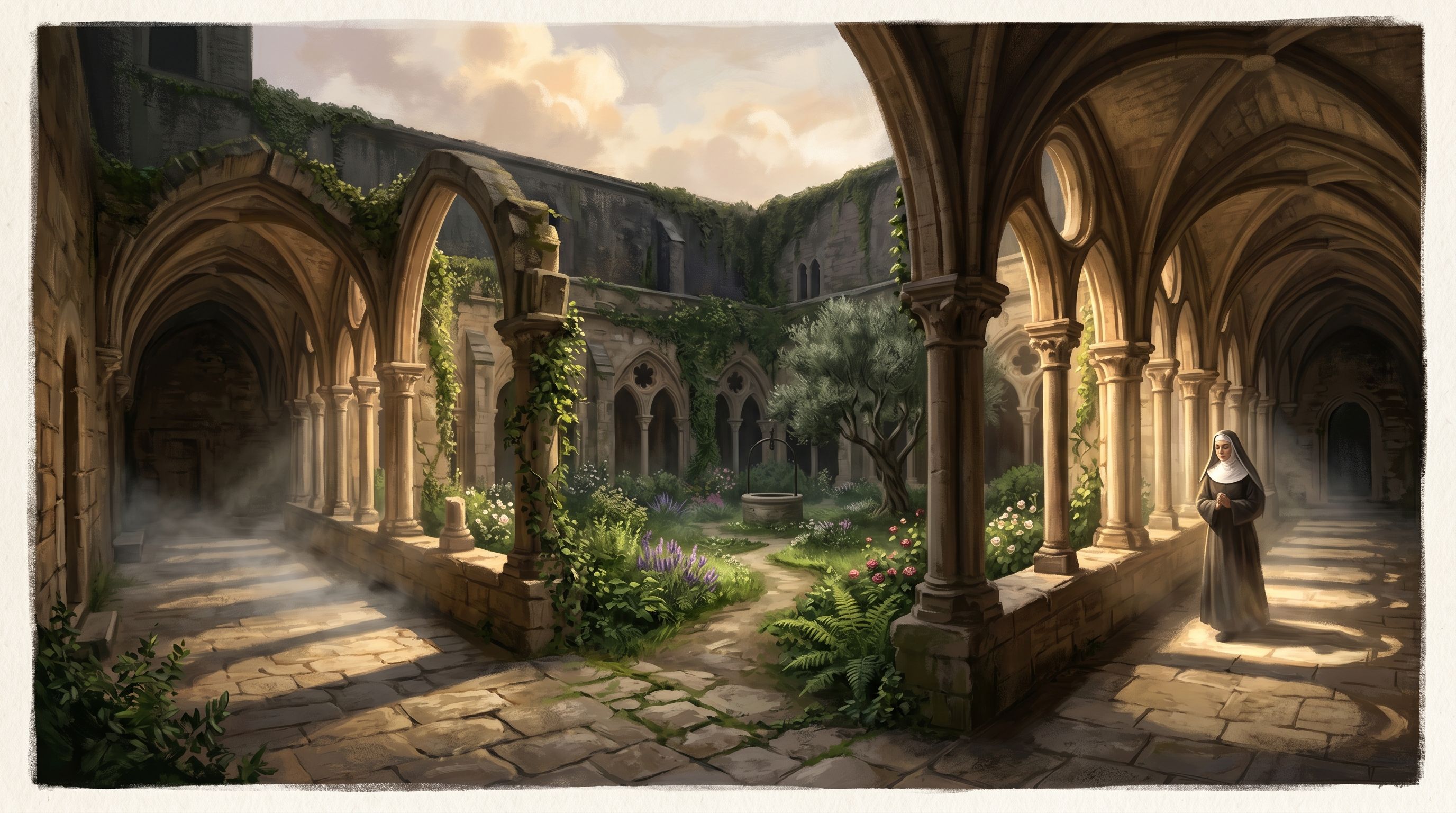
I once met a dreamer, an artist, who was desperately trying to finish a painting and had locked himself away from his friends for months. He dreamed of a monk who kept bringing him empty wooden boxes, locking them, and throwing away the keys. He was furious at this "useless guide." But the dream was trying to show him his own self-imposed exile. By retreating too far into his intellectual cell, he had locked away his creative spirit in a sterile convent where no fresh life could enter. There is a fine line between sacred solitude and bitter isolation. If your dream-monk leaves you feeling abandoned or cold, it is a signal to open your doors again. The mind needs the wind of the world to stir the dust, otherwise even the most beautiful temple becomes a tomb.
Perhaps you need to note these appearances to see if a pattern emerges over your nights. To keep a record of these encounters with your silent guides, you can place these images in your personal symbol collection on Midnight Mind. It is a way to not let the dust of waking life cover these precious messages.
Sleep in peace, silence is your friend.