The Poetry of the Gesture: Beyond a Simple Beverage
When I devour a nightmare, I often taste the bitterness of regret or the sharp salt of fear. But a tea ceremony has a woody, almost earthy flavor that lingers on my palate. In the world of dreams, this ritual is never there by chance; it is a deliberate pause in the narrative of your night.
Truly, this symbol has fascinated me for years because it is the exact opposite of modern haste. If you saw yourself preparing tea with meticulous grace, it’s not that you’ve suddenly developed a passion for ceramics. It’s your subconscious whispering to you to slow down.
We live in a world where everything must move fast, where even our moments of rest are dictated by screens. Your dream, however, places a bowl back in your hands and tells you: "Look. Be here. That is all." It is as if you were standing on a terrace overlooking a vast, quiet valley, far from the noise of the city.
Ritual as the Language of the Soul
I’m not a fan of dream dictionaries that claim "tea equals a new meeting." That is far too reductive for the complexity of your mind. A tea ceremony is about structure and the way you hold space for yourself.
Psychological perspectives often suggest that repetitive, structured dreams act as a "cognitive anchor," helping the dreamer process anxiety through order. Did you feel constrained by the rules of the ritual in your dream, or did those rules bring you a sense of security?
- If the ritual was fluid: You are likely finding a way to harmonize your emotions. You are accepting that every stage of your life has its own importance.
- If you were afraid of spilling the bowl: There may be pressure you are putting on yourself to be "perfect." You fear that your inner calm is merely a facade ready to shatter.
🌙 The Echo of Yume : The steam rising from a dream-bowl is the breath of the soul trying to find its way back to the body.
A Concrete Example: The Unfinished Whisking
Imagine a young professional, overwhelmed by deadlines, who dreams of being unable to whisk the matcha correctly. In the dream, the powder remains clumpy, and the water is too cold. This isn't a failure of skill; it's a reflection of their waking life where they feel they are "performing" relaxation rather than actually experiencing it.
By analyzing this, they realize that their self-care has become another chore on a to-do list. The dream invites them to stop performing and start being, even if the "tea" of their life currently feels messy or incomplete. It is a call to authenticity over perfection.
Bitterness and Sweetness: The Taste of Reality
In a true ceremony, one does not try to mask the taste of matcha with sugar. One accepts the bitterness. In your dreams, this often reflects your ability to face the "bitter" aspects of your life with dignity and resilience.
Some specialists in dream analysis believe that dreaming of stillness is a sign of passivity. I believe the opposite. It takes immense strength to stay seated and prepare tea when everything feels like it’s falling into ruin.
It is a form of spiritual resistance. If you are going through a period where you feel diminished, the ceremony comes to tell you that your value does not lie in your movement, but in the quality of your presence.
I often wonder why humans are so afraid of silence. In your dream, the silence between the gestures is just as important as the tea itself. It is in these gaps that I often nestle to nibble away at the small lingering anxieties that you haven't yet named.
My Humble Baku Advice
If the tea ceremony visits your nights, do not look for a complex explanation in numbers or omens. Simply look at your hand in the dream. Is it tensed? Is it supple? Your body in the dream state often reveals the physical tension you carry while awake.
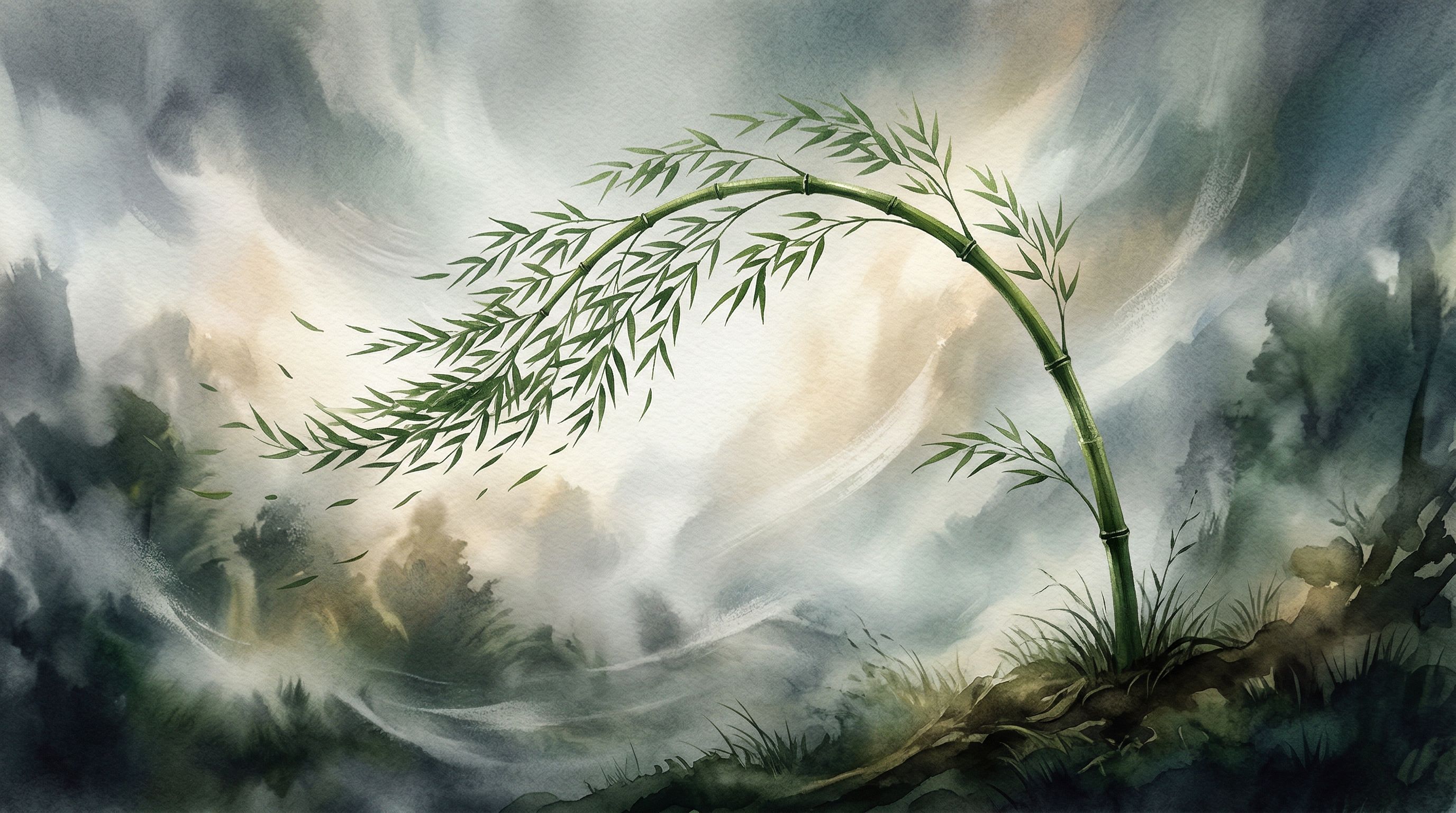
My advice is this: try to integrate a micro-ritual into your waking life. You don’t need to bring out the bamboo whisks or expensive tea sets. Just take three minutes to watch the water pour or to smell the aroma of your coffee in the morning.
Your subconscious is sending you this message because it thirsts for the sacred—for those moments where we expect nothing other than the present moment. Dreams are not threats; they are reminders of what we forget to cherish within ourselves.
I often pay close attention to the texture of the cups in these dreams. Are they rough, crackled, heavy with the weight of the earth? Sometimes a dreamer tells me they felt the intense heat of the water through the thin ceramic, almost to the point of pain. This physical sensation in a dream is never an accident; it is your subconscious trying to shock you back into your senses. When the mind gets lost in abstract worries, the dream-world uses the weight of clay and the bite of hot water to ground you. It reminds me of how we sometimes need to touch something raw and real to feel alive. If you felt the coarse, uneven glaze of the bowl, you are being asked to embrace your own rough edges. It is a quiet return to the physical self, not unlike the grounding presence one feels when immersed in a sacred ritual where every small movement matters.
There is a phrase we use in Japan: 'Ichigo ichie'. It means 'one time, one meeting,' a reminder that this exact moment will never happen again. I once met a dreamer who was going through a painful divorce and kept dreaming of serving tea to an empty chair. She woke up weeping, thinking it was a cruel reminder of her loneliness. But I saw it differently. The tea ceremony in times of transition or grief is not about isolation; it is a sacred space designed to honor what is passing. It is a way of saying goodbye with dignity, of wrapping your sorrow in silk and ceramic rather than letting it tear you apart. If you are standing at a crossroads, this dream does not promise that things will remain the same. It simply asks you to treat the ending of this chapter with the reverence it deserves, acknowledging that even the bitterest departures have their own quiet beauty.
What if you weren't the one whisking the tea, but merely sitting there, waiting to be served? Many dreamers feel anxious when they are passive in their own dreams, as if they are failing some invisible test of control. Honestly, I find this worry a bit exhausting. Why must you always be the host? If an unseen hand poured the tea for you, it is an invitation to surrender. You have spent far too long carrying the weight of others, orchestrating every detail of your waking life. To sit and receive a warm bowl of steeped green tea is to allow yourself to be held, even if only by the architecture of your own mind. It is a gentle reminder that you do not have to earn your rest. Sometimes, the most spiritual thing you can do is simply sit still, open your hands, and let someone—or something—care for you.
If you want to explore these symbols more deeply and keep a record of your inner rituals, your Baku is waiting for you in the Midnight Mind space. Your dreams are gardens; tend to them as one prepares a precious infusion.