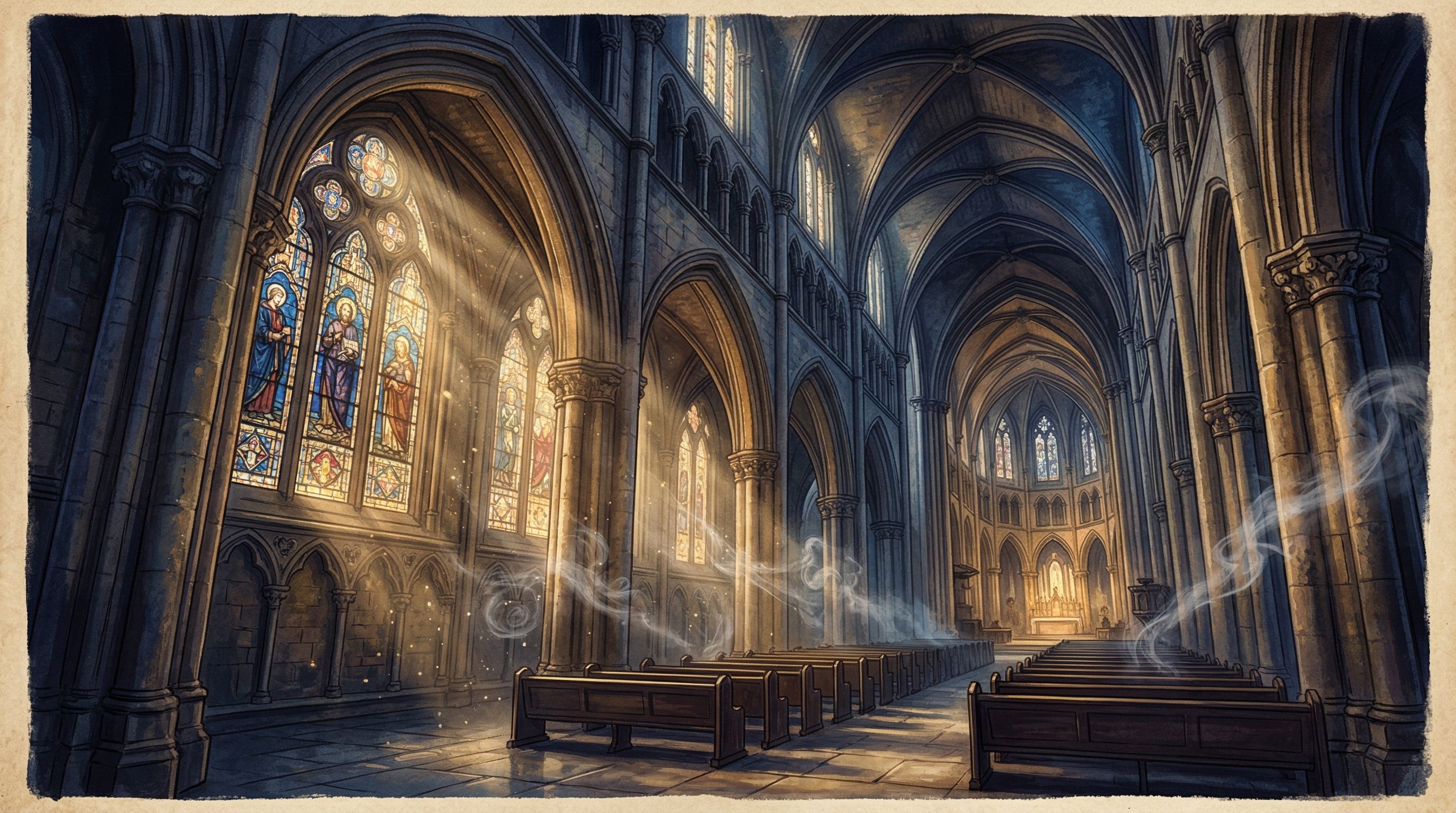
The road that speaks: More than just travel
Honestly, I find it fascinating that our dreams still use this medieval or ancestral image of a pilgrimage in the age of airplanes and digital technology. Why don’t you simply dream of catching a high-speed train toward your destiny? It’s because a pilgrimage imposes a necessary slowness. In the world of dreams, distance is a metaphor for the time you need to digest an emotion or a truth.
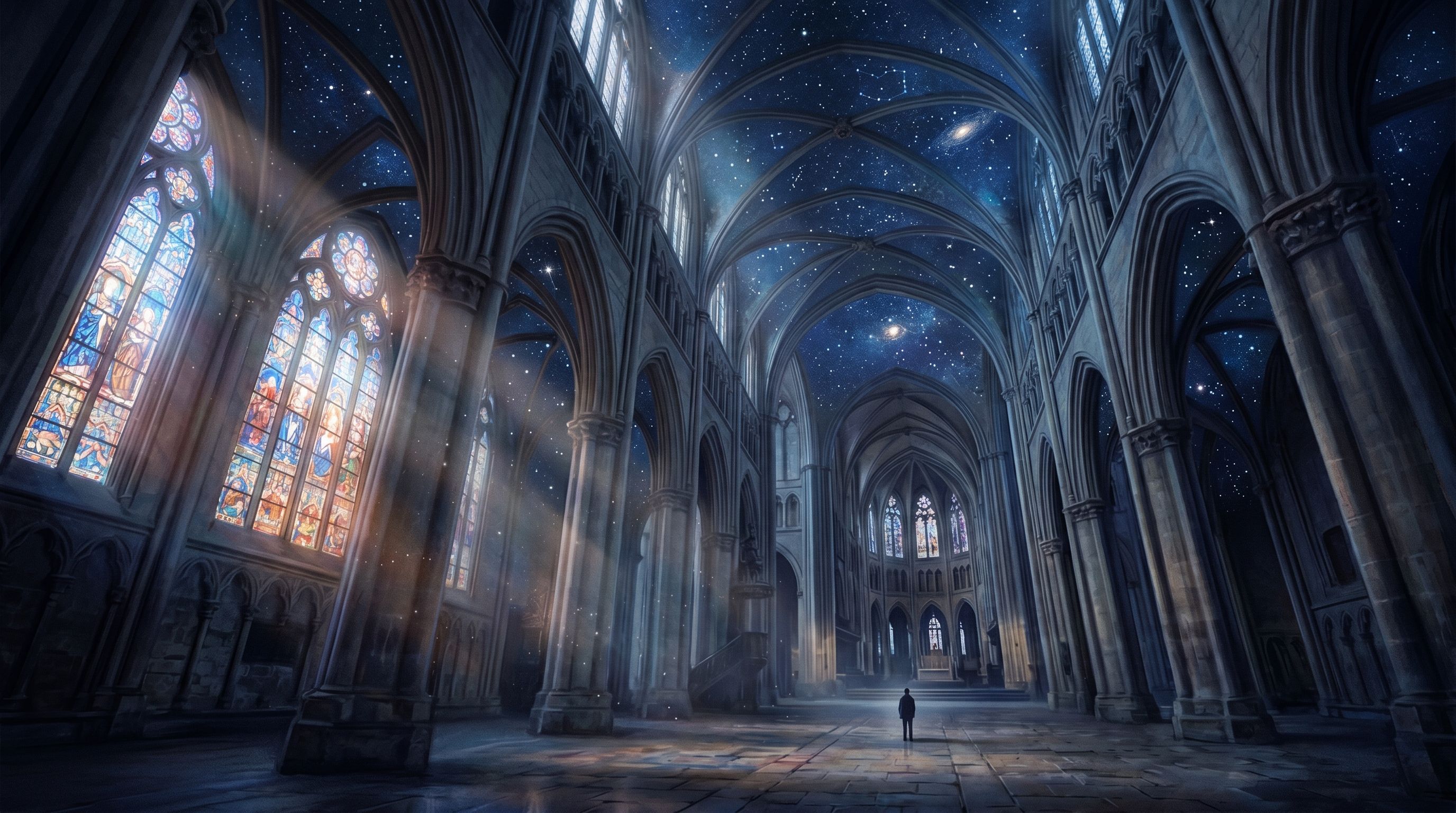
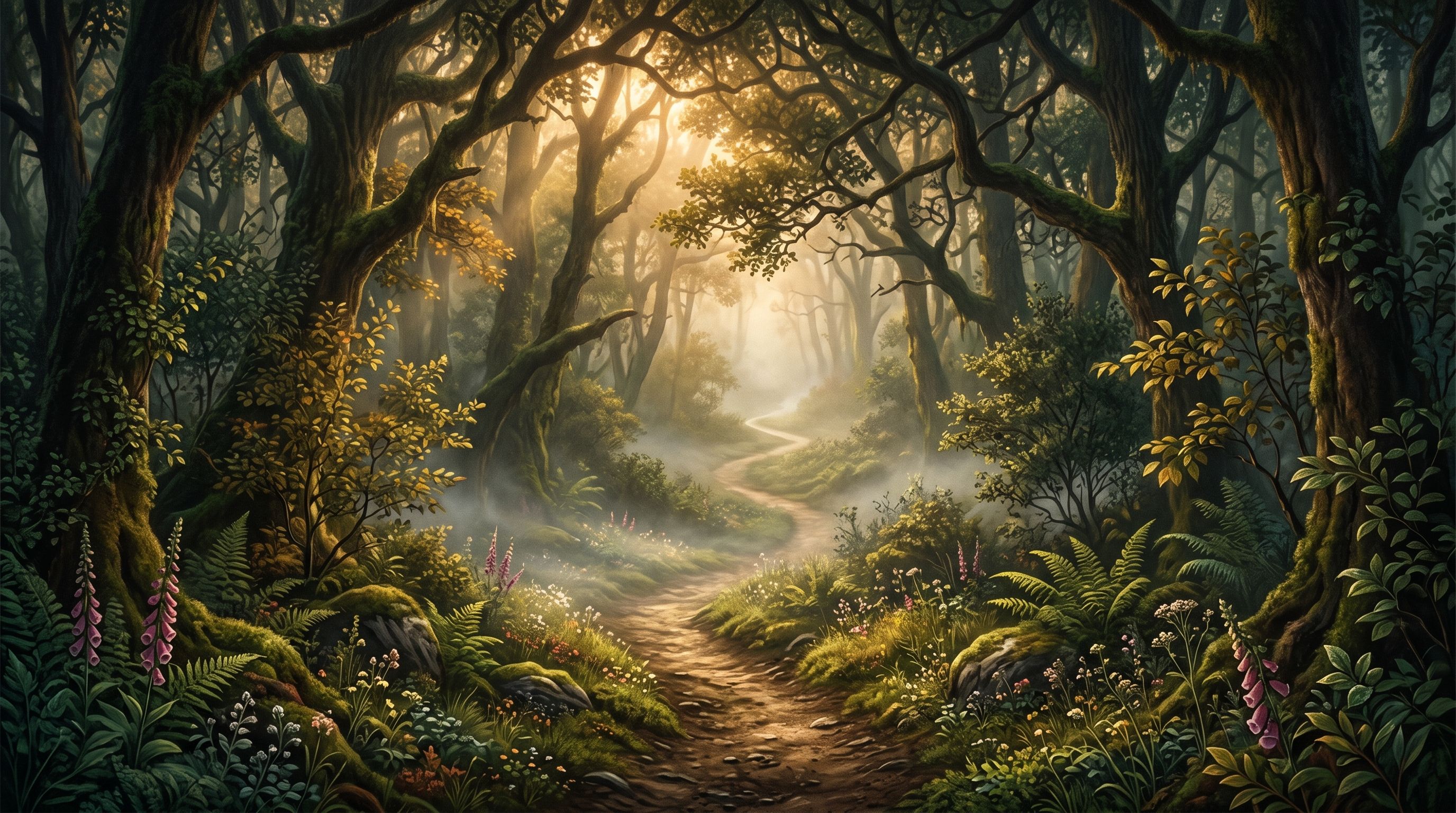
When I slip into dreams to nibble on anxieties, I often see dreamers exhausting themselves on pebble-strewn paths. This is never a punishment. It is a quest. Your mind is searching for a center, an anchor point. Whether you are heading toward a cathedral, a distant mosque, or a sacred mountain, the building matters less than the movement of your feet. A pilgrimage is the moment your deep self says: "I can no longer stay where I am; I must go elsewhere—higher, further."
Some rather rigid dream dictionaries might tell you it’s a sign of guilt. I don’t agree. I dislike interpretations that box you in. To me, a pilgrimage is an act of courage. It is accepting the state of being vulnerable, of being a stranger on the road, the better to find yourself at home within.
Companions and obstacles: Who walks by your side?
I sometimes encounter dreamers who do not walk alone. They are surrounded by a silent crowd or guided by an authority figure. Sometimes, the presence of a guide—like a priest or a sage—indicates that you are seeking external validation for your life choices. You are afraid of picking the wrong path, so your mind invents a shepherd.
But ask yourself: what if the guide was actually you?
If the path is scattered with hurdles—collapsed bridges, sandstorms, brambles—do not panic. In the language of the unconscious, an obstacle is a filter. It serves to help you leave behind what is too heavy. One does not go on a pilgrimage with a fifty-pound suitcase. You go with only the essentials. If you dream that you lose your luggage along the way, it might be a blessing in disguise. Your spirituality has no need for old grudges or material fears.
I remember a dreamer who was desperate because he could never reach the sanctuary. He was walking in circles. By talking with his shadow, we understood that his true goal wasn’t the sanctuary at all, but learning to love the walk itself. He was so obsessed with the result, with the final "answer," that he forgot to look at the landscapes of his own mind.
The destination is a mirror
What lies at the end of your pilgrimage? Sometimes, the dream ends just before you arrive. It’s frustrating, isn't it? Like a song that cuts off before the final note. Yet, this is often a sign that you are still in the middle of a transformation process. You aren't quite ready to "see" the truth face-to-face, and that is perfectly okay. Dream-time does not follow the clock.
If you do reach the holy place, observe the emotion that washes over you. Is it disappointment? Joy? Immense relief? If the place is empty, it doesn't mean your quest was in vain. It means the answer is not found in a geographical location or a dogma, but in the fertile vacuum of your own silence.
To dream of a pilgrimage is, at its heart, to accept the idea that life is a series of renewals. You leave one skin behind on the side of the road and don a new one upon arrival. It is a sacred process, even if you don't consider yourself a religious person. Sacredness is simply the respect you have for your own journey.
When you wake up, take a moment to thank your feet (even if they are imaginary). They are carrying you toward a better version of yourself. Don't try to analyze every pebble on the path; let the sensation of the walk soak into your day. You are in motion, and that is the only thing that truly matters.
Have you ever woken up with your calves aching, smelling of hot dust and wild thyme? It is because the subconscious doesn't just think in symbols; it feels them in the bone. When you are navigating a profound life transition—like a painful ending, a career collapse, or a quiet grief—the mind often refuses the shortcut of logical thought. It forces you to walk. This physical exhaustion in your dream is actually a somatic release. I once met a dreamer who felt so heavy during her dream-walk that she could barely lift her heels from the dirt. She was carrying the unexpressed weight of a major life choice. Every step on that dream-path was a physicalized tear. If you feel the heat of the sun on your neck or the bite of small stones beneath your soles, do not fear it. Your body is simply helping you sweat out what your waking mind is too polite to express.
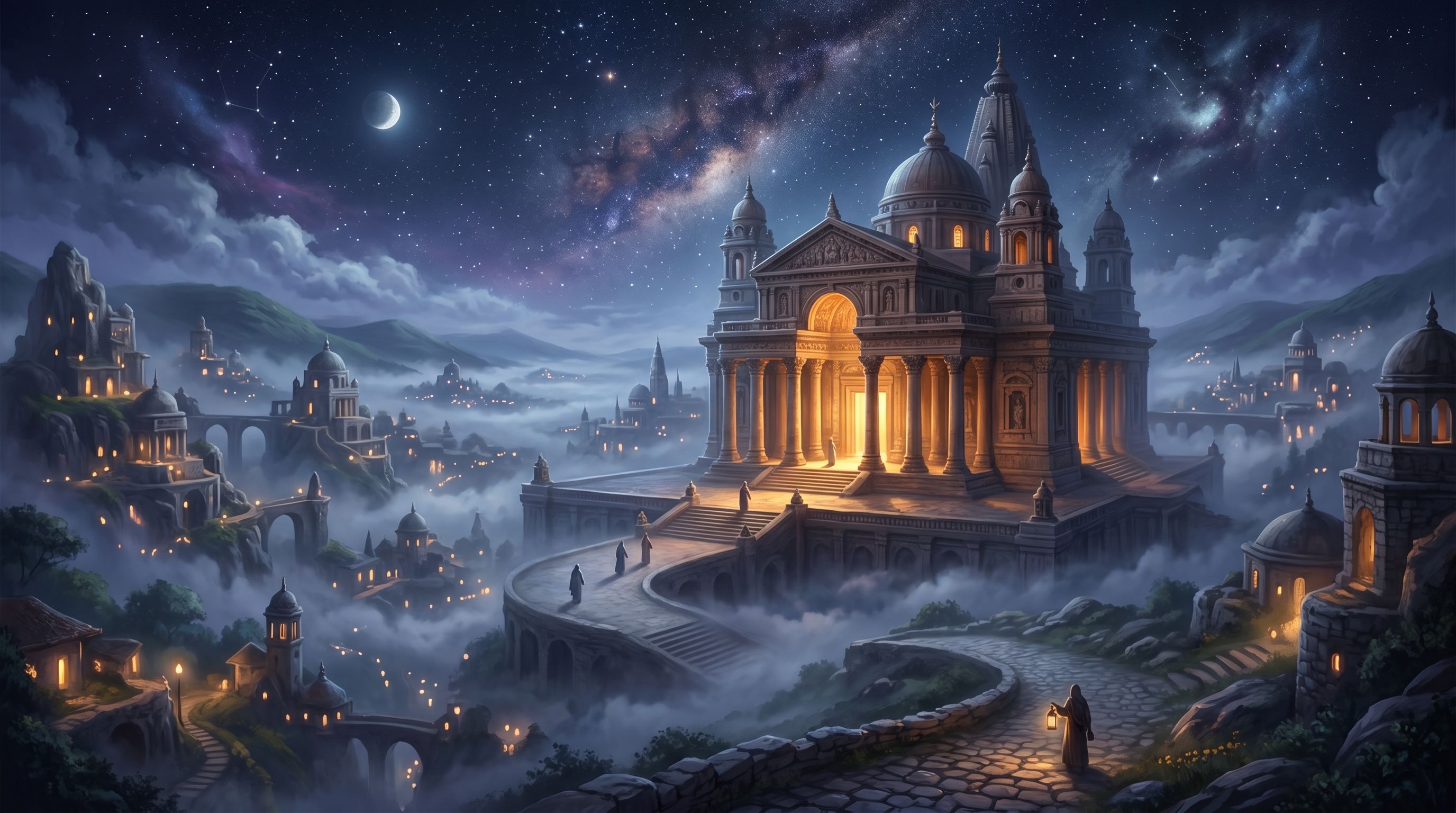
I often get mildly annoyed by those rigid dream dictionaries that insist you must reach the temple to "succeed" in your dream. What a clinical, goal-oriented way to view the soul! Honestly, the most beautiful pilgrimages I’ve observed are those where the dreamer gets delightfully lost. Maybe you were aiming for a sacred monument, perhaps even seeking a quiet church resting on a distant hill, but ended up sitting under a nameless tree sharing wild berries with a stranger. That is where the medicine is. The sanctuary is rarely a physical building; it is the capacity to find peace when the map fails you. If your dream ended before you reached the golden gates, do not view it as a failure. The road itself was the healing, not the altar at the end.
There is a subtle, beautiful melancholy in realizing that some roads have no end. I remember a dreamer who was terrified because her pilgrimage path kept folding back on itself, twisting into spirals. She thought she was cursed to wander forever, a modern Sisyphus in hiking boots. But we looked closer at the patterns. It wasn't a dead-end street; her mind had constructed something deeper, much like wandering through confusing labyrinths where the only way out is through the center. She was undergoing a massive creative block and was terrified of "wasting time." Her unconscious was gently reminding her that spiritual growth is never linear. You do not move in straight lines; you circle around your core truths, getting closer with every loop.
If it feels like your nights are becoming one long, endless hike, you might enjoy recording these stages in Midnight Mind. It’s a way to map your progress and keep track of the collection of symbols you pick up along the road, like so many small spiritual seashells.
Sleep peacefully, traveler. The path is safe, for it is you who draws it with every step.