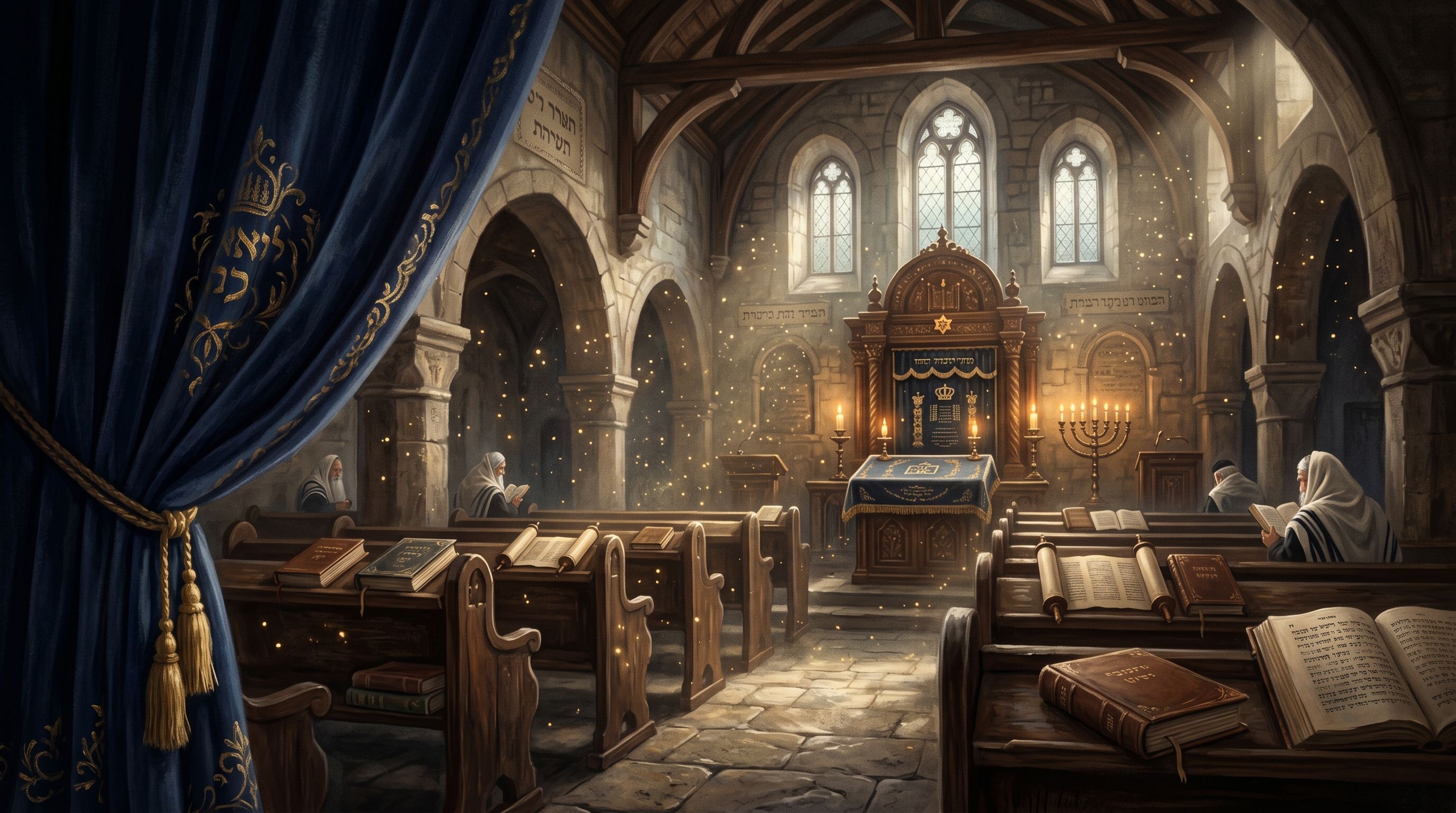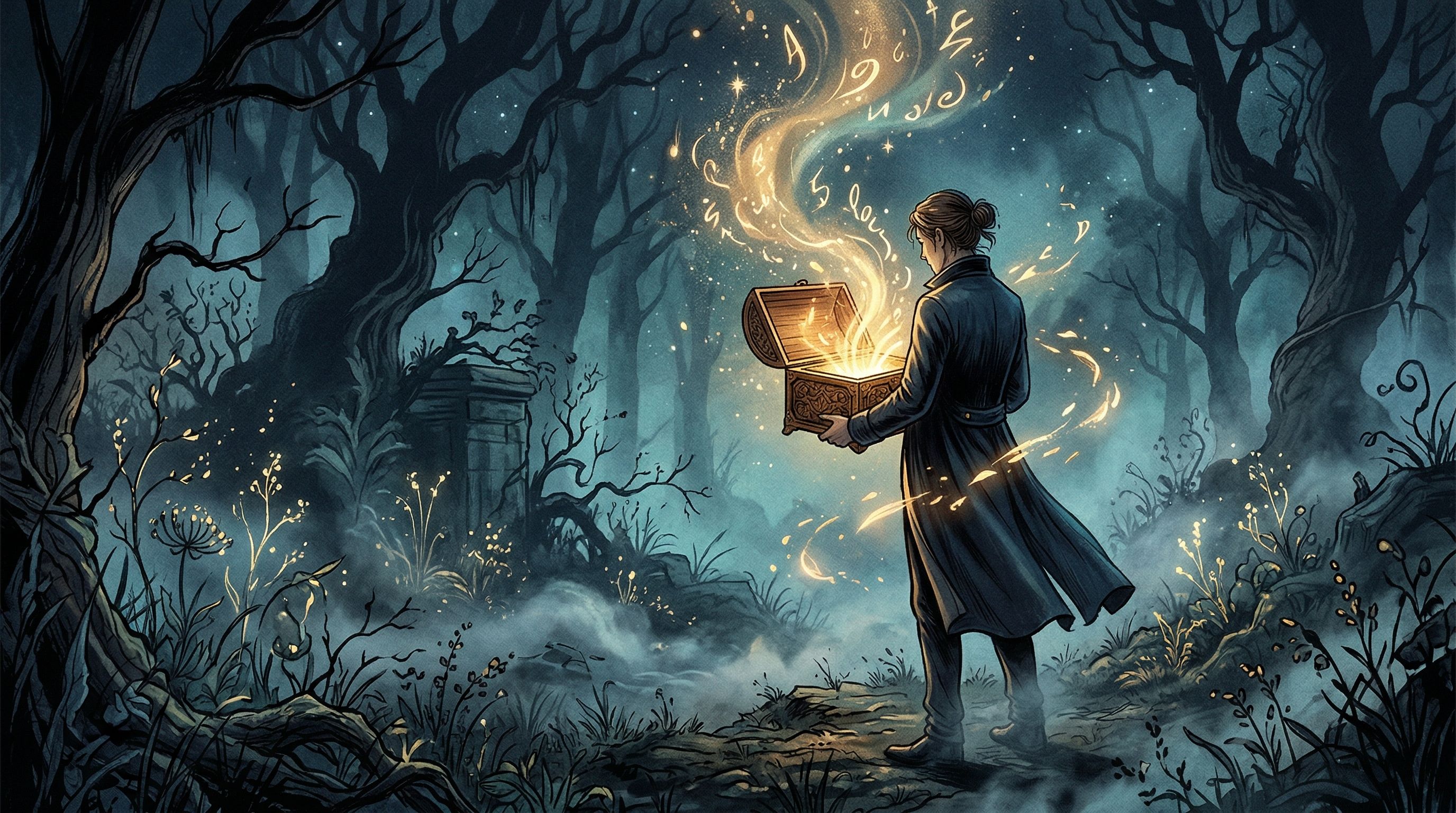
The book as a mirror of your own story
When a book appears in your nocturnal landscape, it is rarely there by chance. It often embodies the very fabric of your existence, what you call your personal story. In my wanderings through minds, I have noticed that the dreamer's position in relation to the object changes everything. Are you reading it, or are you writing it? The nuance is significant for your evolution.
If you see yourself reading greedily, it is likely that your subconscious is seeking to integrate a lesson, to understand a pattern that repeats in your waking life. You are in a receptive phase. You are looking for answers outside of yourself, or you are trying to decipher the codes of a complex situation. It is a quest for clarity.
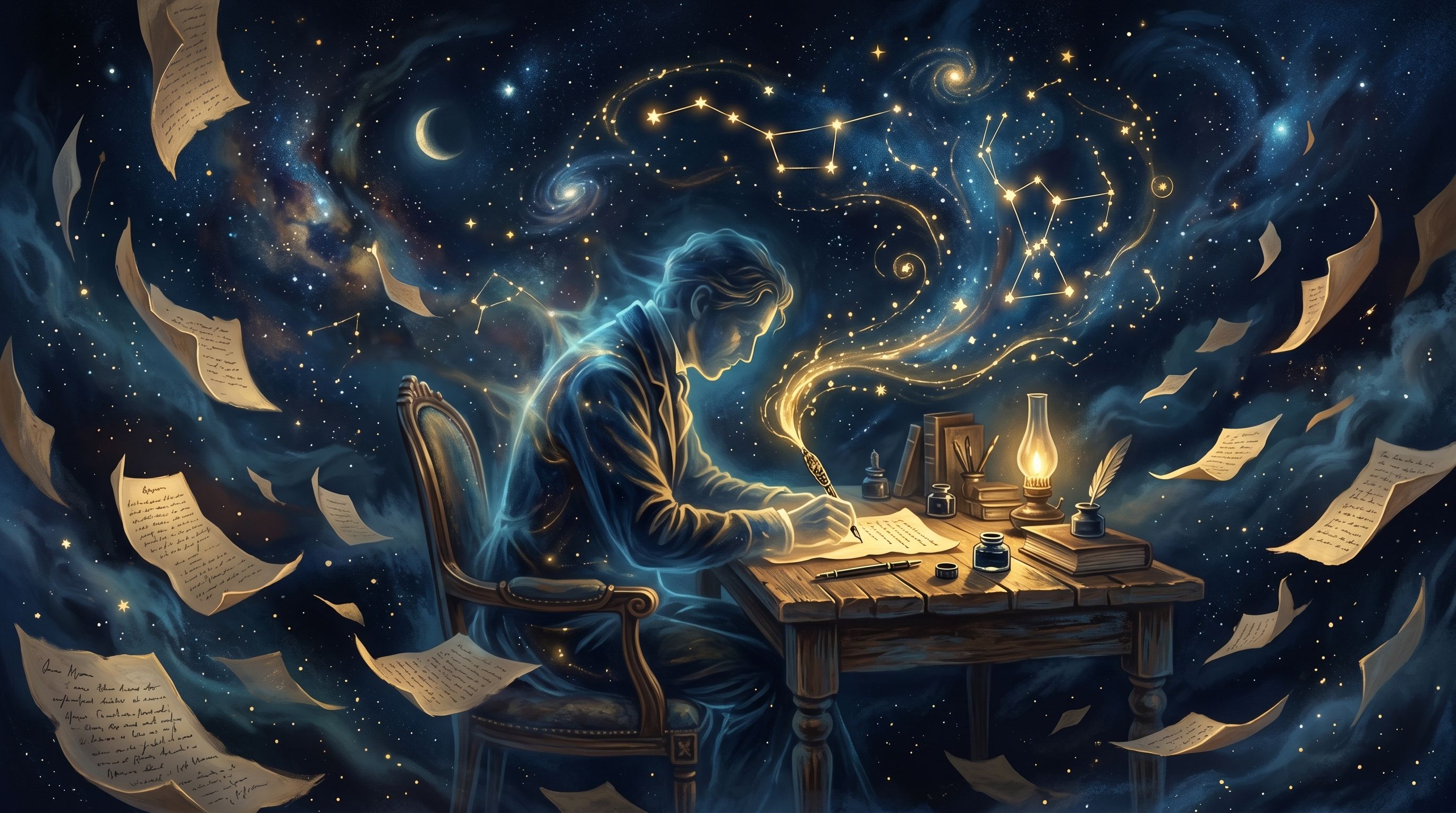
If, on the contrary, you are holding the pen, it means you are reclaiming your power. You are no longer the passive spectator of your days; you are becoming their architect. Writing in a dream is to assert your will to change the narrative. It is deciding that the next chapter will not look like the previous one.
Honestly, I am wary of the fixed interpretations found in some dusty old grimoires. Saying that "dreaming of a closed book means a secret" is a simplicity that annoys me a little. A closed book can also be a well-deserved rest, a page that one finally decides not to reread. Sometimes, it resonates with deeper themes of transmission, such as when we seek to understand the legacy left by our ancestors. This is a feeling often found in the case of a deceased parent, where the book becomes the vessel for a family memory that one does not yet dare to open.
---
Why are words often illegible in your dreams?
This is a complaint I often hear whispered in the ears of dreamers: "Yume, I knew it was a crucial message, but the words were blurry, they were dancing on the page!"
Don't worry, there is an explanation for this, and it is as fascinating as it is mystical. Some sleep specialists believe that the areas of the brain responsible for structured language and reading (like Broca's area or the Visual Word Form Area) are less active during REM sleep. Your brain is then more occupied with processing emotions and images than with deciphering rigorous syntax.
But beyond science, there is the symbol. In the world of dreams, knowledge does not pass through the intellect, but through intuition. If you cannot read the text, try to remember the feeling of the cover. Was it cold like stone or warm like skin? Was the smell that of old paper or a forest after the rain?
Sometimes, your subconscious uses the book as a simple container. What is inside matters less than the fact that you noticed it. It is an invitation to be attentive. There is a part of your story that asks to be brought to light, but perhaps not with words. The language of dreams is a poetry of images, not a dissertation.
🌙 Yume's Echo: Your subconscious does not speak English or French; it speaks the language of heartbeats and cast shadows. A closed book is not a refusal, it is an invitation to listen to the silence between the pages.
---
The quest for knowledge and its vertigo
Knowledge is a strange food. We always want more, but it can also weigh heavily on our shoulders. In your dreams, the book is often the avatar of this thirst for understanding which can sometimes turn into a burden.
Sincerely, this symbol has fascinated me for years because it is incredibly malleable. I have seen dreamers terrified in front of encyclopedias whose letters flew away as soon as they tried to fixate on them. This is what I call "the scholar's vertigo." It is that moment when your mind tells you: "You are trying to over-intellectualize your emotions. Stop wanting to understand everything through logic."
Here are some variations I often encounter in my nocturnal wanderings:
- The burned book: This is not necessarily a loss of knowledge; it is sometimes a radical liberation from obsolete beliefs. You are clearing the way for a new truth.
- The giant book: A truth or a situation that is beyond you, that you cannot yet handle with your human hands. This requires humility.
- The infinite library: Your subconscious is a gold mine, but you may feel overwhelmed by all the possible directions. It is the symbol of hypersensitivity or insatiable curiosity.
Are you looking for a specific answer right now? Or are you afraid of forgetting something important? The dream does not give you a ready-made answer; it asks you the question differently.
---
Concrete example: The library of sand
Imagine a young woman, let's call her Clara. She dreams that she enters a library where all the books are made of sand. As soon as she touches one to understand her past, the work crumbles between her fingers.
In this specific case, the book does not represent knowledge to be acquired, but the impermanence of her memories. Clara was desperately trying to cling to a version of her story that no longer existed. The dream showed her that seeking the truth in frozen "books" was useless. She had to learn to live in the present moment rather than wanting to archive every emotion. It is a lesson in letting go that only the dream world can teach with such delicacy.
---
My humble opinion on your nocturnal pages
I'm going to tell you a Baku secret: book nightmares are the sweetest to eat. They taste of ink and old leather, a taste of wisdom that just needs to be digested. If you dream of a book that scares you, do not run away. Open it. Even if the pages seem threatening to you, they are only made of the fabric of your thoughts.
I have learned, over the centuries, that no one holds the universal key to symbols. Your book does not look like anyone else's. Is it a technical manual, an adventure novel, or a simple notebook? It is in this detail that the true medicine of your soul is hidden.
Some think that dreaming of books is a sign of great loneliness. I think, on the contrary, that it is the sign of a flourishing inner life. You are never alone when you have an entire library in your mind.
If you feel the need to put these scattered pages in order, take the time to write down your visions upon waking. Sometimes, the simple act of putting on physical paper what you saw on dream paper allows you to seal an alliance with your subconscious.
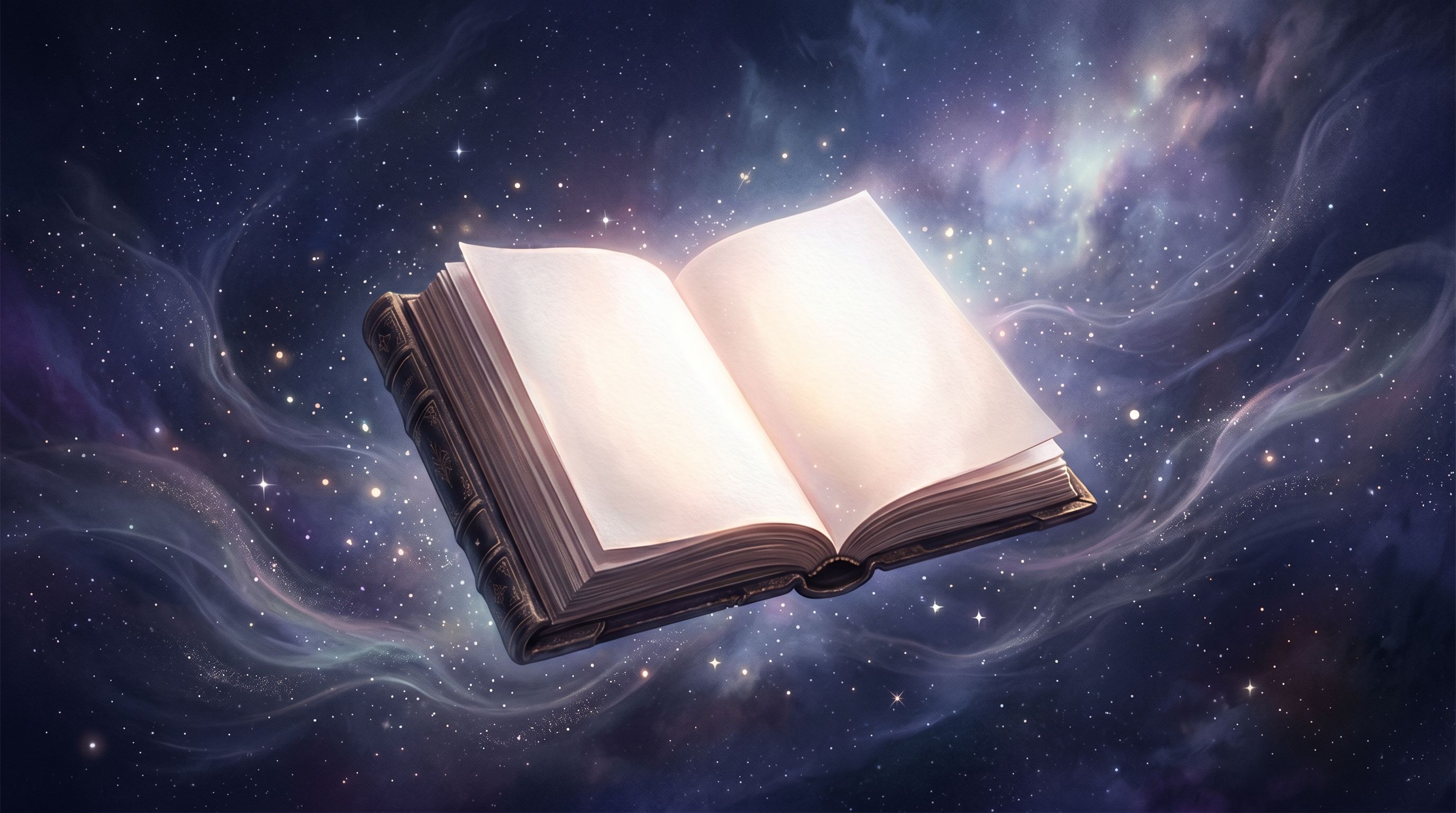
If you want to explore your dreams more deeply, your Baku is waiting for you. The night is still young and there are still so many chapters to explore in your subconscious. Do not fear the blank pages; they are only the beginning of a new adventure.
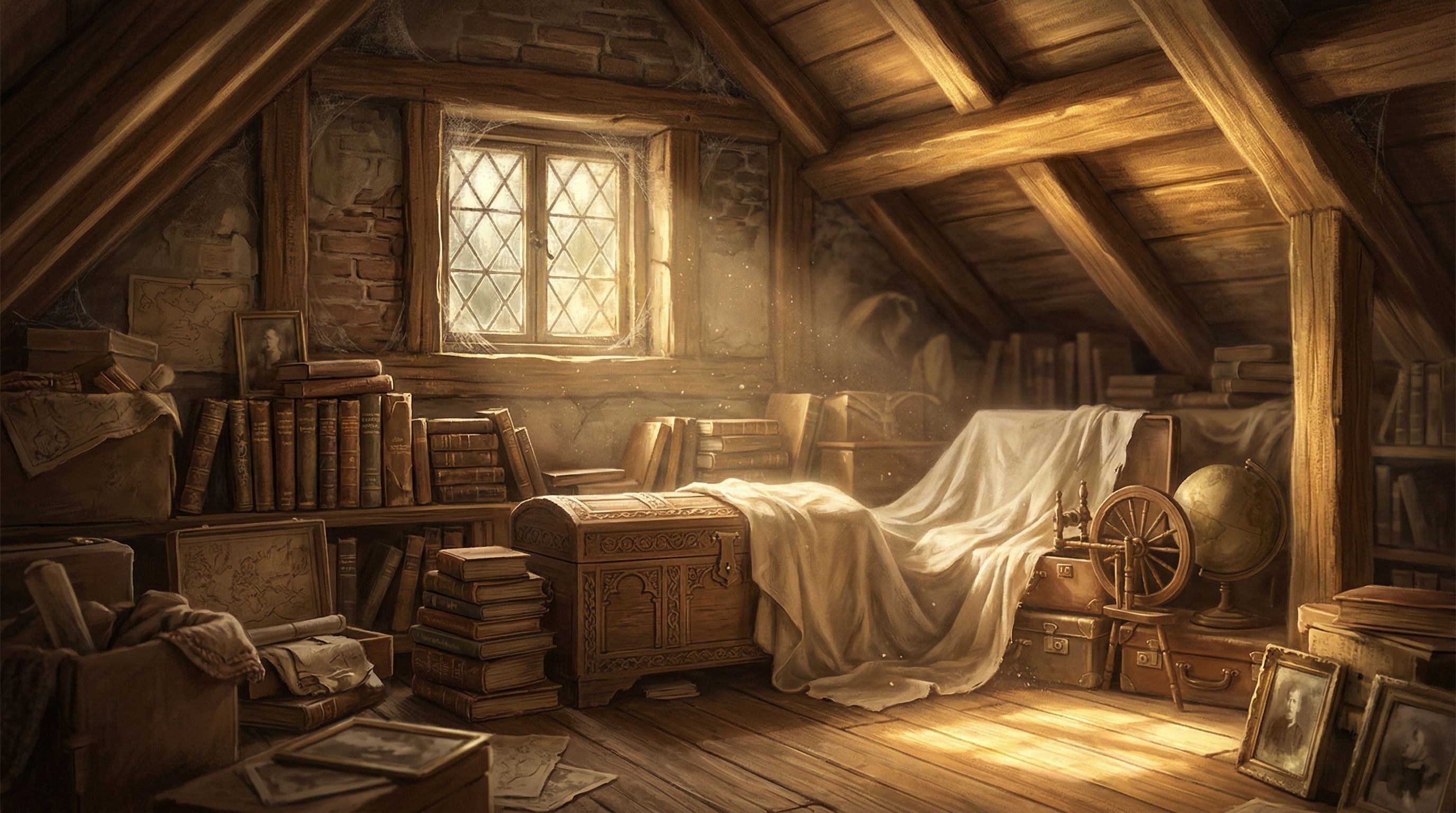
Where do you actually find this book in your sleep? I often see dreamers wandering through damp, subterranean corridors, only to stumble upon a single, waterlogged volume resting on a cold stone floor. There is a profound difference between a book sitting neatly on a polished library shelf and one you discover while descending into a dark basement. The latter isn't about intellectual curiosity; it is about excavation. It represents those dusty, forgotten corners of your psyche where you have locked away memories or truths you deemed too inconvenient for the daylight. When you find a book in the dark, your unconscious isn't asking you to study; it is asking you to retrieve. It is a slow, damp reclamation of a piece of yourself that was left behind in the shadows, waiting for your hands to brush off the mold and remember.
I must admit, it always saddens me a little when a dreamer tells me they were handed a massive, terrifyingly heavy ledger by some stern, faceless authority figure. There is a distinct anxiety in dreaming of a book that feels like an exam you never studied for. Often, this manifests as meeting an old teacher who hands you a volume written in an alphabet you cannot hope to understand. This isn't a sign of your ignorance, though waking life might make you feel that way. It is a projection of the pressure you put on yourself to meet everyone else’s standards, to memorize rules that were never yours to begin with. If the book in your dream feels like a chore or a threat, you have every right to close it. You do not owe your peace to someone else's curriculum.