The Echo of a Silent Confession
Sincerely, I find it fascinating to see how deeply the figure of the priest remains anchored in the collective unconscious, even in our modern societies. For one like me, who gently devours your nightmares, the priest is not a threat; he is a vessel. He is the one to whom we entrust what we do not dare say to ourselves in front of the mirror.
When you dream of a priest, the first question I ask for you is this: what secret weighs heavy on your heart? It isn’t necessarily a matter of "sin" in the religious sense of the word—I leave those concepts to men of flesh and bone. In the world of dreams, sin is simply a truth that is being stifled. Dreaming of this man in black is often your mind seeking a safe space to unburden itself. It is the act of confession that takes precedence here: you need a witness to validate your experience or to help you forgive yourself for a past mistake.
I have occasionally met dreamers who were terrified by this encounter, as if the priest were going to condemn them. But do not forget: this priest is you. He is a part of your own consciousness disguising itself to force you into honesty. If the atmosphere of the dream feels heavy, perhaps you are being too hard on yourself, inflicting an unnecessary penance for a fault that only you can still see.
A Mirror of Our Inner Authority and Spirituality
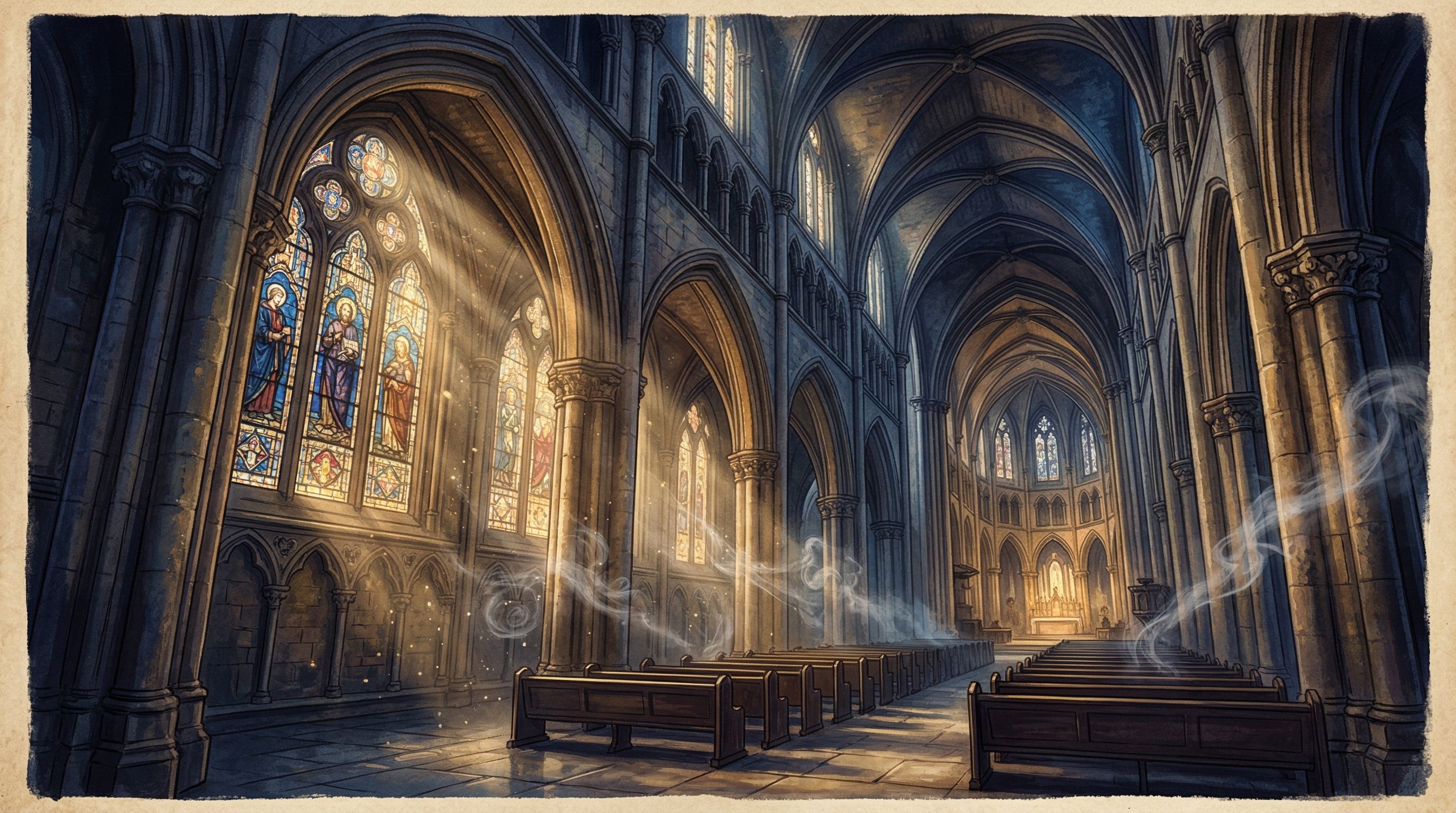
Sometimes, the priest does not come to listen, but to guide—or perhaps to block the way. If he stands before the altar of a church, he represents the link between the material world and the invisible world. This is where spirituality comes into play.
I am not a fan of interpretations that claim seeing a priest foretells a wedding or a funeral. That is far too reductive. To me, the priest is a compass. He embodies your values, your principles, your personal "code of honor."
- If he smiles at you, you are likely in harmony with your principles.
- If he turns his back on you or is stern, it is time to ask yourself if you are betraying your own ideals to please others.
There is a nuance close to my heart: the difference between religion and inner faith. The priest wears the uniform of dogma. Dreaming of him can also reflect a feeling of being stifled by social or family rules that are too rigid. Do you feel forced to follow a path laid out by others? Your subconscious then uses this figure to ask you: "Where is your own light amidst all this decorum?"
The Nuances of the Garb: Between Light and Shadow
In the tapestry of your nights, details matter more than titles. I have seen dreams where the priest wore colorful vestments, or conversely, nothing but rags.
If the priest you encounter is benevolent, he may be a substitute for a father figure or a mentor you need right now. Someone who would tell you: "It's alright, you have the right to be human." He is a balm for the soul. In contrast, a faceless or aggressive priest points a finger at toxic guilt—something gnawing at you that you haven't yet been able to identify.
Honestly? This symbol remains mysterious even to me after so many centuries. It changes shape according to each person's story. A dreamer once told me they saw a priest dancing in a forest; for them, it was a sign that they needed to reconcile their need for the sacred with their wild nature. You won't find that in any dictionary, yet that is where the true magic of interpretation lies.
Do not see this dream as a moral injunction, but as an invitation to dialogue. Your subconscious is not trying to judge you; it is trying to free you from what hinders your journey. The next time you close your eyes, if you cross paths with this silhouette, do not be afraid. Simply ask him what he has come looking for in your secret garden.
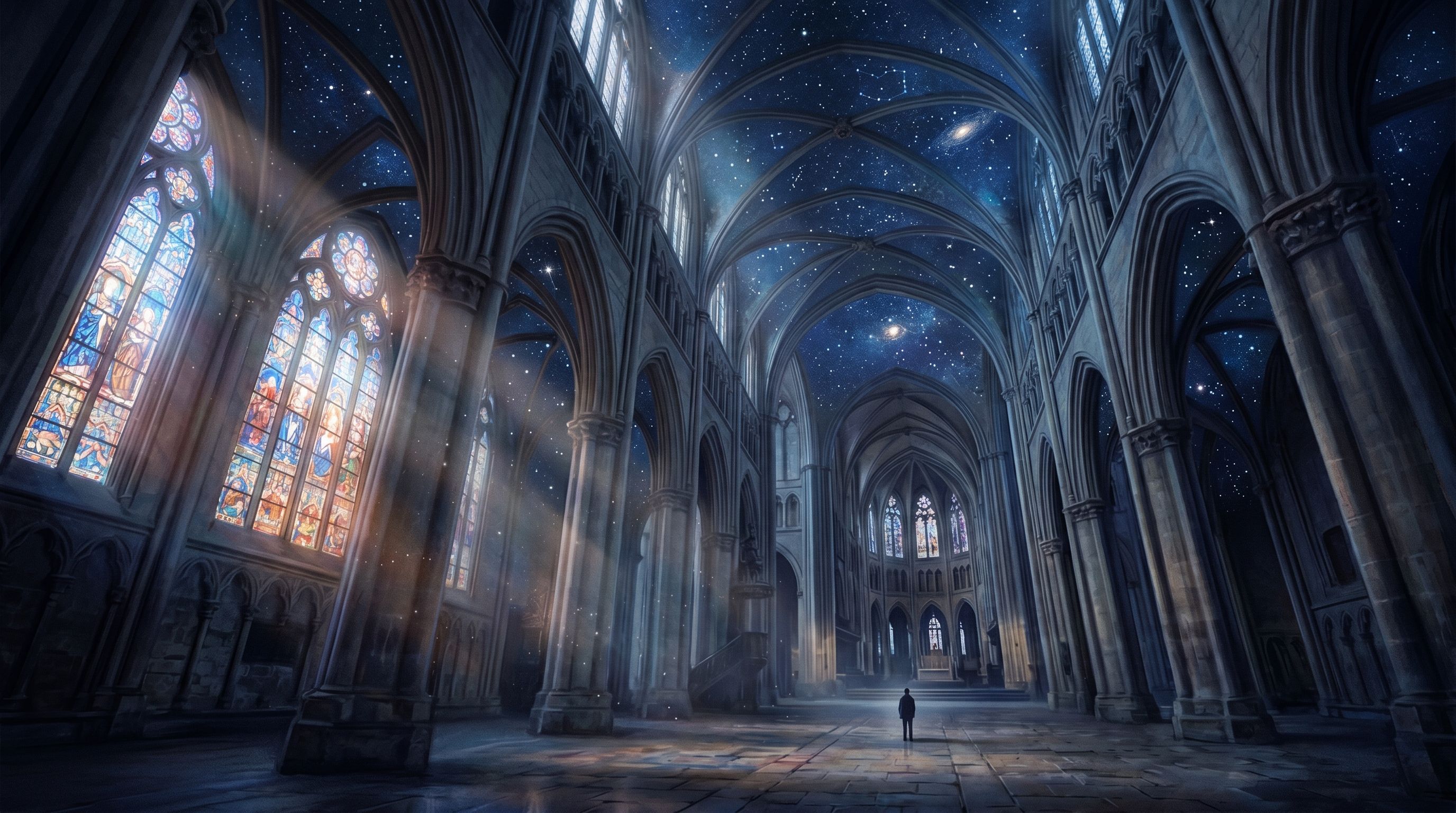
Have you ever noticed the temperature of these dreams? Often, the encounter is wrapped in a biting, ancient coldness, smelling of melted beeswax and damp stone. This sensory detail isn't random; it is your spirit seeking grounding when your waking life feels chaotic and formless. I often see this in those who are undergoing a silent transition—leaving a long-term career or stepping away from family expectations. In these moments of profound isolation, your mind constructs the solemnity of a sanctuary, much like visiting a quiet cathedral in the dead of night. It is a desperate, beautiful attempt to find an anchor, a gravity, when everything else is floating away. You do not need to convert to find solace in this coldness; you simply need to acknowledge that your transition deserves a space that feels sacred, even if it is built entirely of stardust and memories.
I once met a dreamer who was haunted by a priest who did nothing but write in a massive ledger, never looking up. She was convinced she was being condemned for a choice she had made years ago. It broke my heart a little to see her carry this phantom guilt night after night. We often mistake the priest for an external authority, someone waiting to punish us, quite similar to how we might fear standing before a judge in our waking anxieties. But this silent writer wasn't keeping a tally of her sins; he was merely recording the history she refused to integrate. When you dream of a priest who remains stubbornly silent, he is inviting you to stop begging for external absolution. He is holding the pen, but the hand that guides it—and the voice that can finally say 'you are forgiven'—has always been yours.
Frankly, it wearies me when modern dream dictionaries reduce the priest to a simple sign of guilt or religious trauma. What a narrow window through which to view the vastness of human dreaming! Beyond the collar and the cassock, this figure is an ancient archetypal guide—a psychopomp. He is the one who walks between the worlds of the living and the dead, the conscious and the deep, dark waters of your shadow. If he appears when you are feeling utterly lost, he is not there to preach. He is there because you are standing at a threshold, perhaps grieving an old version of yourself. Some dreams of this nature can feel as heavy as watching your own passing, a quiet letting go of who you used to be. The priest is merely the usher, holding the lantern so you do not trip over your own fears as you step into the dark.
Every symbol you encounter is a stone you add to the cathedral of your self-knowledge. If this priest left you with a specific message or emotion, do not hesitate to note it in your personal journal on Midnight Mind. There, you can observe how this figure evolves throughout your nights and perhaps even turn it into an image to better understand its presence.