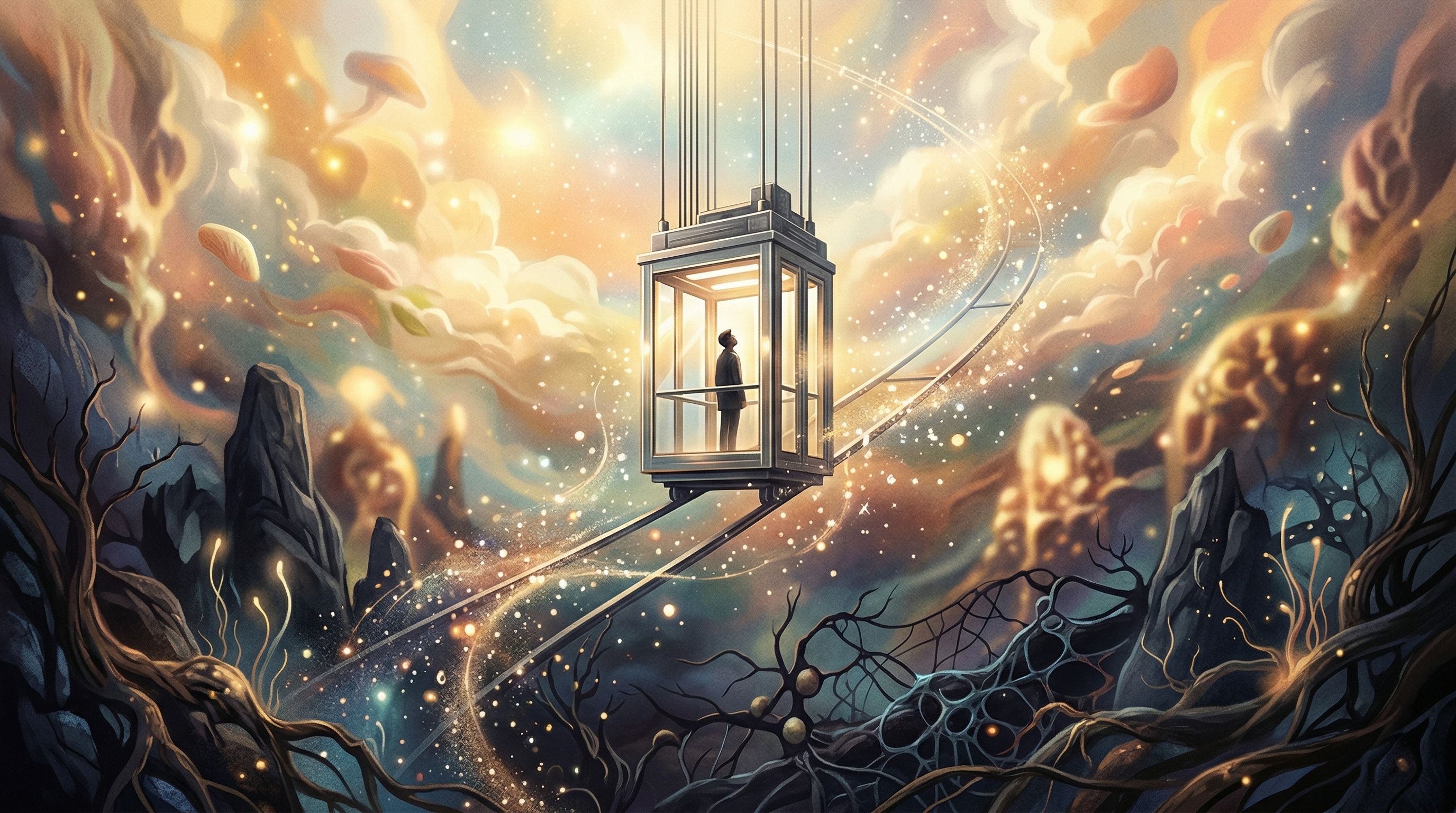
The Luxury of Anonymity and the Weight of Luggage
Honestly, I find that dream dictionaries are often far too harsh on hotels. They see them as a loss of roots, a form of sad loneliness. For me, when I "devour" these kinds of dreams, I often catch the scent of freedom. In a hotel, you don't have your past hanging on the walls. No one knows you. This anonymity is sometimes the only solution your subconscious has found to allow you to finally rest. If you feel good in that impersonal room during your dream, it might be that your usual identity is weighing you down. You might be tired of being the perfect parent, the devoted employee, or the rock-solid friend. Your spirit is calling for a break—a place where you don't need to "play your part."
But then there is the matter of the luggage. I remember a dreamer who told me she was wandering through a massive lobby, unable to find her suitcases. She was panicking. In reality, her bags represented everything she refused to let go of from her old life. A hotel is the ultimate place of passage. We cannot stay there forever. If you dream that you’ve been living there for months, it might mean you are afraid to commit to the next part of your journey. It’s a bit like standing frozen in front of a glacier: everything is suspended, nothing moves, and eventually, the cold sets in. A hotel is a bridge, not a destination. It is there to remind you that you are in motion, even if it feels like you are standing still.
Labyrinths of Corridors and Closed Doors
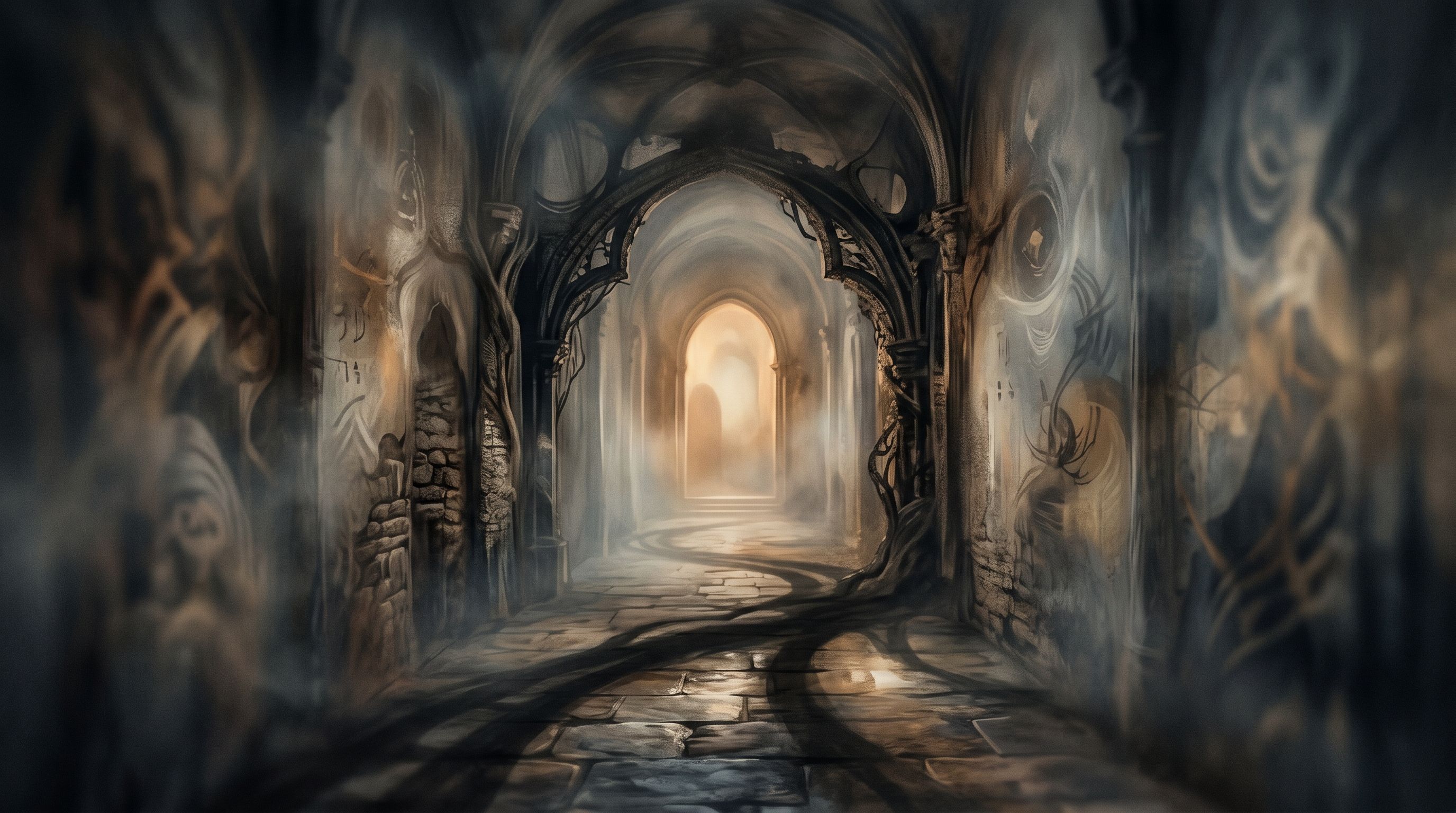
Have you ever noticed how hotel corridors in dreams can feel infinite? You look for room 402, you go up, you go down, and every door looks exactly the same. It’s an experience that can quickly become oppressive. To me, these corridors are the branching paths of your subconscious. Every closed door is a possibility, a facet of yourself that you haven't visited yet. Sometimes, the hotel feels like a tunnel with no end in sight, but with one fundamental difference: here, there is life behind the walls. You hear whispers, the sound of footsteps... these are all the different versions of yourself living side by side.
I sometimes get a little frustrated when people ask me, "Is dreaming of a seedy hotel a bad omen?" Of course not. A run-down hotel with peeling wallpaper isn't a threat. It is simply a reflection of a part of your life that needs a little care, or perhaps a sign that you are placing too much importance on how things look to others (the "decor") at the expense of your inner comfort. Conversely, a palace that is too luxurious can be intimidating; it shows that you are putting immense pressure on yourself to live up to a new situation.
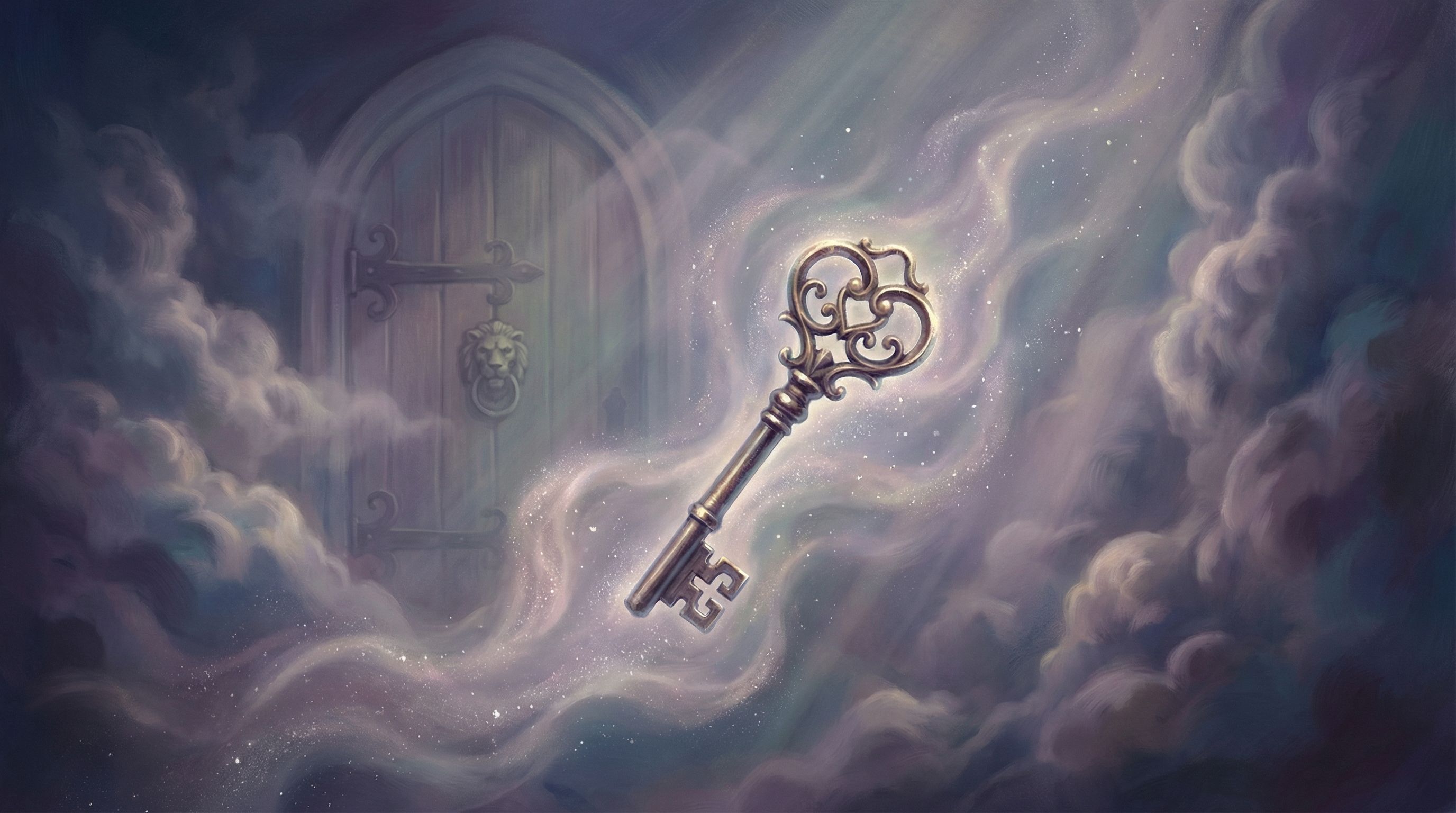
The most important thing is the key. Do you have it? Is it heavy? Or did you lose it at the reception desk? Losing your key isn't "losing your mind"—it's just forgetting, for a brief moment, that you have the right to access your own private space. It is an invitation to reclaim your intimacy.
Listen to the Murmur of the Carpet
My advice, if hotels frequently visit your nights, is not to rush to leave. Don't feel like you absolutely must get back "home." If your subconscious has dropped you there, it’s because the mental house you were occupying is no longer suited to who you are becoming. Enjoy this time of transition. Look out the window of your dream room: what do you see? The city? The sea? That is where your next step lies.
Dreams are never threats; they are mysterious compasses. The hotel is simply telling you: "Set your bags down for a moment. Breathe. You don't need to be anyone right now." It is a decompression chamber between two worlds.
I often wonder why we pay so little attention to the lobby. We rush through it in our dreams, desperate to get our hands on that plastic keycard. But have you ever stood before the receptionist only to realize you cannot read the registration form, or that you are interacting with a faceless person handing you a key that doesn't fit any lock? It is a strange form of dissociation. When you finally unlock the door, expecting a cozy haven, you might find yourself stepping into an empty room without a single piece of furniture. Your waking mind might panic, viewing this blankness as isolation. But to me, it is a magnificent canvas. The emptiness isn't a lack of life; it is the clean slate your spirit has been begging for. It is the quiet moment before the paint dries, a space where no one else's expectations can cling to the walls.
I once met a dreamer who was deeply troubled by a recurring dream of a creaky, wooden inn high in the misty mountains of Tohoku. She felt lost because there were no locks on the paper sliding doors, and strangers kept walking past her futon. We often forget that the modern, locked hotel room is a very Western, individualistic concept of safety. In older traditions, sharing a temporary shelter was a communal blessing, a reminder that we are all travelers sharing the same brief night. If your dream-hotel lacks privacy, it might not be an invasion of your boundaries; it could be a gentle invitation from your subconscious to soften your defenses. Perhaps you have built your daily ego-walls a little too high, and your spirit is reminding you that vulnerability is the only way to let the light back in.
And then, of course, there is the quiet dread of the check-out time. You are frantically throwing mismatched socks into an unzippable bag, hearing the phantom ticking of a clock, terrified of being penalized for staying past noon. This anxiety is rarely about the hotel itself; it is about the artificial timelines you impose on your own healing. I see so many dreamers who undergo a massive life transition—like a divorce or a career shift—and expect themselves to settle in instantly. They treat their grief like a weekend stay. If you are rushing to check out of your dream hotel, ask yourself: who is holding the stopwatch? Sometimes, the most spiritual thing you can do is to ask the receptionist for a late departure, allowing yourself to sit quietly on the edge of the unmade bed for just a little while longer.
If you feel the need to jot down room numbers or the faces you pass in the lobby of your nights, you can use the Midnight Mind app. It is a beautiful place to build your collection of symbols and understand, step by step, which destination your inner journey is taking you toward.