The void that speaks volumes: why does the mind erase features?
Sincerly, it bothers me a little when I read in certain ancient dream dictionaries that crossing paths with a faceless stranger is an omen of misfortune. It’s so simplistic—almost lazy. In my world, the world of ether and dreams, absence is a form of presence.
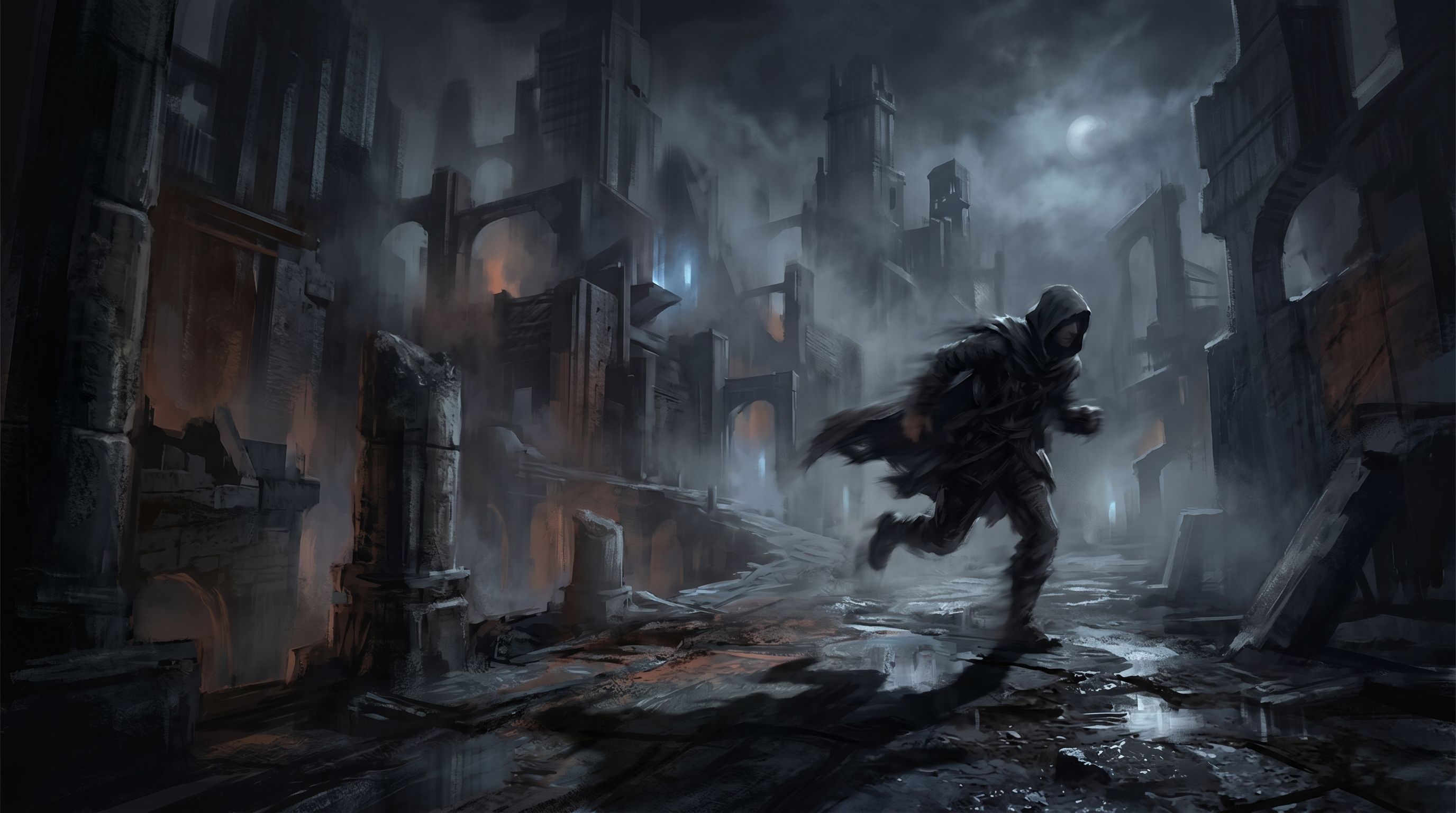
Imagine your dream is a play. If an actor walks onto the stage wearing a plain white mask, it’s not because they forgot their makeup. It’s so that you focus on their gestures, their words, or what they represent symbolically. In your nights, anonymity is a narrative tool. If the person chasing you, helping you, or observing you has no nose, no eyes, and no mouth, it is because their social identity (name, age, relationship to you) has no importance for the message your subconscious is trying to deliver.
Sometimes, this silhouette represents a "function." If you dream of a faceless doctor, the important thing isn't who that doctor is, but the concept of healing or authority they embody. It’s a bit like when you travel through a world without nuances: the brain simplifies the image so that you can feel the essence of the moment rather than being distracted by surface details. We focus on the raw emotion—the one that cannot lie.
Mirror of a blurred identity: when the missing face is our own
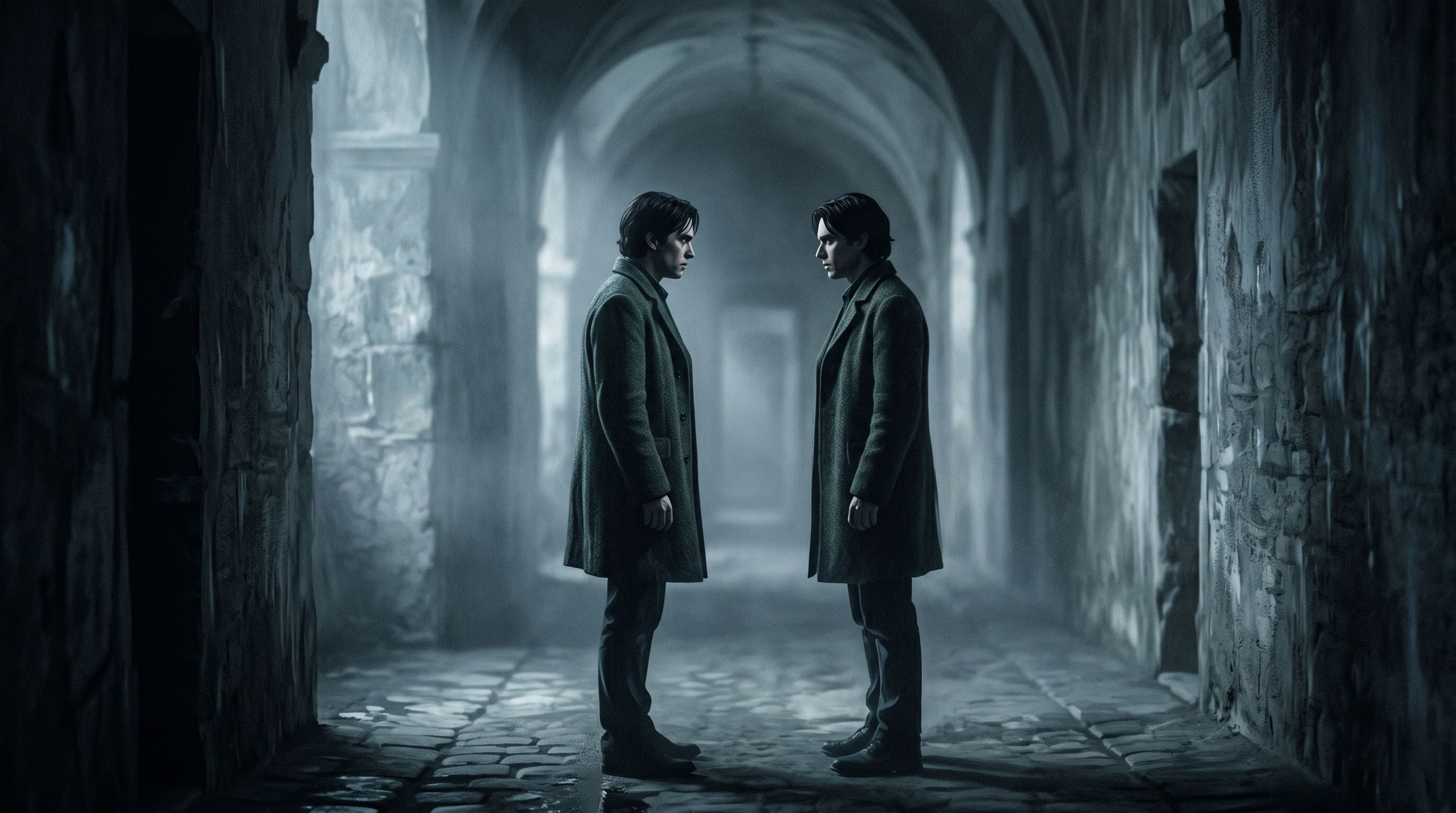
There is a question I often ask dreamers who come to share their fears with me: "What if that person was you?"
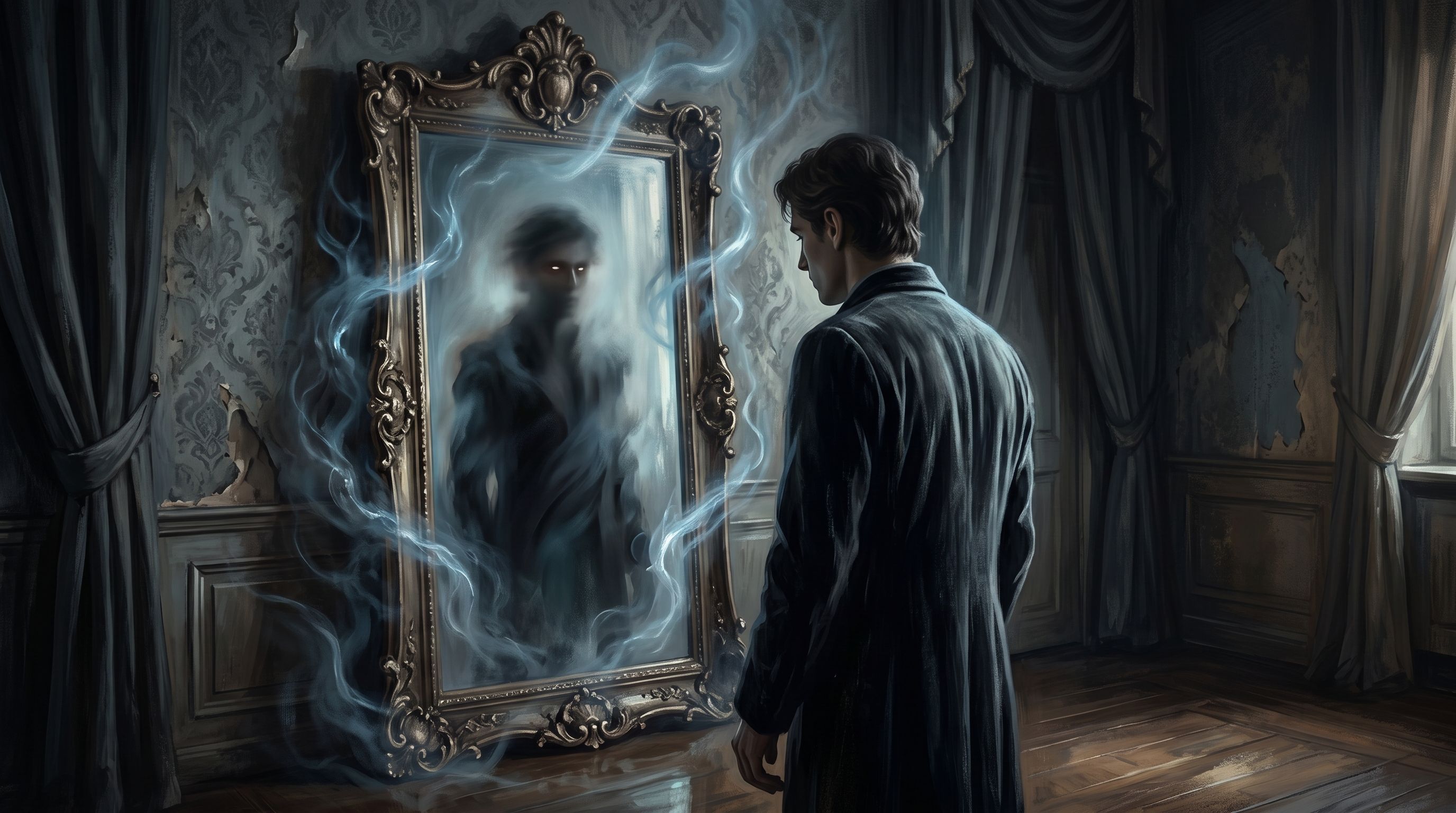
We spend our days wearing social masks. At work, with family, among friends... We adjust our features to please, to reassure, to fit in. The dream of the faceless person often occurs when we have ended up losing ourselves behind these masks. It is the visual expression of a loss of personal landmarks. Do you still recognize yourself in the mirror of your waking life?
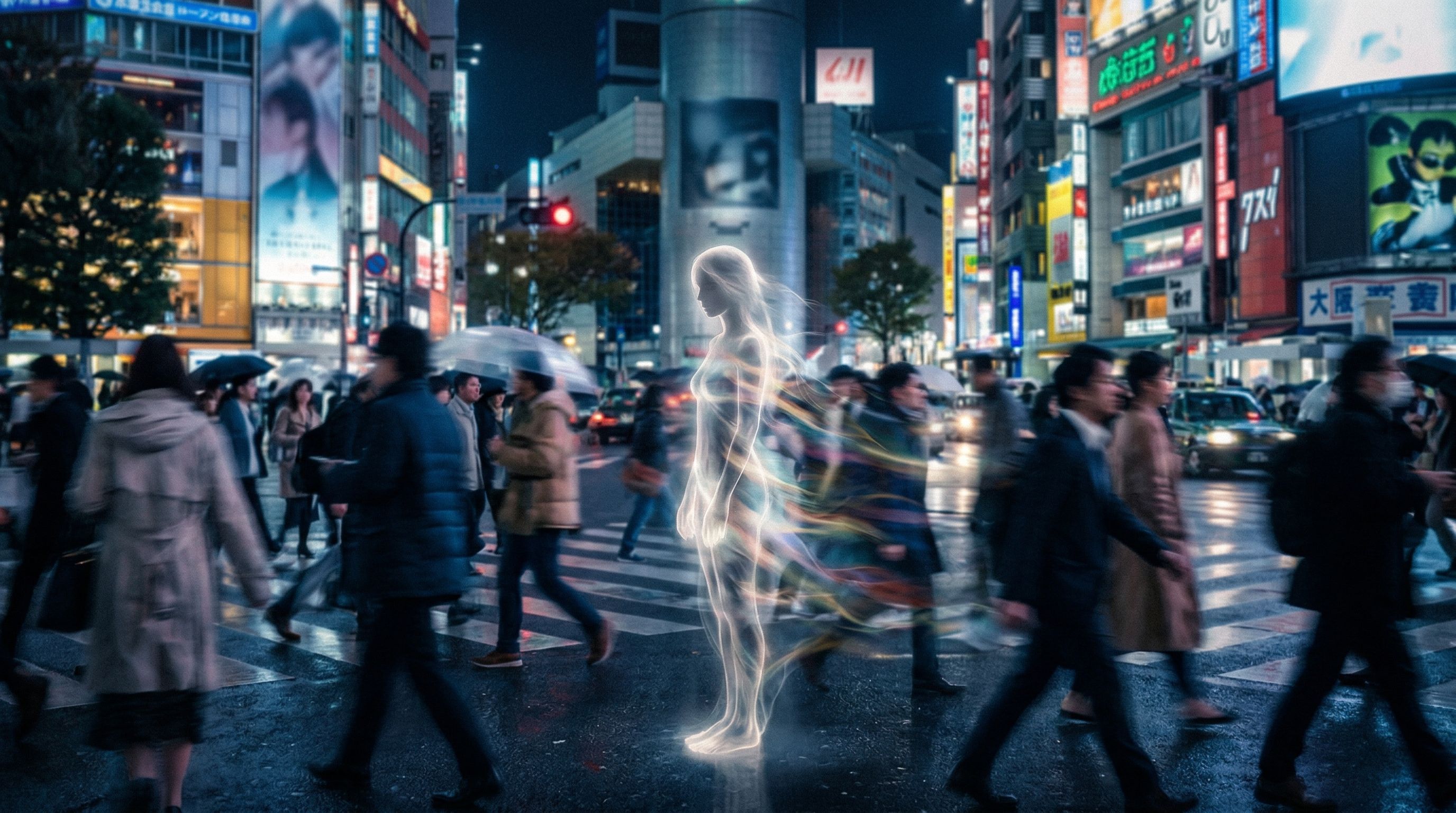
I remember a dreamer, a very bright young man who was overwhelmed by the judgment of others. He constantly saw crowds of smooth-faced people, like storefront mannequins, walking toward him. He was terrified. In reality, it wasn't the crowd that scared him, but his own sense of anonymity among others. He felt interchangeable. His dream was telling him: "Look, if you don't define yourself, you become like them—a mere shadow."
It’s fascinating to see how much the absence of features can create a sense of unease. We are social creatures; we look for eye contact to reassure ourselves. By removing that, your subconscious forces you to seek the truth elsewhere: in intuition, in sensation, and in the energy radiating from the encounter. It is an experience sometimes close to what one feels when facing something monochrome: a reduction of complexity to touch the essential, the root of the feeling.
Between shadow and light: the unknown as potential
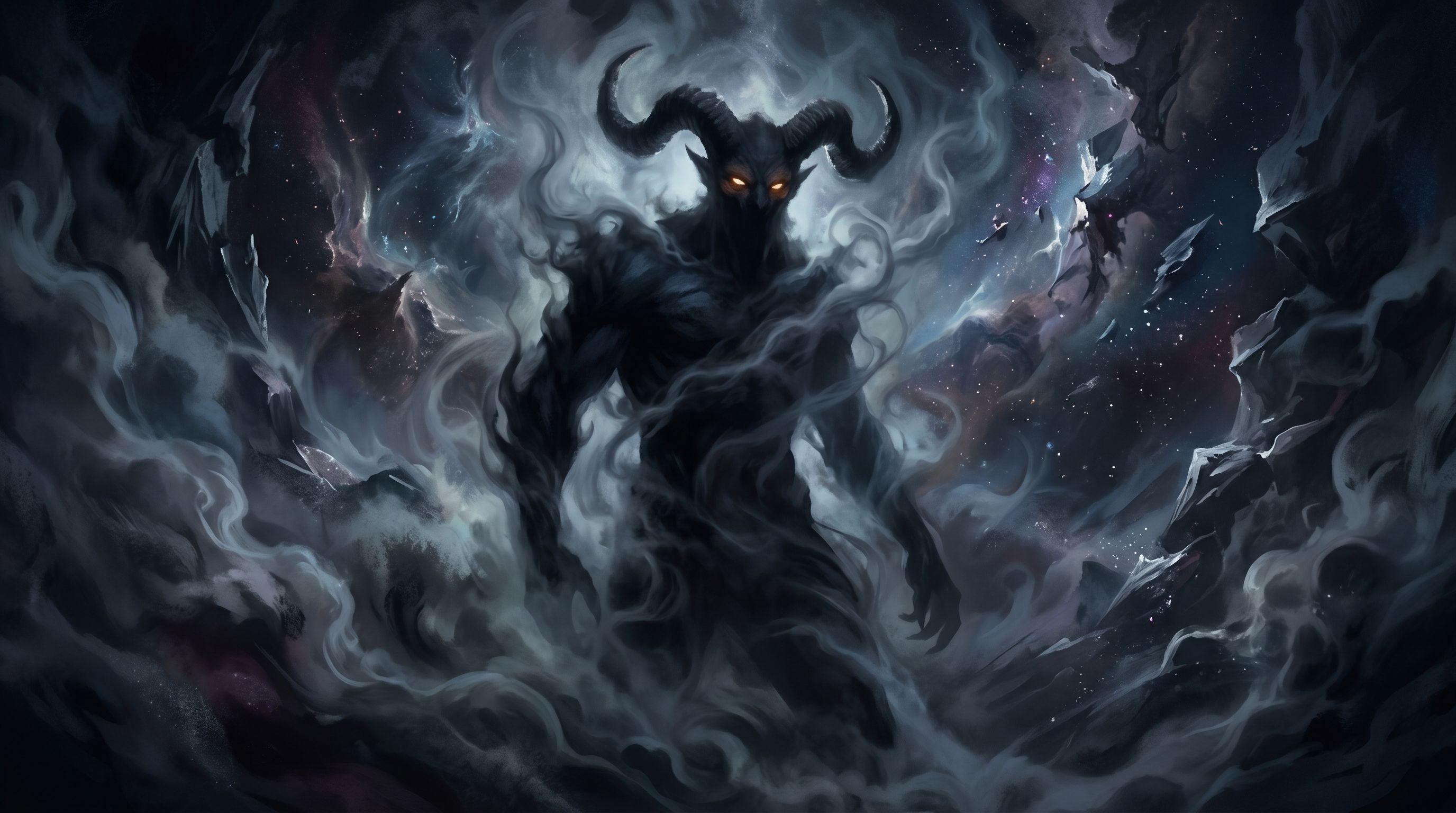
I am not a fan of those dictionaries that say "Dreaming of X means Y." The human psyche is far too vast to be pigeonholed. A faceless person can be the Jungian shadow—that part of ourselves we repress because it disturbs us—just as they can be the "Guide," that inner wisdom that hasn't yet taken a defined form.
If the person in your dream feels benevolent despite their lack of features, perhaps you are developing a new skill or a new facet of your personality. It is a seed that hasn't sprouted yet: it holds all the potential in the world, but it doesn't have a "head" yet.
On the other hand, if this blurred identity feels oppressive, ask yourself what you are running from in reality. Is it a decision you don't dare to make? A truth you refuse to look at? The face is the seat of truth. To have no face is sometimes to refuse to face reality.
Honestly? This symbol remains mysterious even to me, after all these years devouring nightmares. But one thing is certain: the dreamer is never in danger when facing a featureless silhouette. The danger lies in refusing to listen to what this void is trying to tell you. The void is not nothingness; it is a space to be filled by your own understanding, by your own colors.
My dear dreamers, do not fear these misty faces any longer. They are silent messengers, blank pages upon which your future is being written. Learn to observe them without looking away, and you will see that, little by little, the features will begin to appear, revealing a truth you were already carrying within you.
Have you ever noticed the quality of silence in these encounters? When you stand before someone without eyes or lips, the air itself seems to thicken, turning heavy and still. It is a quiet that forces you to listen not with your ears, but with your skin. I once met a dreamer who described touching the smooth, featureless space where a nose should have been; she said it felt like cool porcelain, smelling faintly of old paper and rain. Without a mouth to speak, these figures communicate through a strange, telepathic weight—a sudden flood of knowing that bypasses language entirely. It is a beautiful, albeit eerie, reminder that your mind does not need the mechanics of the physical body to convey deep, resonant truths. When sight fails, your other dream-senses awaken.
I often see these blank faces appearing during great times of transition, when you are shedding an old version of yourself but haven't quite grown into the new one yet. It is the ultimate threshold. You might feel as though you are standing before a book with blank pages, terrified by the vast emptiness of what lies ahead. That faceless traveler you meet on the road isn't a ghost haunting you; they are the clay of your own potential, waiting for you to sculpt their features with your choices. It takes courage to look at an empty canvas and not see a threat, but rather an invitation to draw your own destiny. Why demand a finished portrait when your soul is still happily experimenting with the rough sketches?
Honestly? I sometimes wonder if we try too hard to shrink these dreams into neat psychological boxes. In certain ancient mystical traditions, the formless companion is not a symptom of a fractured ego, but a visitation of the sacred—the Divine, which has no single face because it wears all faces at once. When you find yourself dreaming of crossroads and a featureless guide appears to point the way, perhaps they represent the pure, unconditioned spirit of guidance itself. It is a humbling thought. By stripping away the eyes, the chin, the familiar wrinkles of human identity, your dream allows you to touch something infinite, undisturbed by the fleeting judgments of our waking world.
If this sightless silhouette continues to haunt your nights and you would like to archive these encounters to see how they evolve over time, feel free to record them in your "Dream Characters" journal on Midnight Mind. It is an excellent way to see if, bit by bit, the face of your subconscious finally begins to take shape.