The Mystery of the Waking Statue
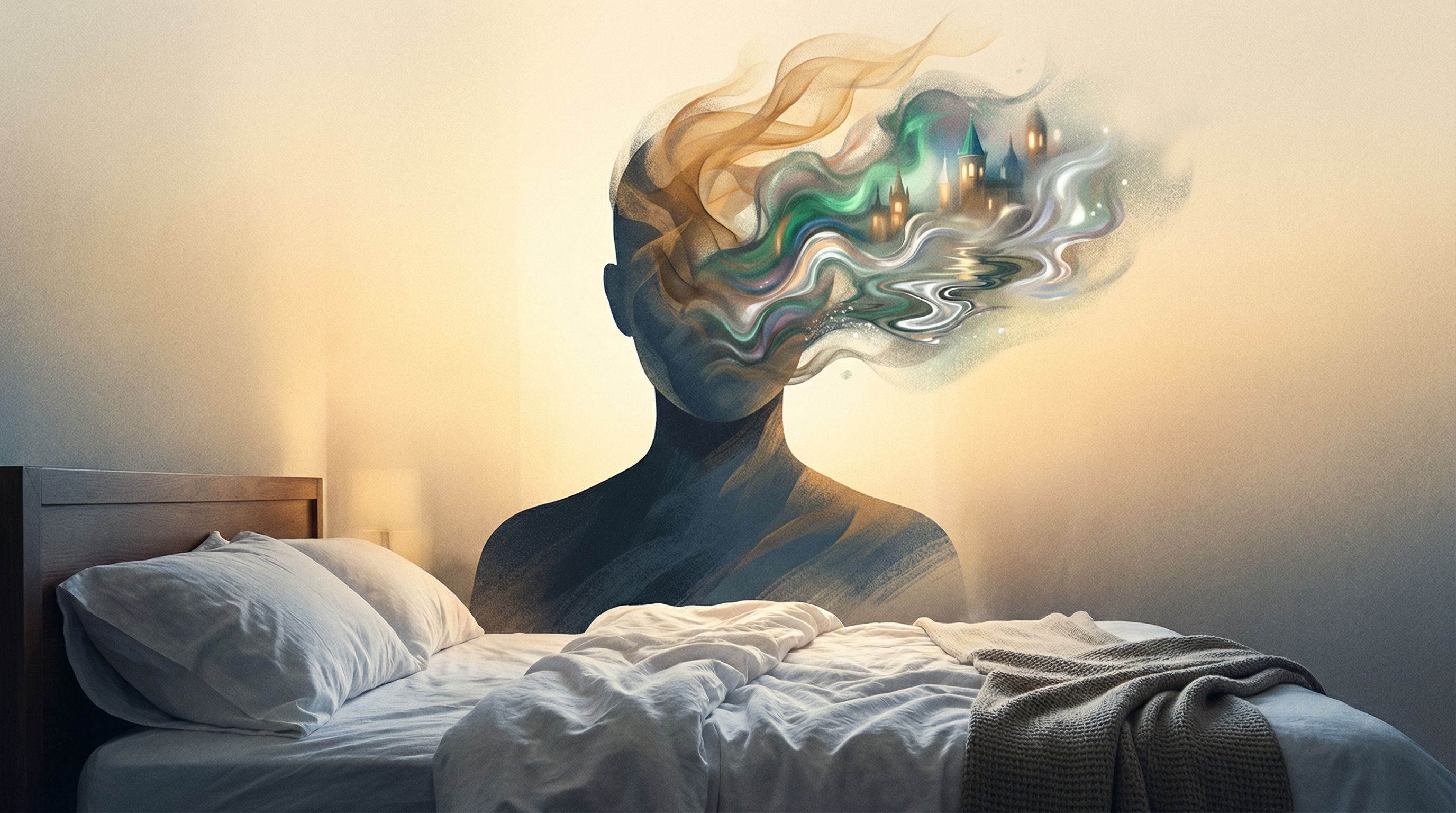
Have you ever felt a heavy weight on your chest, as if an invisible guest were sitting there, watching you breathe? You try to scream, but your throat is tight. You try to bolt upright, but your spine is fused to the mattress.
In my time as a Baku, I have seen many of you struggle with this "Guardian of the Threshold." It is a state that feels ancient and mystical, yet its roots are firmly planted in the delicate chemistry of your brain.
It is easy to let your imagination run wild when you are vulnerable in the dark. Throughout history, cultures have blamed demons, hags, or extraterrestrials. But I am here to tell you that what you are experiencing is a fascinating, albeit startling, biological phenomenon known as persistent atonia.
Some researchers estimate that between 8% and 50% of the global population will encounter this state at least once. It is far more common than you might think, yet because it feels so personal and eerie, we often keep it hidden in the shadows of our minds.
---
The Architecture of the Glitch: REM and Atonia
To understand why your body freezes, you must first understand the physiology of sleep. Your night is divided into cycles, and the most famous of these is REM (Rapid Eye Movement) sleep.
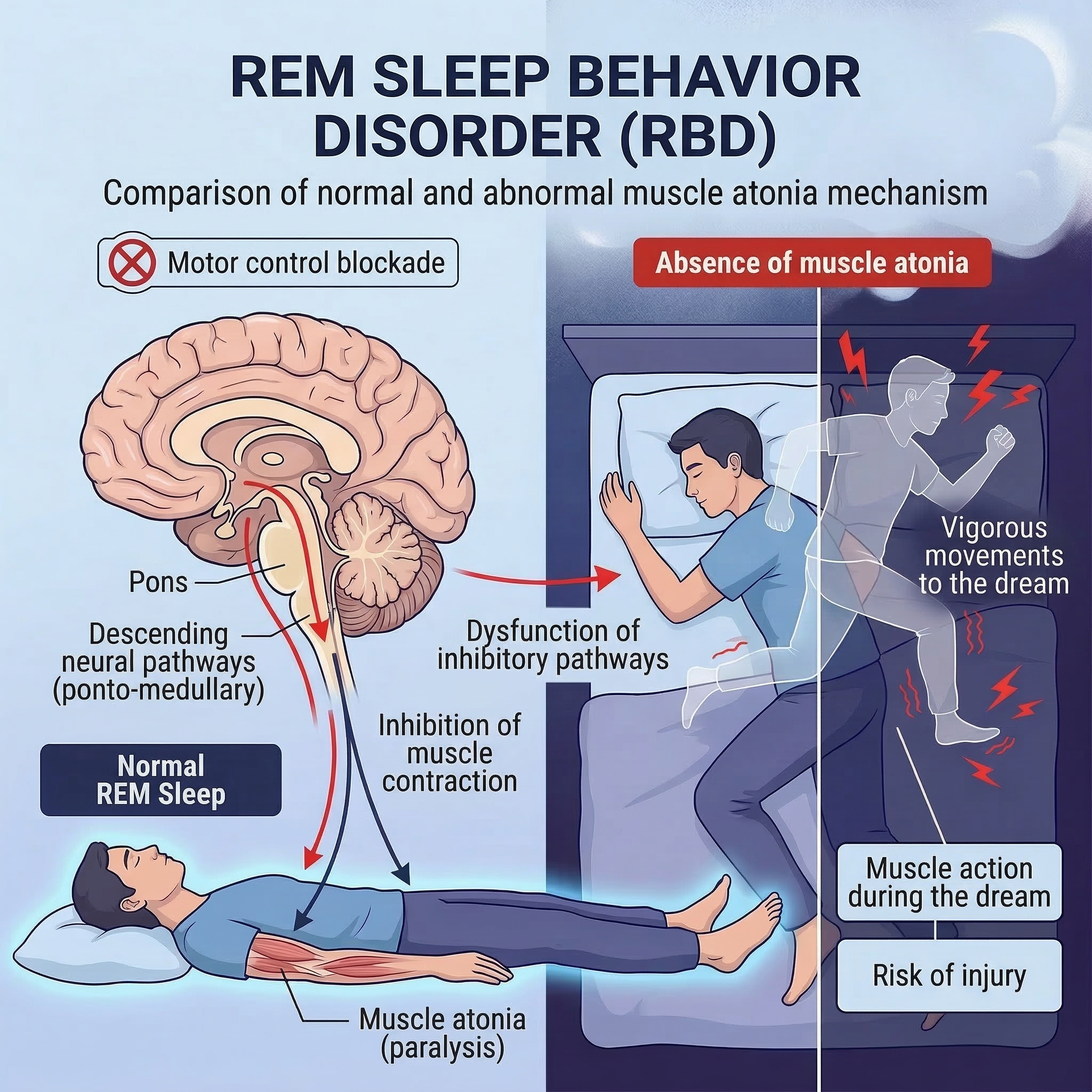
During REM, your brain is incredibly active—almost as active as when you are awake. This is the stage where your most vivid, cinematic dreams occur. To prevent you from physically acting out these dreams—like running from a shadow or jumping off a ledge—your brain sends a signal to paralyze your voluntary muscles.
This state is called muscle atonia. It is a protective mechanism, a biological safety switch. Two neurotransmitters, GABA and glycine, work together to "switch off" the motor neurons in your spinal cord.
Sleep paralysis happens when there is a timing error. Your consciousness "boots up" before the chemical paralysis has worn off. You are awake, but the "handbrake" of REM sleep is still firmly engaged.
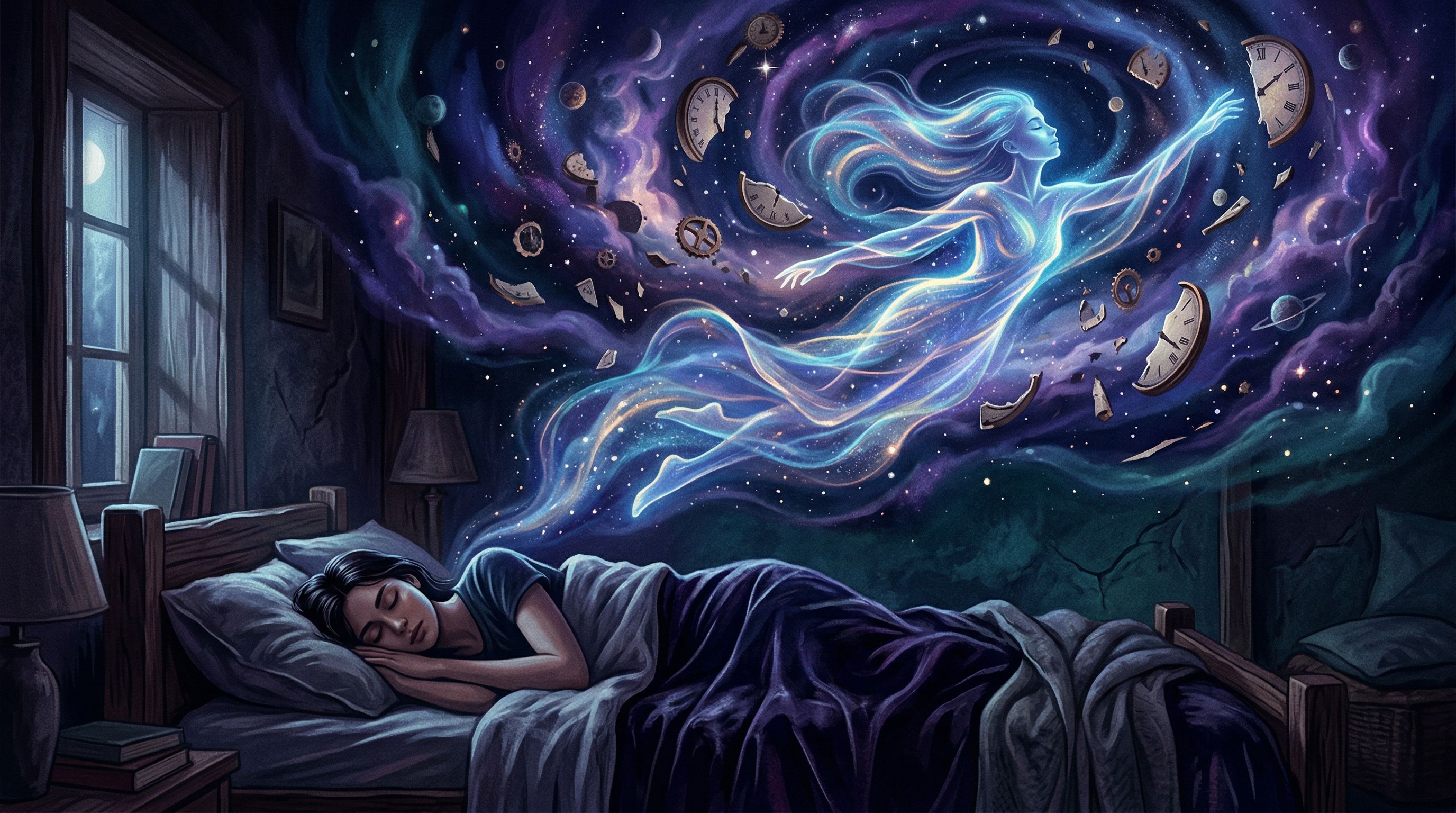
"Think of it as a bridge between two worlds. Your mind has already crossed back into the light of the waking world, but your body is still lingering in the deep waters of the dream realm."
---
The Hallucination Theater: Why We See Shadows
Perhaps the most distressing part of sleep paralysis isn't the immobility itself, but the hallucinations that often accompany it. Statistics suggest that roughly 75% of episodes involve some form of sensory distortion.
When you are in this state, your brain's amygdala—the center for fear and threat detection—is often hyper-vigilant. Because your body cannot move, your brain enters a state of "emergency." It tries to find a reason for the paralysis and the feeling of chest pressure.
If it can't find a real threat, it creates one. This is why so many people report:
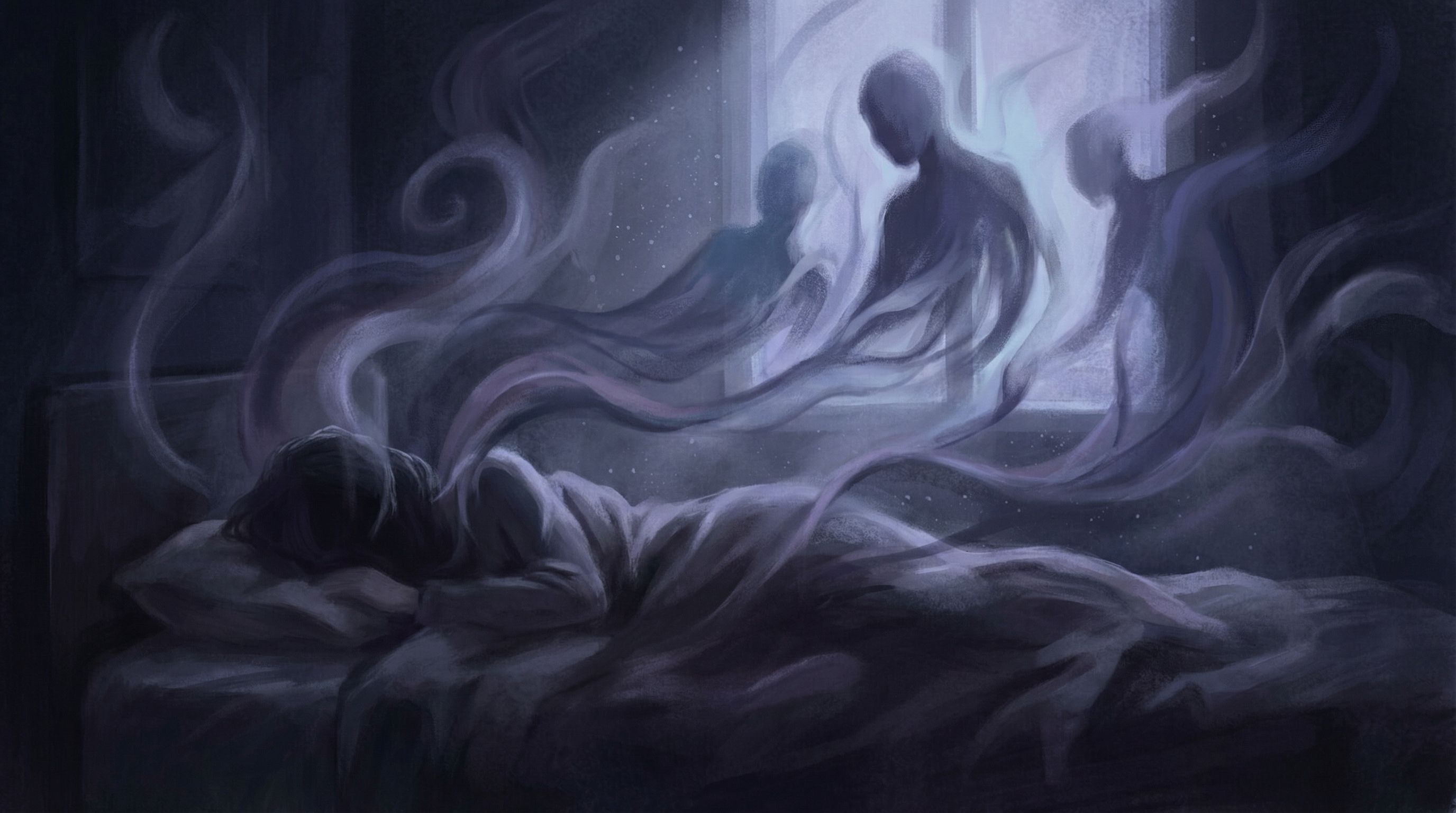
- The Presence: A feeling that someone is standing in the corner of the room or hovering over the bed.
- The Incubus: A sensation of intense pressure on the chest, making it feel difficult to breathe.
- Vestibular-Motor Sensations: A feeling of spinning, floating, or even an out-of-body experience.
These aren't "ghosts." They are the result of your brain still being in "dream mode," projecting internal imagery onto the external world. Your REM (Rapid Eye Movement) sleep mechanisms are simply leaking into your waking reality.
---
Triggers: Why Does It Happen to You?
You might wonder why some nights are peaceful while others are spent in this frozen state. While the science is still evolving, several factors are known to increase the likelihood of a "glitch" in the transition:
1. Sleep Deprivation: This is the most significant trigger. When you are exhausted, your brain may "crash" into REM sleep more quickly or struggle to exit it cleanly. 2. Irregular Schedules: Shift work or jet lag disrupts the circadian rhythm, confusing the brain's timing for atonia. 3. Sleeping Position: Interestingly, research suggests that sleeping on your back (supine position) makes you significantly more likely to experience paralysis. This may be due to the way the tongue or soft palate can slightly interfere with breathing, triggering the brain to wake up abruptly. 4. Stress and Anxiety: A high-cortisol environment keeps the brain in a state of hyper-arousal, making the "mismatch" between mind and body more frequent.
---
Concrete Example: The "Toe-Wiggle" Technique
Imagine you wake up tonight and realize you are paralyzed. Instead of fighting the weight on your chest—which only increases your heart rate and fuels the panic—try a different approach.
Focus all your mental energy on a single, tiny point of your body. Don't try to sit up; that requires too many muscle groups. Instead, try to wiggle just your right big toe. Or, try to blink your eyes rapidly or move your tongue.
By focusing on a small, peripheral muscle, you send a clear signal to your brain that you are awake. This often "breaks" the chemical spell of atonia instantly. Once you feel the paralysis lift, get out of bed for a few minutes, drink some water, and reset your environment before trying to sleep again. This prevents you from falling straight back into another episode.
---
Navigating the Stillness
If you experience sleep paralysis, I want you to remember that you are not broken. You are simply witnessing a rare overlap of two different states of being.
While it feels like a confrontation with something external, it is actually a deeply internal event. It is an invitation to look at your muscle atonia not as a cage, but as a sign that your body is working hard to protect you during your travels through the dream world.
By improving your sleep hygiene—keeping a regular schedule and reducing blue light exposure—you can help your brain synchronize its transitions more smoothly.
---
I often wonder if your physical immobility is simply mirroring a choice you are refusing to make in your waking hours. I remember a young painter who came to me, exhausted, her nights plagued by this heavy stillness. She was torn between a secure, soul-crushing job and the terrifying freedom of her art. Her body froze at night because, during the day, she was completely paralyzed by fear. When you refuse to move forward in your waking life, your unconscious sometimes stages this immobility in the theater of your bed. It is not a punishment; it is a profound pause, a physical manifestation of dreaming of paralysis that forces you to sit with your unresolved transitions. Your spirit is ready to leap, but your fear is pulling the handbrake. What is it that you are holding back?
In my home country, we call this phenomenon Kanashibari—literally meaning to be bound tightly by metal or golden chains. It is an evocative image, isn't it? While modern clinics dismiss it as a mere synchronization error between brain and muscle, I find that clinical coldness deeply unsatisfying. It strips away the sacredness of the threshold. There is an ancient, heavy wisdom in being bound. Sometimes, your mind is racing so fast, burning through anxious thoughts like wildfire, that the only way your soul can catch up is if your body is pinned to the earth. The golden chains are not there to imprison you; they are anchoring you. It is a violent sort of grace, yes, but when you are forced into absolute stillness, you are finally made to listen to the quiet hum of your own survival.
Have you noticed how the air in the room changes right before it happens? It grows impossibly cold, and a strange, metallic static hums in your ears. I have watched these dark shadows hover over you, and honestly, even with all my centuries of devouring nightmares, their presence still holds a touch of mystery for me. Are they truly just misfirings of your hyperactive amygdala, as the neurologists claim? Or is that shadow actually a projection of your own neglected strength—the parts of yourself you have pushed deep into the dark, now demanding to be seen? Perhaps the "monster" on your chest is simply trying to breathe life back into you. Next time the shadow approaches, try not to fight the weight. Soften your gaze, breathe through the tight space, and ask yourself what silent truth is trying to wake up.