The White Silence: An Encounter with Your Inner Self
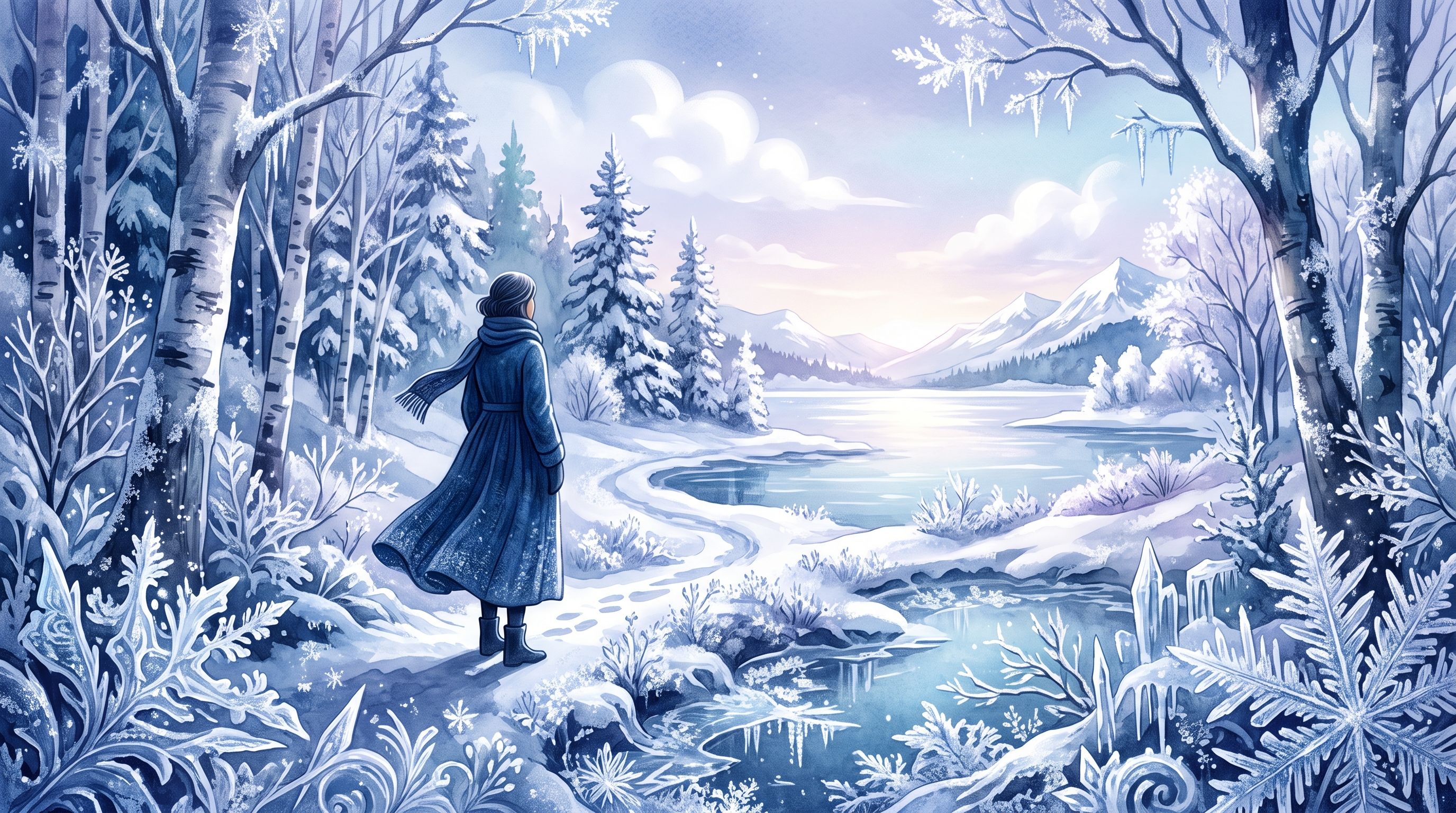
If there is one thing that bothers me in traditional interpretation manuals, it is that pesky habit of saying snow represents a cold heart or the death of feelings. What a lack of poetry! As a Baku who tastes your dreams every night, I see snow as a form of insulation. When you dream of walking in the snow, your mind is creating a buffer zone between you and the external demands of your life.
It is a dream of chosen solitude, even if it feels forced upon you in the moment. In this landscape where everything looks the same, your usual landmarks fade away. Does this frighten you? Often, we feel lost because we are desperately searching for a pre-marked path, while the dream is telling you precisely: "The road is gone; it is up to you to create it."
I remember a dreamer who wandered through an endless blizzard. He was terrified of never finding his home again. While conversing with his subconscious, I understood that he wasn't afraid of the snow, but of the freedom it imposed on him. Without the walls of his routine, he no longer knew who he was. Snow doesn't hide the world; it simplifies it so you can focus on the essentials: your breath and your steps. It is a bit like rising above the landscape to see the world from a new, detached perspective.
---
Following Your Own Steps: The Mystery of Footprints
Look behind you. In your dream, do you turn around to observe your footprints? This is a crucial detail for your introspection. Sometimes, we are surprised to see that our steps are deep, as if we were carrying an invisible weight. Other times, the snow is so hard that we leave no trace at all, which can make us feel like a ghost, as if we have no impact on the world.
To walk in the snow is to face your own accountability. Unlike grass that springs back or dust that blows away, snow holds the memory of your passage. It shows you where you stumbled, where you hesitated, and where you turned away. If you are fleeing something in your dream, your footprints are your worst enemies—they betray you. But if you move forward with intention, they become the evidence of your existence.
Honestly, I find it fascinating—that moment when the dreamer realizes they are the sole master of their trajectory. If the snow is fresh and untouched before you, it means your future is not yet written. It is an invitation to be bold. Do not fear the cold; in the world of dreams, cold is merely a form of lucidity. It is emotion set to rest to make room for reflection.
🌙 The echo of Yume : Snow is the earth’s way of holding its breath. Perhaps your soul is simply asking for the same permission to be still.
---
Use Case: The Architect of the Void
Consider the case of a young woman I'll call Elena. She dreamt repeatedly of walking through a knee-deep snowdrift toward a house that never seemed to get closer. In her waking life, she was overwhelmed by a promotion she wasn't sure she wanted.
The snow wasn't an obstacle; it was her mind's way of slowing her down. By making every step difficult, her subconscious was asking: "Is this destination worth the effort?" When she finally stopped walking in the dream and simply sat in the snow, she felt a wave of relief. The "goal" disappeared, and she realized she just needed rest.
Like a silent vessel navigating the depths, your mind uses these environments to protect you from the pressure of constant progress.
---
The Nuances of the Snowy Blanket
Not all whites are created equal. I am often surprised by the variety of textures you humans invent in your sleep. The consistency of the snow tells a story about your current emotional resilience.
Light, Powdery Snow This is the dream of a gentle transition. You move without effort; the world is a cocoon. It is often the sign of a mind at peace, accepting change without resistance. You are gliding through life's shifts.
Melting or Muddy Snow I must say, this is less pleasant to "eat" as a dream. It is often a sign of confusion, a period where things are neither clear nor finished. You are in between states, perhaps feeling that a situation is losing its purity or becoming "messy."
The Storm (The Blizzard) This represents emotional chaos. You cannot see a yard in front of you. Here, the message is simple: stop walking. Wait for it to pass. In the subconscious, as in nature, forcing your way through a storm is the best way to exhaust yourself for nothing.
---
The Science of the Frozen Mind
While we embrace the mystical, some specialists in sleep science suggest that cold dream environments might be linked to the body's thermoregulation during REM sleep. When your physical temperature drops slightly, your brain may weave that sensation into a narrative of ice and snow.
Furthermore, psychologists often view snow as a "Tabula Rasa"—a blank slate. In terms of cognitive processing, dreaming of a white landscape can be a way for the brain to "defragment" its hard drive, clearing out the visual noise of the day to prepare for new information. It is a literal mental cleaning.
I have often noticed that those who dream of walking through the snow at night are those who possess great inner strength, even if they are unaware of it. Moving through white darkness requires immense faith in your own sensations.
---
A Little Baku Advice for Your Journey
If this dream returns to visit you, do not immediately try to find out "where" you are going. Instead, ask yourself "how" you are walking. Are your steps heavy? Are you barefoot or well-shod?
Your equipment in the dream represents the resources you allow yourself in reality. If you are walking barefoot in the snow, perhaps it is time to be a bit gentler with yourself and protect yourself from outside judgments. You might be leaving yourself too vulnerable to the "cold" opinions of others.
Dreams are not weather forecasts of your misfortune; they are the landscapes your soul draws to help you see yourself more clearly. The snow always ends up melting, but what you learn about your ability to traverse the silence—that will remain engraved within you.
If you want to explore your dreams more deeply, your Baku is waiting for you.
Have you ever noticed the sound your boots make in these cold dreams? That dry, rhythmic crunch of compressed ice crystals. It is often the only noise in an otherwise dead-silent landscape. I have always found this acoustic isolation fascinating; it acts like an auditory mirror. When the external world is completely muted, your subconscious forces you to listen to your own internal metronome—your breath, your heartbeat, the steady friction of your own movement. Some dreamers panic when the ambient noise of their busy life vanishes, feeling as though they have slipped into a state of being alone in the world. But this silence isn't a void to be feared; it is a sanctuary. Your mind is simply lowering the volume of others' expectations so you can finally hear the subtle, quiet thoughts you usually ignore during the noisy day.
In my home country, we often view winter not as the death of nature, but as its deepest breath—a sacred pause where life gathers its strength in secret. Sometimes, as you trudge through these vast, frozen fields of the mind, a silent companion appears. I once watched over a dreamer who, lost in a blinding flurry, suddenly saw the shape of a wild deer standing quietly at the edge of the woods. It did not speak, nor did it lead her back to a familiar road. It simply stood there, a warm, breathing presence in the middle of the frost. In Shinto traditions, these creatures are messengers of the spirits, and in your dreams, they represent your purest instincts. When the snow hides all human landmarks, logic becomes useless. You must stop calculating your route and instead trust your animal nature—the quiet, wordless intuition that knows exactly how to survive the cold.