The Metadream: When Your Mind Plays with Russian Dolls
As I slip my snout into the dreams of humans, I often encounter this strange architecture: a room within a room, a curtain opening onto another curtain. Some dream dictionaries—which I find a bit too dry—will tell you that waking up within a dream is simply a sign of stress or mental fatigue.
Honestly? I find that quite reductive. For me, who has been digesting nightmares for centuries, the metadream—this dream within a dream—is an architectural masterpiece of your subconscious. It is as if your mind were building a stage to show you that you are simultaneously the actor, the set designer, and the audience.
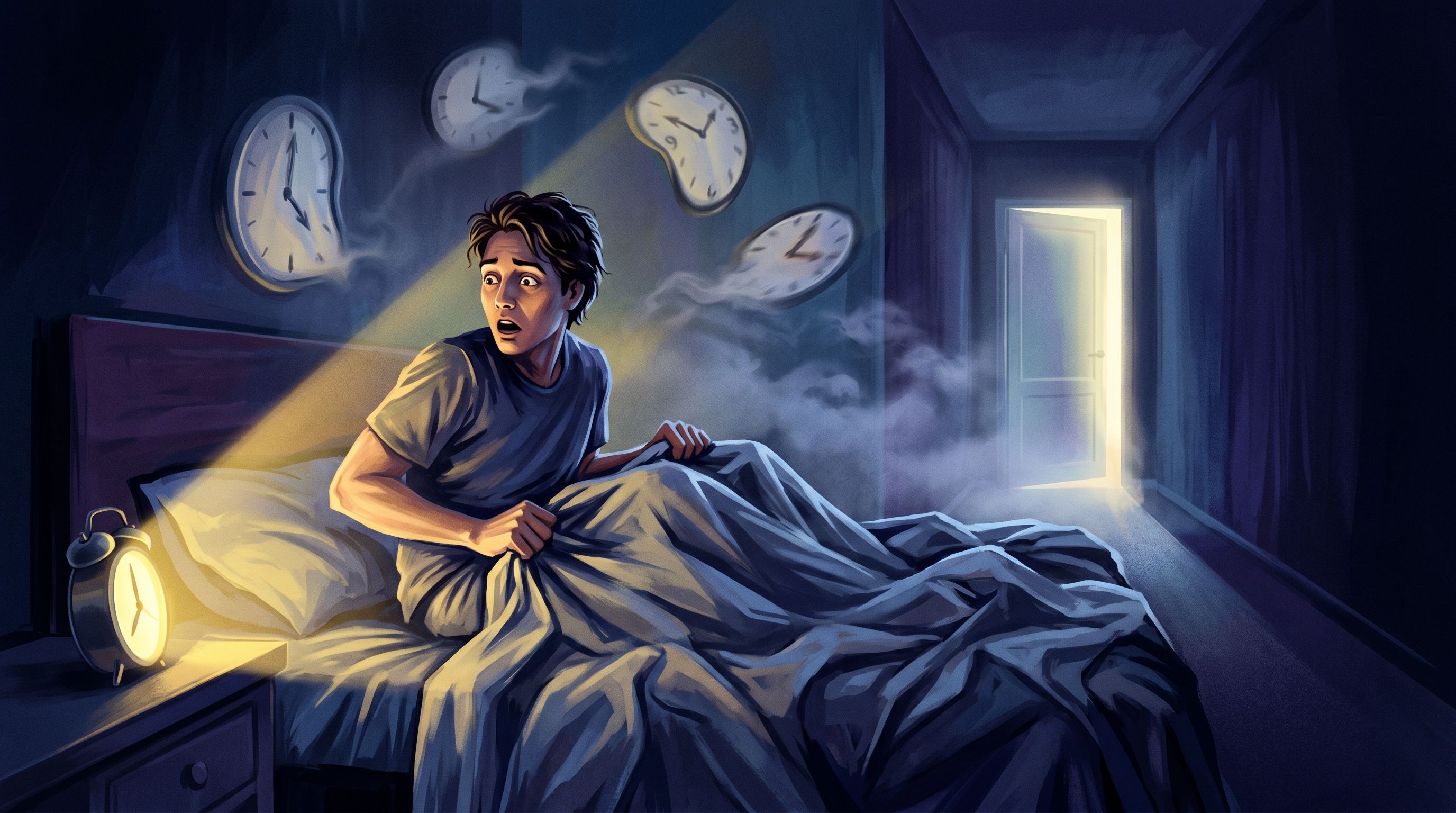
When you experience this fictional awakening, you are in a buffer zone. It is a space of transition. I have often seen dreamers grow frustrated by these infinite loops, where one "wakes up" ten times in a row without ever truly leaving the bed.
But look closely: with each "awakening," something changes. The color of the walls, a missing door, a tiny detail. Your subconscious isn't running in circles for nothing; it is trying to see if you can discern truth from falsehood, the essential from the trivial.
It is a form of recursive reflection of your own consciousness. Sometimes, this happens when you are trying to hide a truth that is too heavy to carry. By creating a "false awakening," your mind gives you the illusion that the problem is solved, that you have returned to normal, while you are actually still processing the information deep down.
It is a bit like How Total Darkness Resets Your Consciousness and Your Dreams: sometimes you have to go deeper into the dark to find the light again.
🌙 Yume's Echo: Your mind is a labyrinth of mirrors; do not look for the exit, seek to understand who is holding the mirror.
The Vertigo of the Threshold: Between Fear and Liberation
I remember a dreamer who told me she "woke up" seven times in the same night. Each time, she got up to go to work, and each time, an absurd detail—a talking cat, a clock without hands—sent her back to her bed. She was exhausted, terrified by the idea of never "returning."
Sincerely, this symbol fascinates me because it touches our primal fear of losing our footing. But if you look at this phenomenon with gentleness, you will see it is exceptional training.
This process is intimately linked to the concept of Awakening in the Dream: Initiating Lucidity Without Forcing the Door. By making you believe you are awake while you are still sleeping, your brain creates a short circuit.
This is the perfect moment to become lucid. If, instead of panicking, you asked yourself: "What if this were still a dream?", you would suddenly take the lead.
In your daily life, this dream can occur when you feel like you are living on autopilot. You get up, you work, you eat, you sleep... but are you truly "awake"?
The dream awakening is a poetic metaphor for your need to emerge from spiritual lethargy. Your soul whispers: "Open your eyes, but for real this time. Do not settle for appearances."
Concrete Example: Breaking the Loop of the False Awakening
Imagine a dreamer who finds himself repeatedly "waking up" in his childhood bedroom. Every time he swings his legs out of bed, the floor feels like cold marble, but the door leads back into the same room. This loop often occurs during periods of intense transition or when one feels trapped in a repetitive life cycle.
Instead of fighting the loop or succumbing to the panic of being "stuck," the dreamer decides to perform a reality check. He looks at his hands. In the dream, his fingers are long and shimmering like silk.
This simple act of grounding—recognizing the dream for what it is—breaks the cycle. The walls of the room dissolve, and he finds himself standing in a field of Gold, finally in control. The dream wasn't a trap; it was a training ground for presence.
Embracing the Layers of Your Intuition
There is a certain melancholy in these dreams, I admit. One feels alone against a world that slips away. But do not forget that I am here, in the folds of your pillow.
These layers of sleep are like the skins of an onion; they protect a tender and precious heart: your intuition. If you dream that you wake up, it is perhaps because you are finally ready to face what you were avoiding just yesterday.
Waking up is not a threat; it is a promise of clarity. Some specialists in sleep psychology suggest that these experiences occur when the brain is in a state of "hyper-arousal" during REM sleep, but I prefer to see it as your mind's way of asking you to pay attention to the details.
Instead of struggling to leave the dream, next time, try to simply sit within it. Look at your hands. Observe the light. Often, the loop stops as soon as you accept being there, fully present, even within the illusion.
That is where the magic happens, where the nightmare evaporates, and I can finally savor the sweetness of your peaceful thoughts.
🌙 The echo of Yume : The truth is not found at the end of the tunnel, but in the light that you carry while crossing it.
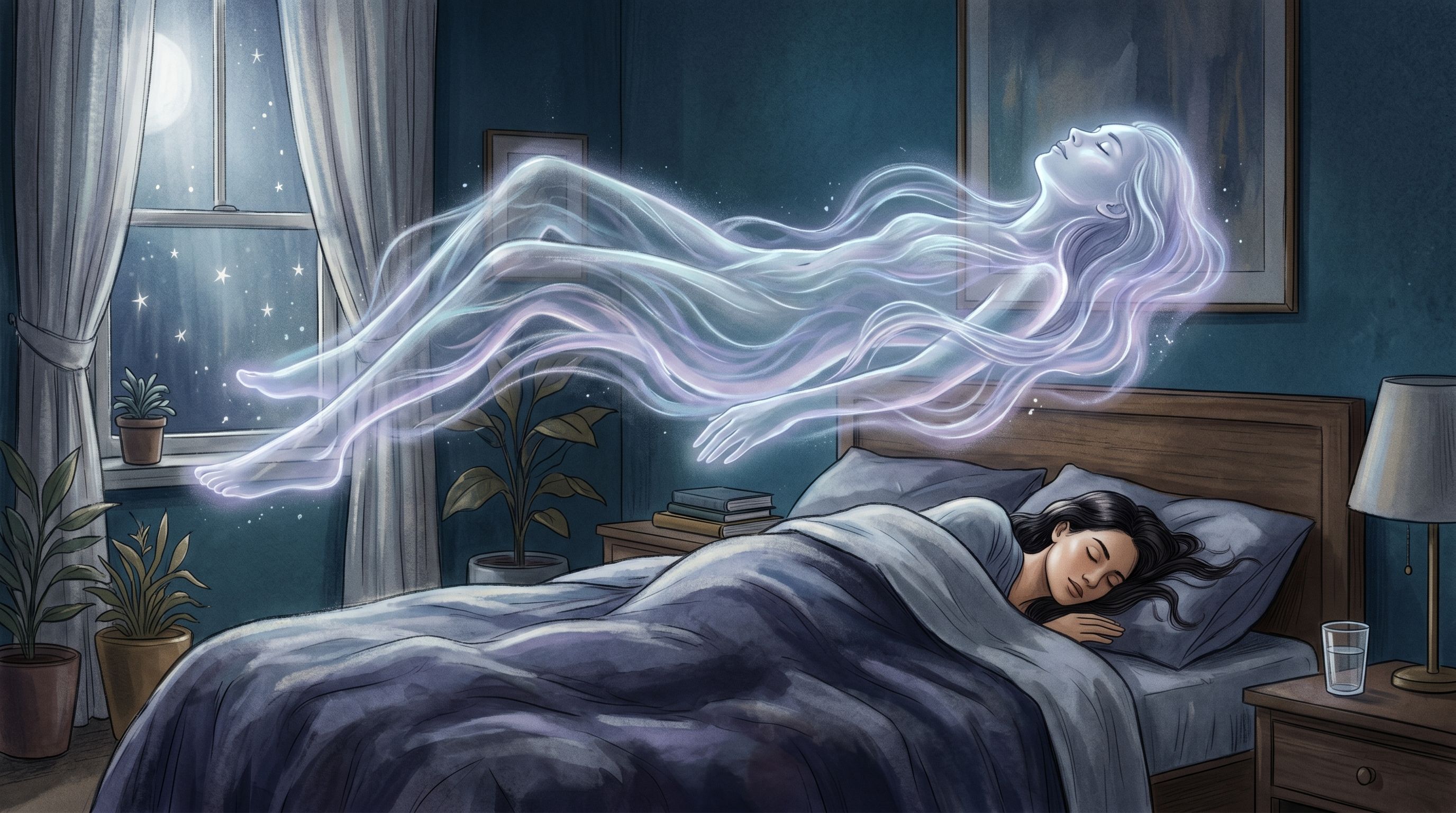
Have you ever noticed how heavy your dream legs feel when you try to stand up during these false awakenings? It is a peculiar sensation, like wading through warm honey. This sensory friction is actually your physical body whispering to your dream body, a quiet tug-of-war between two states of existence. I have always found this friction beautiful. Your mind is trying to reconcile the physical weight of your sleeping muscles with the weightless freedom of your dreaming self. In some spiritual traditions, this is the moment the soul hovers just inches above the flesh. It shares a profound energetic boundary with dreaming of seeing yourself sleeping, where the division between the observer and the observed completely dissolves. If you experience this weight, do not fight it. It is merely your anchor keeping you safe while your spirit wanders.
I sometimes think of the ancient sages who spent their lives trying to blur the line between waking and dreaming. To them, waking up inside a dream was not a cognitive glitch, but a sacred milestone. They understood that our daytime reality is often just another layer of sleep, thick with illusions and social scripts. When you wake up within your sleep, you are touching the very essence of dreaming of meditation—a state of pure, detached observation where the ego temporarily loses its grip. Honestly? I get a bit tired of modern psychology trying to diagnose these loops as mere stress reactions. What if they are invitations to question the solidity of your daytime life? Perhaps your spirit is simply asking: when you finally open your physical eyes tomorrow, will you actually be awake?
I once watched over a young painter who kept waking up in an empty, white-walled gallery. Every time she opened a door to escape, she found herself back on the gallery floor, staring at a blank canvas. She was in the middle of a painful career transition, terrified of making the wrong choice in her waking life. Her mind created this loop to show her that running away from the canvas only brought her back to it. Sometimes, these recursive loops act as emotional pressure cookers. They trap you in a specific room because there is a feeling, a grief, or a truth in that space you are desperately trying to bypass. The loop will only break when you stop looking for the door and instead look at what is right in front of you, waiting to be felt.
Do not be afraid of the depths of your own mind. You are far more vast than what your open eyes can perceive. If these nightly labyrinths continue to haunt or question you, your Baku is here to help you decipher them within the Midnight Mind app.
Sleep in peace, little dreamer, I am watching over your shadows.