The Necessary Rain: When the Soul Does Its Laundry
I find it fascinating how much you tend to fear your own vulnerability. As a Baku, one who devours even the darkest nightmares, I see tears in a dream as a sign that the "meal" is finished. It is as if, after a long period of emotional drought, the clouds have finally burst within your mind.
In the architecture of your sleep, water in all its forms represents your emotional landscape. Whether you are navigating the deep waters of the ocean or watching the steady beam of a lighthouse on a stormy night, water reflects your inner state. Tears are the purest form of this water because they come directly from your body.
To dream of crying is often to allow yourself in sleep what you forbid yourself during the day. You know that "brave face" you put on to stay strong? Your subconscious doesn't care for it. It sees the pressure building up in the hidden corners of your psyche.
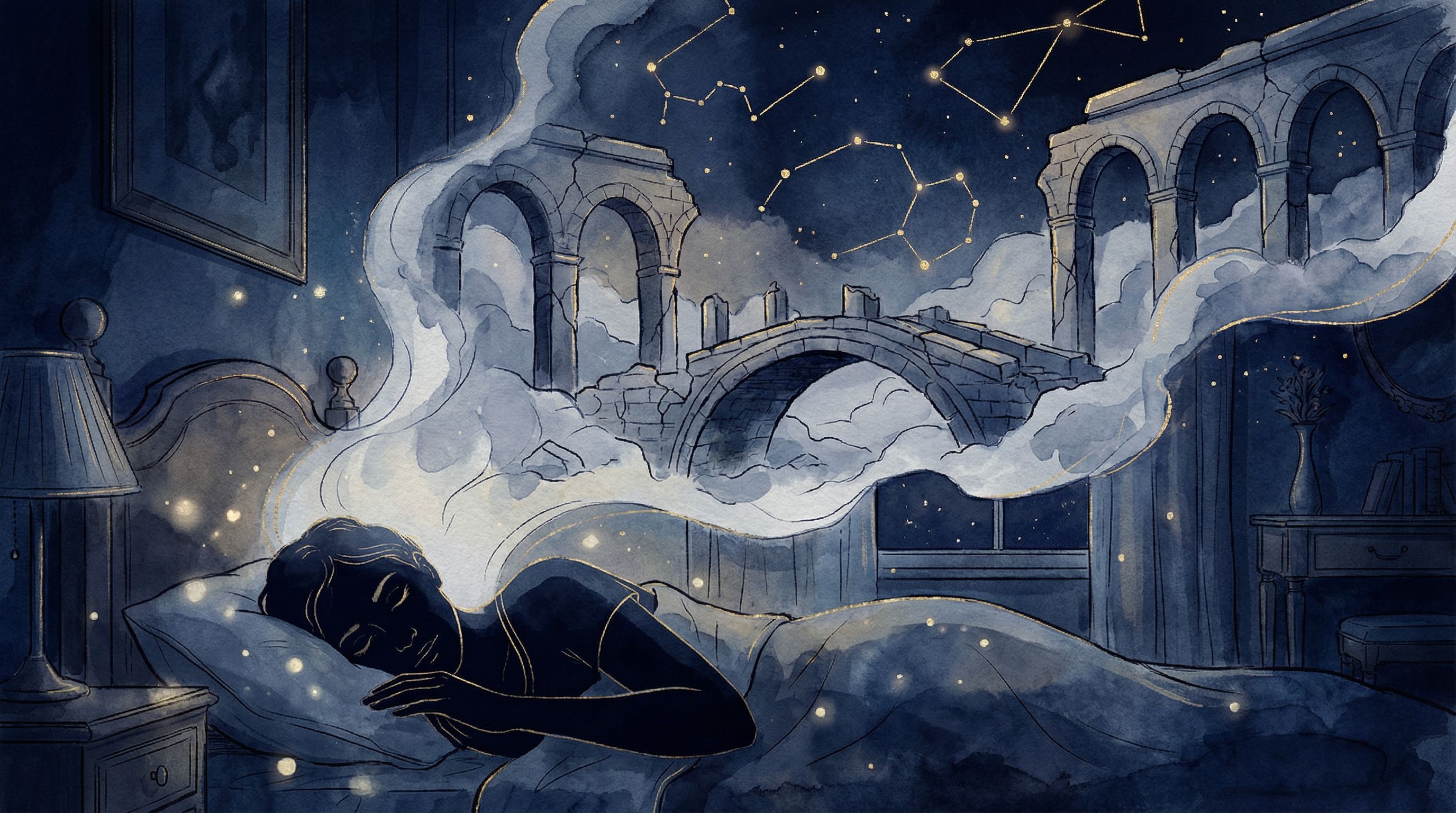
Some specialists in the field of sleep psychology suggest that REM sleep—the stage where most dreaming occurs—acts as a sort of "overnight therapy." During this time, your brain processes difficult experiences, effectively stripping away the sharpest edges of your pain. When you cry in a dream, you are participating in this ancient, biological ritual of release.
---
The Nuances of Salt: What Your Tears Are Telling You
Not all tears taste the same, and I am not just talking about the saltiness I sometimes perceive in the ether of dreams. Depending on the context of your vision, the message changes radically. Sometimes, you don't cry out of sadness, but from pure beauty, relief, or a sudden realization.
Crying Alone or Before Others
If you see yourself crying in a corner where no one can see you, it may be that you feel your feelings aren't "valid" or that they don't interest anyone in your waking life. It is a form of inner loneliness that you must look at directly.
Conversely, crying in front of someone in a dream is an act of immense trust. Your subconscious is asking: "Are you ready to show your truth to this person?" It is an invitation to vulnerability.
The Silence of Weeping
Have you ever had that dream where you cry without making a sound? It is a feeling of suffocation, isn't it? This often happens when you feel powerless in the face of a situation. Your voice is cut off, but your eyes speak for you. It is the cry of the heart that cannot find words in the human dictionary.
Strange or Intense Tears
Sometimes a dream becomes more dramatic. Tears of blood, for example, are often perceived as frightening. Yet, they generally symbolize an emotional sacrifice or a sense of vitality slipping away. It isn't a prediction of misfortune, but a warning light: you are exhausting yourself trying to carry a burden that isn't yours.
Like the sleek, resilient skin of a seal that allows it to glide through freezing waters, you must find a way to protect your essence while remaining fluid. It might be time to take that form of emotional retreat you so desperately need.
---
A Concrete Example: The Silent Theater
Imagine you are standing in a vast, empty theater. You are on stage, and though there is no audience, you begin to weep uncontrollably. In the dream, you aren't crying because of a script, but because the silence of the room finally allows you to hear your own heart.
This is a classic "use case" of the subconscious providing a safe space. You aren't being judged by the world; you are simply witnessing your own truth. When you wake up, that theater remains a part of you—a place where you finally gave yourself permission to feel. The "performance" of your daily life is paused, and the raw emotion is finally allowed to take center stage.
---
Why I Don't Believe in Simple Dream Dictionaries
People often ask me if crying in a dream announces a death or bad luck. Honestly, these rigid interpretations bother me. They are like cages for the night birds that are your dreams. Every tear is unique. It belongs to your story, your history, and your specific joys.
🌙 Yume's Echo: Tears are just the soul's way of exhaling when the words have become too heavy to carry.
If you dream of crying because you lost an insignificant object, it is not the object that matters—it is the feeling of loss. The subconscious uses substitute symbols. The tear is the common denominator, the raw expression of an overflow.
I prefer to see a dream of tears as a metamorphosis. Ice melts to become a river once more. The rigidity of your certainties or your blocks liquefies to allow you to flow through your own life again. We cannot move forward if we are petrified by unexpressed emotions.
---
Welcoming the Morning Dew
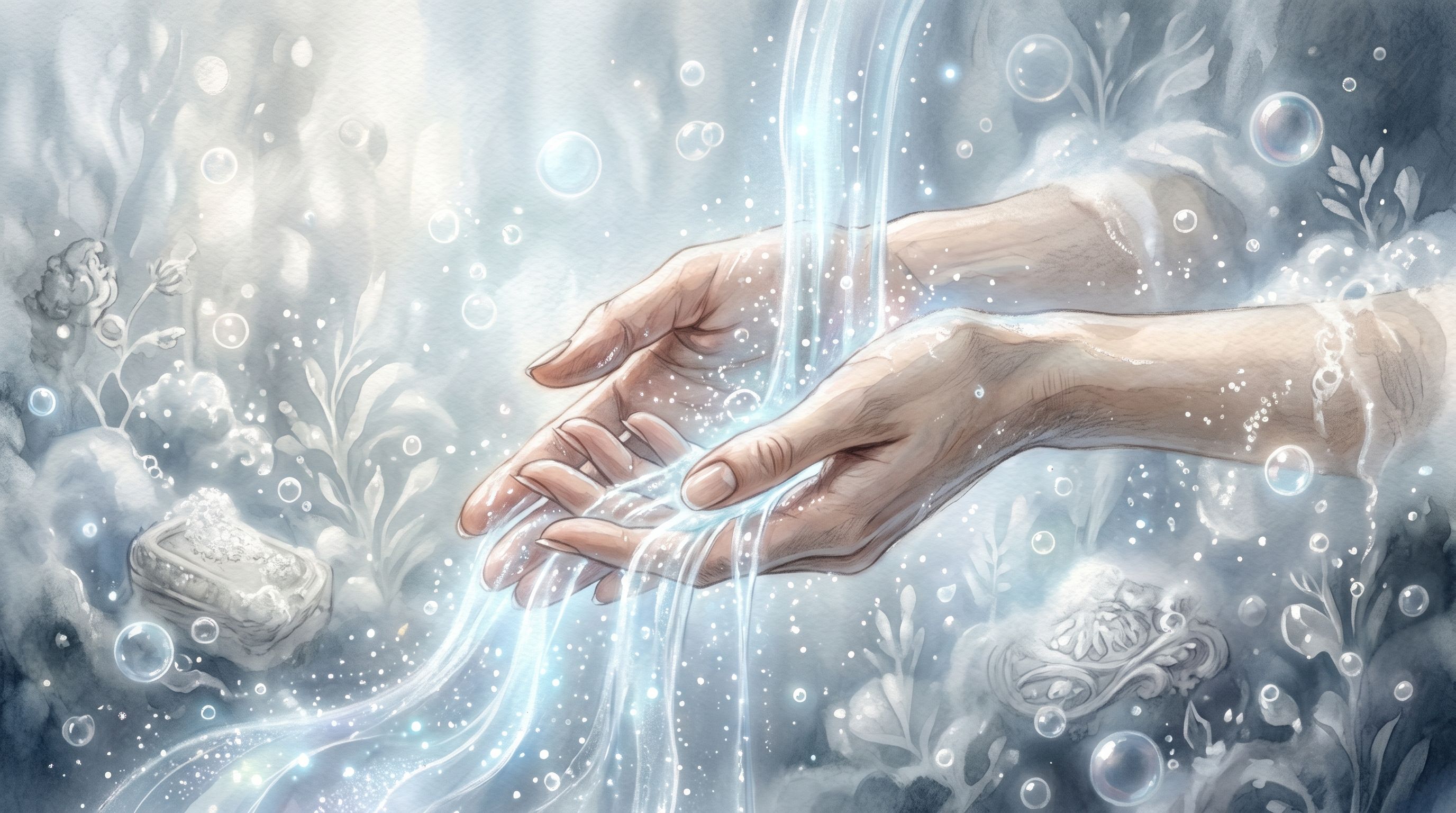
If you wake up with a sense of emptiness after crying in a dream, do not rush to fill that void with noise or work. Stay in that clarity for a moment. Tears carry away the dust that was preventing you from seeing clearly.
I encourage you to stop seeing dream-born sadness as an enemy. It is often the servant of a future joy, the one who sweeps the room before the party begins. Your dreams are your most faithful allies, and even when they make you cry, it is only so you can smile more brightly tomorrow.
Take care of your nights. They are far richer than what your open eyes can perceive. If you want to explore your dreams more deeply, your Baku is waiting for you.
Have you ever woken up with your eyelashes genuinely damp, only to find the sadness itself has already evaporated? It is a strange, liminal state. Your body has carried out the physical command of your dream, yet your conscious mind remains empty of the context. I honestly find it tedious when dream interpreters rush to label this as a sign of repressed depression. Sometimes, it is simply your body's beautiful, clumsy way of catching up with the soul's release. It is a biological echo, a gentle reminder that finding your path to emotional healing doesn't always feel like a sudden burst of sunlight; sometimes, it feels like the quiet, cool dew of dawn. You don't need to search your memories for a hidden tragedy to justify those wet cheeks. Just let the moisture dry in the morning air, knowing that whatever needed to leave your spirit has found its way out through the salt.
I once met a dreamer who came to me deeply disturbed because she had spent an entire night weeping over a spilled bowl of soup in her dream. She was embarrassed, convinced it was a sign of emotional fragility. But dreams are rarely about the soup. Her grief was actually a misplaced mourning for a friendship she had let slip away years prior—a quiet regret she had buried under a mountain of daily tasks. It made me think about how we often deny ourselves the grace of looking back. Crying over the trivial in your sleep is often a detour your mind takes to avoid a direct confrontation with old ghosts. It is a backdoor toward seeking a sense of closure, allowing you to grieve the small loss because the larger one still feels too massive to carry. Do not mock your dream-self for crying over broken cups or lost keys. Your soul is simply finding a shape it can manage.
What happens when the tears in your dream do not belong to you, but to someone who has caused you pain? It is incredibly easy to misinterpret this as a desire for revenge, a petty subconscious wish to see your enemies suffer. I strongly disagree with this simplistic view. When you witness an adversary weeping in the dark theater of your mind, your sleeping ego is often dropping its armor. It is a moment of profound projection: your subconscious is dressing your own unexpressed grief in the clothes of the one who broke you, because it is safer to pity them than to admit your own fracture. Or perhaps it is a quiet acknowledgment that pain is a shared language, growing silently in the background of our lives, much like the roots of a weeping willow stretching deep into the damp earth. To see another cry is to recognize that we are all made of the same vulnerable water.