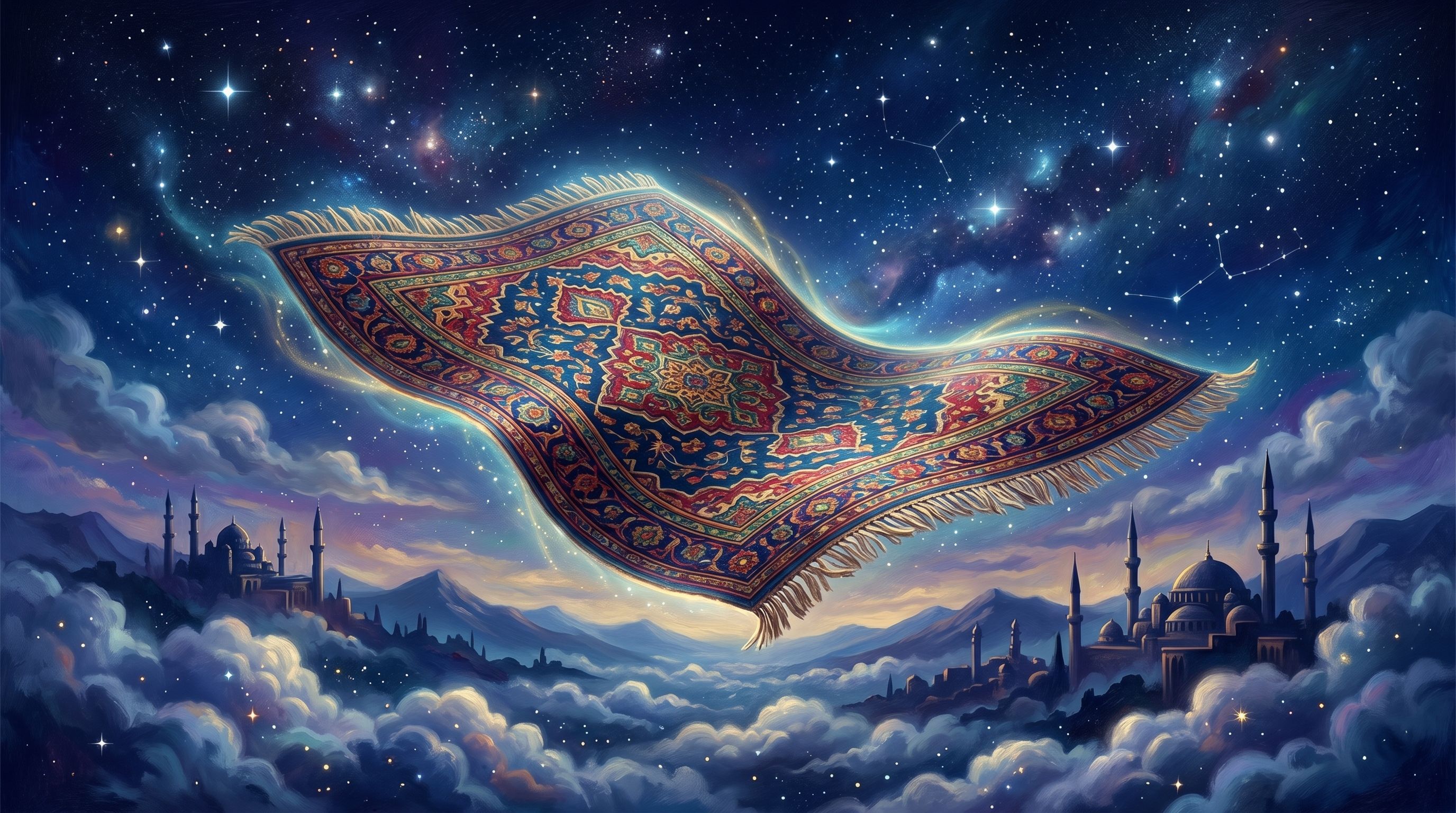
Ah, flying... Who hasn't felt that sweet intoxication, that feeling of absolute lightness, of infinite freedom, even for the space of a dream? It is perhaps one of the most universally shared dreams, and yet, its meaning is far from uniform. Every wingbeat, every ascent into the air carries a unique story, yours. So, ready to spread your dream wings and explore what this dream might be whispering to you?
Flight, in the language of dreams, is often associated with a feeling of liberation. Perhaps you feel hindered in your waking life? A prisoner of responsibilities, routines, or relationships that prevent you from fully blossoming? The dream of flying could then be a safety valve, an outlet where you can finally cast off these chains and taste a long-desired freedom. It is the symbol of an aspiration to exceed your limits, to break the boundaries you impose on yourself. It is a desire to say goodbye to the weight of constraints.
But flying is also a matter of control. Do you fly with ease, gliding gracefully over landscapes? Or do you struggle to stay in the air, fighting against the wind, fearing at every moment that you will crash? The way you fly in your dream can give you precious clues about how you handle the challenges of your life. A controlled flight can reflect confidence in your abilities, an assurance that you can overcome obstacles. A chaotic flight, on the other hand, can indicate a fear of losing control, a lack of self-confidence.
Personally, I find that flying also symbolizes a need for perspective. When caught in the whirlwind of daily life, it is easy to lose sight of the big picture. The dream of flying can invite you to gain height, to move away from insignificant details and consider your life as a whole. It is an invitation to adopt a fresh look, to see things from a different angle. There is a dreamer who told me they finally understood which direction to take in their career after a particularly clear and soothing dream where they glided over a forest.
The context, of course, plays a crucial role in interpretation. What are you flying with? Magnificent, luminous wings? Or are you floating without anything, carried by an invisible force? Are you flying alone, or accompanied? Is the landscape you cross familiar, strange, threatening? Every detail is a piece of the puzzle, a nuance that can illuminate the deep meaning of your dream. If you spot a waterfall, the meaning may be linked to strong emotions.
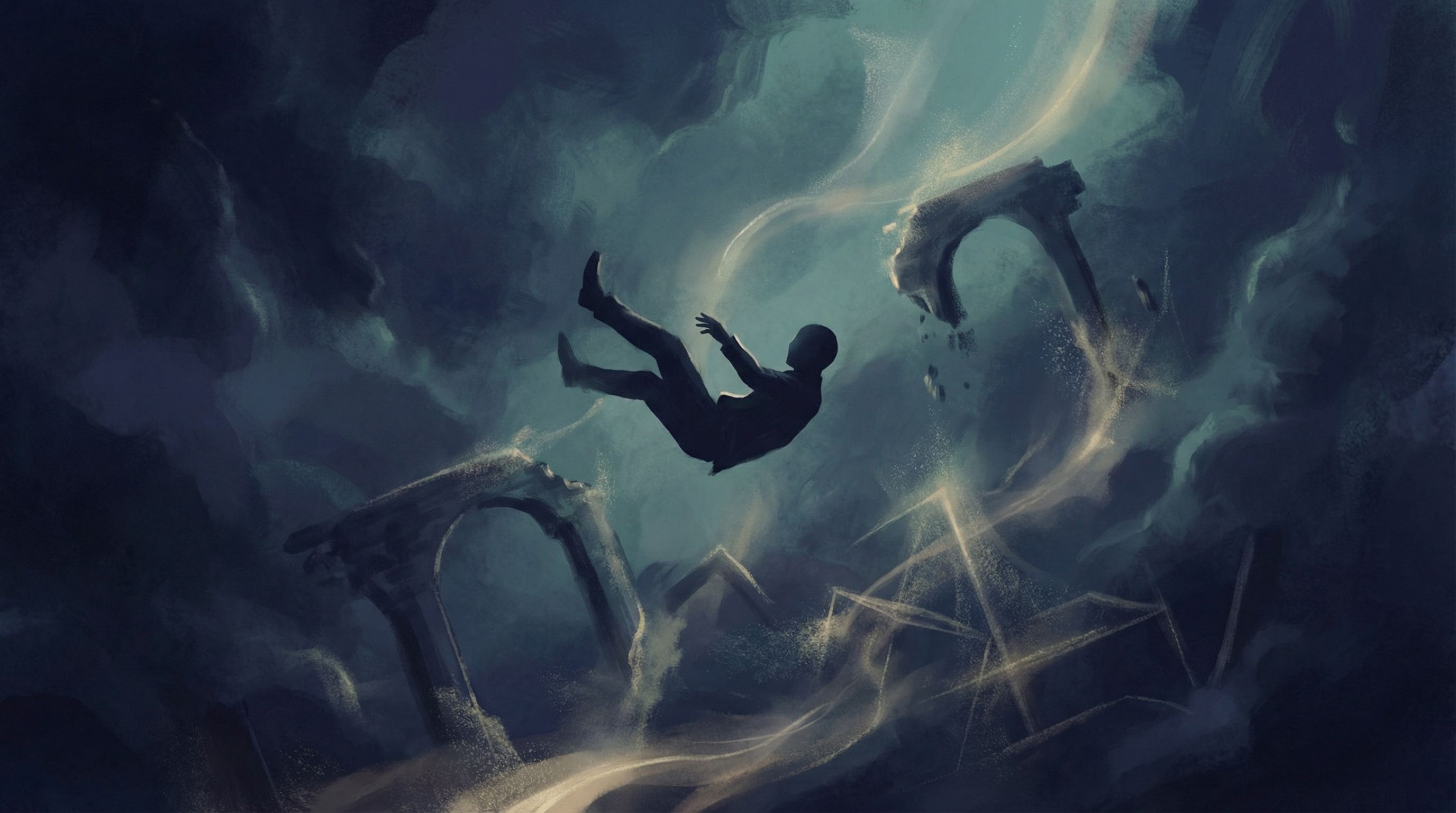
That cold shiver running down your spine. That sensation of losing your footing, the ground giving way...
Dreaming of flying close to the ground, for example, may suggest that you are taking flight, but you still need time to gain confidence. Flying very high, on the contrary, can reflect great ambition, a desire to surpass yourself and reach heights. A dream where you fly toward the sun could symbolize a quest for spirituality, an aspiration for light and knowledge. And dreaming of floating gently, carried by a light breeze, can simply mean that you need rest, calm, and serenity.
It tires me to see these simplistic interpretations everywhere, these "dream dictionaries" that give you ONE single meaning for each symbol. The truth is that the meaning of a dream is deeply personal and intimately linked to your history, your emotions, and your experiences.
So, my friend, I invite you to listen to your heart, to connect to your own feelings. Do not look for ready-made answers, but let yourself be guided by your intuition. Dreams are messengers, not riddles to be solved. They are windows open to your unconscious, reflections of your soul.
Have you ever paid attention to the temperature of the air when you lift off? In my long nights of watching over sleeping souls, I’ve noticed that flying is rarely just a visual experience; it is deeply tactile. There is a precise, thrilling moment when the heavy law of gravity dissolves, and your skin registers the cool, thin atmosphere of the upper air. Sometimes, this weightlessness is your body's poetic way of processing the paralysis of sleep itself. It is a gentle negotiation between your heavy, resting limbs on the mattress and your mind's sudden realization that it is no longer bound by flesh. If you pay close attention, you might even hear the low hum of the wind, a sound not unlike the rustle of dry leaves or soft, distant voices. It is your senses waking up to a different kind of reality, reminding you that your spirit knows how to occupy space without taking up any weight at all.
Sincerely, this effortless drift has fascinated me for centuries. In ancient Daoist teachings, they spoke of xiaoyao, a state of wandering without destination, of riding the clouds not because you have powerful wings, but because you have made yourself completely empty. I love this perspective. Too often, we treat flying in dreams as an act of sheer willpower—as if you have to strain your muscles and fight the air to stay aloft, like a clumsy machine built for the skies. But the most profound flights are those where you do absolutely nothing. You simply allow the dream-world to support you. It is a beautiful lesson in wu wei, the art of effortless action. When you stop fighting to stay up and instead let the currents carry you, you realize that peace doesn’t come from constant effort, but from trusting the air beneath you.
Yet, I must offer a word of caution, or perhaps just a gentle doubt. Sometimes, our flight is not an act of liberation, but a beautiful, desperate escape. I am not a fan of assuming every flight is a triumph. Are you flying because the ground has become too painful to walk on? When life becomes overwhelming, your mind can choose to lift you far above the wreckage, wrapping you in a cozy numbness where nothing can touch you. It is a form of emotional detachment, a survival mechanism that keeps you safe but also keeps you distant. If you find yourself constantly looking down at your waking life from a cold, detached altitude, ask yourself what you might be running from. Flying can be a sanctuary, but if we never land, we can never tend to the gardens—or the ruins—we left behind on the earth.
I once met a dreamer who was deeply frustrated because she could never fly higher than three inches off the ground. She felt it was a failure, a sign of her own limited imagination or lack of spiritual depth. Honestly? This symbol remained a mystery to me for a while, too. But as we listened to her life story, a different picture emerged. She was going through a quiet, fragile period of rebuilding her life after a great loss. That low, cautious hovering wasn't a failure at all; it was a beautiful compromise. Her spirit was testing the air, learning to trust the feeling of lifting off without losing touch with the solid ground that kept her safe. She didn't need a soaring rocket to find her freedom; she just needed to know she could float, even if only a little, until she felt strong enough to climb higher.
If this journey to the land of dream flight has made you want to explore the twists and turns of your unconscious further, perhaps you would like a traveling companion? In Midnight Mind, the Bakus have developed an AI-assisted interpretation. Who knows, maybe it will help you untangle the threads of your nights and better understand the messages your dreams are trying to convey to you. And don't hesitate to add this fascinating symbol to your personal collection, to find it easily during your next explorations!