The Alchemy of Sugar: Why Your Mind Bakes While You Sleep
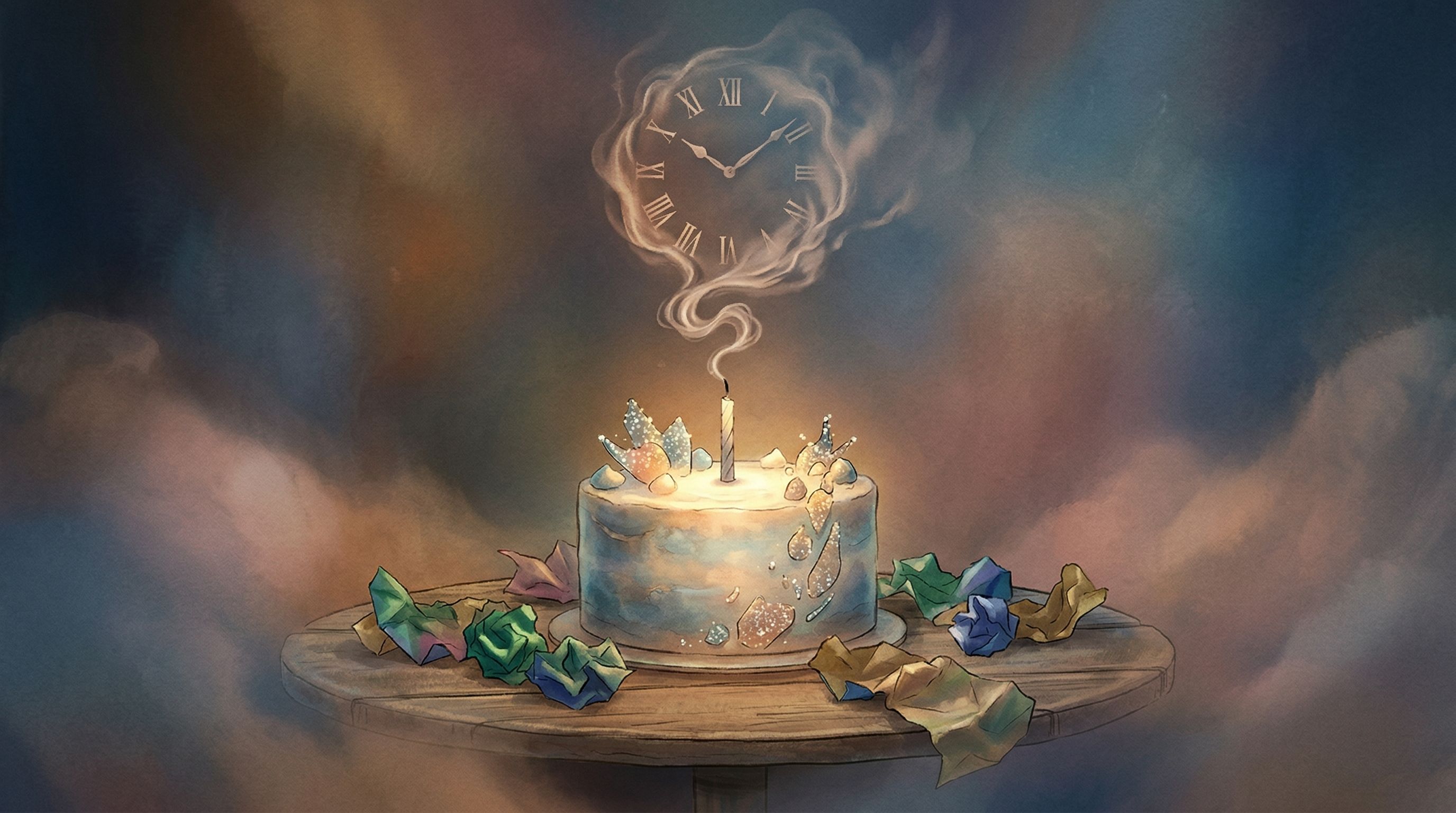
I often slip my snout into the mists of your sleeping mind, and I must tell you: the scent of a freshly baked cake is one of the most complex aromas I encounter. You might think it is a simple, almost childlike image, but in the realm of the night, sugar is never free. It carries the weight of your desires and the texture of your accomplishments.
To understand why you are dreaming of a cake, you must first look at what a cake is: a result of a process. It requires patience, the right temperature, and a precise mix of disparate ingredients. When this symbol appears, your subconscious is often pointing toward the "human batter" of your life. It is the harmonious end product of your recent efforts.
Some specialists in the psychology of dreams suggest that food in dreams represents emotional nourishment. If the cake is rich and delicious, it is a sign that you are finally allowing yourself to savor the fruits of your labor. You are moving from the "doing" phase to the "tasting" phase.
---
The Social Slice: Sharing, Solitude, and Boundaries
One of the most fascinating things for me to observe—as a Baku who feeds on your shadows—is how you behave with that cake. In the architecture of your dreams, the way you slice and distribute this sweetness is a sacred ritual that reveals your relationship with the world.
If you find yourself eating a magnificent cake all alone, in a quiet corner of your dream, do not judge yourself for being "greedy." Instead, ask yourself if you are currently starving for self-care. Perhaps you have been giving so much of your energy to others that your mind is creating a private sanctuary where you can finally nourish yourself without interruption.
Conversely, handing out slices during a dream celebration shows a soul in full bloom. It suggests that you feel abundant enough to radiate outward. However, I have seen many dreamers exhaust themselves in their sleep, giving every slice away until their own plate is empty. If this resonates with you, your dream might be a gentle warning: you are losing yourself in the service of others, leaving no sweetness for your own spirit.
🌙 The Echo of Yume : A cake is never just a dessert; it is a map of how much space you allow joy to take up in your life.
---
When the Sweetness Turns Bitter: Frustration and Hollow Success
Not every dream cake is a delight. I have swallowed many nightmares where the cake was made of plaster, or where it crumbled into ash the moment the dreamer tried to take a bite. These visions are bitter, I know, but they are incredibly honest messengers.
An inedible cake often reflects a sense of injustice or disappointment. You worked hard, you followed the "recipe" of society or your career, and you expected a reward. But when the moment of celebration arrived, it felt hollow. This is your mind processing the gap between your expectations and your reality.
It is also possible that the cake is too sweet, almost sickeningly so. In this case, you might be surrounded by flattery or "empty calories" in your waking life—situations that look good on the surface but offer no real substance or growth.
---
Concrete Example: The Unfinished Masterpiece
Consider the case of a dreamer who repeatedly saw a beautiful wedding cake sitting in the middle of a desert. Every time she approached it, the wind would blow sand over the frosting.
In her waking life, she was a talented artist who never finished her projects because she was terrified of judgment. The cake represented her creative potential—something beautiful and celebratory. The desert was her isolation, and the sand was her own self-criticism "weathering" her success before she could even taste it. Once she recognized that the sand was her own fear, she began to allow herself to "eat"—or rather, to finish and showcase her work—in the real world.
---
The Texture of Your Joy: A Baku’s Final Thought
The next time you wake up with the memory of a dream pastry, I invite you to look beyond the frosting. Do not look for a generic definition in a dusty book. Instead, ask yourself: "What was the texture of my joy in that moment?"
Dreams are bridges built between what you know and what you have yet to discover about your own heart. They are never there to frighten you, even when they are strange or disappointing. They are an invitation to a dialogue.
If you felt a sense of lack or a surge of happiness, take note of it. Your nocturnal feasts form the map of your evolution. If you wish to explore your dreams more deeply, your Baku is waiting for you.
Perhaps you were seeing yourself sleeping while the cake was being served, or maybe the frosting was a specific, calming color beige. Every detail is a crumb leading you back to your true self.
Sleep peacefully, leave the shadows to me, and never forget: your mind knows exactly what kind of sweetness you need.
Have you ever woken up with the taste of raw flour and sticky, unrisen yeast on your tongue? It is a peculiar sensation, one that leaves a heavy warmth in the gut. I remember a dreamer who came to me night after night, distressed because she kept pulling liquid, sunken cakes from her dream-ovens. She was desperate to taste the finished product, to feel that she had finally "arrived." But the unconscious does not respect our waking deadlines. Eating raw batter in a dream is a beautiful, messy confession of impatience. You want the joy, the validation, the sweet ending—and you want it now. But some things in your waking life are still rising, still reacting to the quiet heat of your deep mind. Forcing the process only leaves you with something indigestible, far from the grace of dreaming of a blessing that has been allowed to mature in its own time. Let the fire do its work.
Let us look at another angle, one that is older than modern psychology. Historically, sweet cakes were not always baked to be eaten by the baker; they were left at crossroads as offerings to spirits, gods, or ancestors. When you dream of a cake that you are forbidden to touch, or one that you place carefully on a pedestal, I must ask: who are you trying to appease? There is a subtle, melancholic difference between baking for pleasure and baking to buy someone’s approval. If you find yourself presenting a pristine, untouchable dessert to a cold crowd, you might be sacrificing your own resources to keep the peace. It is a dynamic of performance, similar to the tension of dreaming of a boss whose validation you crave but can never quite secure. Ask yourself if the sweetness you are creating is truly yours to keep, or if you are still trying to buy your way into someone else’s good graces.
Frankly, it tires me to see how often popular dream guides reduce this rich symbol to a simplistic omen of "upcoming marriage" or "financial wealth." How dull. A cake is far more mysterious than a mere bank statement or a marriage certificate. Sometimes, a massive, towering cake is not a promise of joy, but a heavy monument to social expectation. I have walked through dreams where a massive, multi-tiered confection felt like a gilded cage. You are expected to blow out the candles, to smile, to perform happiness for an audience, even when you feel hollow inside. If the cake in your dream feels daunting or too heavy to carry, it is okay to walk away from it. You do not have to celebrate on demand. True sweetness cannot be forced, and sometimes the quietest nights—the ones without frosting or applause—are the ones that feed your soul the most.