The laboratory of the soul: between transformation and creation
I have always found it fascinating that humans place so much importance on the kitchen, both in their waking life and in their dreams. For me, the Baku who devours nightmares, the kitchen is a bit like my own domain: a place of transmutation. When you dream that you are preparing food, you are not simply following a recipe. You are the alchemist of your own existence.
Take the ingredients of your day: a tense discussion with a colleague, an unexpected joy, a latent fatigue. In the dream world, the kitchen is where you try to mix all of this into something edible and assimilable. If the food is abundant and tasty, it means you feel capable of digesting what life brings you. It is a bit like the symbolism of the nourishing earth found when a cow: there is this idea of fertility and giving of oneself.
But I will be honest with you: I am quite annoyed by those armchair interpretations that say a dirty kitchen means a messy life. It is much more subtle than that. Sometimes, a kitchen in total chaos in a dream is a sign of immense creativity seeking expression. It is the necessary mess before the creation of the perfect dish. If everything were always tidy and sanitized, would you really want to create? What matters is not the state of the cupboards, but how you feel in front of the countertop. Do you feel overwhelmed or excited by the menu being prepared?
The warmth of the home and the shadows of the pantry
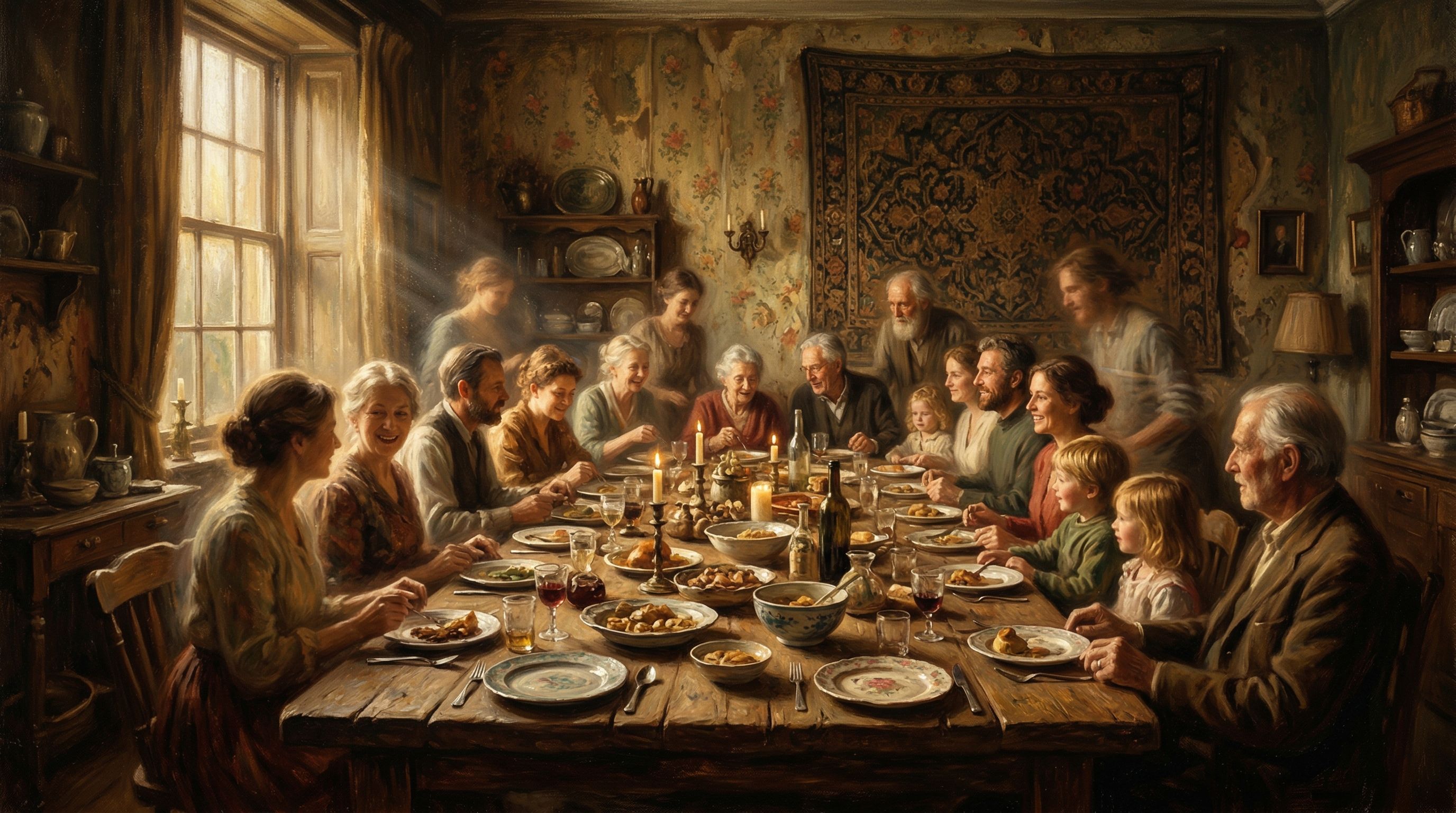
The kitchen is also the heart of the home, the nerve center of the house. In your dreams, it speaks of your deepest intimacy. It is where people gather and share. If you see yourself eating alone in a huge, cold kitchen, your subconscious might be whispering that you lack human warmth or feel disconnected from your roots.
I once listened to the story of a dreamer who could never find food in their dream cupboards. They opened every drawer, but everything was empty. There was a great sadness in their dream. This did not mean they were going to run out of money, but that they felt "starved" for recognition or love. We often forget that the hearth, in its original sense, is the fire. If the fire in your dream kitchen is out, perhaps you need to reignite your own passion, your own enthusiasm for your current projects.
Conversely, an overheated kitchen, where steam prevents you from seeing the walls, can reflect excessive family or social pressure. "If you can't stand the heat, get out of the kitchen," as the saying goes. Your dream sometimes shows you, with a somewhat raw poetry, that you are taking on too many responsibilities to feed others at the expense of your own rest.
I sometimes remain perplexed by certain symbols. An exploding blender, a talking fridge... the subconscious has a humor of its own. But at its core, the message is always the same: how do you treat your vital energy? Do you let it perish in a corner, or do you transform it into a feast that resembles you?
Never forget that even if the meal you prepare in your dream seems burnt or failed, it is only a rehearsal. The night allows you to test mixtures, to fail without risk, so that tomorrow, when you wake up, you know exactly which ingredient to add to your life so it finally tastes the way you desire.
Have you ever woken up with the lingering scent of burnt spices or the faint hiss of boiling water still ringing in your ears? The dream kitchen is a deeply somatic stage, a place where your body translates emotional processing into visceral sensory details. I am fascinated by how often a dreamer will describe the temperature of their dream kitchen rather than its color. A cold, damp floor beneath bare feet, or the heavy, comforting steam of a boiling pot. These sensory textures are direct lines to your physical state. Sometimes, your mind uses the kitchen to signal that your body is struggling to process an emotional burden, similar to how dreaming of the stomach reflects our struggle to digest difficult truths. If you find yourself coughing from heavy smoke in a dream, it might not be a metaphor for a toxic relationship, but your lungs and nerves begging for a deep, uninterrupted breath of fresh, waking air.
In the quiet corners of my memory, I often think of the ancient Japanese hearths, where the Kamado-gami—the kitchen gods—were kept to protect the home fire from going cold. There was a sacred, dirty, soot-covered warmth to those spaces. I occasionally feel a pang of sadness when dreamers show me their sleek, ultra-modern dream kitchens, all gleaming white marble and silent stainless steel. They ask me why they feel so anxious in such a perfect space. Sincèrement, this obsession with sterile perfection is a modern trap. A kitchen without a single stain, where no grease has ever splattered, is a place where no life has been lived. If your dream serves you a laboratory instead of a hearth, ask yourself if you are trying too hard to sterilize your own messy, human emotions to fit someone else's definition of a clean life.
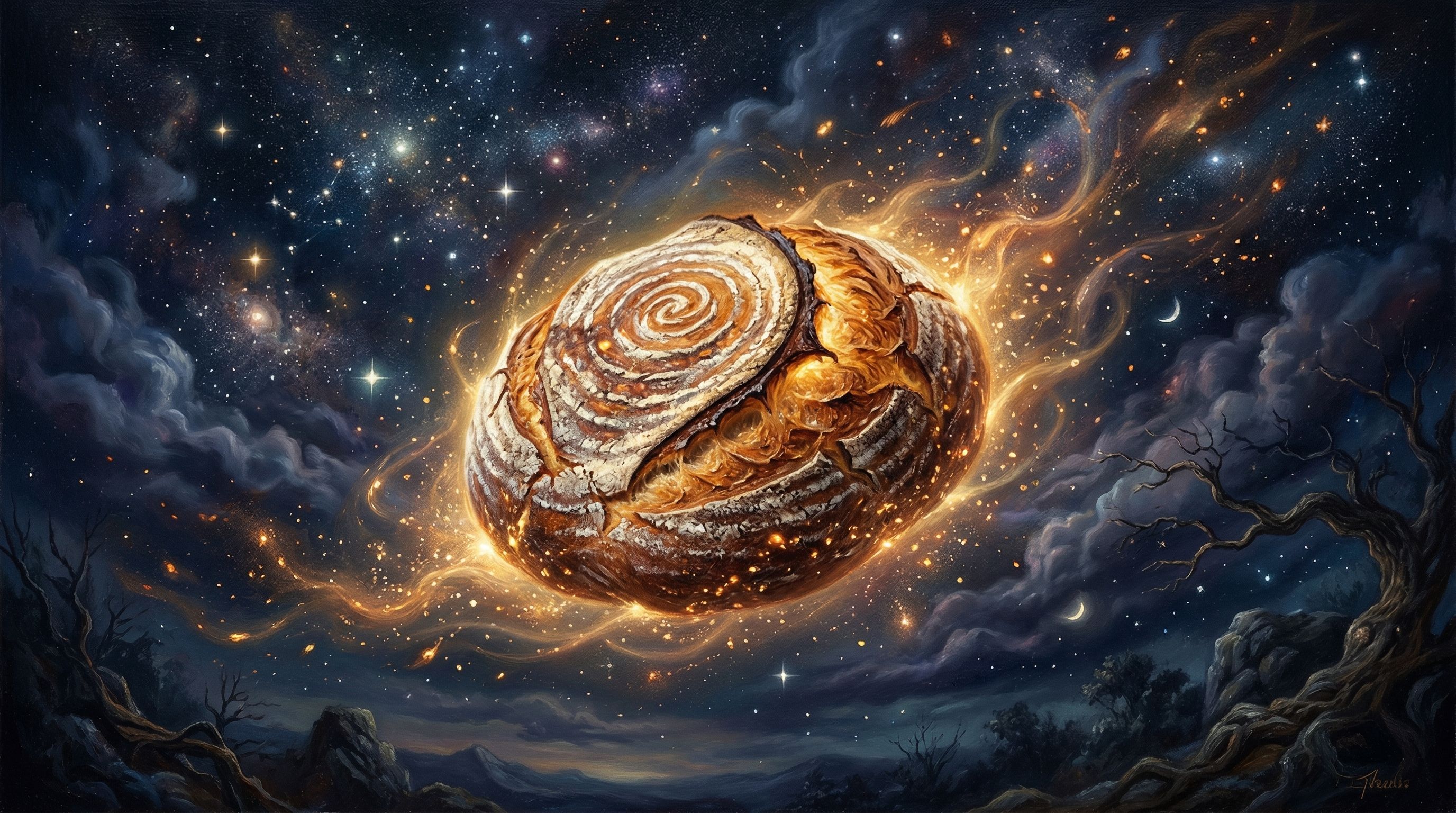
It is quite common, during periods of profound transition, to find a ghost working at your stove. A grandmother you lost years ago silently chopping vegetables, or an old friend washing dishes without saying a word. I once met a dreamer who wept because her deceased mother was simply standing in her kitchen, baking a loaf of bread, refusing to look back. She thought it was a haunting, a cruel reminder of her grief. But ancestral figures in the kitchen are rarely there to scare you; they are there to remind you of the recipes for survival they passed down to you. They are rebuilding the hearth. It is like finding comfort in dreaming of a nest when the world outside feels too cold, a reassurance that the lineage of nourishment hasn’t broken, even if you currently feel entirely alone at the table.
Then there are those surreal nights where the ingredients make absolutely no sense. You find yourself boiling stones, frying old photographs, or trying to bake your own childhood toys. I must admit, these bizarre recipes make me smile, even if they leave you incredibly confused upon waking. What are you trying to make digestible? The unconscious is incredibly resourceful; when it cannot process a hard, stubborn memory, it throws it into the frying pan to see if heat will soften it. You are trying to transform a heavy, unyielding reality into something you can finally swallow. Instead of searching for a literal translation, look at the fire beneath the pan. Is it high and frantic, or a slow, patient simmer? Sometimes, the dream is just asking you to let a difficult memory sit on the back burner for a while longer before you try consuming it.
Every dish you imagine, every utensil you touch in this sanctuary of the home is a piece of the puzzle of your deep self. If you want to keep track of these nocturnal recipes and understand what great change is simmering in your mind, you could record these visions in the Midnight Mind app. It is a way to collect the flavors of your dreams and never again let an intuition evaporate like steam on a kitchen window.
What were the ingredients of your last dream? Were they fresh, bitter, or of a forgotten sweetness? Take the time to taste them; that is how one becomes the chef of their own destiny.